Filed your ITR? These scenarios could still get you a tax notice

The Income Tax Department has picked nearly 1.65 lakh cases for scrutiny for Assessment Year (AY) 2026, which is three to four times more than usual.
ITR Filing Doesn’t End With Submission
The deadline to file Income Tax Returns (ITR) for FY 2024–25 (AY 2025–26) is September 15, 2025. Filing your return on time is important, but that alone doesn't close the process. The Income Tax Department has selected around 1.65 lakh cases for scrutiny under Section 143(2), indicating tighter monitoring. Taxpayers must stay vigilant even post-filing.

Mismatch in Income Details
A common reason for receiving a notice is a discrepancy between reported income and Form 26AS or AIS (Annual Information Statement). For instance, TDS deducted by an employer or bank must align with the income reported in your return. Even minor mismatches can trigger scrutiny, particularly for salaried individuals and freelancers.

Non-Disclosure and Inaccurate Claims
Not reporting all income sources, including interest from savings or FDs, rental income, capital gains, or foreign assets, may result in a notice.
Similarly, inflated deductions under Sections 80C, 80D, or HRA exemptions without valid proof are red flags. Underreporting attracts a 50 per cent penalty, while misreporting can draw a 200 per cent penalty under Section 270A.

Lifestyle and Transaction Mismatches
High-value financial activities not reflected in the ITR may prompt review. These include:
1. Cash deposits over Rs. 10 lakh+ in a year
2. Credit card payments above Rs. 2 lakh
3. Mutual fund or bond purchases over Rs. 2–5 lakh
4. Equity investments above Rs. 1 lakh
5. Property deals over Rs. 30 lakh
A steep fall in income compared to previous years without supporting documentation may also draw attention.

Form Errors and Job Switch Gaps
Using the wrong ITR form can lead to incomplete disclosures, especially if multiple income heads are involved. This is a common mistake among first-time or self-filing taxpayers.
If you’ve changed jobs during the year and claimed deductions from both employers without consolidating Form 16s, it may create reporting inconsistencies. Also, fabricated documents or false entries fall under Section 271AAD, which invites strict penalties.
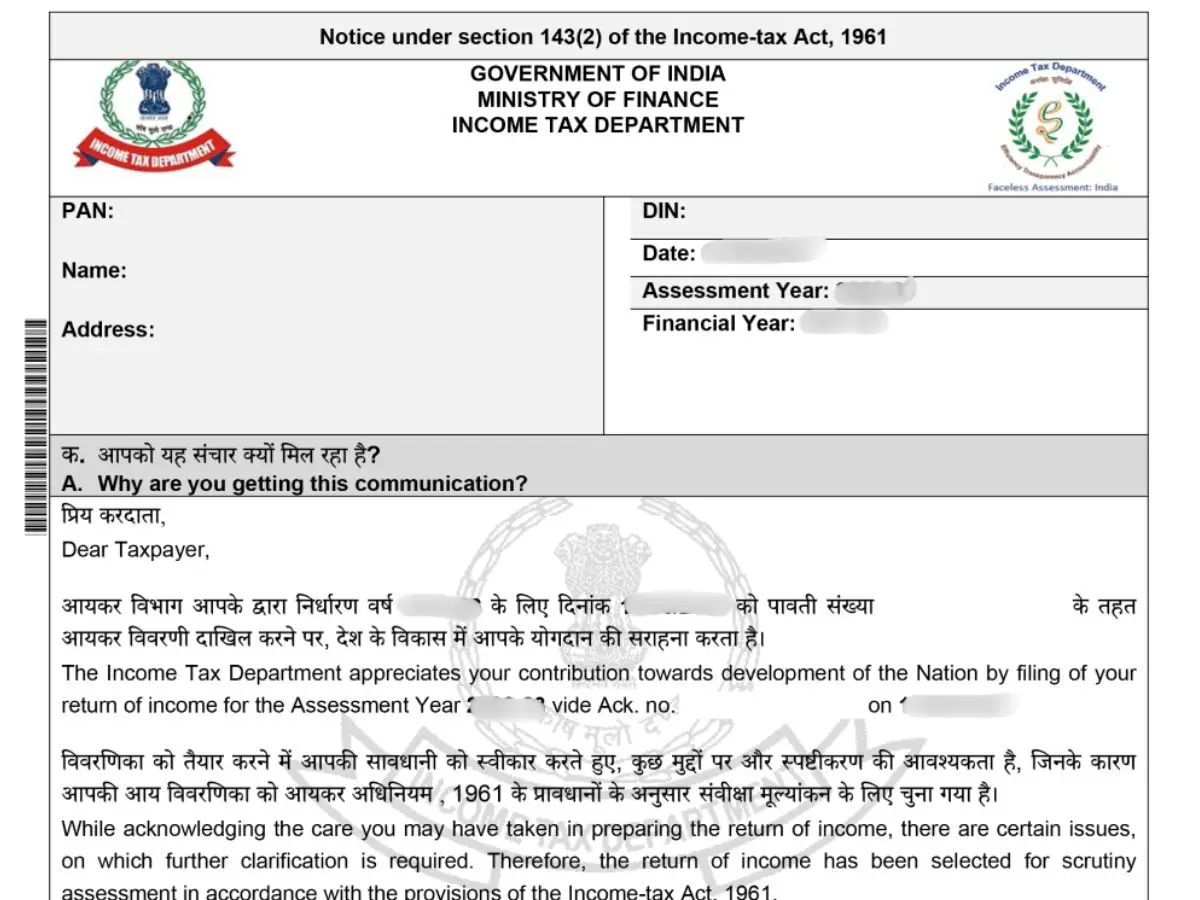
If You Receive a Notice
Act promptly and carefully:
1. Verify that the PAN and Document Identification Number (DIN) are correct.
2. Identify the reason and section cited (e.g., 139(9) for defective returns, 143(2) for scrutiny).
3. Prepare documents such as salary slips, bank statements, investment proofs, and Form 16s.
4. Consult a tax expert for guidance, especially for scrutiny or reassessment cases.
5. Respond within deadlines to avoid escalated action or penalties.
)
)
)
)
)