Explainer | 'Toro Jubilo' a fiesta or a grotesque tradition from the stone ages?

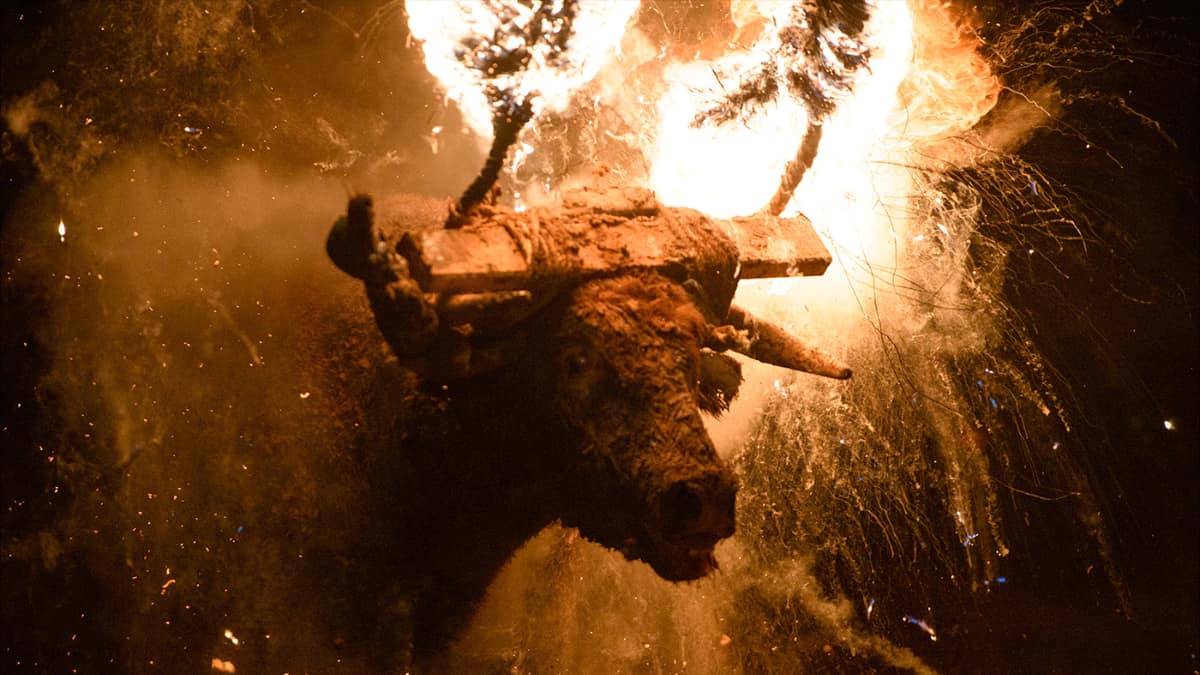
Toro Jublio: Anything but 'joy' for the bull
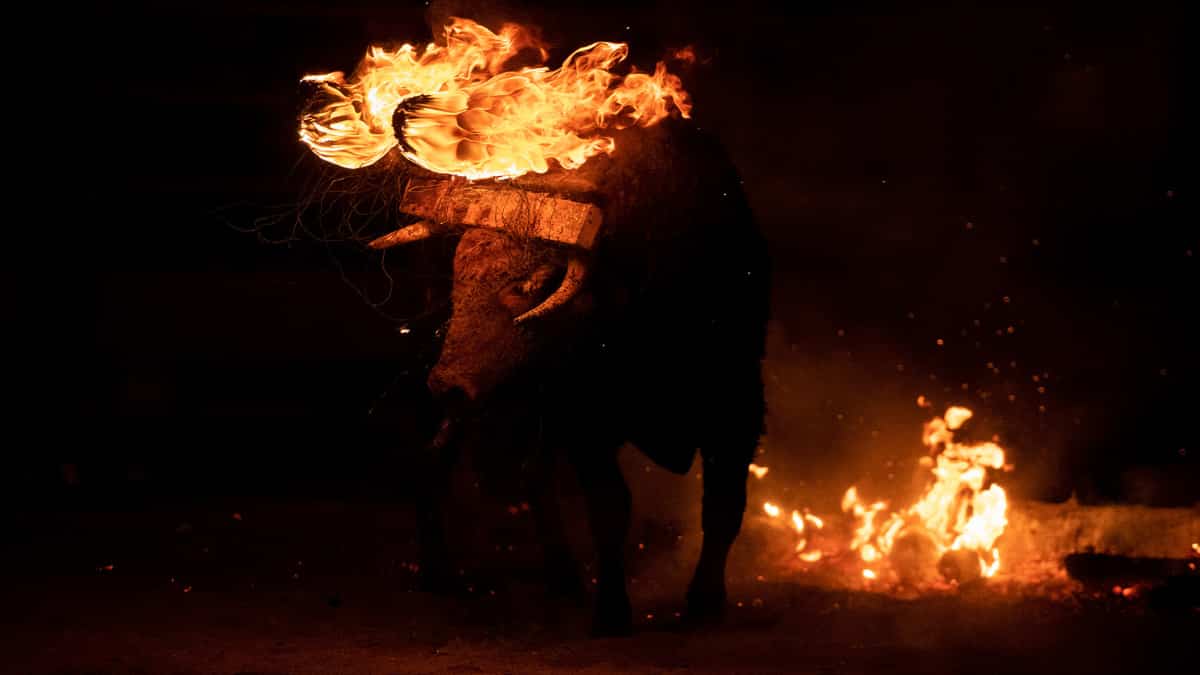
Writhing, grunting, with panic, a bull charges through an arena as thousands of people cheer on from the sidelines. The animal's horns have burning balls of tar attached, the one source of light in the dark.
The "Toro Jublio" or the "Joy of the Bull" festival is anything but 'joy' for the animals forced to participate in the event.
Image credit: @CAS_Int/Twitter
Where is it celebrated, and why?
The centuries-old festival is typically celebrated in the second week of November in the medieval town of Medinaceli. As per the Medinaceli City Council website the most widespread opinion is that the celebration has Celtiberian origins.
"The rite would be commemorating the victory of the Celtiberians over the Carthaginians at the battle of Hélice (Elche, Alicante), in 229 BC" in which it is believed that the Celtiberian leader Orison launched used oxen carrying bundles of burning straw on their antlers, to force Carthaginian besiegers' disbandment.
Another possible theory as per the website is the tradition might come from primitive "Mithraic solar rites, linked to telluric cults, in which the regenerative and fecundating quality of the sun, the bull and fire was represented, as opposed to the passive and inert quality of the moon."
The bull and the fire are believed to represent strength and purification, "united in a pagan communion".
Image credit: @AnimaNaturalis/Twitter
How the flaming balls of tar are attached
An AFP report describes the scene from that took place on Saturday as Medinaceli celebrated Toro Jubilo.
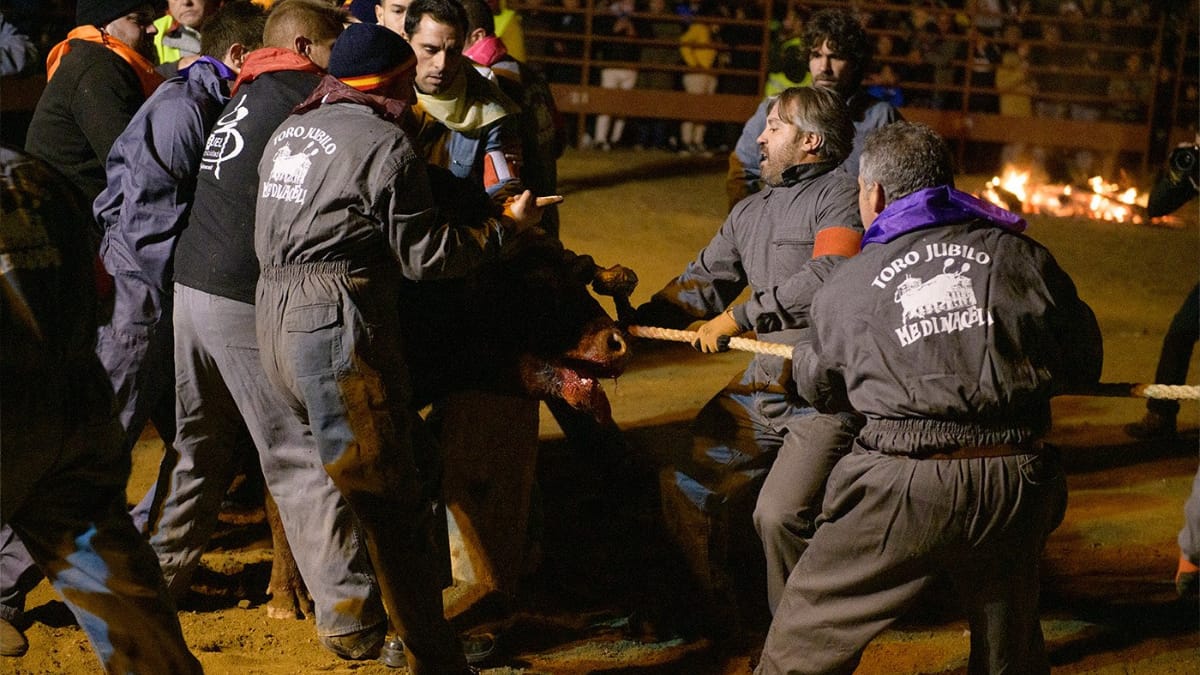
Just before midnight, the bull was dragged into a makeshift bullring in the town's main square by a group of men dressed in matching grey uniforms.
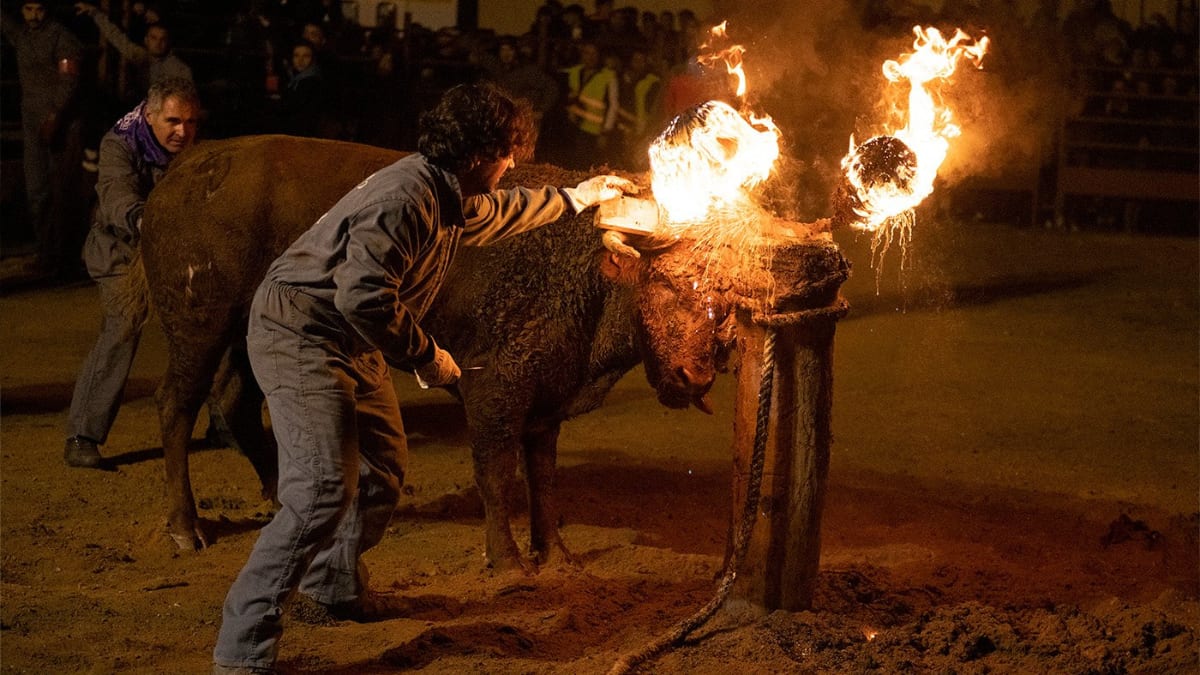
The animal is then tied to a wooden post and as some men intimidate it with sticks, and other pull its tail to keept it steady, balls of highly flammale tar is attached to its horns.
Caked mud is then applied to the animal's face and back so it doesn't catch fire, before the tar is set alight.
Image credit: @AnimaNaturalis/Twitter
Does the protection offered by the caked mud make a difference?
In one word: No.
While the bull may escape the fire, the sheer distress it faces is heartbreaking.
As per Jaime Posada of the animal rights group Anima Naturalis, another organisation calling for a ban on the practise the bull is kept in a tight pen for hours, with barely enough space to move, none to sit, "it is stressed simply from that".
Image credit: @AnimaNaturalis/Twitter
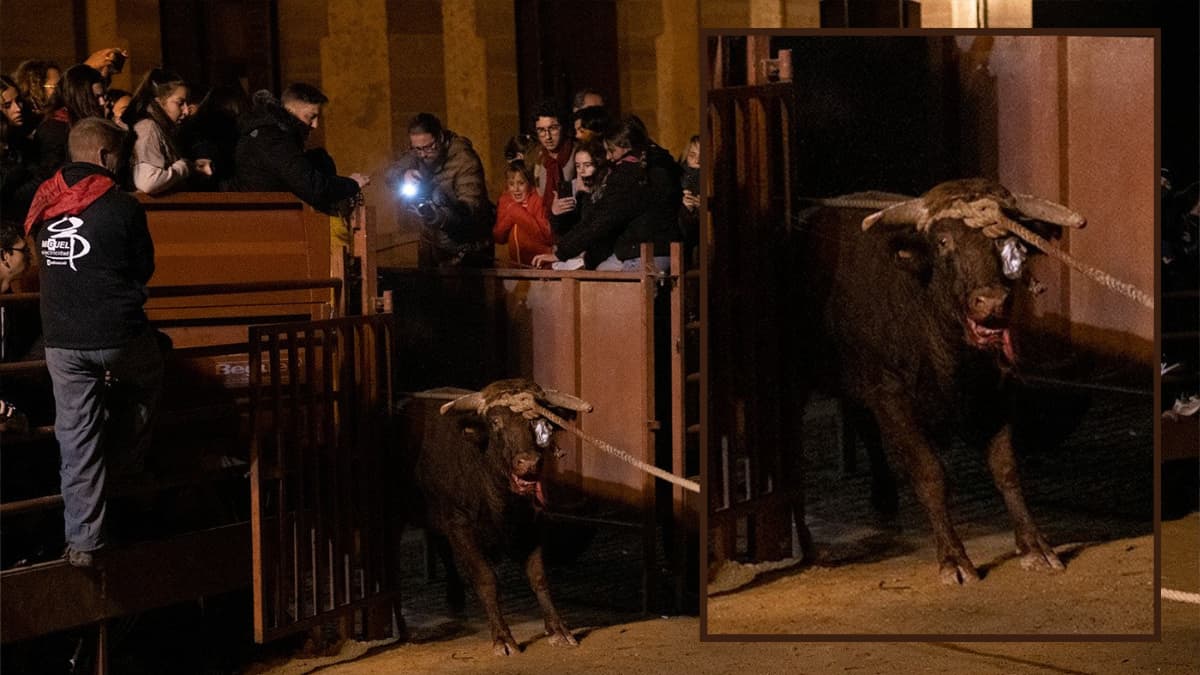
Grotesque tradition from stone age
Calling for a ban on the "grotesque tradition", Spanish anti-animal cruelty party PACMA said on Twitter "This grotesque tradition continues to be celebrated even though we are no longer in the Stone Age."
As per the website Nerja Today "The festival was actually banned during the Franco era between 1962 and 1977, an indication of just how bad it must be."
However, Castilla and Leon's regional governments have given the festival a special cultural status.
Image credit: @AnimaNaturalis/Twitter
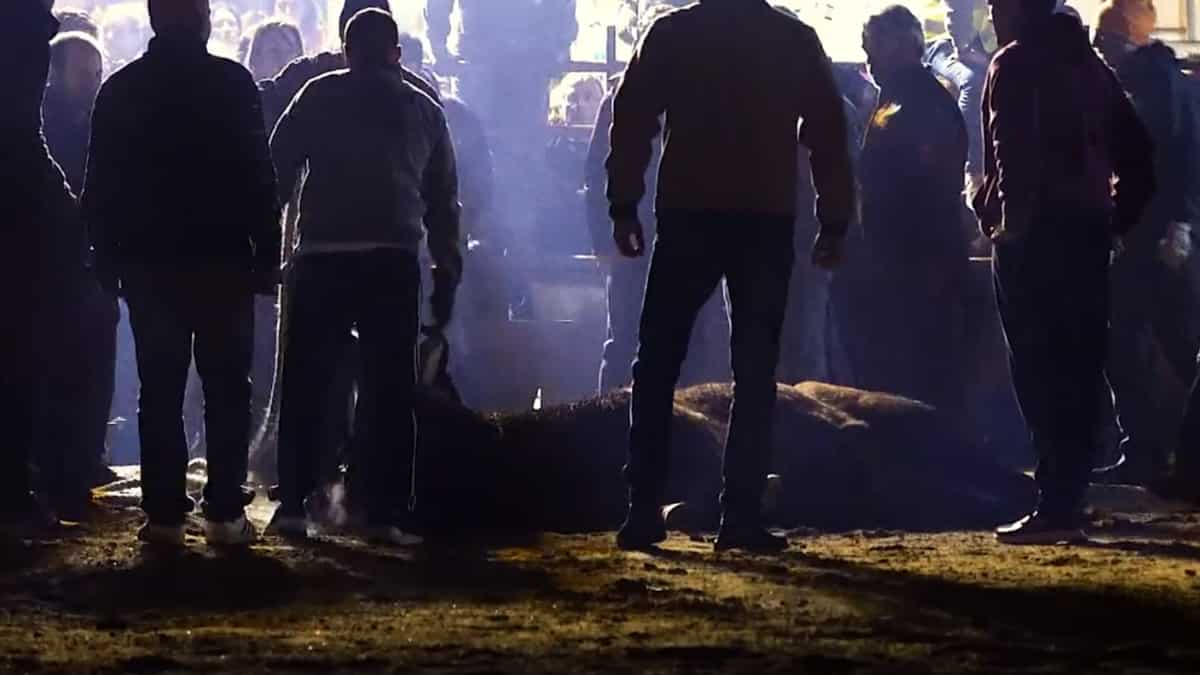
Does the bull 'survive' this Joy of the Bull fiesta?
While traditionally the bull's life is spared at the end of the festivities, this year's bull didn't survive the festivities.
The animal died after another bull that was sent into the ring to guide it out after the event was done, rammed it in the head.
As As per Medinaceli City Council website earlier the bull would be sacrificed and the community would eat its meal.
Image credit: Video screengrab @PACMA/Twitter
)
)
)
)
)