Exclusive | An on-board look at the 'reborn' INS Vikrant, India’s first-ever indigenous aircraft carrier

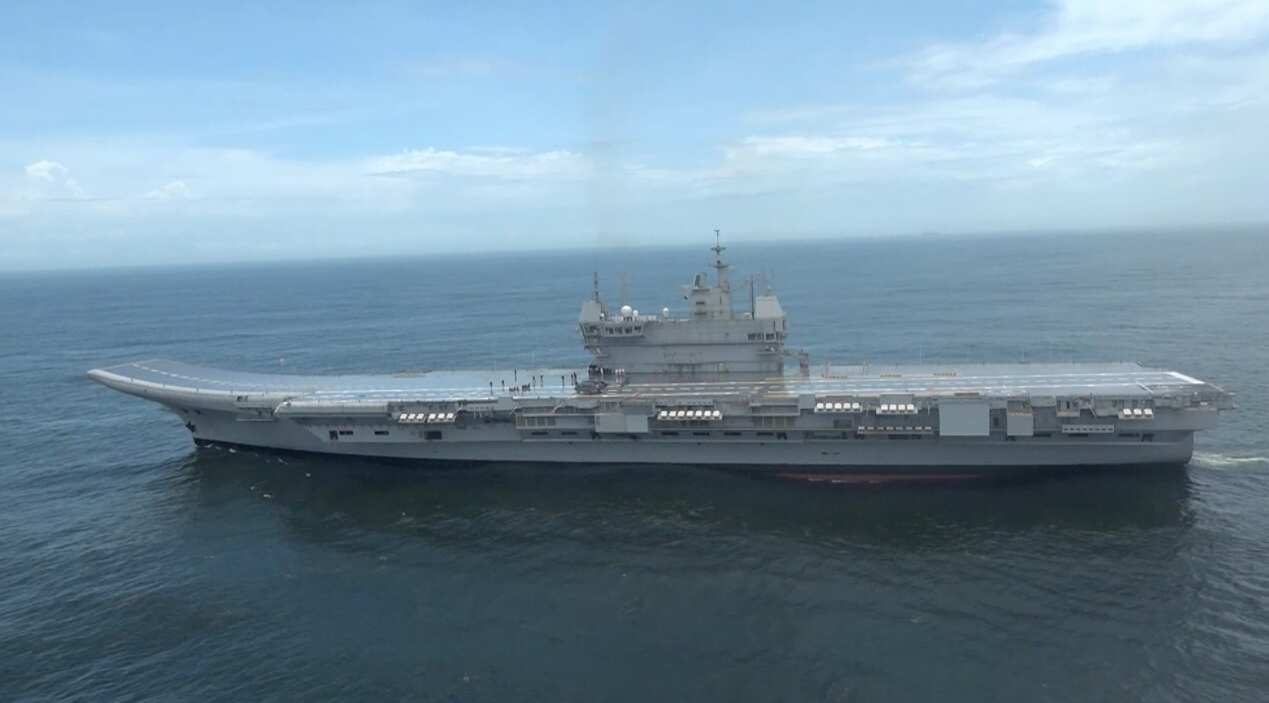
Made-in-India, Made-for-India
Aircraft carriers or floating military airfields are considered the pinnacle of Naval engineering, operations and the most potent form of power projection, far from a country’s shores.
India has operated aircraft carriers for nearly five decades, but all of those carriers have been of foreign origin and were later modified for the Indian Navy.
Coinciding with India’s 75th year of Independence, in 2022, a made-in-India, made-for-India engineering marvel, known as the Indigenous Aircraft Carrier (IAC-1) will be inducted into the Indian Navy. Notably, this Rs.20,000cr vessel features 76 per cent indigenous components.
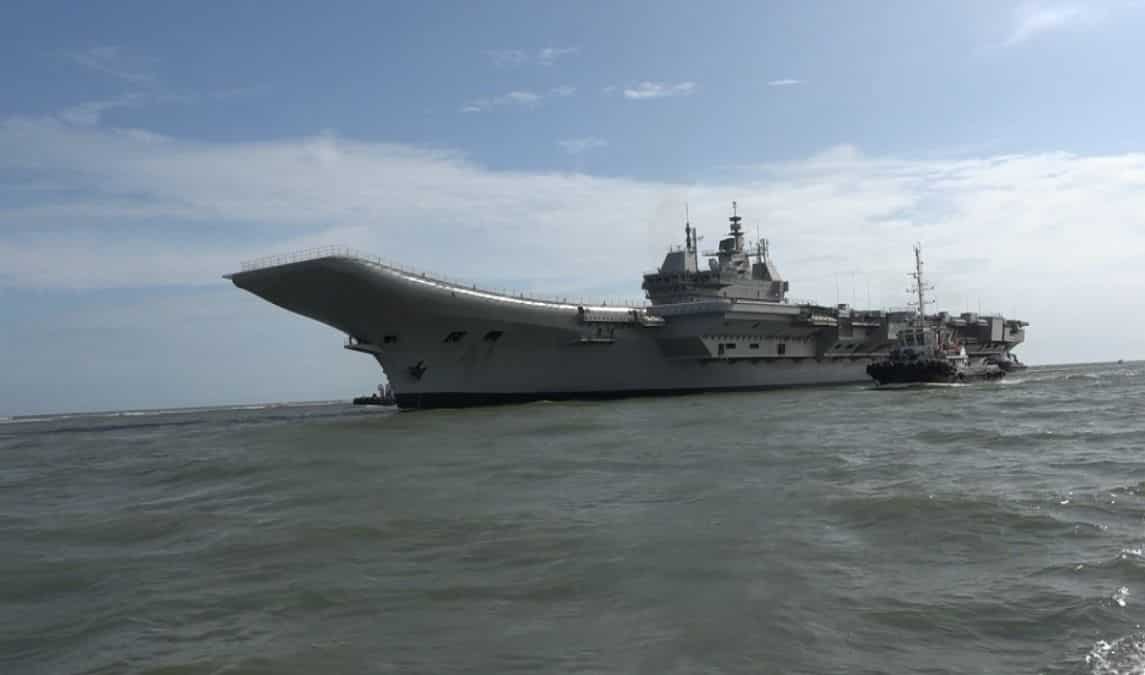
A 'Floating Fortress!'
After an aerial encirclement of the vessel, the Sea King landed on the deck of the Carrier, thereby, revealing in full detail, what a massive structure the IAC-1 has. The carrier is 262 meters long, 62 meters wide and nearly 18 stories tall… Nothing less than a 'Floating Fortress!'
With a displacement of over 40,000 tonnes, the IAC-1 dwarfs all other warships that the Indian Navy operates. Simply put - the IAC-1 weighs nearly 8 times as much as a normal warship. Designed by the Navy’s Directorate of Naval Design (DND) and built by India’s state-run Cochin Shipyard Limited, the Indigenous Aircraft carrier is the country’s most prestigious military project to date.

The huge proportions
As huge as two football fields, the flight deck of the IAC-1 is meant to carry two dozen Russian-origin MiG29K fighters of the Indian Navy, besides a handful of choppers.
On its frontal region, IAC-1 features two take-off axes (150 meters and 200 meters long) meant for fighter jets. The aft (rear portion) of the carrier has a landing strip for fighter aircrafts. Besides this, the deck has multiple areas marked for the landing of choppers.

So big that you can lose your way
IAC-1 is meant to carry 1,700 crew and has 2300 compartments spread across its decks… Here’s a word of caution from the Navy - “If you’ve spent anything less than 3 months on the carrier, you’re sure to lose your way!” It’s a city at sea…
This gigantic carrier is propelled by 4x LM-2500 Gas turbines that produce 90MW of power. IAC-1 uses license-built Indian versions of the LM-2550. Originally developed by General Electric, USA, the gas turbines used on IAC are are built by Hindustan Aeronautics Limited, India.

The powerful generators
The engines, their operating temperature and pressure and the vessel’s propulsion are controlled from the engine room.
The generators on board the carrier produce enough electricity to cater to the needs of the city of Kochi, where the carrier was built. All of that electricity is diverted to various systems and subsystems of the ship from the Electric Switchboard room.
The ship control center takes care of the air conditioning, refrigeration, water purification and several other important functions.

The floating Air Traffic Controller
If you have a floating airfield, you better have a floating Air Traffic Controller - the Flight Command a.k.a FlyCo.
The Flight Command plans, controls, and facilitates the take-off, landing, operations, arming, de-arming, positioning etc of all aircraft on board the Carrier. If that wasn’t enough, the Flyco is also responsible for the flight operations of all choppers on board the accompanying ships (part of the carrier battle group) Flyco has the best and most panoramic view of the ship’s Flight deck.

Hangar space for harsh weather
Missiles, bombs, and armaments protect the aircraft from their enemies… But what about the forces of nature… Operating a floating airbase at sea requires immense resources to store, service, maintain, aircraft and ensure high availability, the aircraft hangar that span the entire length of the ship is where the flights are stored during harsh weather and during times of their service and maintenance
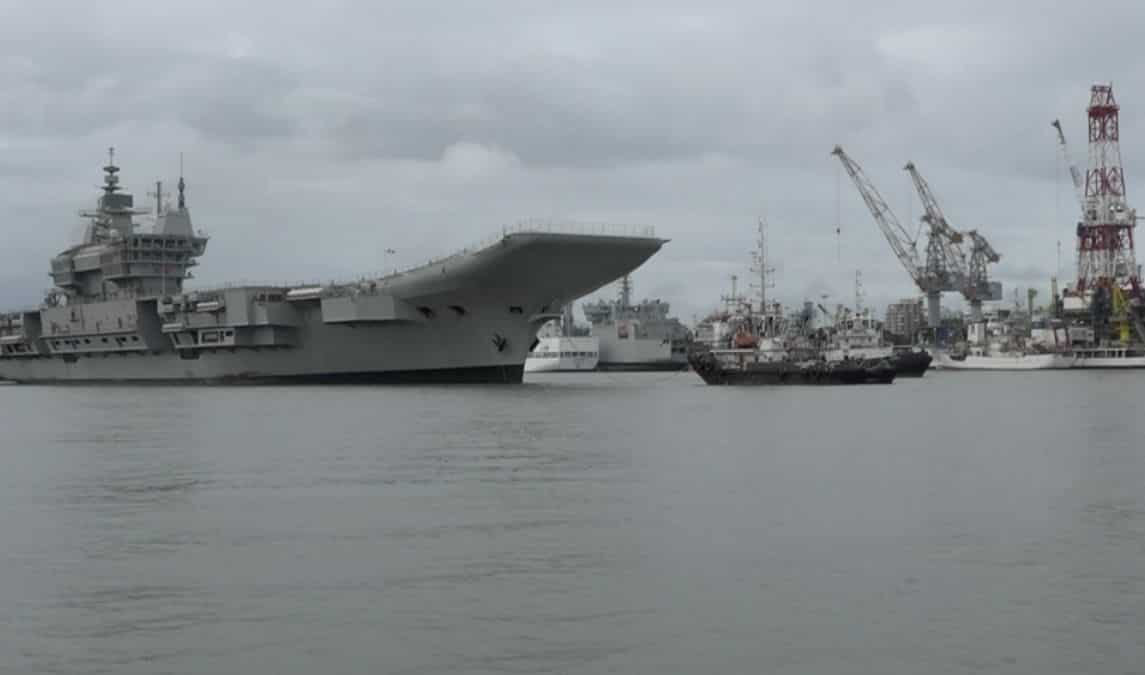
How the 200 metres runway works
A typical airport runway is anywhere between 2-3 kms, so how does a floating airport with barely 200 meters of runway enable fighter jet takeoff?
Aircraft wheels are held back by restraining blocks, during which the pilots rev the engines to full power. At the opportune moment, the restraining blocks that hold back the aircraft from taking-off are released…The 20-ton fighter aircraft zooms past the 200 meter runway in a matter of seconds… It soars into the sky, after leaping off the Ski-jump that can be seen at the front-end of the carrier.

A magnificent ship
India’s Navy Chief Admiral Karambir Singh and Shipping Minister Sarbananda Sonowal, senior officials visiting the carrier, as it undergoes its second-phase of sea trials off Kochi.The Minister lauded Cochin Shipyard limited and Indian private industry for their contribution in realizing such a magnificent ship. The Navy Chief said that the sea trials were going extremely well and that the Navy hoped to Commission the carrier by August 2022.

INS Vikrant
INS Vikrant
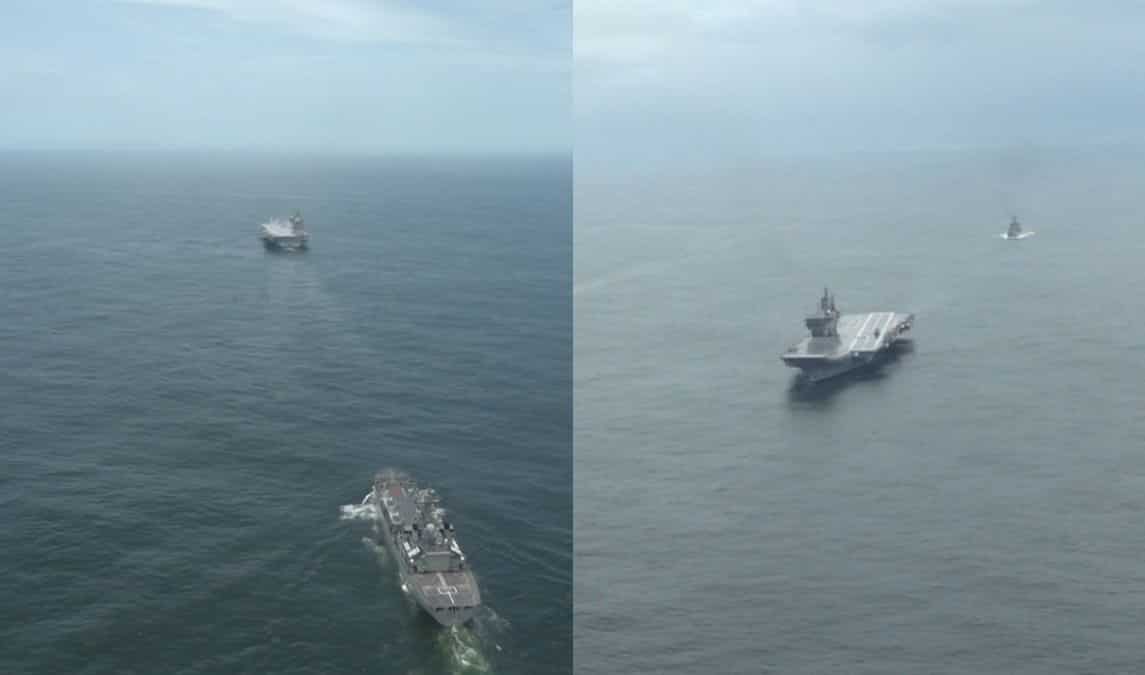
A strong navy is a strategic necessity
All of India’s aircraft carriers have had names that boast of size, power and magnificence - Viraat, Vikrant and Vikramaditya.
With the induction of INS Vikrant, India would have two operational aircraft carriers - one each for the Eastern and Western Seaboard. This deadly duo would not only help India protect its waters, sea lanes of communication and trade interests, but also project Indian power far from her shores.
To meet the ever-evolving challenges in the Indian Ocean region and given India’s growing global stature, a strong Indian Navy is a strategic necessity. This gains significance given an expansionist China, that plans to have 10 aircraft carriers by 2050. Experts in India are contemplating the necessity for a third aircraft carrier to be built, based on the experience and know-how, know-why gained from the IAC-1 project.
)
)
)
)
)