Economic Survey 2026: India to maintain fastest-growing major economy status with GDP Growth 6.8–7.2%. Why this matters!

This projection is anchored in domestic growth drivers rather than external demand, reflecting India’s increasing insulation from global volatility.
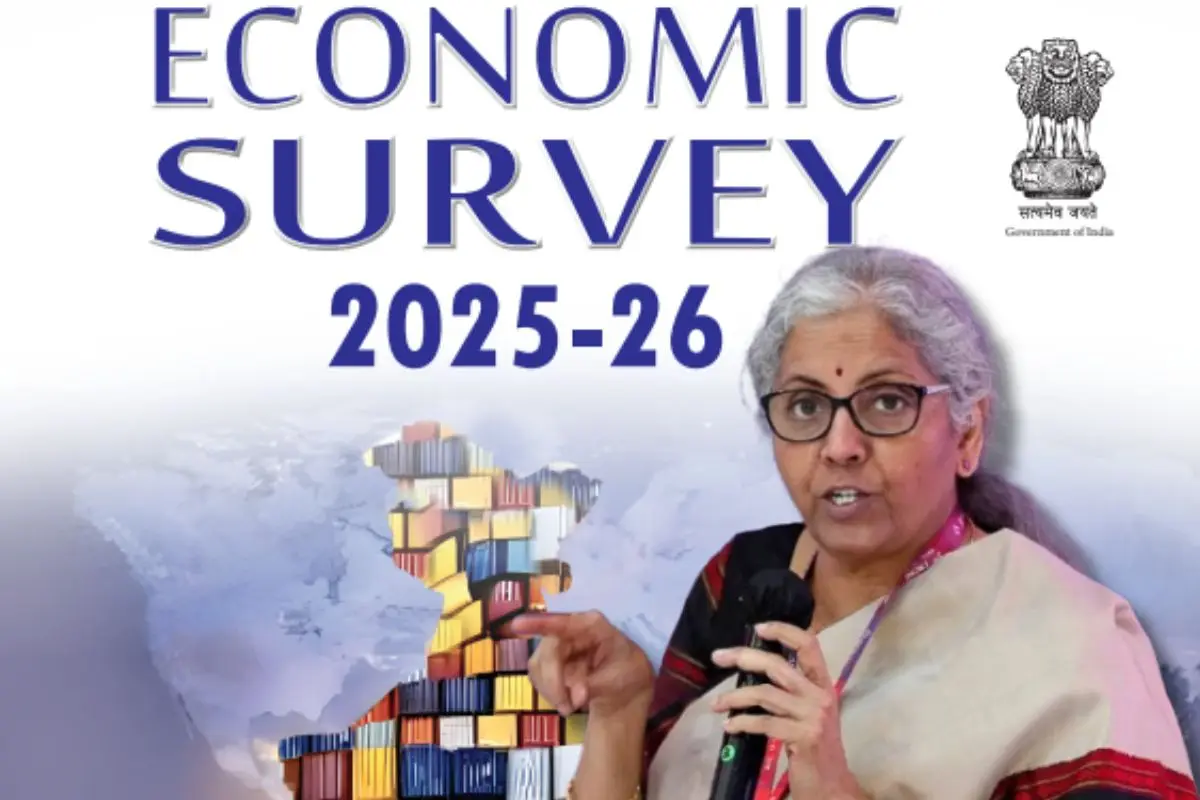
Strong GDP Growth Projection for FY27
The Economic Survey 2025–26 projects India’s real GDP growth for FY27 in the range of 6.8–7.2 per cent, placing India among the fastest-growing large economies globally. This projection is anchored in domestic growth drivers rather than external demand, reflecting India’s increasing insulation from global volatility.

Global Uncertainty and Its Limited Impact
The Survey also emphasises that global growth remains subdued, with trade conflicts, modest global demand, and financial uncertainty posing downside risks. However, these factors translate into external uncertainty rather than immediate macroeconomic stress for India.
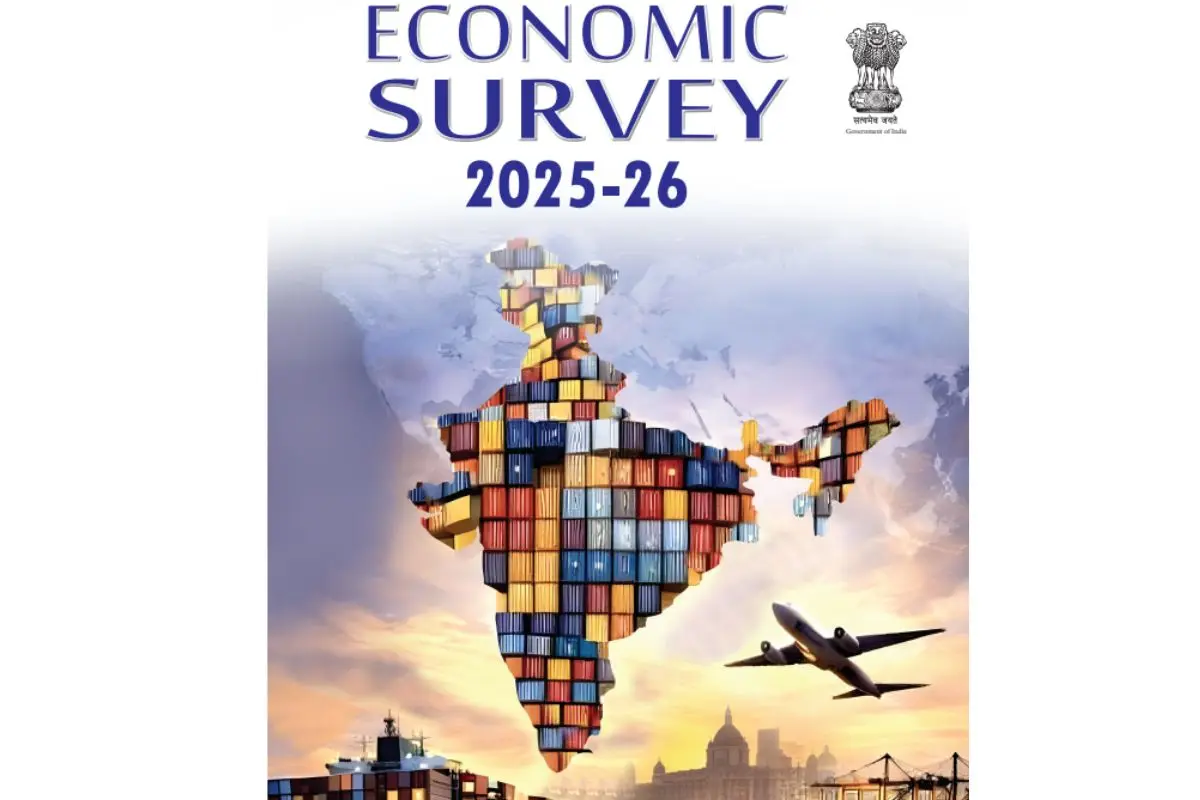
Official Estimates and Growth Outlook
"The Economic Survey projects real GDP growth in FY27 in the range of 6.8 to 7.2 per cent. The outlook, therefore, is one of steady growth amid global uncertainty, requiring caution but not pessimism," the report states. It says that the domestic economy remains on a stable footing. Inflation has moderated to historically low levels, although some firming is expected to occur going forward.
Macroeconomic Stability as a Growth Pillar
A key factor supporting the FY27 growth outlook is macroeconomic stability. Inflation has moderated to historically low levels, and the balance sheets of households, firms, and banks have strengthened. Fiscal consolidation has been pursued without compromising growth-enhancing capital expenditure. The Survey explicitly links sustained public investment to the resilience of domestic demand and improving private investment intentions, which together underpin medium-term growth momentum.
Structural Reforms Boost Medium-Term Growth
The Survey also notes that cumulative structural reforms, including GST rationalisation, deregulation, logistics reforms, and digital public infrastructure, have lifted India’s medium-term growth potential closer to 7 per cent. Unlike short-cycle recoveries, the FY27 outlook is framed as a continuation of reform-led growth, supported by healthier financial systems and improving productivity. While risks remain, they are described as “broadly even,” warranting caution but not pessimism.
Surge in Government Capital Expenditure
The Government of India’s capital expenditure has increased nearly 4.2 times, from ₹2.63 lakh crore in FY18 to ₹11.21 lakh crore in FY26 (BE). Effective capital expenditure in FY26 (BE) is ₹15.48 lakh crore, positioning infrastructure as a key growth driver, the Survey states.
Services Sector as a Growth Anchor
The services sector continues to act as a "high-growth, low-volatility anchor," with medium-term growth projected at 7–8 per cent. New frontiers such as the "Orange Economy" (experience-led services) and space services are identified as emerging opportunities. Currently, India’s services sector contributes more than half of the Gross Value and serves as a major driver of exports and employment in the country.
)
)
)
)
)