Don't look up! This Soviet-era spacecraft can crash anywhere on Earth this month

Authored By Subhadra Srivastava
Published: May 01, 2025, 17:57 IST | Updated: May 01, 2025, 17:57 IST
A Soviet spacecraft launched more than five decades ago is set for an uncontrolled re-entry into Earth’s atmosphere and the scariest part is that might fall anywhere on earth.
1 / 14
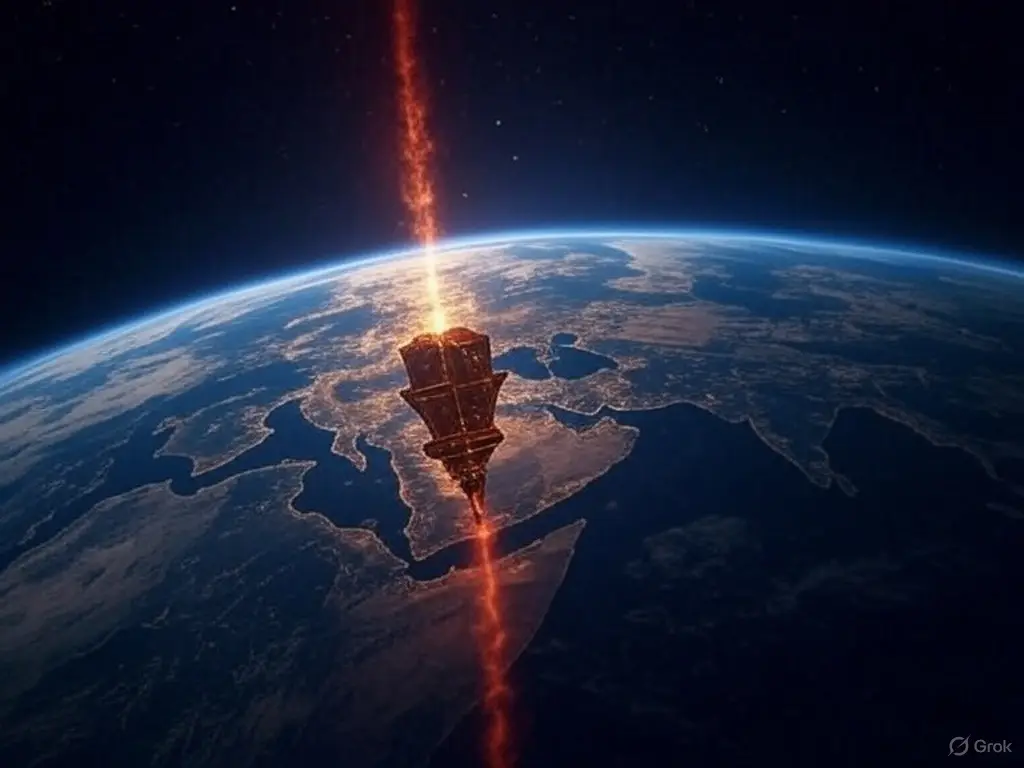
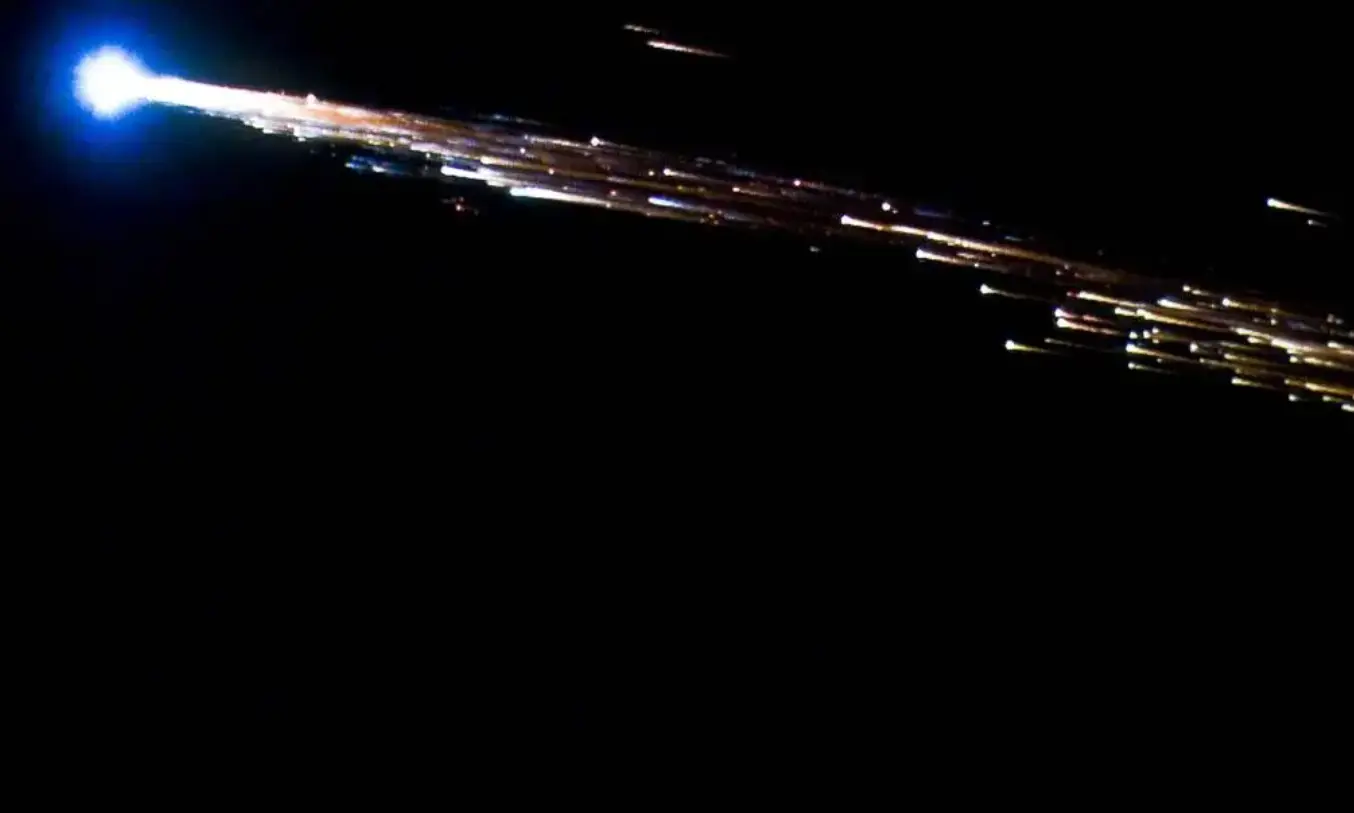
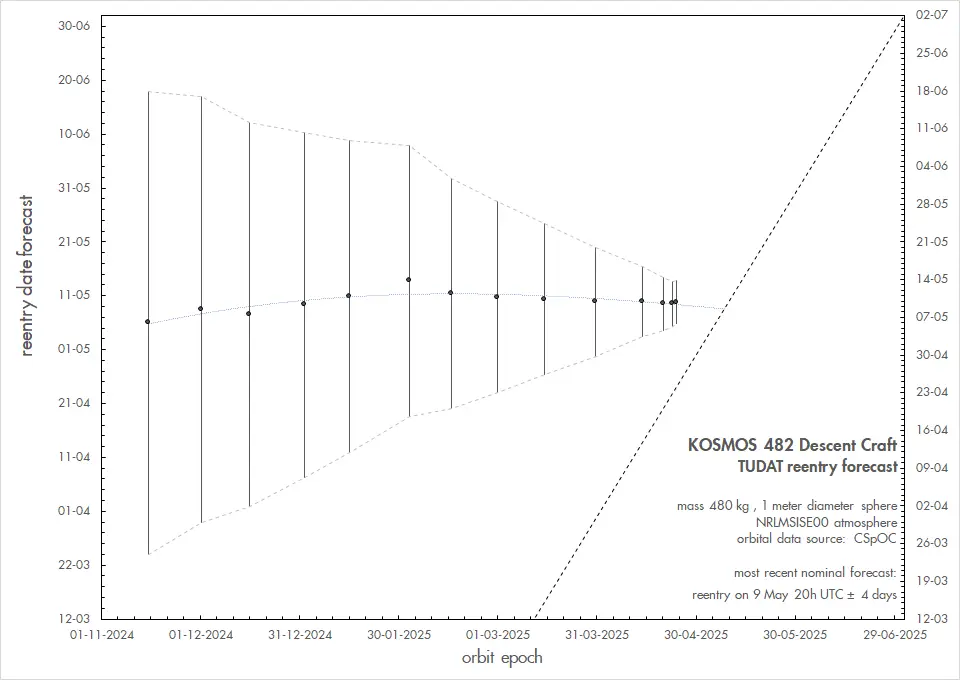
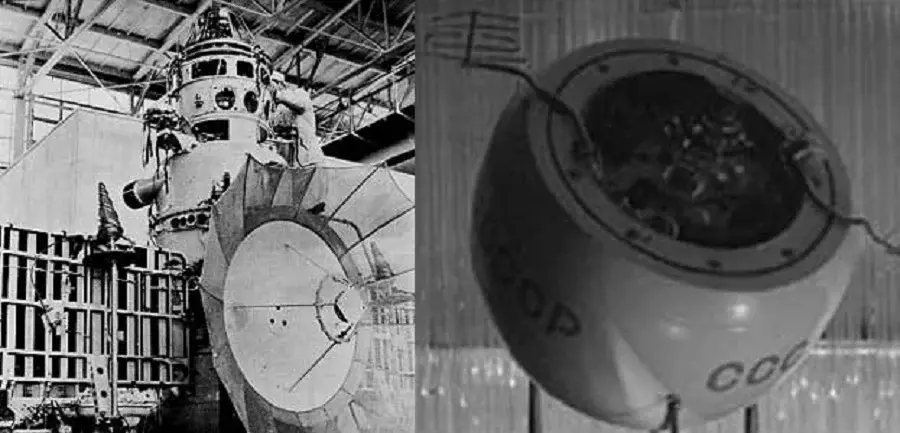
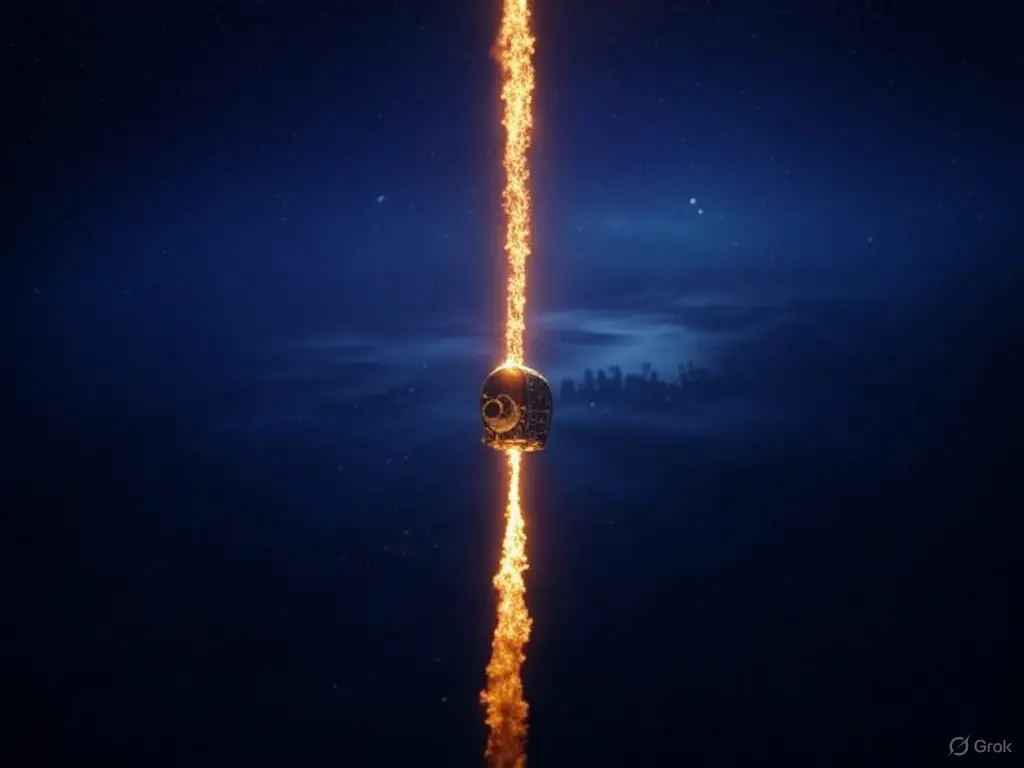
A Soviet spacecraft launched more than five decades ago is set for an uncontrolled re-entry into Earth’s atmosphere and the scariest part is that might fall anywhere on earth. The lander will enter the Earth's atmosphere around May 10, but it could also be a few days earlier or later. The Kosmos 482 Descent Craft, originally part of the USSR’s Venera programme to study Venus, is expected to crash around 10 May, give or take a few days.
2 / 14
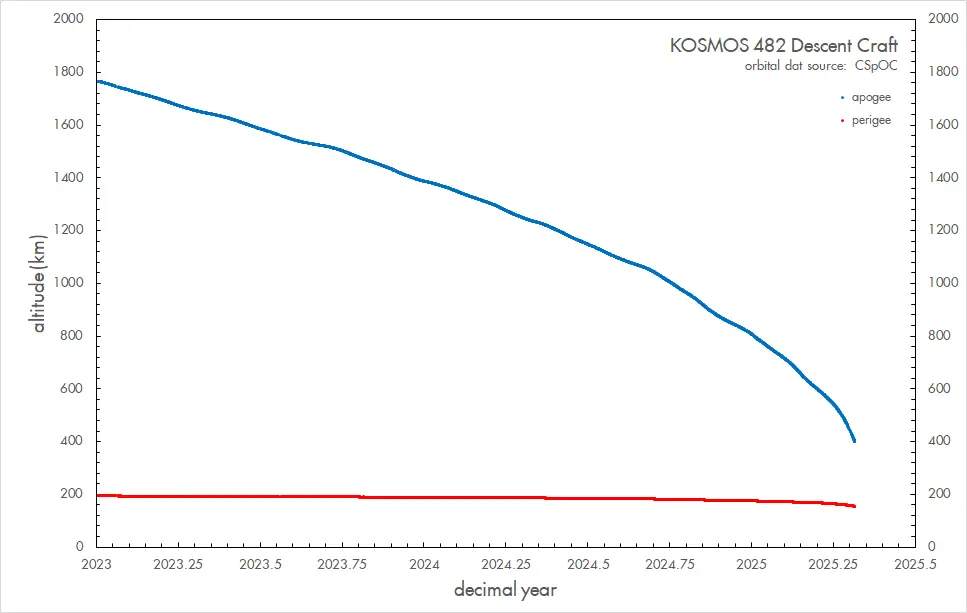
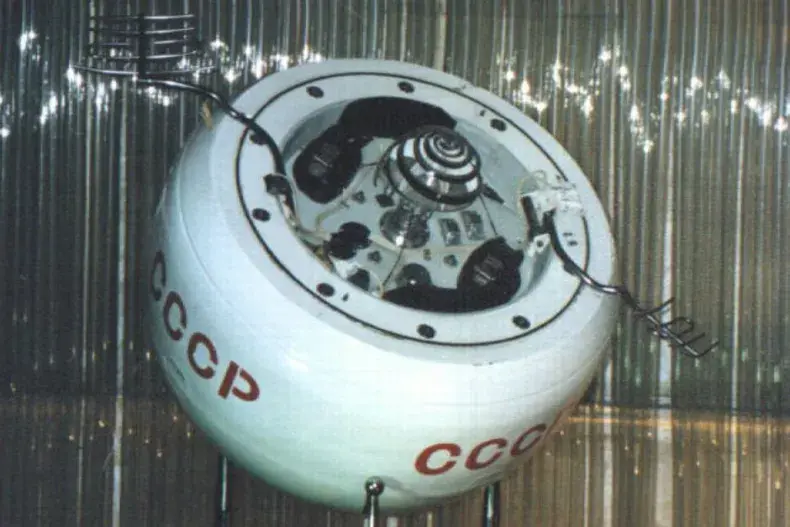
Launched on 31 March 1972, Kosmos 482 was meant to reach Venus but failed to gain enough velocity due to a booster malfunction. This left the 495-kg descent module in a decaying elliptical orbit around Earth, where it has remained ever since.
3 / 14
Dutch satellite tracker Marco Langbroek notes that because the lander was built to withstand the intense pressures and heat of Venus’s atmosphere, it might survive re-entry and reach the ground intact. He compares the risk to that of a meteorite impact — low but not zero.
4 / 14
Marco Langbroek, who lectures at Delft Technical University, has been monitoring the object closely. He stated on X (formerly Twitter) that it will likely re-enter in an unusual, shallow trajectory, making predictions difficult. This could allow parts of the probe to survive the descent.
5 / 14
With an orbital inclination of 51.7 degrees, Kosmos 482 could land anywhere between 52 degree north and 52 degree south latitude. While most spacecraft debris tends to fall into oceans, there remains a chance of impact on land.
6 / 14
The Kosmos 482 probe originally split into two after its failed launch. The main body re-entered Earth’s atmosphere on 5 May 1981, while the descent module continued to orbit for over 50 years, gradually losing altitude.
7 / 14
Kosmos 482 was a sister probe to Venera 8, which successfully landed on Venus and transmitted data for 50 minutes before succumbing to the planet’s extreme conditions. Kosmos 482 never reached its target, but now prepares for its final descent back to Earth.
8 / 14
A Soviet spacecraft launched more than five decades ago is set for an uncontrolled re-entry into Earth’s atmosphere and the scariest part is that might fall anywhere on earth. The lander will enter the Earth's atmosphere around May 10, but it could also be a few days earlier or later. The Kosmos 482 Descent Craft, originally part of the USSR’s Venera programme to study Venus, is expected to crash around 10 May, give or take a few days.
9 / 14
Launched on 31 March 1972, Kosmos 482 was meant to reach Venus but failed to gain enough velocity due to a booster malfunction. This left the 495-kg descent module in a decaying elliptical orbit around Earth, where it has remained ever since.
10 / 14
Dutch satellite tracker Marco Langbroek notes that because the lander was built to withstand the intense pressures and heat of Venus’s atmosphere, it might survive re-entry and reach the ground intact. He compares the risk to that of a meteorite impact — low but not zero.
11 / 14
Marco Langbroek, who lectures at Delft Technical University, has been monitoring the object closely. He stated on X (formerly Twitter) that it will likely re-enter in an unusual, shallow trajectory, making predictions difficult. This could allow parts of the probe to survive the descent.
12 / 14
With an orbital inclination of 51.7 degrees, Kosmos 482 could land anywhere between 52 degree north and 52 degree south latitude. While most spacecraft debris tends to fall into oceans, there remains a chance of impact on land.
13 / 14
The Kosmos 482 probe originally split into two after its failed launch. The main body re-entered Earth’s atmosphere on 5 May 1981, while the descent module continued to orbit for over 50 years, gradually losing altitude.
14 / 14
Kosmos 482 was a sister probe to Venera 8, which successfully landed on Venus and transmitted data for 50 minutes before succumbing to the planet’s extreme conditions. Kosmos 482 never reached its target, but now prepares for its final descent back to Earth.
)
)
)
)
)