'Destroyer' ISIS terrorist al-Qurashi: Low-profile but brutal operator

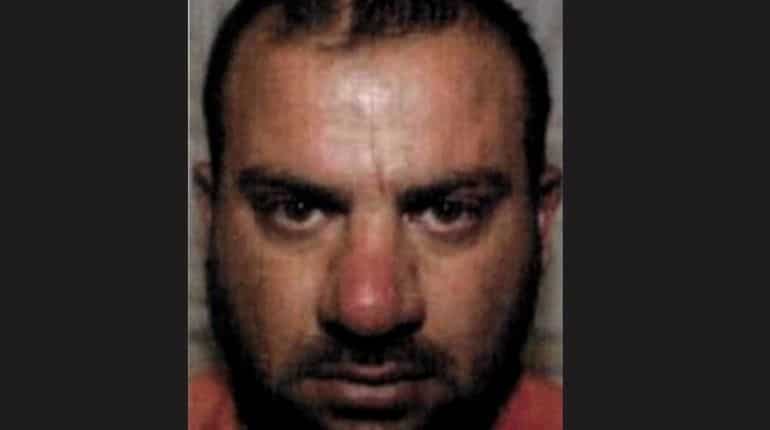
al-Qurashi nicknamed the 'Destroyer'
The head of Islamic State group, whom the US declared dead in a special-forces raid Thursday, was nicknamed the "Destroyer" and presided over massacres of Yazidis before assuming the leadership.
Abu Ibrahim al-Hashimi al-Qurashi, also known as Amir Mohammed Said Abd al-Rahman al-Mawla, took over the jihadist network two years ago after founder Abu Bakr al-Baghdadi blew himself up in a US special forces raid in October 2019.
Considered a low-profile but brutal operator, Qurashi had largely flown under the radar of Iraqi and US intelligence until that point.
He took over at a time when IS had been weakened by years of US-led assaults and the loss of its self-proclaimed "caliphate" in Syria and northern Iraq.
Served in Iraqi army under Saddam Hussein
The US State Department slapped a $10 million bounty on his head and placed him on its "Specially Designated Global Terrorist" list.
Born in the northern Iraq town of Tal Afar and thought to be in his mid-40s, his ascension in the ranks of the extremist group was rare for a non-Arab, born into a Turkmen family.
Serving in the Iraqi army under Saddam Hussein, the late dictator toppled by the US-led invasion of Iraq in 2003, Qurashi joined the ranks of Al-Qaeda after Hussein was captured by US troops in 2003, according to the Counter Extremism Project (CEP) think-tank.
In 2004, he was detained by US forces at the infamous Camp Bucca prison in southern Iraq, where Baghdadi and host of future Islamic State figures met.
Qurashi ordered liquidation of the Yazidi minority
After both men were freed, Qurashi remained at Baghdadi's side as he took the reins of the Iraqi branch of Al-Qaeda in 2010, then defected to create the Islamic State of Iraq (ISI), later the Islamic State of Iraq and Syria (ISIS).
In 2014, Qurashi helped Baghdadi take control of the northern city of Mosul, the CEP said.
The think-tank said Qurashi "quickly established himself among the insurgency's senior ranks and was nicknamed the 'Professor' and the 'Destroyer'.
He was well respected among IS members as a "brutal policymaker" and was responsible for "eliminating those who opposed Baghdadi's leadership", it said.
He is probably best known for playing "a major role in the jihadist campaign of liquidation of the Yazidi minority (of Iraq) through massacres, expulsion and sexual slavery," said Jean-Pierre Filiu, a jihadism analyst at the Sciences Po university in Paris.
Syrian hideout
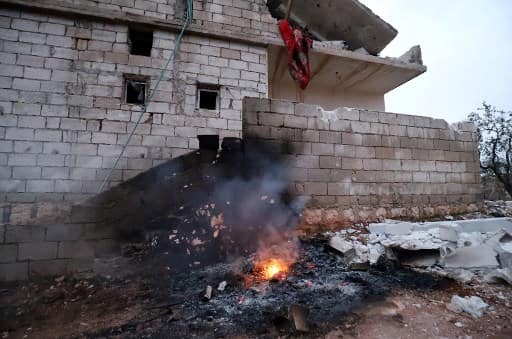
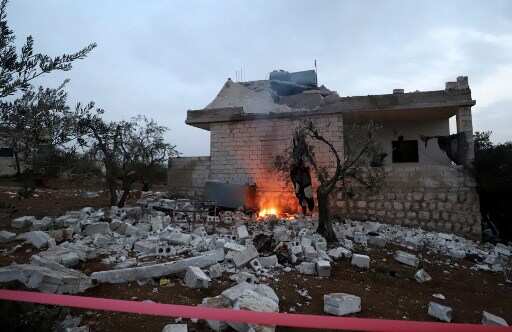
On Thursday, US President Joe Biden said that a global "terrorist threat" had been removed when Qurashi blew himself up after US special forces swooped on his Syrian hideout in an "incredibly challenging" night-time helicopter raid.
Hans-Jakob Schindler, a former UN official and director of CEP, called his death a "a major setback for ISIS" in terms of losing a second leader, but doubted it would be a game changer.
IS is thought to prepare for the killings of its leaders with plans for who will take over.
'A genuine operational chief'
Schindler said Quraishi "was not a very transformational leader" because IS had already started to shift from a group that controlled territory in Iraq and Syria to an international network of jihadist organisations under Baghdadi.
But Filiu argued that Qurashi's assassination could be "harder to overcome" than Baghdadi's.
He was "a genuine operational chief whose elimination risks preventing the resurgence of the jihadist group, at least temporarily."
Damien Ferre, director of the Jihad Analytics consultancy, said that Qurashi's legacy would be the reinforcement of the Afghan branch of IS, which has been increasingly active since the United States agreed in 2020 to withdraw its troops from the country.
Other researchers also see the rise of an IS branch around Lake Chad in west Africa as significant, with the group managing to draw fighters from the ranks of the Nigerian terror group Boko Haram.
"On the operational front during his time, Islamic State regained momentum in 2020 before seeing the quality and the quantity of its attacks fall last year," said Ferre.
Syrian merchant from Aleppo?
In a corner of Syria crammed with people uprooted by 11 years of civil war, the leader of Islamic State and his family hid in plain sight: they kept to themselves, neighbours did not pry into each other's past, the rent was paid on time.
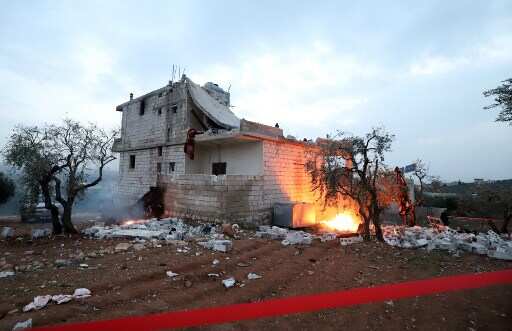
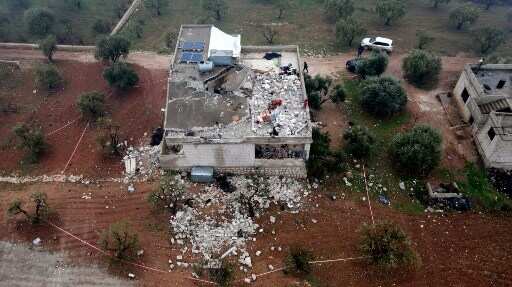
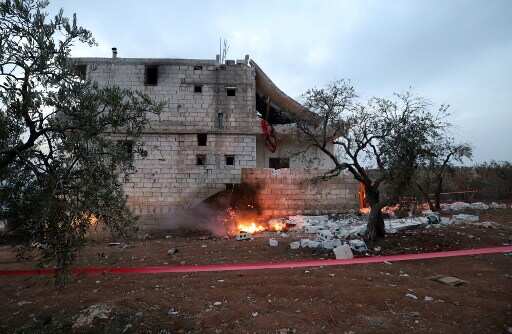
The status quo was shattered on February 3 night, when US special forces swept into the town of Atmeh in northwest Syria to raid his hideout.
Until that point, locals believed that Quraishi was a Syrian merchant from Aleppo who had brought his family to the relative safety of Atmeh near the Turkish border, far from the frontlines of the Syrian conflict.
al-Qurashi flourished under Abu Bakr al-Baghdadi
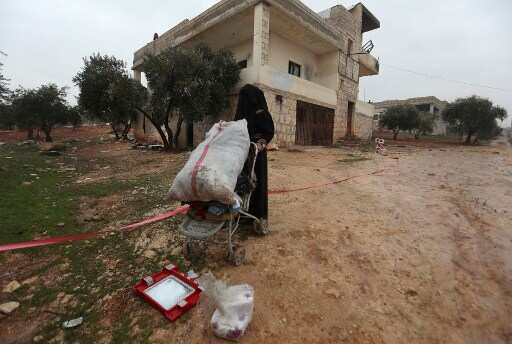
There was little to draw attention to the three-story building on the edge of town since Quraishi, an Iraqi, rented an apartment there a year ago, taking the first floor initially before expanding to rent the top one too.
While the family were not from Atmeh, this did not draw attention in an area where tens of thousands of people have fled from all over the country.
Quraishi took over the leadership of Islamic State following the death in 2019 of its founder Abu Bakr al-Baghdadi, who also died during a raid by U.S. commandos when he detonated explosives.
Baghdadi had also been hiding in northwest Syria, the last major bastion of rebels fighting President Bashar al-Assad. Baghdadi's hideout was some 25 km (15 miles) from Atmeh, also in Idlib province.
Quraishi used family as 'protective shield'
Despite the close proximity of hostile forces, this was a relatively good hiding place for Quraishi as he sought to revive the fortunes of Islamic State, which controlled a third of Iraq and Syria in 2014 before being beaten into retreat.
Syrians say it is easy for strangers to go unnoticed. Beyond the internally displaced, the area also hosts foreign Islamists who traveled to the country during the war either as fighters or civilian volunteers.
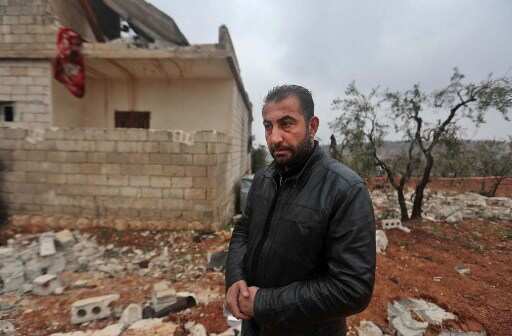
Neighbours said four children were rescued after the assault - a 12-year-old girl, boys aged 7 and 4 and an infant. It was not clear if they were related to Quraishi. The badly damaged apartments were strewn with children's toys, witnesses added.
The US official said Quraishi had been using the house and an unwitting family living on the first floor as a "protective shield," a factor that complicated planning for the raid.
)
)
)
)
)