Top deep‑sea regions with richest precious metal deposits

The ocean is home to some precious metals which have never been extracted. However, exploration for future purposes of deep-sea mining is on. Different zones in the seas across the world have varied metals. These are the undersea zones on Earth rich in precious metals.
“Battery in a rock" - Oceans contain precious metals that have not been commercially mined
The ocean is home to not just marine life, but also precious metals that can be utilised in various technological equipment. One of the regions carries rocks with rich deposits of nickel, manganese, copper, zinc, and cobalt. This led mining companies to call them a “battery in a rock.” Commercial deep-sea mining has not yet started, and exploration activities are happening. Which places on Earth have the richest deep-sea metal deposits?
Three types of deep-sea metal deposits lie under the sea
Firstly, deep-sea metals are present in three main types of deposits and are found in specific locations. These deposits are polymetallic nodules, cobalt-rich crusts, and seafloor massive sulfides. They are spread in different places under the sea.
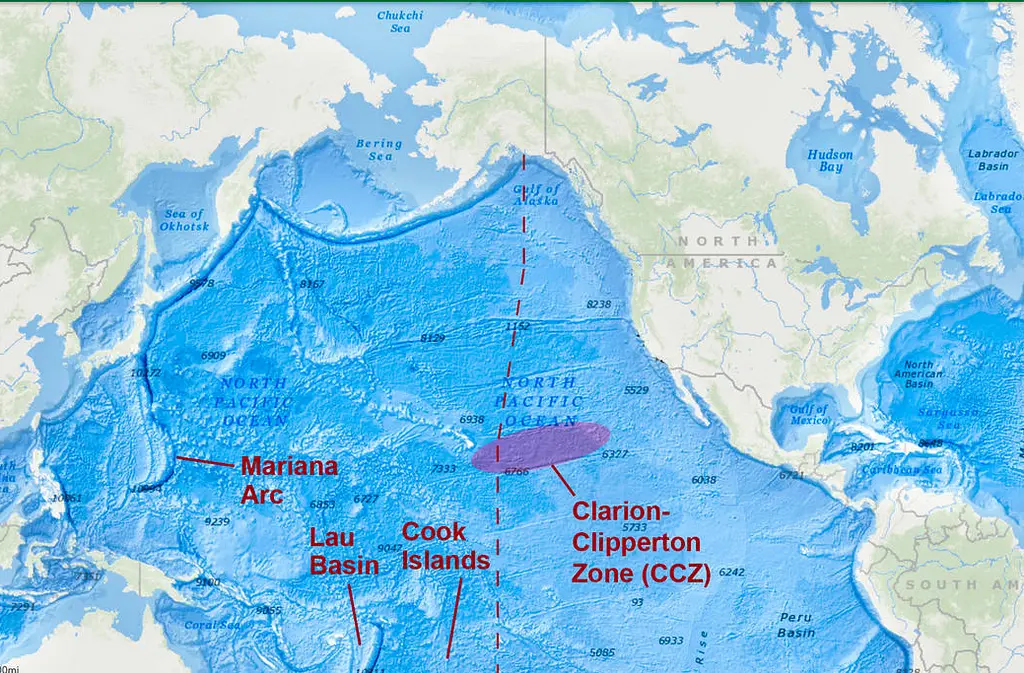
Clarion-Clipperton Zone (CCZ) in the Pacific
The Clarion-Clipperton Zone (CCZ) is the most famous undersea area for polymetallic nodules. Located in the Pacific Ocean, it sits between Hawaii and Mexico. The rocks here are filled with precious metals, such as nickel, manganese, copper, zinc, and cobalt, that can help power green energy. It is estimated to contain 21 billion tons of polymetallic nodules, focusing most exploration activities to this zone.
Penrhyn Basin located within the EEZ of the Cook Islands in the South Pacific
Polymetallic nodule fields are also located in the Penrhyn Basin, located within the Exclusive Economic Zone (EEZ) of the Cook Islands in the South Pacific; the Central Indian Ocean Basin (CIOB) and the Peru Basin. Notably, the International Seabed Authority (ISA) has granted authority to India to explore a 75,000 sq. km site in the CIOB
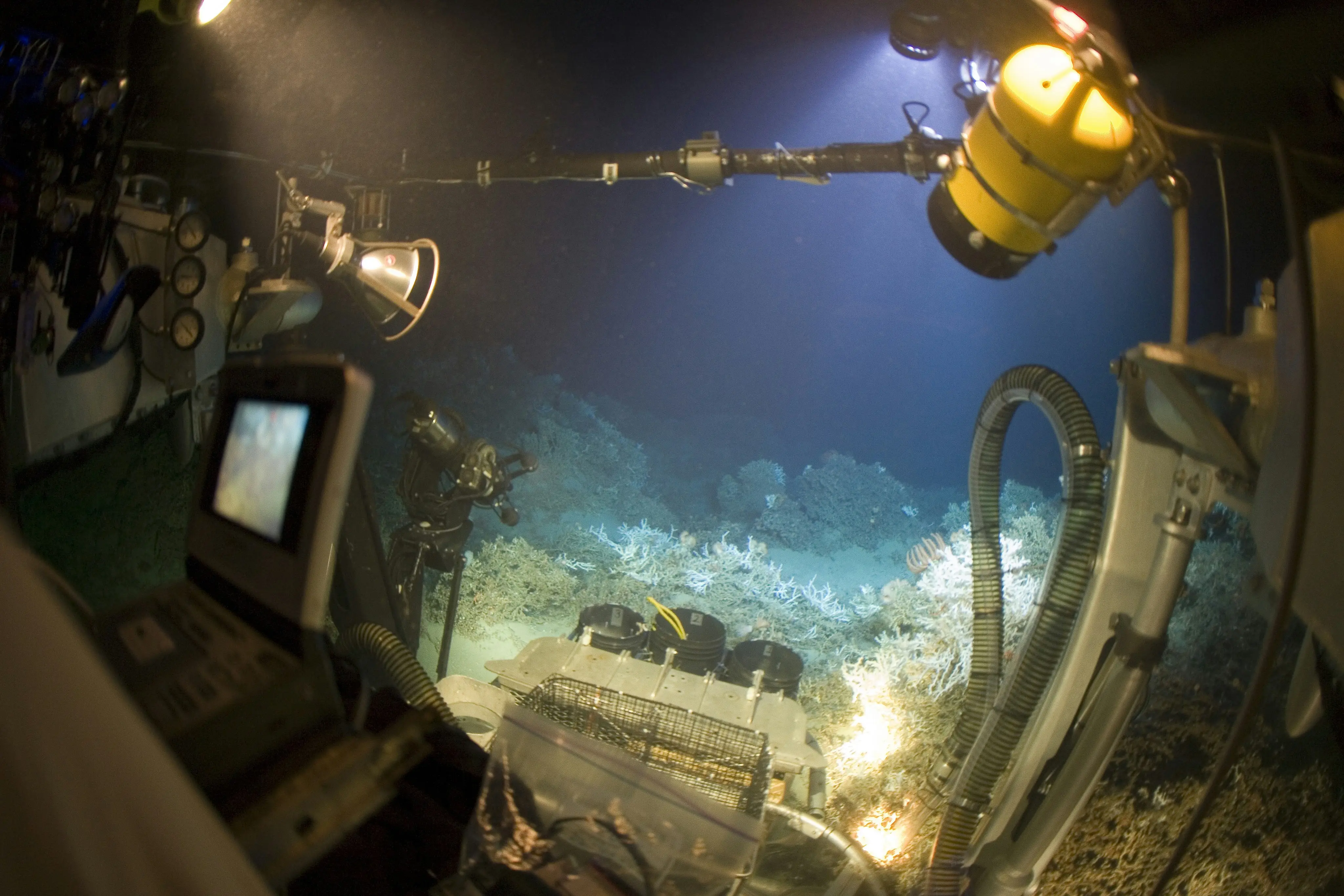
Cobalt-rich crusts in the ocean
The second kind of deposits are the cobalt-rich crusts, comprising iron and manganese oxides on underwater mountains at depths of 800–2,500 meters. These deposits have cobalt and tellurium in large proportions, along with nickel, platinum, and rare earth elements.
Prime Crust Zone (PCZ), Micronesia and Kiribati
The Prime Crust Zone (PCZ) in the western Pacific Ocean has the thickest deposits of cobalt-rich crusts. Other deposits are located in the waters of island nations, such as the Federated States of Micronesia and Kiribati, and the Hawaiian Islands in the US EEZ. Undersea mountains in the Atlantic and Indian Oceans also have cobalt-rich crusts.
Seafloor massive sulfides near hydrothermal vents
The third kind of deposits is seafloor massive sulfides (SMS). They are mostly found near hydrothermal vents in tectonically active areas, at depths of 1,000–4,000 meters. These deep-sea zones house copper, zinc, gold, and silver.
Tongan and Fijian Exclusive Economic Zones have high-grade gold and silver deposits
Manus Basin in the Bismarck Sea near Papua New Guinea has the largest deposits of seafloor massive sulfides. Vent systems in the mid-Atlantic ridge, Tongan and Fijian Exclusive Economic Zones, and the Norwegian Continental Shelf are the other sources of these sulfides. Notably, the Tongan and Fijian have high-grade gold and silver deposits.
)
)
)
)
)