China's Tianwen-1 probe sends dazzling high resolution Mars pics

Tianwen-1 probe
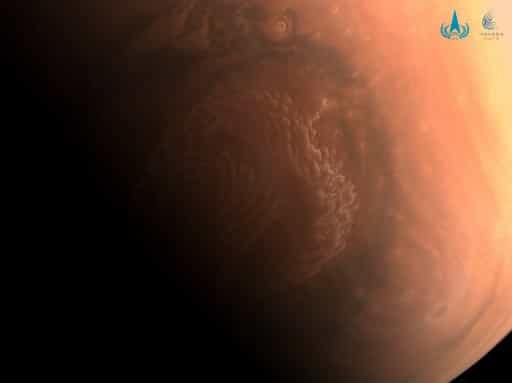
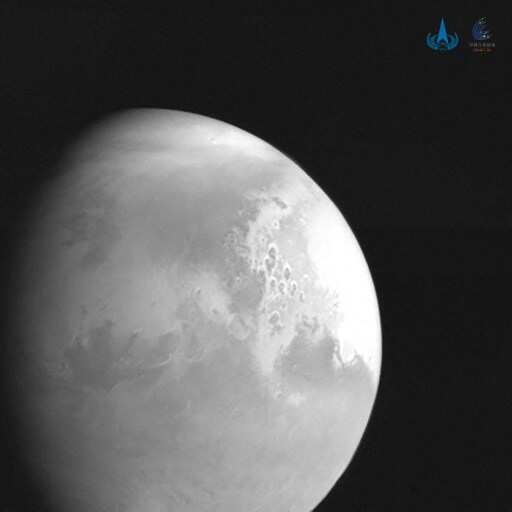
China's national space agency on Thursday published high-resolution images of Mars captured by the country's Tianwen-1 probe, which is currently orbiting the Red planet.
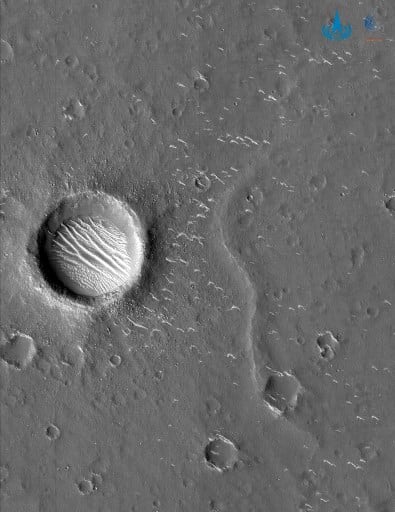
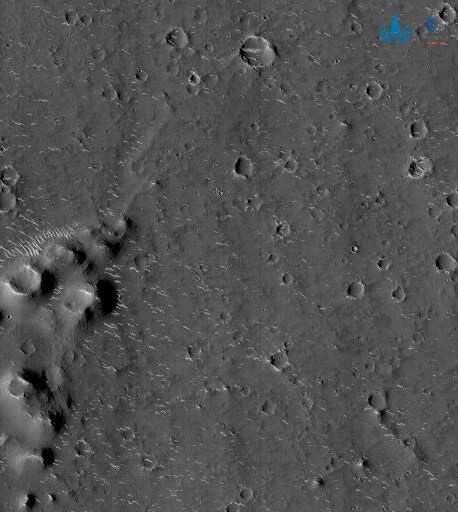
These images include two panchromatic view and one colour image, said the China National Space Administration (CNSA).
Mars craters, mountain ridges and dunes visible
The panchromatic images were taken by the high-resolution camera of China's spacecraft, Tianwen-1 meaning Questions to Heaven, at a distance of 330 to 350 km above the surface of Mars.
In the images, Martian landforms such as small craters, mountain ridges and dunes are clearly visible. It is estimated that the diameter of the largest impact crater in the images is around 620 meters, state-run Xinhua news agency reported quoting CNSA statement.
Tianwen-1 has flown for 224 days
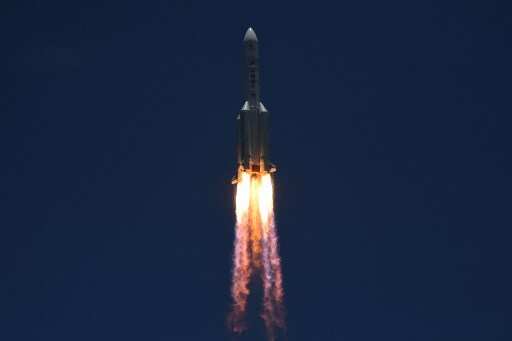
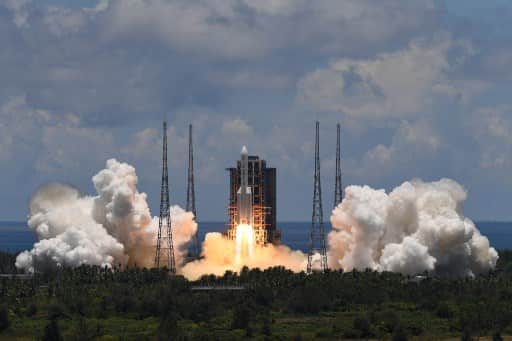
China launched Tianwen-1 on July 23, 2020. The spacecraft, consisting of an orbiter, a lander and a rover, entered the parking orbit around Mars on February 24.
It has flown for 224 days and about 475 million kms. Currently, it is about 212 million km away from Earth, according to CNSA.
It entered its pre-set parking orbit above Mars on February 24 and would fly in this orbit for about three months before releasing its landing capsule.
Mars' Utopia Planitia
The Tianwen 1 mission's ultimate goal is to land a rover in May or June on the southern part of Mars' Utopia Planitia, a large plain within Utopia, the largest recognised impact basin in the solar system to conduct scientific surveys, state-run China Daily reported.
Weighing about 240 kilograms, the rover, which is yet to be named, has six wheels and four solar panels and is able to move 200 meters per hour on Mars.
It carries six scientific instruments including multispectral camera, ground-penetrating radar and meteorological measurer, and is expected to work about three months on the planet.
UAE, US and China in Mars race
Spacecraft of UAE, US and China have recently entered the Mars orbit. NASA's Perseverance rover landed on Mars on February 18 after almost seven months travelling from Earth.
Since then, it has sent back some striking images from around its landing site, Jezero Crater.
The UAE orbiter named Hope will study the Martian atmosphere and climate.
China releases video footage
Previously US, Russia, EU besides India have succeeded in sending spacecraft to Mars regarded as the most complex space mission. India became the first Asian country to have successfully launched its Mars orbiter mission Mangalyaan which entered the orbit of the red planet in 2014.
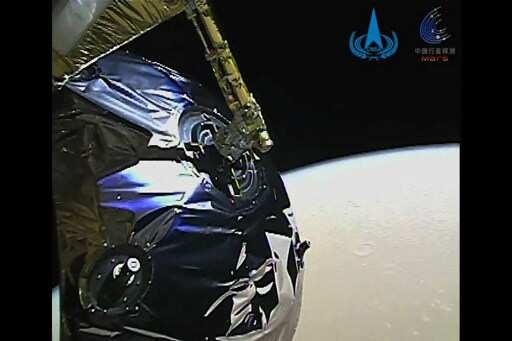
India also became the first country to have entered the Martian orbit in its first attempt. China's space agency had earlier released video footage from its spacecraft circling Mars, two days after it successfully entered the planet's orbit in Beijing's latest ambitious space mission.
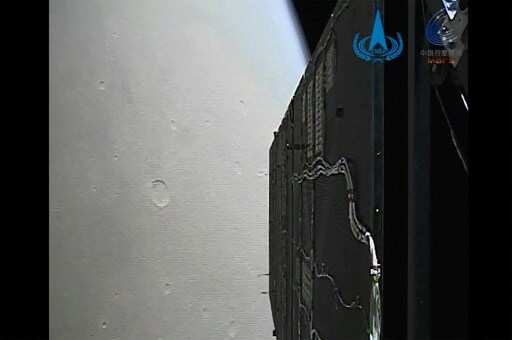
In the video, published by state broadcaster CCTV, the surface of the planet is seen coming into view out of a pitch black sky against the outside of the Tianwen-1, which entered the orbit of the Red Planet on Wednesday.
Questions to Heaven
White craters are visible on the planet's surface, which fades from white to black through the video as the probe flies over the course of one Martian day, said official news agency Xinhua.
The five-ton Tianwen-1 -- which translates as "Questions to Heaven" -- includes a Mars orbiter, a lander and a solar-powered rover and launched from southern China last July.
China's mission
Billions of dollars have been poured into space exploration as China seeks to assert its rising global stature and growing technological might.
China has come a long way in its race to catch up with the United States and Russia, whose astronauts and cosmonauts have had decades of experience in space exploration.
Beijing has already sent two rovers to the Moon -- including the first to make a successful soft landing on its far side.
)
)
)
)
)