China stopped tracking 3I/ATLAS after its Mars flyby but why?

After initial enthusiasm from its deep-space tracking network, China’s astronomical silence on 3I/ATLAS after the object’s Mars encounter has raised questions, was it a technical limit, a policy shift, or deliberate restraint?

1. The Early Momentum: China’s Rapid Detection Network
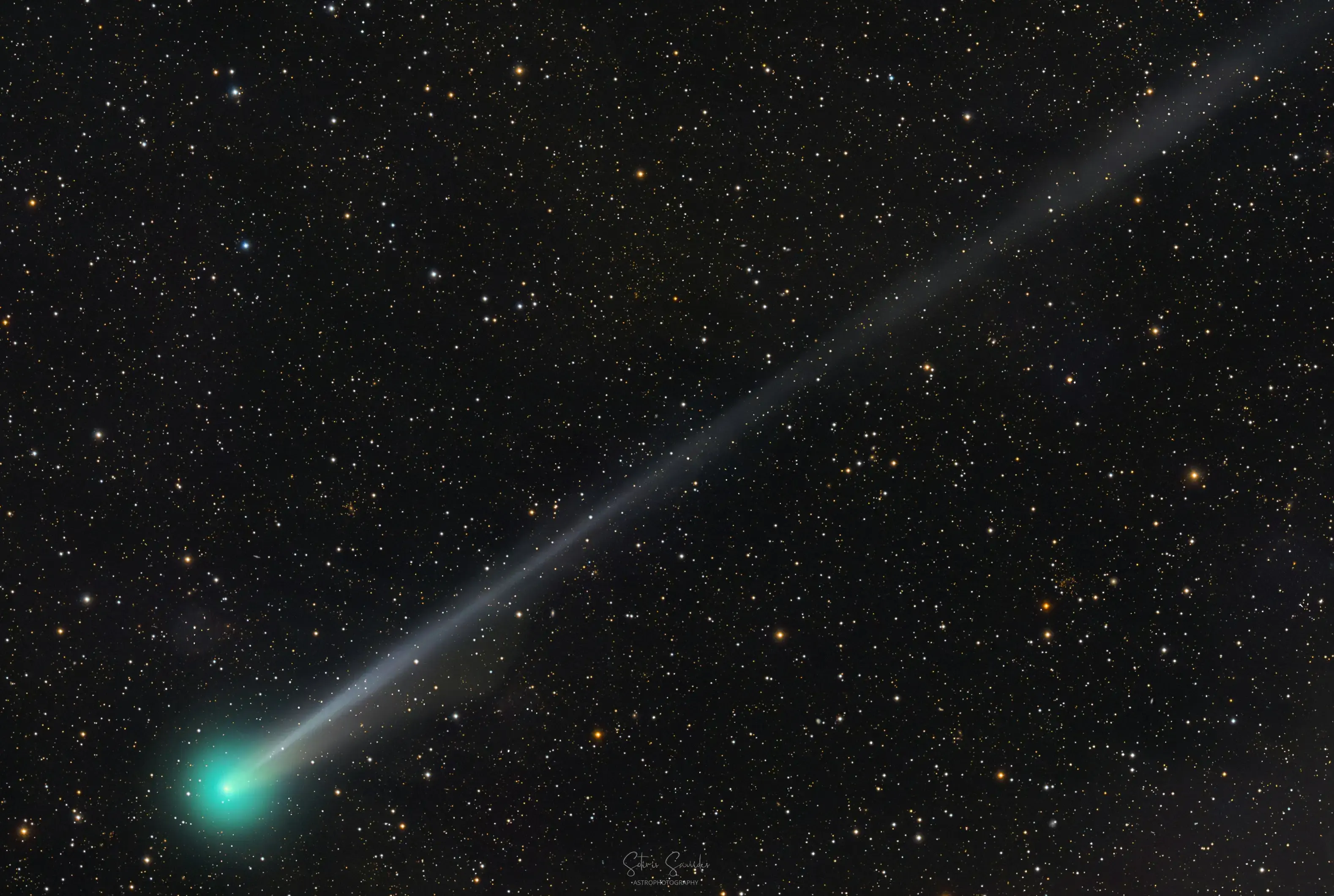
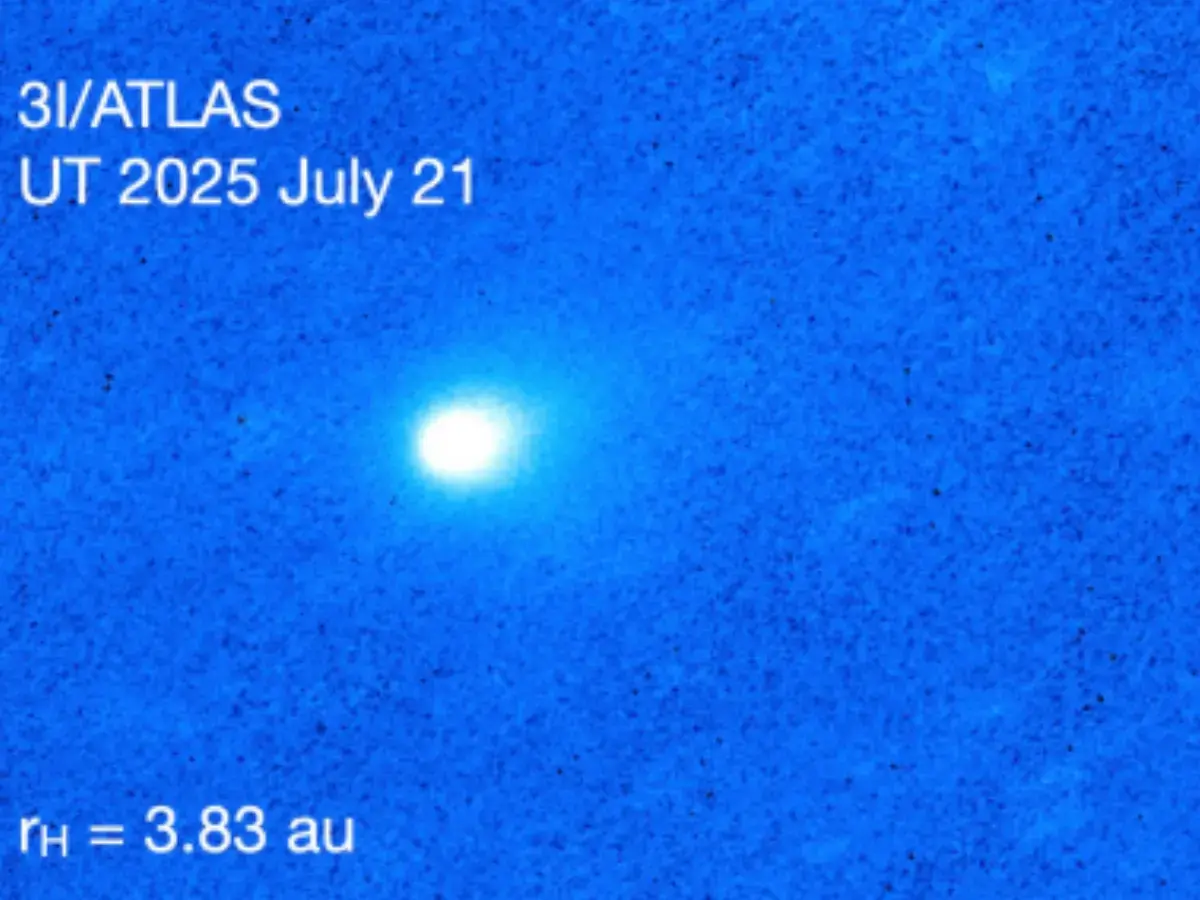
In late August, when 3I/ATLAS was still inbound toward Mars, China’s Purple Mountain Observatory (PMO) and CNSA’s Deep Space Network (CDSN) were among the earliest to release trajectory models in local academic channels. They confirmed the object’s interstellar origin using optical and radar signatures, cross-verified with Japan’s Subaru Telescope and India’s ARIES observatory.
2. The Mars Flyby Window and the Data Gap
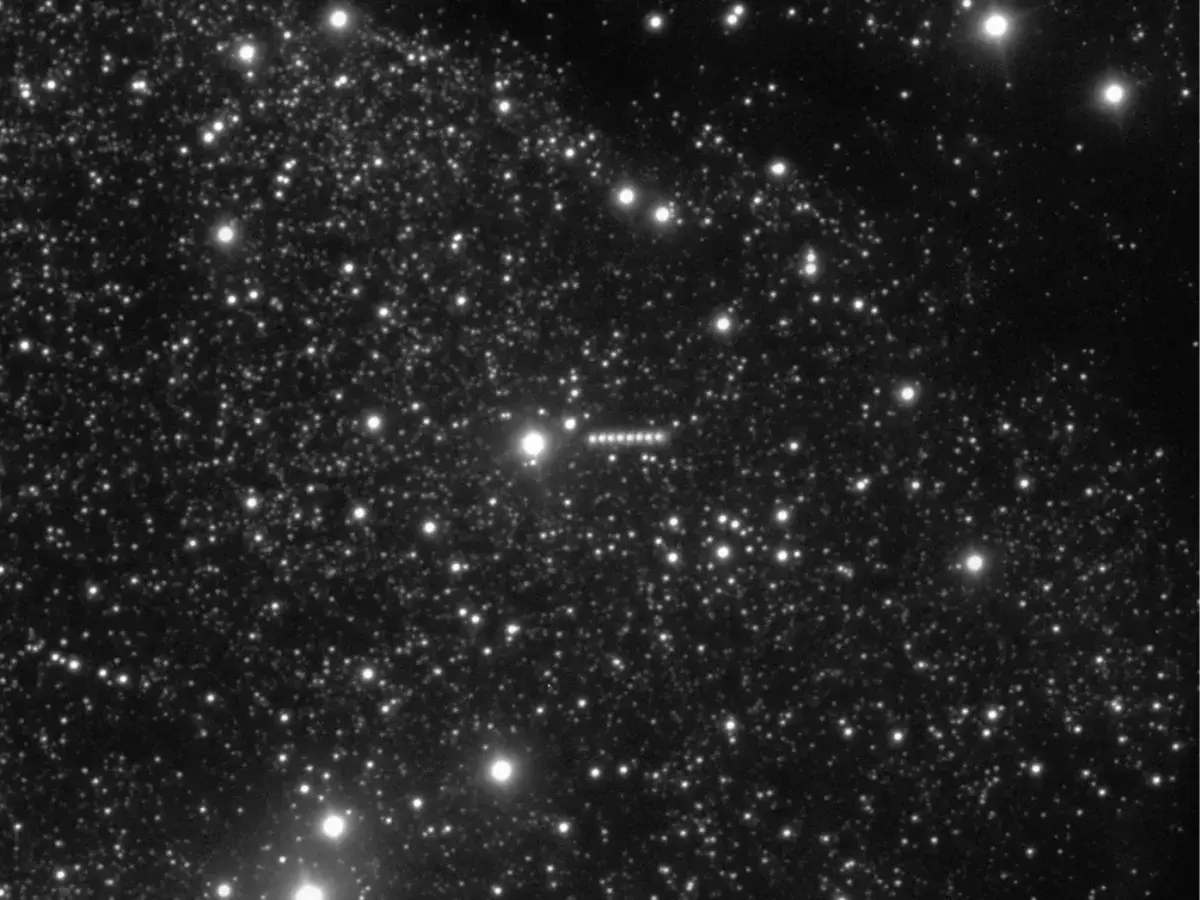
Around the object’s closest Mars approach, expected in early September, the last Chinese public dataset came from the Xinjiang 35-metre radio dish, showing a signal strength drop just before the object moved behind the Sun relative to Earth. After that, no further observations were logged on China’s National Astronomical Data Centre (NADC) portal, marking a sudden data gap that puzzled global trackers.
3. Official Reason: Prioritising Lunar and Spacecraft Missions
When journalists reached out to Chinese space officials, the CNSA spokesperson cited “instrument scheduling conflicts” with the Chang’e-7 lunar mission preparations and Queqiao-2 relay calibration as reasons for temporary suspension of interstellar object monitoring. This explanation aligns with published telescope logs, which show redirected observation time toward lunar and Earth-orbit projects.
4. Loeb’s Take: “When Data Disappears, So Does Certainty”
On the Joe Rogan Experience, Harvard physicist Avi Loeb addressed the gaps in data sharing globally, saying:
“Every lost observation narrows our window to understand what 3I/ATLAS really is. Once it passes behind the Sun, we might never see it again.”
Loeb added that China’s early tracking was crucial, but “the global scientific community needs to maintain transparency even amid political or mission priorities.”

5. The Speculative Angle: Data Classification
Several Chinese researchers, speaking anonymously in domestic forums, suggested that data from deep-space objects is now classified when signals overlap with defence frequencies or are deemed “strategically sensitive.” The Xi’an Satellite Control Center, which handles both civilian and military tracking, may have re-routed 3I/ATLAS data internally, a pattern observed previously during asteroid 2022WJ1’s atmospheric entry.

6. The Role of International Cooperation
Following China’s silence, European and Indian observatories, particularly Gaia, ESO, and IIA Bengaluru, stepped in to maintain optical coverage. Despite differences in data release policies, coordination through the Minor Planet Center allowed continuity of trajectory modelling.

7. The Larger Implication: A New Era of Cautious Astronomy
3I/ATLAS has inadvertently revealed how space observation now sits at the intersection of science, strategy, and sovereignty. As nations compete for first contact and discovery credit, transparency often takes a back seat. Whether China’s silence was logistical or political, the moment underscores a shared truth: interstellar phenomena now exist within geopolitical shadows as much as cosmic light.
)
)
)
)
)