Can it jam Iran’s S-300 air defence? This is the most advanced jammer in the US military

The US Navy has fielded the AN/ALQ-249 Next Generation Jammer to counter advanced air defences like Iran’s S-300. Mounted on EA-18G Growlers, this digital powerhouse uses AESA tech to blind multiple enemy radars instantly from safe ranges.

The new beast
The US Navy has introduced the AN/ALQ-249 Next Generation Jammer Mid-Band (NGJ-MB), a significant leap in electronic warfare. Developed by Raytheon, this system replaces the decades-old ALQ-99 pods used since the Vietnam War era. It achieved initial operational capability in early 2025 and is now deployed with fleet squadrons. This pod is not just an upgrade; it is a complete revolution in how the US disrupts enemy signals.
The formidable platform
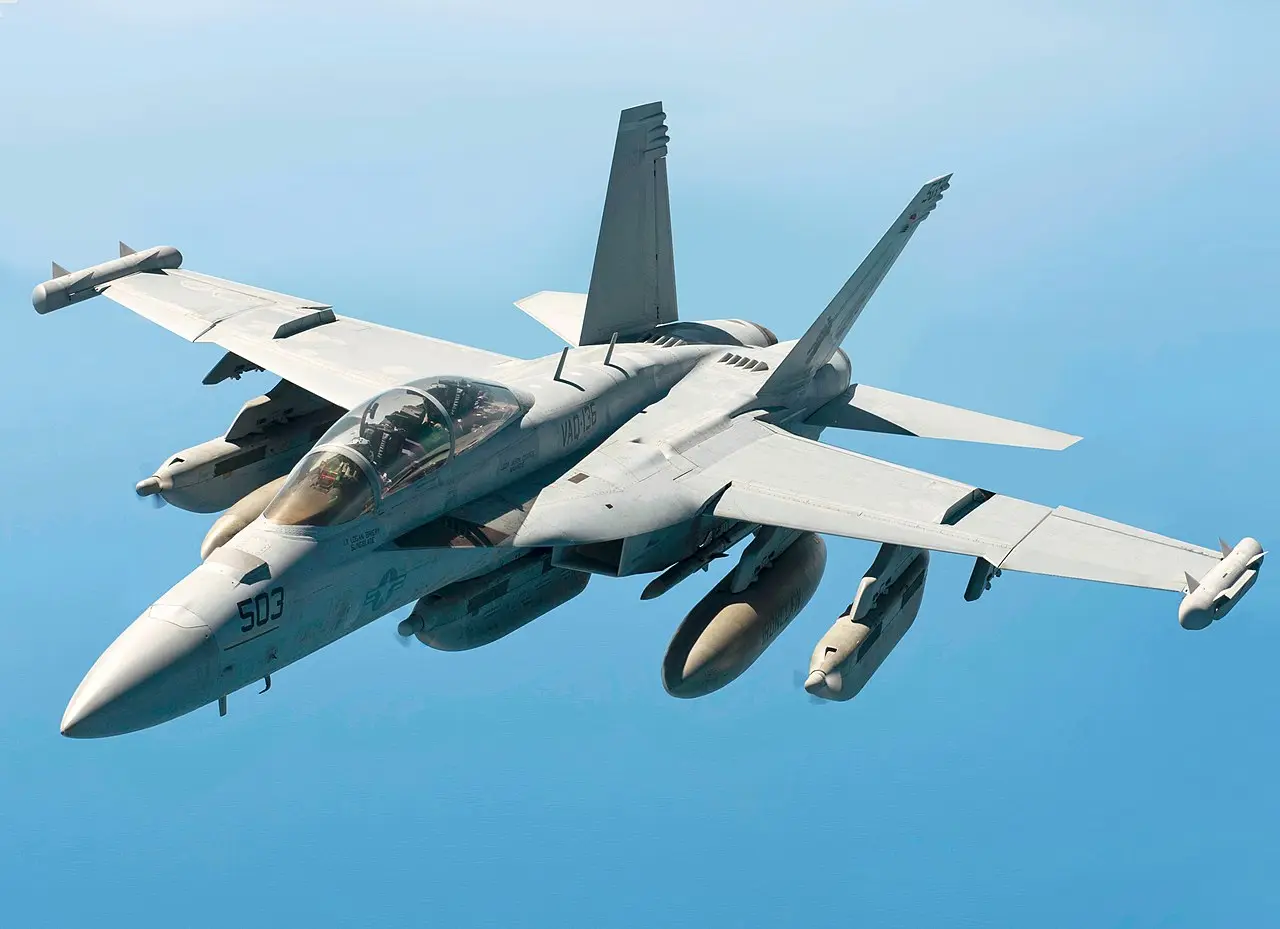
This advanced jammer is carried by the EA-18G Growler, the world’s most capable electronic attack aircraft. The Growler carries two of these heavy pods under its wings to dominate the electromagnetic spectrum. While the jet itself is based on the Super Hornet, its mission is non-kinetic, meaning it fights with electrons rather than explosives. It protects strike aircraft by rendering enemy radars useless before they can fire.

The S-300 target
Iran operates the Russian-made S-300PMU2 ‘Favorit’, a potent long-range air defence system. Its effectiveness relies heavily on the 30N6E2 ‘Tomb Stone’ fire control radar, which tracks targets and guides missiles. These radars operate in specific frequency bands that older jammers struggled to suppress effectively. If the radar cannot see the aircraft due to noise or false targets, the deadly missiles cannot be launched.

Why mid-band matters
The 'Mid-Band' designation is critical because the S-300 relies on long-range surveillance radars (like the 'Big Bird') to find targets before it can shoot. These search radars operate in the mid-band frequencies (2-6 GHz). The AN/ALQ-249 is specifically tuned to dominate this range. By blinding the search radar first, it breaks the "kill chain" at the start - if the S-300 cannot find the jets in the wide sky, it cannot tell its fire-control radar where to aim.

The AESA advantage
Unlike the old mechanical jammers that had to physically turn antennas, the NGJ-MB uses Active Electronically Scanned Array (AESA) technology. This allows it to switch targets instantly with zero mechanical lag. It can jam a radar in front of the aircraft and another to the side simultaneously. This agility is essential against modern digital radars that hop frequencies rapidly to avoid jamming.

Incredible stand-off range
One of the biggest advantages of the AN/ALQ-249 is its massive power output and range. It allows the EA-18G Growler to jam enemy defences from a much safer distance, known as ‘stand-off’ jamming. This keeps the American pilots and their valuable aircraft outside the lethal reach of the S-300’s missiles. Older systems often required pilots to fly dangerously close to the threat to be effective.

Handling multiple threats
Modern battlefields are crowded with dozens of radars and communication nodes. The NGJ-MB can attack multiple targets at once, blinding several surface-to-air missile batteries simultaneously. Its digital software handles the complex task of modulating beams for different enemy systems in real-time. This capability is vital when facing an integrated air defence network like Iran’s, which links multiple batteries together.

Digital software brain
The system is software-defined, making it essentially a flying computer that can be updated like a smartphone. If Iran or Russia changes their radar codes or tactics, US engineers can upload a new ‘jamming profile’ quickly. This open architecture ensures the pod stays relevant against threats that have not even been invented yet. It removes the need for costly hardware replacements every few years.

Already combat ready
The system has already seen deployment on US aircraft carriers, including the USS Abraham Lincoln with squadron VAQ-133. Operational reports suggest it provides a significant boost in disrupting ground communication and air defence systems. Its arrival signals that the US Navy is moving away from legacy tech to a fully digital fighting force. Real-world testing has validated its power against modern emitters.

The final verdict
Can it jam the S-300? Experts believe the AN/ALQ-249 is specifically designed to defeat systems exactly like the S-300PMU2. While the S-300 is a formidable adversary with anti-jamming modes, the sheer power and digital agility of the NGJ-MB give the US a distinct upper hand. It turns the S-300’s sophisticated radar screens into a wall of digital noise, rendering the battery blind.
)

)
)
)