Can clouds hide an aircraft from the S-400?

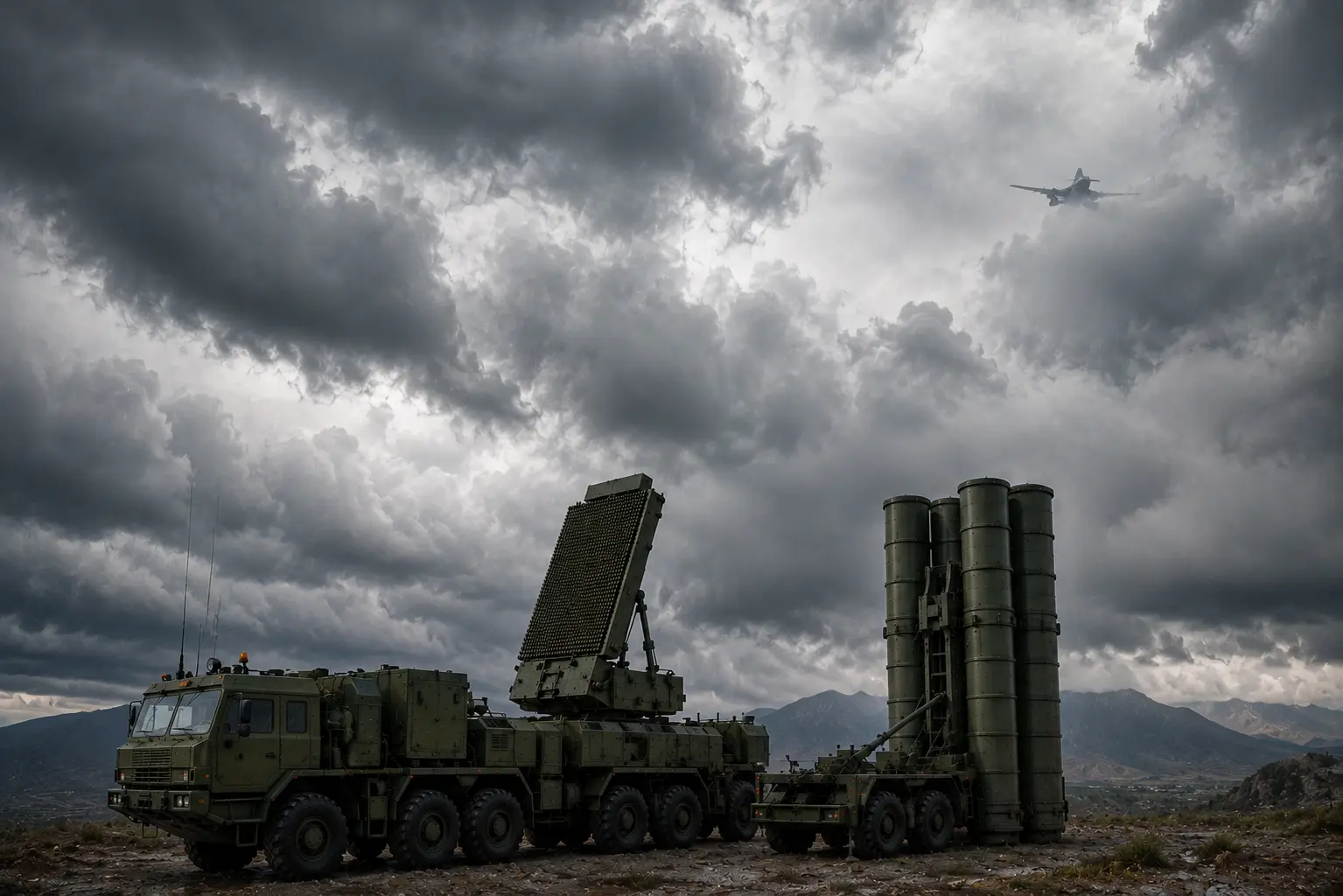
Thick clouds cannot hide an aircraft from the S-400. By simultaneously broadcasting L-band, S-band, and X-band electromagnetic waves, the system's massive radars easily punch through dense weather to maintain a solid lock on enemy targets.

The Cloud Cover Myth
Many believe that hiding inside thick clouds can protect an aircraft from surface-to-air missiles. However, while clouds successfully block human vision and optical sensors, they are completely transparent to modern military-grade radar frequencies.

The L-Band Advantage
The S-400's primary surveillance relies on the 91N6E ‘Big Bird’ panoramic radar, which operates in the L-band. These long-wavelength radio waves easily punch through heavy cloud cover and atmospheric moisture without losing their scanning energy.

S-Band Penetration
To detect low-flying threats in difficult environments, the system deploys the 96L6E all-altitude radar. Operating in the S-band, this sensor perfectly balances high-resolution tracking with excellent weather penetration, ensuring continuous monitoring through dense fog.

The X-Band Target Lock
Once a threat is identified, the 92N6E ‘Grave Stone’ engagement radar takes over using high-frequency X-band waves. While exceptionally heavy rain can cause minor signal attenuation, standard clouds offer zero protection against its 36-target locking capability.

Weather Filtering
Because water droplets can reflect some radar energy, thunderstorms often create digital interference on older radar screens. The S-400 overcomes this by using advanced phased-array technology and digital signal processing to instantly filter out weather clutter.

Radar Homing Missiles
Even after the interceptor missile is launched, cloud cover offers no sanctuary for the targeted aircraft. Interceptors like the 40N6 and 9M96E use active radar homing seekers, allowing them to independently track targets through zero-visibility weather at speeds up to Mach 14.
An Impenetrable Network
Ultimately, hiding from an S-400 inside a cloud is physically impossible. By simultaneously blasting the airspace with L-band, S-band, and X-band electromagnetic waves, the USD 1.25 billion system easily dominates the sky regardless of local weather conditions.
)
)
)
)
)