Budget 2026: Foreign travel gets cheaper! FM Nirmala Sitharaman cuts TCS on overseas tour packages

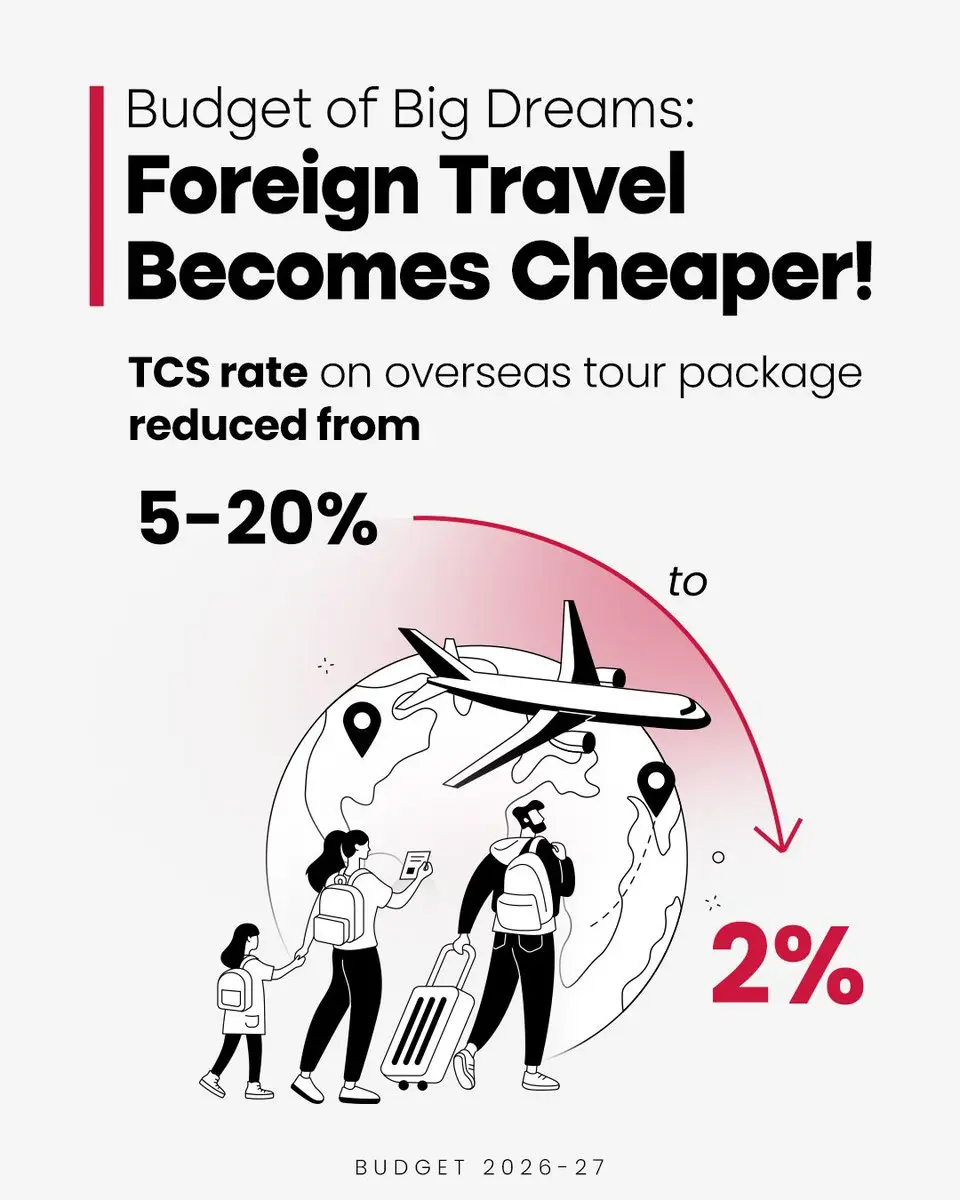
Until now, overseas tour packages attracted TCS ranging between 5 per cent and 20 per cent, depending on the amount spent under the Liberalised Remittance Scheme (LRS).
What happened?
Union Budget 2026 offers relief to international travellers as Finance Minister Nirmala Sitharaman reduced the Tax Collected at Source on overseas tour packages, offering long-awaited relief to travellers facing steep upfront costs for international trips. Additionally, while presenting the Budget in Parliament, Sitharaman said tourism can drive jobs and foreign exchange, announcing plans to strengthen the sector, including setting up a National Institute of Hospitality by upgrading the National Council for Hotel Management and Catering Technology.
What Has Changed Under Budget 2026
Until now, overseas tour packages attracted TCS ranging between 5 per cent and 20 per cent, depending on the amount spent under the Liberalised Remittance Scheme (LRS). Budget 2026 has brought this down to a uniform 2 per cent, with no minimum threshold, easing the cash flow burden on travellers.
Why TCS Matters for Overseas Travel
TCS is collected by tour operators at the time of purchase and later adjusted against the taxpayer’s final income tax liability. While refundable, the higher rates often increased upfront travel costs. The reduced rate means travellers now pay far less at the time of booking, making foreign holidays more accessible.
Impact on Tour Packages and Demand
Travel industry experts expect the cut to revive demand for international travel, particularly among middle-income families and first-time overseas travellers. Lower TCS is likely to encourage bookings for leisure travel, group tours, and family holidays that were previously deferred due to high initial costs.
Education and Medical Remittances Also Benefit
The Finance Minister also extended relief under the LRS for education and medical remittances, reducing TCS to 2 per cent in these categories. This move is expected to ease financial pressure on students studying abroad and families funding overseas medical treatment.
Tourism Push Beyond Tax Relief
The Finance Minister said, “The Tourism sector has the potential to play a large role in employment generation, forex earnings and expanding the local economy.” The Finance Minister also announced plans to develop ecologically sustainable mountain trails to strengthen adventure tourism. These trails will be created in Himachal Pradesh, Uttarakhand, and Jammu and Kashmir, as well as in Araku Valley in the Eastern Ghats and Podhigai Malai in the Western Ghats.
Archaeological sites to be converted
Sitharaman said the initiative aims to position India as a destination for world-class trekking and hiking experiences while preserving fragile ecosystems. In addition, the Budget outlined proposals to develop turtle trails along key nesting sites in Odisha, Karnataka, and Kerala. The government will also convert 15 archaeological sites into cultural tourism destinations, with excavated landscapes opened to visitors through curated walkways. These measures are intended to expand tourism offerings while promoting conservation and heritage awareness.
)
)
)
)
)