Why B-2 is almost silent on ground? Here is the engineering that makes a 153-tonne aircraft hard to hear

military aircraft are heard before they are seen. The B-2 Spirit inverts this. Witnesses at airshows and near Whiteman Air Force Base consistently describe the same experience: the aircraft appears in the sky, often before the sound catches up.
Why Aircraft Are Loud
Aircraft noise comes from two primary sources: engine noise, produced by the combustion process and the high-velocity exhaust stream exiting the aircraft, and aerodynamic noise, produced by air flowing over surfaces, through gaps, and around protrusions. Conventional aircraft are loud because their engines are exposed — the exhaust exits directly into the airstream at high velocity, and nothing stands between the turbine noise and a listener on the ground. The geometry of exposed engine nacelles also creates acoustic reflectors that amplify the noise in certain directions.
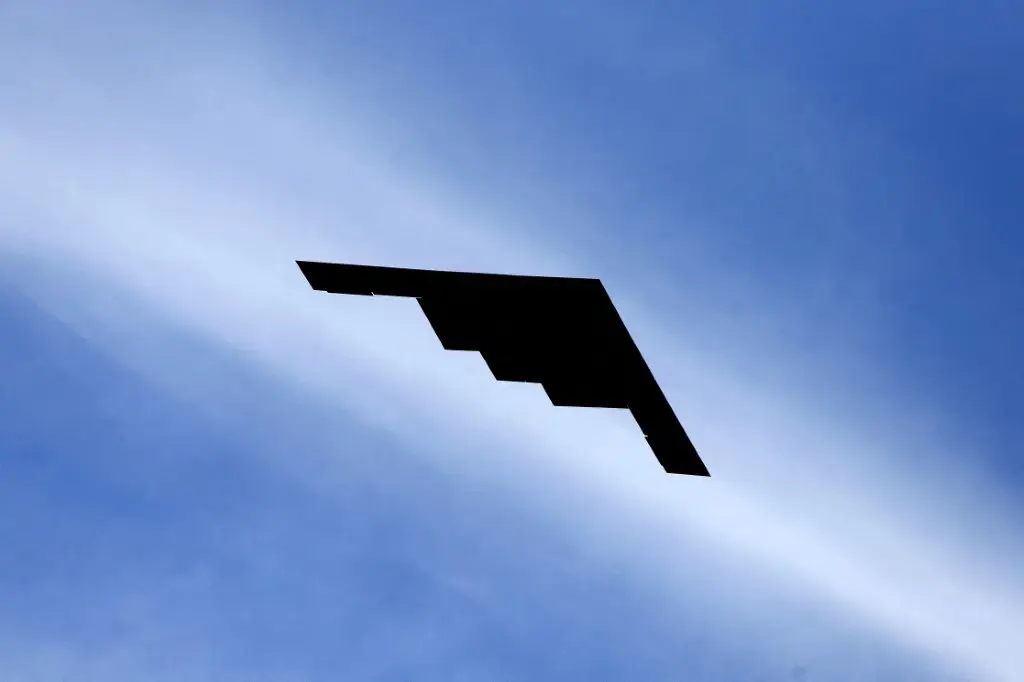
How The B-2 Hides Its Engines
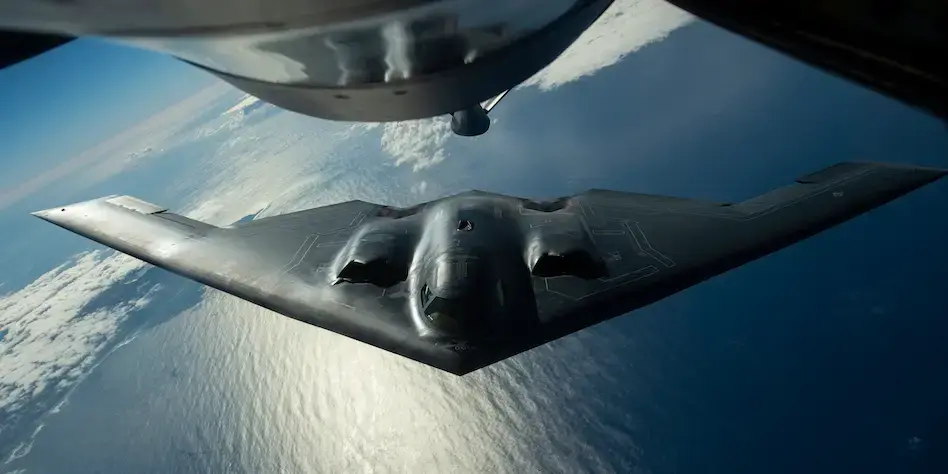
The B-2's four GE F118 engines are buried entirely within the wing structure. The air intakes are on the upper surface of the wing, lined with radar-absorbing material and designed to minimise radar reflection. The exhaust is routed through a carefully designed slot along the trailing edge of the aircraft — a low-profile exit that mixes the hot exhaust with cooler air before it leaves the aircraft. The exhaust slot design was developed for infrared signature reduction, but it also significantly reduces noise by slowing and mixing the exhaust stream before it exits.
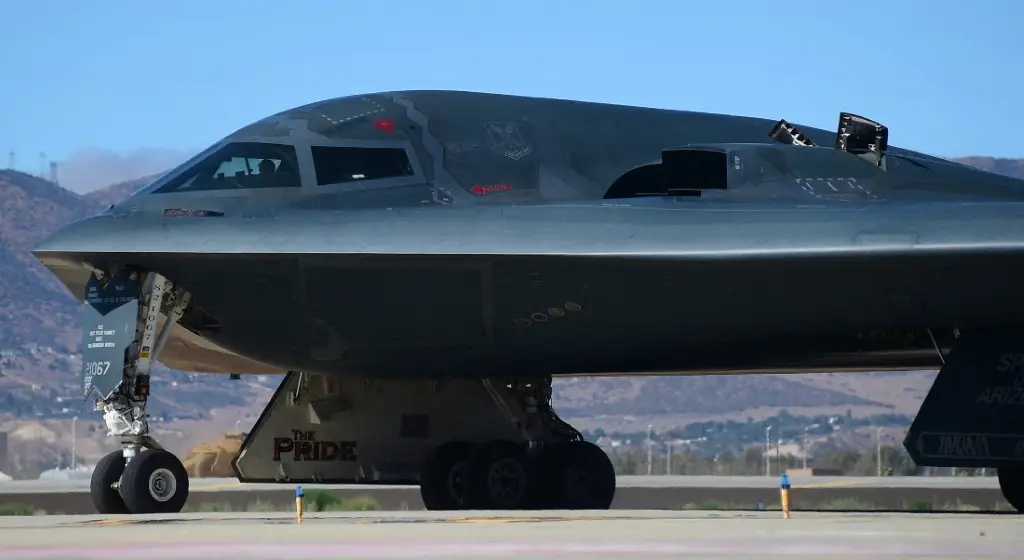
The Acoustic Effect Of The Wing
The B-2's flying-wing design creates a significant acoustic shielding effect. On a conventional aircraft, engine noise radiates in all directions — forward, sideways, and downward. On the B-2, the engines are on the upper surface, enclosed within the wing. The wing structure itself absorbs and blocks a significant portion of the noise that would otherwise propagate downward toward a ground observer. The result is that a listener directly below a B-2 in flight hears a fraction of the noise they would hear from a conventional aircraft with equivalent thrust.

What Witnesses Actually Describe
Accounts from airshow observers, Whiteman AFB neighbours, and military personnel who have observed B-2 operations describe a consistent pattern: the aircraft is heard as a diffuse, low rumble rather than the sharp, directional roar of conventional jet aircraft. The sound is difficult to localise — observers often cannot determine which direction the aircraft is coming from until it is already overhead. At altitude, the B-2 at cruise power is described by observers as roughly comparable in apparent loudness to a commercial airliner at a much higher altitude. The acoustic signature is understated relative to the aircraft's physical and performance characteristics.

The Infrared And Acoustic Connection
The exhaust slot design that reduces the B-2's acoustic signature was primarily developed to manage its infrared signature — the heat emitted by the exhaust that heat-seeking missiles track. By mixing hot exhaust gas with cooler air before it exits the aircraft, the design reduces the peak temperature of the exhaust plume, making the aircraft harder to detect with infrared sensors. This same mixing process — slowing and cooling the exhaust — also reduces the velocity of the exhaust stream, which is the primary driver of jet noise. The infrared solution and the acoustic solution are the same solution.
What Stealth Silence Means Operationally
Radar stealth prevents early warning systems from detecting the B-2 at long range. But radar systems do not operate in isolation. Air defence networks include human observers, acoustic detection systems, and visual lookouts — particularly in lower-technology environments. An aircraft that is also acoustically quiet reduces the probability of detection by these secondary means. In environments where sophisticated radar may not be available, acoustic detection can provide the only warning. The B-2's low acoustic signature extends its stealth beyond the electromagnetic domain into the acoustic domain — an additional layer that compounds the difficulty of early detection.
The Paradox Of A Quiet Giant
The B-2 is simultaneously one of the most powerful and one of the quietest military aircraft in existence. Its four F118 engines produce approximately 69,000 pounds of thrust combined — comparable to many large transport aircraft. Yet its acoustic signature at altitude is a fraction of what that thrust level would produce in a conventional design. The silence is not accidental. It is the result of the same engineering philosophy that shapes every aspect of the B-2: reduce every detectable signature, in every domain, by every means available. The B-2 is designed to be unfindable. That design goal applies to radar, infrared, acoustic, and visual domains alike.
)
)
)
)
)