Why B-2 bomber shows up on radar as a bird even being 172 feet wide?

The B-2 Spirit has a wingspan of 172 feet — wider than the fuselage of a Boeing 737 is long. It weighs up to 336,500 pounds fully loaded. It is one of the largest aircraft in the world. And yet on most radar systems, it produces a return roughly equivalent to a large seagull. The contrast between the B-2's physical reality and its electromagnetic reality is one of the most extraordinary engineering achievements of the 20th century — and almost nobody who writes about it actually describes what the aircraft looks like in person.

The Numbers Nobody Mentions
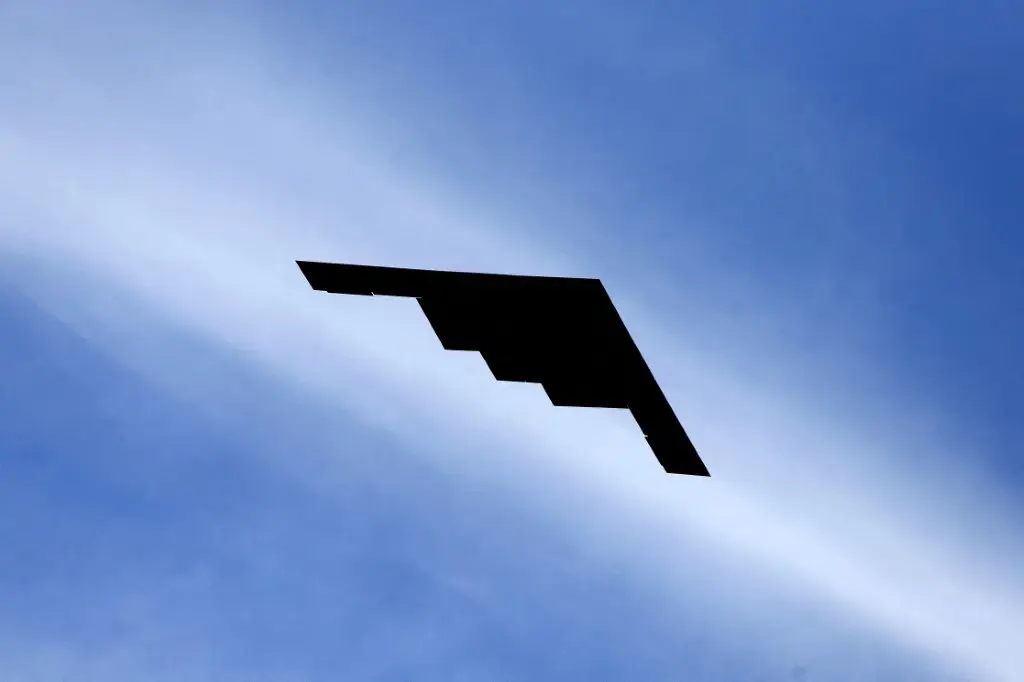
The B-2 Spirit's wingspan is 172 feet — 52.4 metres. For comparison, a Boeing 737-800 fuselage is 39 metres long. The B-2 is wider than that aircraft is long. Its length from nose to trailing edge is only 69 feet — its wingspan is more than twice its length, which is what gives the flying wing its distinctive flat, swept appearance. Its maximum takeoff weight is 336,500 pounds — roughly 153 metric tonnes. It is not a small aircraft that happens to be hard to see on radar. It is one of the largest military aircraft in the world that happens to be hard to see on radar.
What It Looks Like In Person
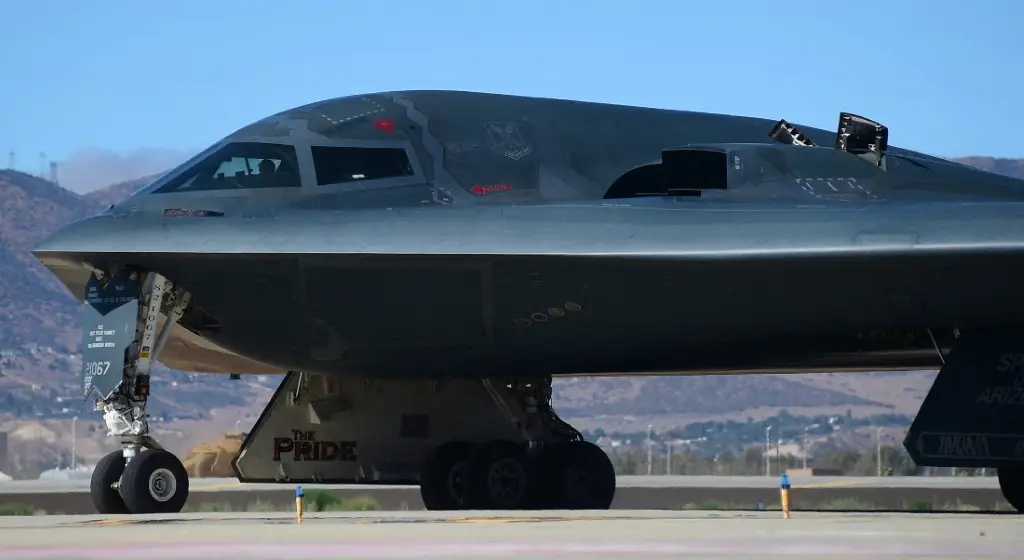
People who have stood near a B-2 on the ground describe a consistent reaction: surprise at its size. The photographs, the video footage, the airshow appearances — none of them fully convey what it is like to stand under the leading edge of a wing that extends 86 feet in either direction from a centreline you can barely see. The aircraft is flat and low to the ground, which means its wingspan fills the horizontal field of view in a way that a tall aircraft never does. Airshow crowds who see a B-2 flyover for the first time consistently report that it is significantly larger than they expected.
The Radar Cross-Section: What 172 Feet Looks Like To A Radar
The B-2's radar cross-section — the measure of how much radar energy it reflects back to a receiver — is classified, but has been described in declassified and open-source analyses as approximately 0.1 square metres. For reference: a large bird has a radar cross-section of approximately 0.01 square metres. A conventional large aircraft has a cross-section of 100 square metres or more. The B-2 sits somewhere between a bird and a very small conventional aircraft on radar. An object 172 feet wide appears, electromagnetically, to be about the size of something you could hold in your hand.

How A Large Object Produces A Small Radar Return
Radar cross-section is not determined by physical size — it is determined by how much energy is reflected back toward the radar receiver. A large flat mirror held perpendicular to a torch beam reflects almost all the light back toward you. The same mirror tilted at an angle reflects almost none. The B-2's entire surface is designed to deflect radar energy away from the transmitter rather than back toward it. Combined with radar-absorbing materials that convert incoming energy to heat, the aircraft's physical size becomes largely irrelevant to its radar signature. The engineering separates physical reality from electromagnetic reality.

The Wingspan Compared To Other Famous Aircraft
The B-2's 172-foot wingspan places it in the company of some of aviation's largest aircraft. The Boeing 747-400 has a 211-foot wingspan. The C-5 Galaxy military transport has a 222-foot wingspan. The B-52 has a 185-foot wingspan. The B-2's wingspan is comparable to these giants — not because the B-2 needs that wing area to carry weight, but because the flying-wing design uses the entire structure as both wing and fuselage. The weapons, fuel, crew, and engines all live inside a wing that spans 172 feet. Every foot of that span is doing aerodynamic work.
What It Sounds Like Overhead
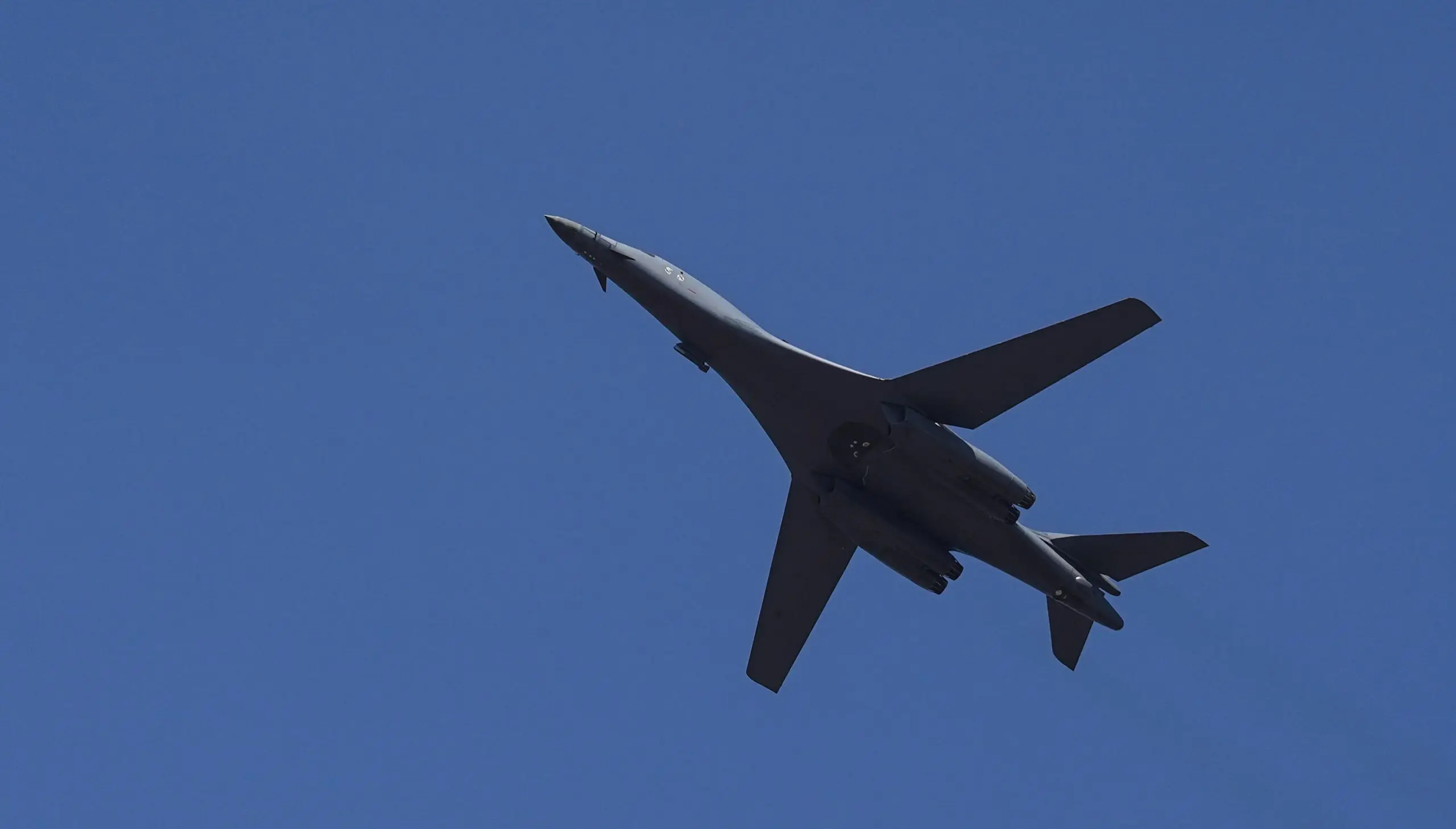
A B-2 flyover is one of the acoustically distinctive experiences in aviation. The aircraft's four GE F118 engines are buried deep inside the wing structure, with exhaust routed through carefully designed slots. The result is that a B-2 at altitude produces significantly less noise than a conventional aircraft of comparable size. Witnesses at airshows describe hearing the B-2 before seeing it — but the sound is muted, diffuse, and difficult to localise. The aircraft appears over the crowd and is gone before the expected roar catches up. The acoustic engineering that reduces the infrared signature also reduces the noise signature.
The Paradox Of The B-2
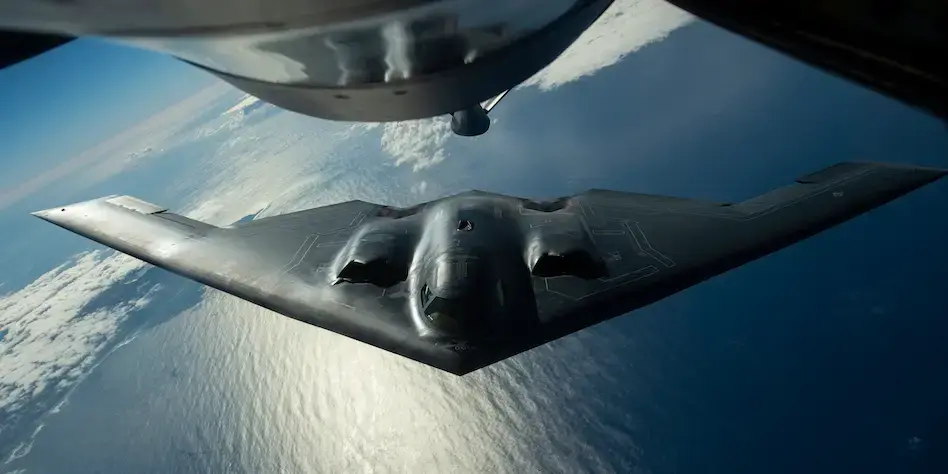
The B-2 embodies an engineering paradox that has no parallel in aviation: it is simultaneously one of the most visually striking and physically imposing aircraft ever built, and one of the hardest to detect at any distance beyond visual range. From the ground, with eyes, it is unmistakable — a flying wing unlike anything else in the sky, huge, distinctive, aerodynamically alien. From a radar screen, at the ranges that matter for air defence, it is nearly invisible. The B-2 is designed to be seen when it wants to be seen — at airshows, on deterrence flights, in photographs. And to be unseen when it needs to be.
)
)
)
)
)