B-52 bomber secrets: Range, payload, and upgrades that keep it relevant today

According to Boeing, the aircraft continues to provide both nuclear and conventional global strike capability, with a combination of multiple factors including range, payload and mission availability that underpins strategic deterrence and allied operations around the world.

Enduring relevance of a Cold War design
The Boeing B‑52 Stratofortress continues to remain a central element of United States long‑range strike capability more than seven decades after its introduction in 1950s. According to Boeing, the aircraft continues to provide both nuclear and conventional global strike capability, with a combination of multiple factors including range, payload and mission availability that underpins strategic deterrence and allied operations around the world. The service record of Stratofortress spans from the Cold War to ongoing global missions, highlighting a design that has adapted to changing defence needs.
Range and persistence
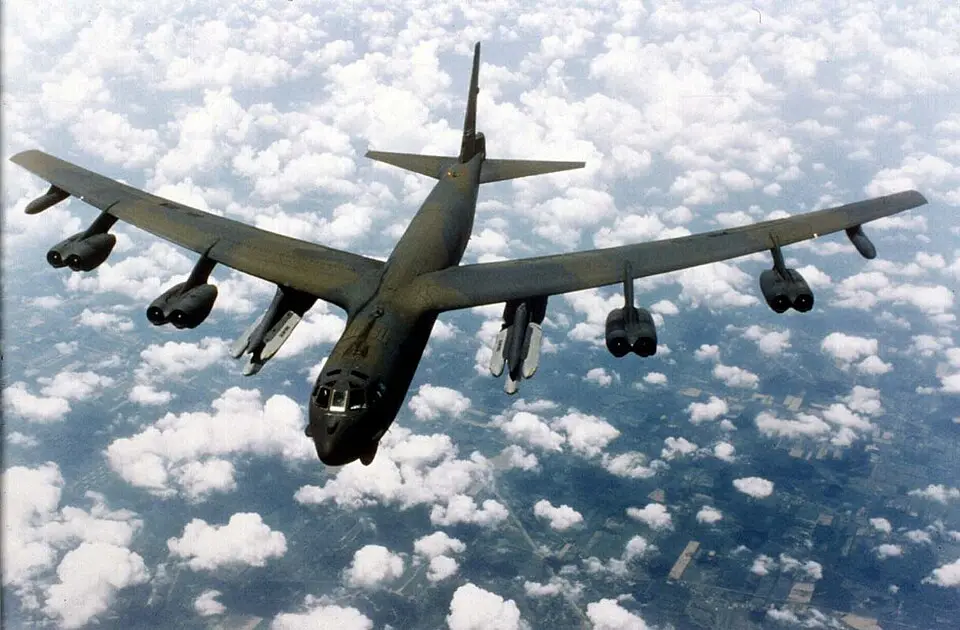
At the core of the B‑52’s utility is its exceptional range. Boeing notes that the Stratofortress can project power worldwide with long on‑station time, augmented by aerial refuelling for virtually an unlimited reach. The aircraft has a published range of approximately 8,800 miles, which is 7,647 nautical miles, allowing it to reach distant targets without the need for forward basing.
Payload capabilities
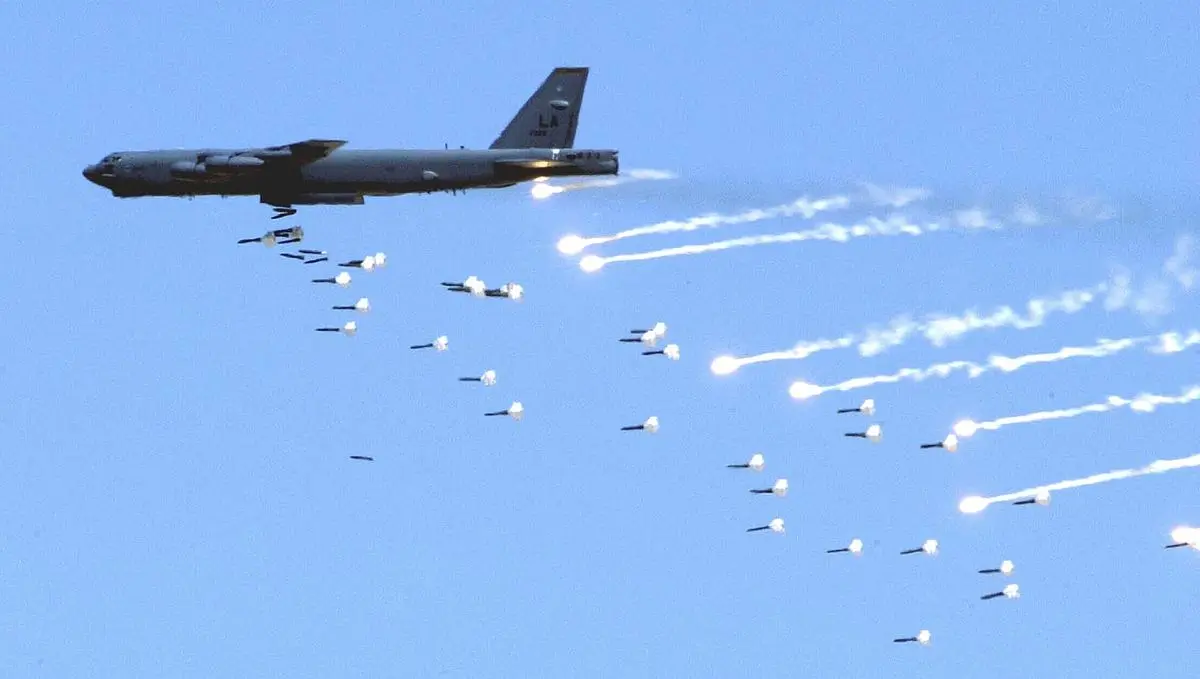
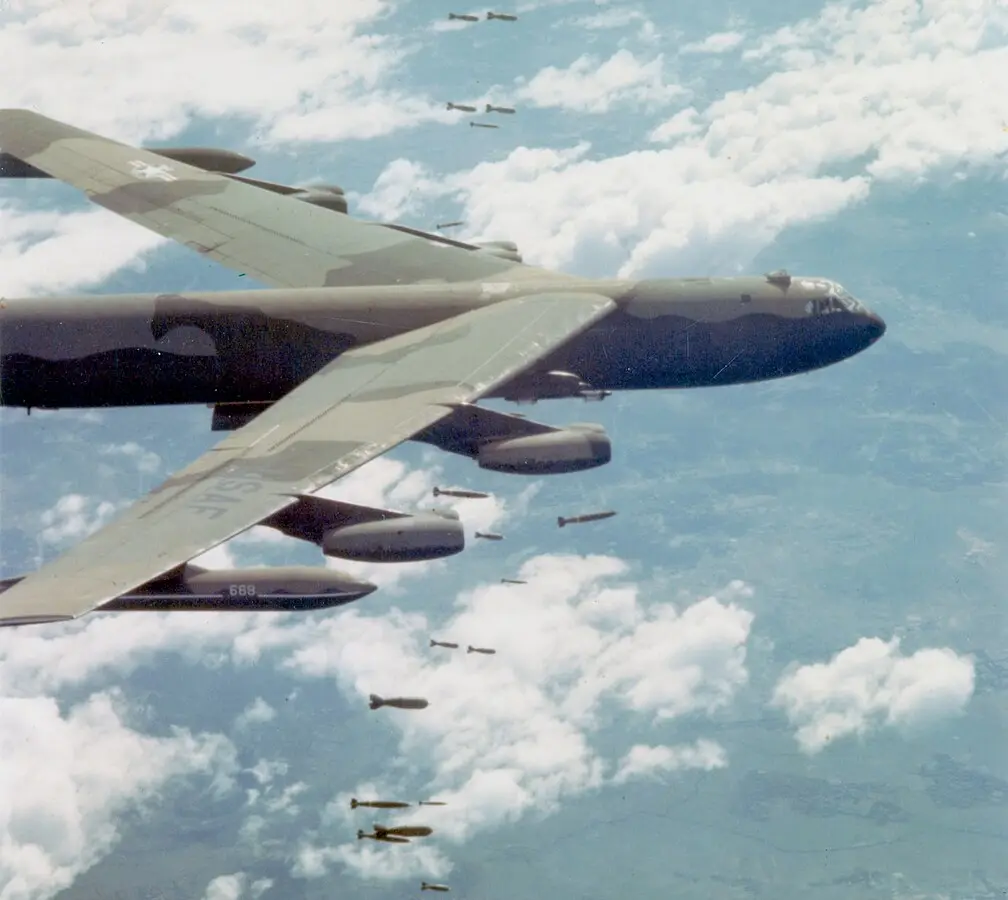
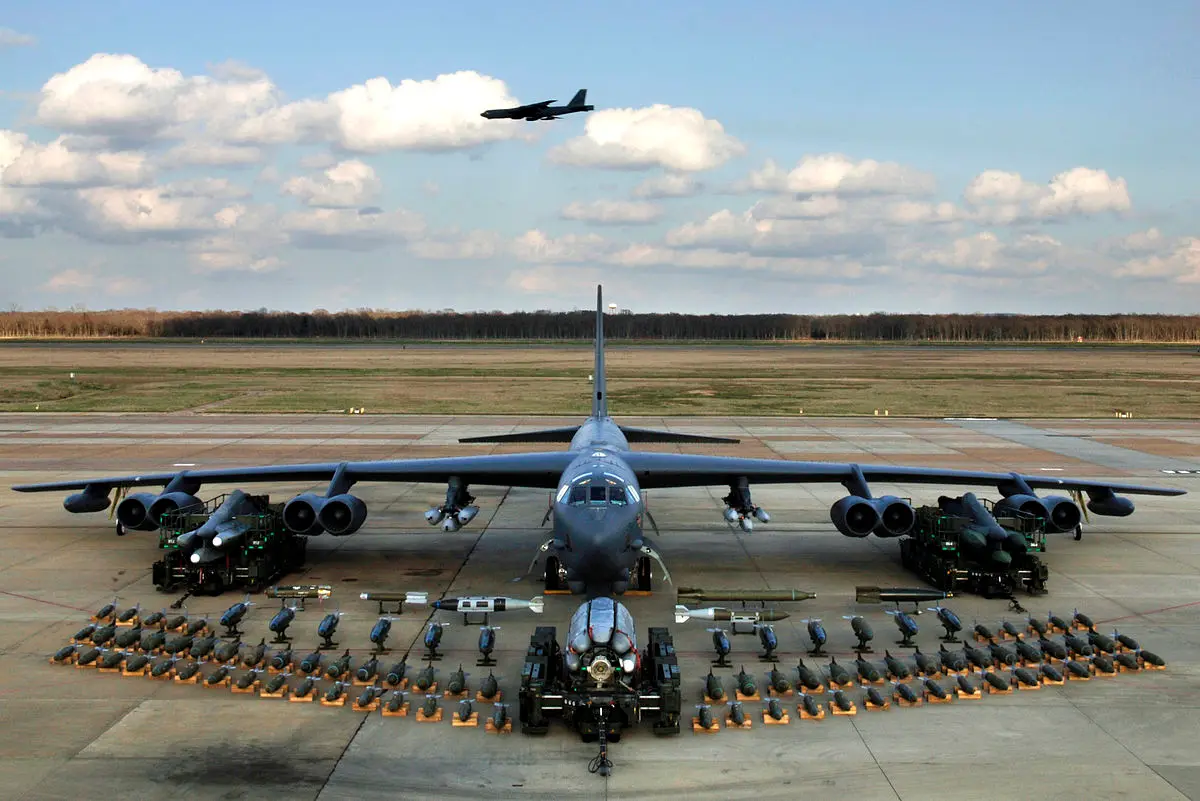
The B‑52 can carry roughly 70,000 pounds of mixed ordnance, which includes gravity bombs, cluster bombs, precision-guided missiles, joint direct attack munitions as well as mines. The B-52 is capable of dropping or launching the widest array of weapons in the US inventory. This large and flexible payload capacity of the bomber supports a wide range of mission sets, and the aircraft has been modified over time to deploy air‑launched cruise missiles and decoys for extended‑range standoff strike options.
Design and crew operations
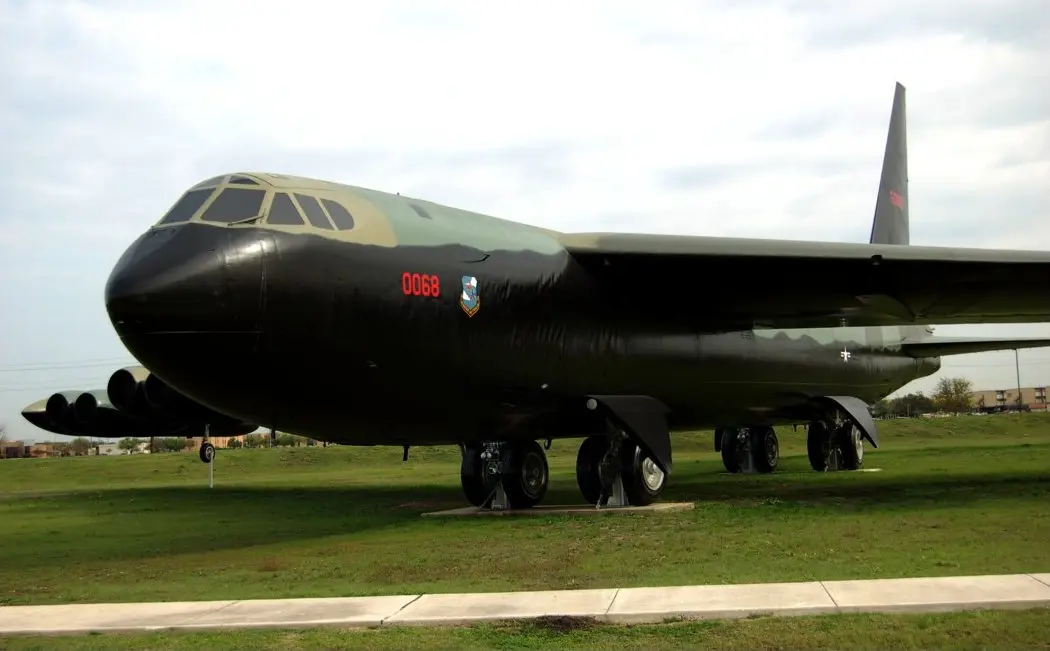
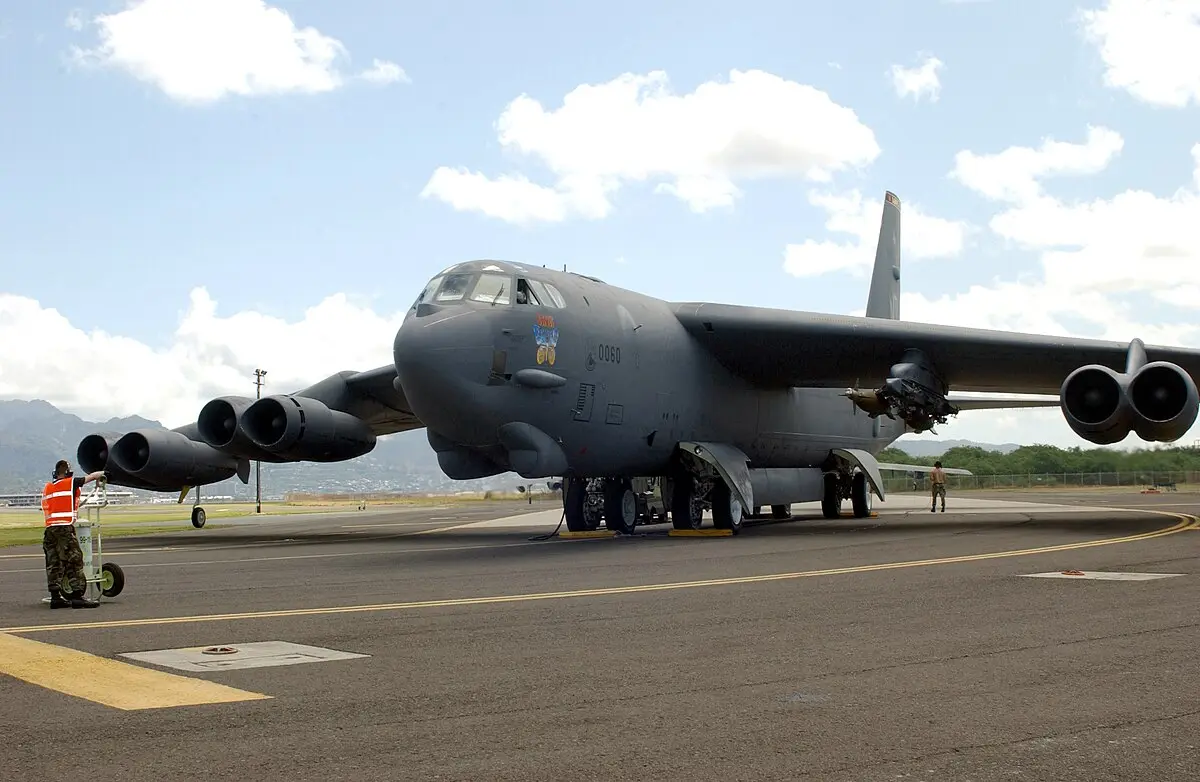
The aircraft is powered by eight Pratt & Whitney TF33‑P‑3/103 turbofan engines, each of which produces up to 17,000 pounds of thrust. This illustrates how the B‑52 combines power with endurance. It has a wingspan of 185 feet and a crew of five personnel, including aircraft commander, pilot, radar navigator, navigator and electronic warfare officer. According to Boeing’s published specifications, the aircraft operates at speeds up to about 650 mph and is capable of flying at high subsonic speeds at altitudes up to 50,000 feet (15,166.6 meters).
Modernisation and sustainability
Boeing highlights that continued upgrades and sustainment efforts are key to extending the B‑52’s relevance. The design adaptability that has allowed the platform to meet evolving defence needs is central to efforts to keep the aircraft in service beyond 2040. On Friday, the US Air Force received the first Radar Modernization Program test aircraft, according to Boeing's release, these were equipped with a new electronically scanned array radar. The radar is designed to enhance situational awareness and survivability.
Operational heritage: decades of service
Originally developed as an intercontinental bomber capable of high‑altitude nuclear delivery, the B‑52’s role expanded over time to include not only conventional strike, standoff attack but also maritime operations. Boeing notes its high mission‑capable rate and human‑centred crew operations support sustained global use.
Conclusion: a unique blend of capability
The B‑52’s combination of long range, high payload and continuous modernisation distinguishes it within the US bomber fleet. The enduring presence of these bombers underscore a design that remains relevant to modern defence challenges, providing a strategic platform capable of global strike for decades to come.
)
)
)
)
)