Asia Cup final showdown not the first: Five times India-Pakistan political rivalry invaded the cricket pitch

India-Pakistan cricket rivalry was on display once again at the final of Asia Cup 2025. This decades-old tussle reflects political tensions. From refused handshakes to cancelled tours, here are five instances of India-Pak tensions spilling into the cricket field.
A long-standing cricket rivalry
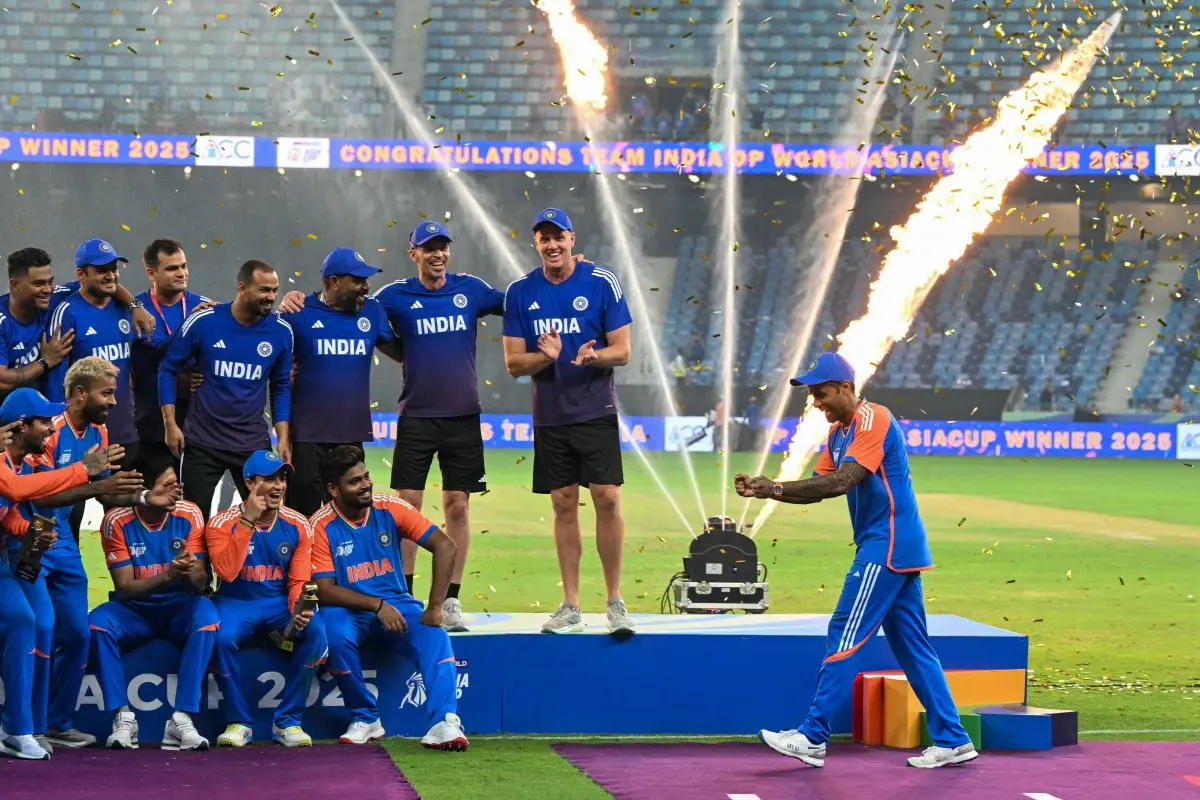
Few sporting rivalries carry the weight of political tensions than the India-Pakistan cricket matches. The Asia cup final drama of Sunday (Sep 28) is only the latest instance of geopolitics intruding the pitch. Terrorism, war and domestic political sentiments always overshadow cricket between the two South Asian arch rivals, with the pitch becoming a proxy battlefield. Here are five key instances when politics spilled directly onto the cricket field, disrupting matches, cancelling tours, and reshaping how the sport is played and watched. (The image shows Indian captain Suryakumar Yadav carrying an imaginary Asia Cup trophy after winning the 2025 edition's final against Pakistan)

Asia Cup 2025 Final Fiasco and On-Field Tensions (September 2025)
The Asia Cup 2025 final, hosted in Dubai, became a textbook example of how rapidly cricket can become high on political symbolism. It came after the Pahalgam terror attack in April and India’s retaliatory “Operation Sindoor”. When the two teams finally met in the group stage on September 14, political hostility was palpable. Indian captain Suryakumar Yadav refused the customary handshake with Pakistani counterpart Salman Ali Agha, at the toss and after India’s seven-wicket win—an act he later described as a tribute to the victims of terrorism. Pakistan’s cricket board, the PCB, filed a formal protest with the ICC, calling it a breach of cricketing spirit.
In matches, Pakistani players responded with overt symbolism, with Haris Rauf mimicked a downed aircraft in an on-field gesture. This was seen as a provocative nod to Pakistan’s earlier claims of shooting down Indian jets. Sahibzada Farhan celebrated with a gun-like bat gesture, drawing fines and BCCI outrage. As India and Pakistan geared up for their first-ever Asia Cup final meeting on September 28, PCB Chairman Mohsin Naqvi lamented the “lack of sportsmanship.” After winning the final, India refused to recieve the trophy from Naqvi, who walked away with the medals. (The image shows Naqvi presenting the runners-up cheque to Pakisan captain)
Asia Cup 2023 Venue Controversy (August–September 2023)
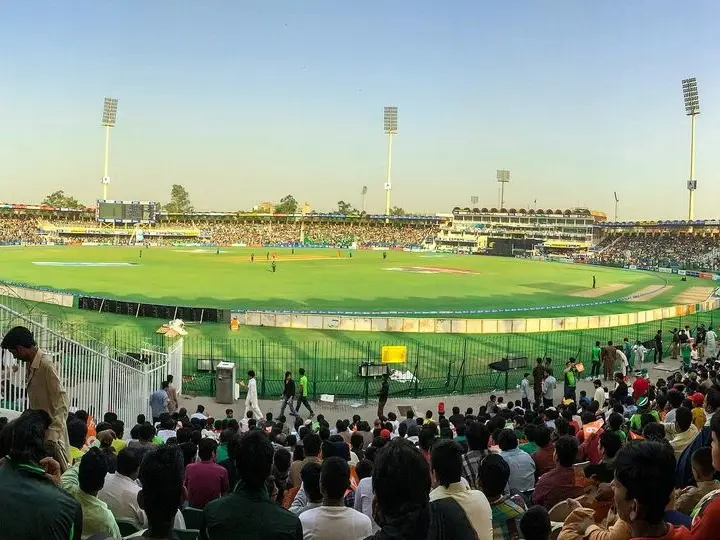
The 2023 Asia Cup was nearly derailed before it began. IT was scheduled to be held entirely in Pakistan, but India refused to send its team across the border, citing security concerns linked to cross-border terrorism. Under the leadership of ACC President Jay Shah, who is also BCCI Secretary, a hybrid model was decided upon: four matches were held in Pakistan, while nine—including all of India’s—were shifted to Sri Lanka. Pakistan’s cricket board, under Ramiz Raja, viewed this as a political move, even threatening to boycott the upcoming 2023 ODI World Cup in India in retaliation. While the Asia Cup drew massive global viewership, it came at the cost of deteriorating bilateral relations. In spite of the tensions, Pakistan played its matches of the 2023 World Cup in India, the host country. (Image shows the Gaddafi Stadium in Pakistan)
2008 Mumbai Attacks and India's cricket Boycott with Pakistan (From November 2008 Onward)
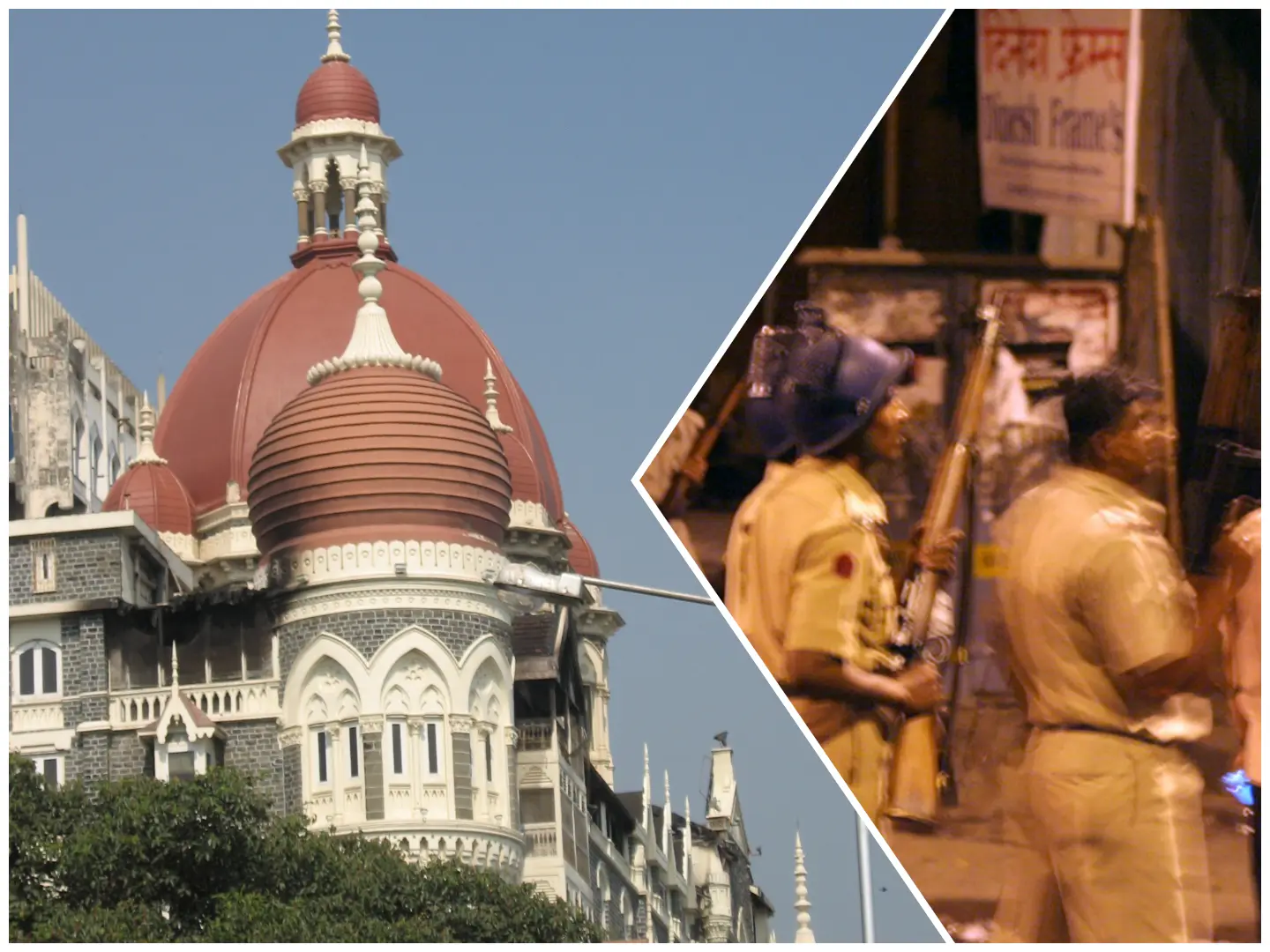
The 26/11 Mumbai terror attacks in November 2008, blamed on Pakistan-based militant group Lashkar-e-Taiba, led India to immediately suspend all bilateral cricketing ties.
A planned ODI series in Pakistan was cancelled. Since the attacks, no Indian cricket team has toured Pakistan. This freeze, lasting over 15 years, meant that tournaments like the 2014 Asia Cup had to be relocated from Pakistan to Bangladesh. Indian politicians repeatedly called on the ICC to ban Pakistan from international tournaments altogether.
Since the attacks, India and Pakistan met only at ICC or ACC tournaments, with the regular bilateral fixtures turning into a rare, politically charged, high-stakes event.
Shiv Sena Pitch Digging Incident (January 1991)
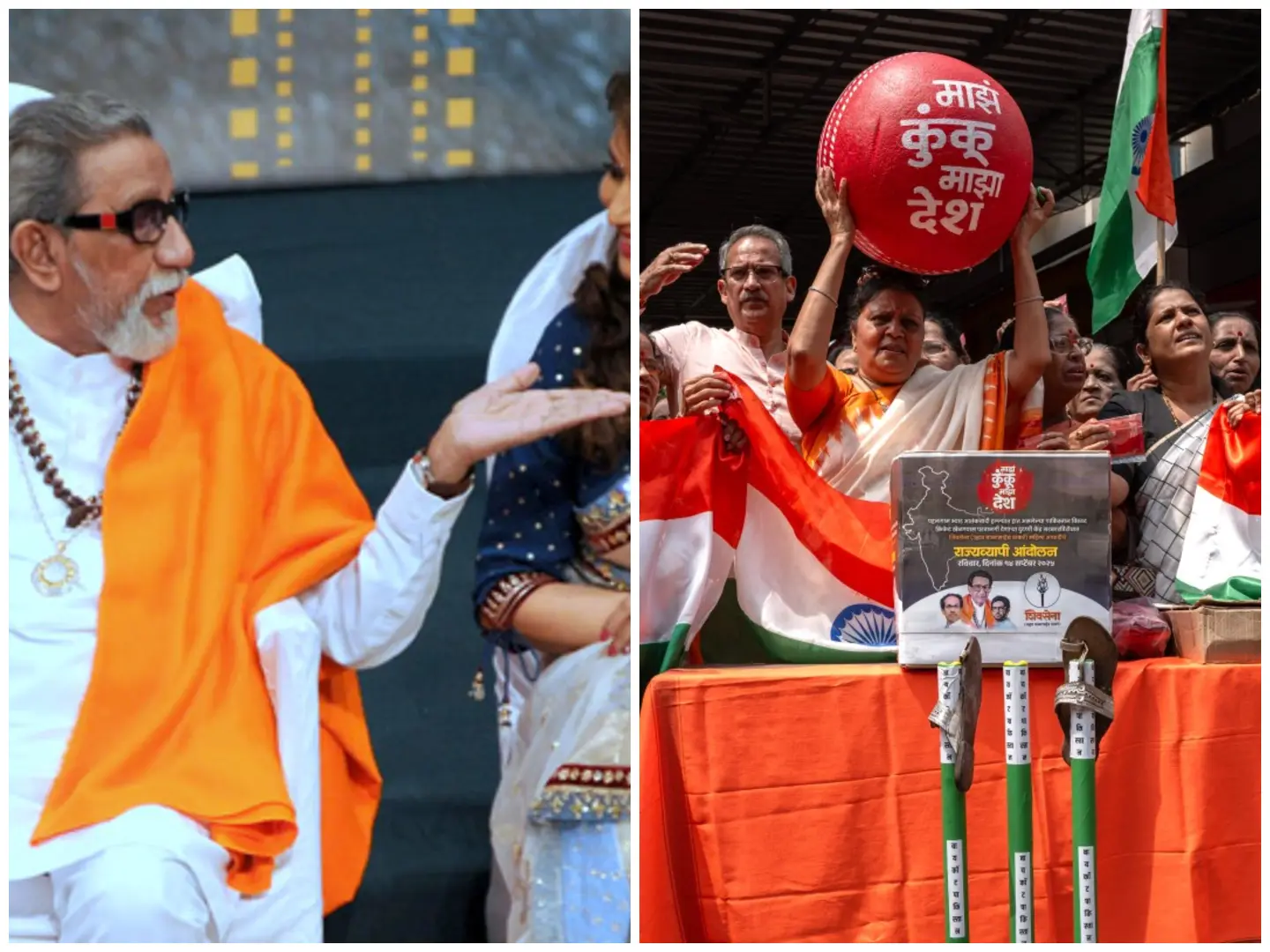
Politics invaded the pitch quite literally in January 1991, when activists of Shiv Sena, a right-wing Hindu nationalist group in India, dug up the Wankhede Stadium pitch in Mumbai ahead of a scheduled India-Pakistan Test match. Shiv Sena was protesting Pakistan’s involvement in Kashmir, particularly the 1990 exodus of Kashmiri Pandits, which the group attributed to Pakistan-backed terrorism.
The match was cancelled, and the entire series was scrapped. This was the first time a political group in India successfully sabotaged an international cricket fixture. (The image is a combo of Bal Thackerey, the Shiv Sena chief during the 1991 incident, and an AFP photo of a recent protest by Shiv Sena activists in September 2025)
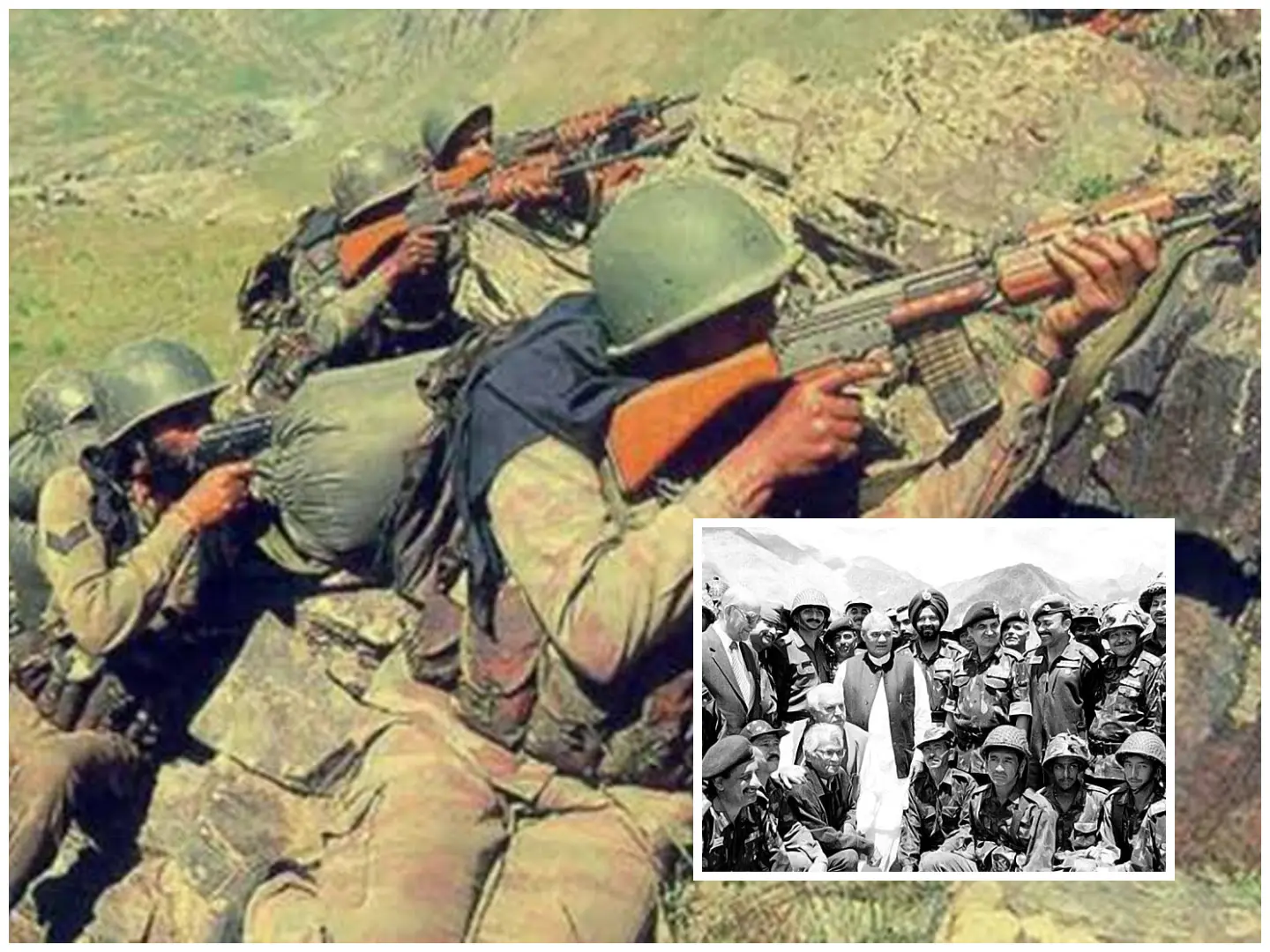
Kargil War and cricket Series Suspension (May–July 1999)
Just months after India and Pakistan faced off in the 1999 ICC Cricket World Cup, the region was engulfed in the Kargil War, after Pakistani soldiers and militants crossed the Line of Control into Kashmir.
A scheduled Indian tour of Pakistan was immediately cancelled, and bilateral cricket was suspended for nearly five years.
Calls to ban Pakistani players from Indian tournaments like the emerging IPL gained traction.
Protests erupted whenever Pakistan was scheduled to play in India. Cricket only resumed in 2004, when diplomatic efforts temporarily thawed relations. Pakistani players were allowed in the first couple of IPLs, before being scrapped entirely from the lucrative league.
)
)
)
)