All you need to know about China's Belt and Road Initiative


What is Belt and Road Initiative
Belt and Road Initiative is a strategy proposed by the Chinese government to the world to have a geographically structured route including several lands, sea and the maritime silk road routes.
By ''Belt'' they mean to have overland routes with road and rail transportation. And ''Road'' refers to the different sea routes including a wider area of the Indian Ocean, South Pacific Ocean and the South China Sea.
Xi's idea about Belt and Road Initiative
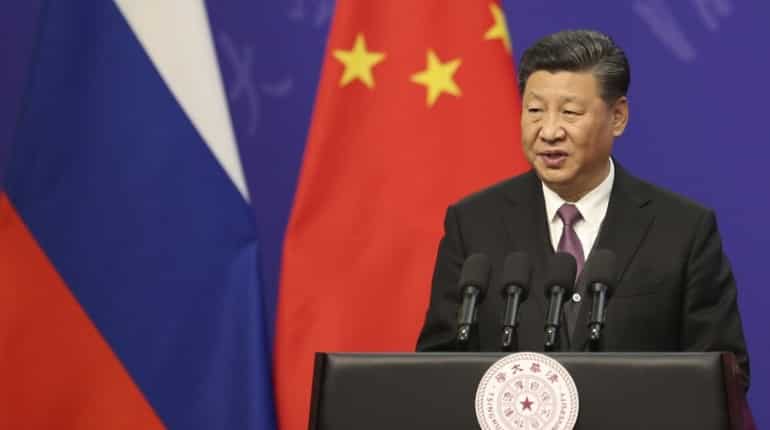
According to Chinese President Xi Jinping, this initiative will bring the much-needed modern infrastructure to the developing countries.
He also said that this global infrastructure project will have "zero tolerance" for corruption while vowing to prevent debt risks.
Jinping's pet project is a reboot of the ancient Silk Road to connect Asia to Europe and Africa through massive investments in maritime, road and rail projects.
China's dream project
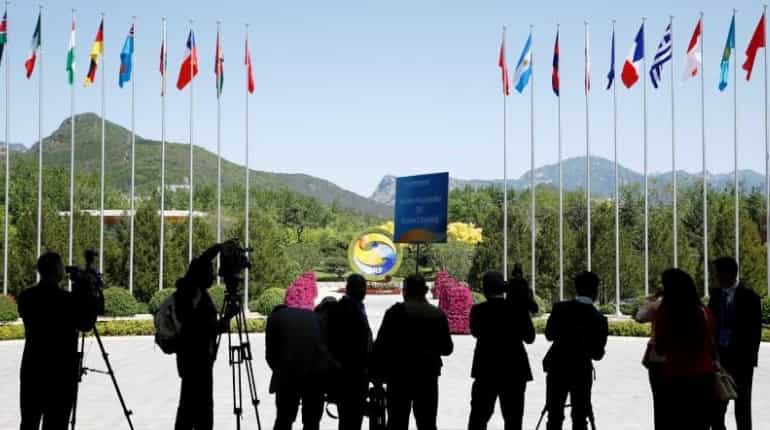
China's dream project to have a direct trade route with the world, primarily includes countries of Asia, Europe, Middle East, Africa and Latin America.
To rebuild the Maritime Silk Road is China's aim to have investment and collaboration with different countries through several routes.
Deep suspicion for India, US
China's Belt and Road Initiative (BRI), is a sweeping trillion-dollar infrastructure programme across Asia, Africa and Europe that is viewed with deep suspicion by countries like India and the United States and has divided opinion within the EU.
Even countries like Sri Lanka, Malaysia and the Philippines, are also increasingly raising vocal concerns about the environmental impact on the island cities, a lack of transparency surrounding their funding and the possibility of a Chinese-sprung debt trap.
Washington, which involved in trade and other diplomatic spats with China, has dismissed BRI as a "vanity project" and rebuked Rome for signing up to the scheme.
Pakistan, Russia, Italy sign up
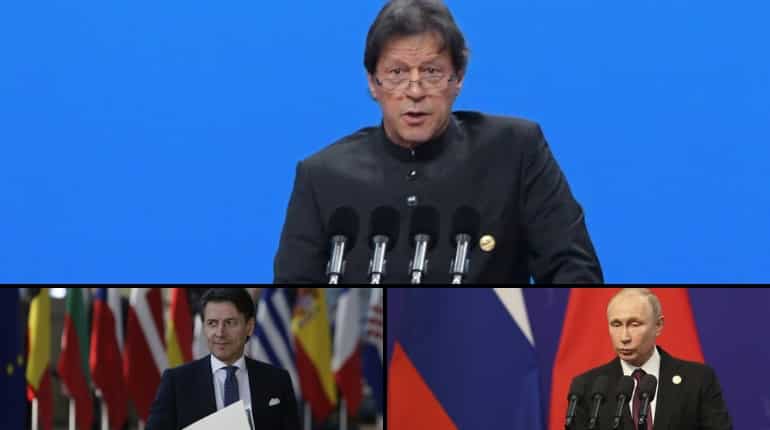
Pakistan Prime Minister Imran Khan said his country is an "enthusiastic" supporter of Belt and Road, called for the creation of an office for anti-corruption cooperation.
The two countries are building the China-Pakistan Economic Corridor (CPEC), a multi-billion-dollar project linking the northwest Chinese region of Xinjiang to the Arabian sea port of Gwadar.
Russian President Vladimir Putin and Italian Prime Minister Giuseppe Conte's country were also among the first G7 member to sign up to Belt and Road and are among the headliners.
Could marginally boost trade: World Bank
The World Bank estimates that Belt and Road funded infrastructure could marginally boost trade and officials there say it is offering to fund in areas where it is sorely needed.
But in reality, the money comes as loans instead of aid, requiring countries to pay China back for the massive projects its companies and people build.
)
)
)
)
)