AI Summit 2026: Why western delegates are lying about upcoming AI job crisis?

Analysts suggest the "empowerment" narrative serves a strategic purpose for Western tech giants: maintaining access to India.

1. The Great Pacification: "Unbundling" vs. Replacement
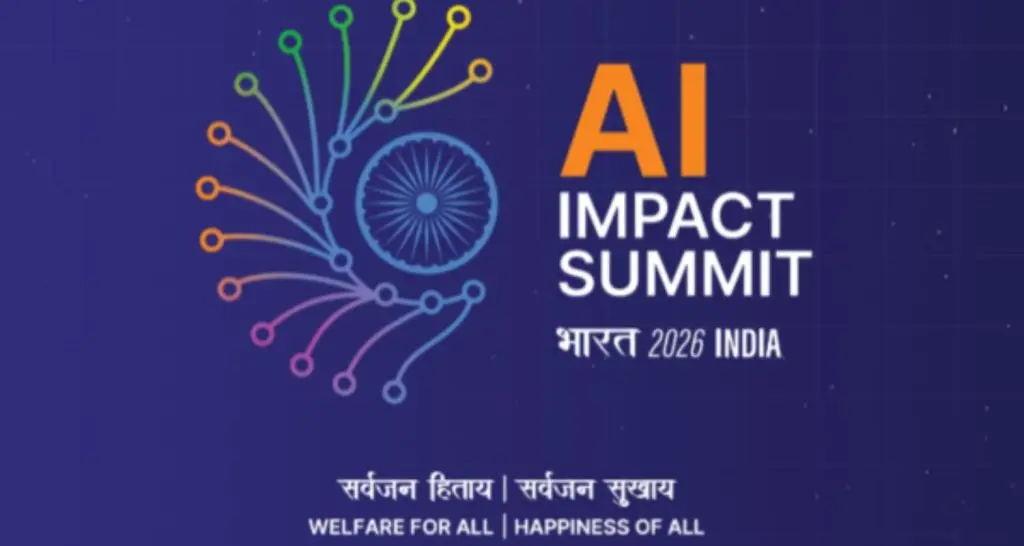
The buzzword echoing through the corridors of the Bharat Mandapam was not "layoffs" but "unbundling." While Western delegates publicly framed AI as a "co-pilot" that enhances human capability, industry insiders argue this terminology is a deliberate softening of the blow. "Unbundling" effectively means breaking down complex professional roles into tasks that AI agents can execute autonomously, leaving humans with only the lowest-value supervisory scraps. For India’s IT sector, which relies on volume-based contracts, this shift threatens to hollow out the mid-level workforce entirely, replacing teams of ten with a single AI overseer.
2. The "Agentic AI" Reality Check
Behind closed doors, the conversation shifted from "generative" to "agentic" AI, systems capable of planning and executing multi-step workflows without human intervention. While keynote speakers celebrated creativity tools like Midjourney, the venture capitalists in attendance were focused on agents designed specifically to automate back-office operations: HR processing, level-1 tech support, and data reconciliation. These are the very pillars of India's BPO industry, yet the delegates carefully avoided discussing the direct collision course between these new agents and India's service exports.

3. Vinod Khosla’s Stark Warning Ignored
Breaking the diplomatic silence, Silicon Valley veteran Vinod Khosla offered a brutal prediction that clashed with the summit's optimistic tone. He warned that the traditional IT services model would be "obsolete" within a few years, as AI drives the marginal cost of expertise to near zero. While most delegates emphasized a "long transition," Khosla’s comments highlighted the speed at which Western enterprise clients are already looking to replace expensive human contracts with cheap, scalable AI solutions, a reality the summit’s official narrative tried to downplay.

4. The "18-Month" Obsolescence Clock
A quiet admission from Microsoft AI CEO Mustafa Suleyman regarding the timeline of AI capabilities introduced a sense of urgency absent from the main stage. He noted that white-collar reasoning capabilities could match human levels within 18 months. This rapid acceleration contradicts the "generational shift" narrative often sold to policymakers, suggesting that the window for India to pivot its workforce is not a decade, but a matter of quarters. The discrepancy between this technical reality and the "upskilling takes time" rhetoric left many observers uneasy.

5. The "Tool User" Trap
A recurring piece of advice given to Indian students was to "learn AI tools" to stay relevant. Critics argue this is a dangerous distraction. By focusing on mastering specific tools (like prompting), the workforce is being trained on a layer of technology that is itself being automated. As models become more intuitive and capable of self-correction, the role of the "prompt engineer" or "tool operator" is expected to be short-lived. The advice sugarcoats the deeper need for fundamental, non-automatable skills like strategic negotiation and complex problem-solving in the physical world.
6. Protecting the "Social License" for Data
Analysts suggest the "empowerment" narrative serves a strategic purpose for Western tech giants: maintaining access to India. With the EU enforcing strict regulations and the US bogged down in copyright battles, India represents a massive, relatively open market for data and deployment. Admitting that their technology might decimate local jobs would risk a political backlash, regulatory crackdowns, or "data protectionism." Thus, framing AI as a "partner" rather than a "replacement" is essential to keeping the Indian market open for business.

7. The End of Cost Arbitrage
The final unspoken truth of the summit was the death of wage arbitrage. For decades, India’s competitive advantage was skilled labor at a lower cost than the West. AI negates this advantage by offering "intelligence" at the cost of electricity. A US company no longer needs to outsource coding or support to Bangalore if an AI agent in a Virginia data center can do it instantly for pennies. The Western delegates’ focus on "collaboration" conveniently sidestepped this economic reality: that AI isn't just a new tool, it is a new, infinitely cheaper labor force that lives on the cloud, not in a country.
)
)
)
)
)