Published: Oct 25, 2025, 14:43 IST | Updated: Oct 25, 2025, 14:43 IST
These systems enable precise flight in environments with limited ground references, reducing mission risk and extending operational viability in contested airspace.
1 / 8
Intro
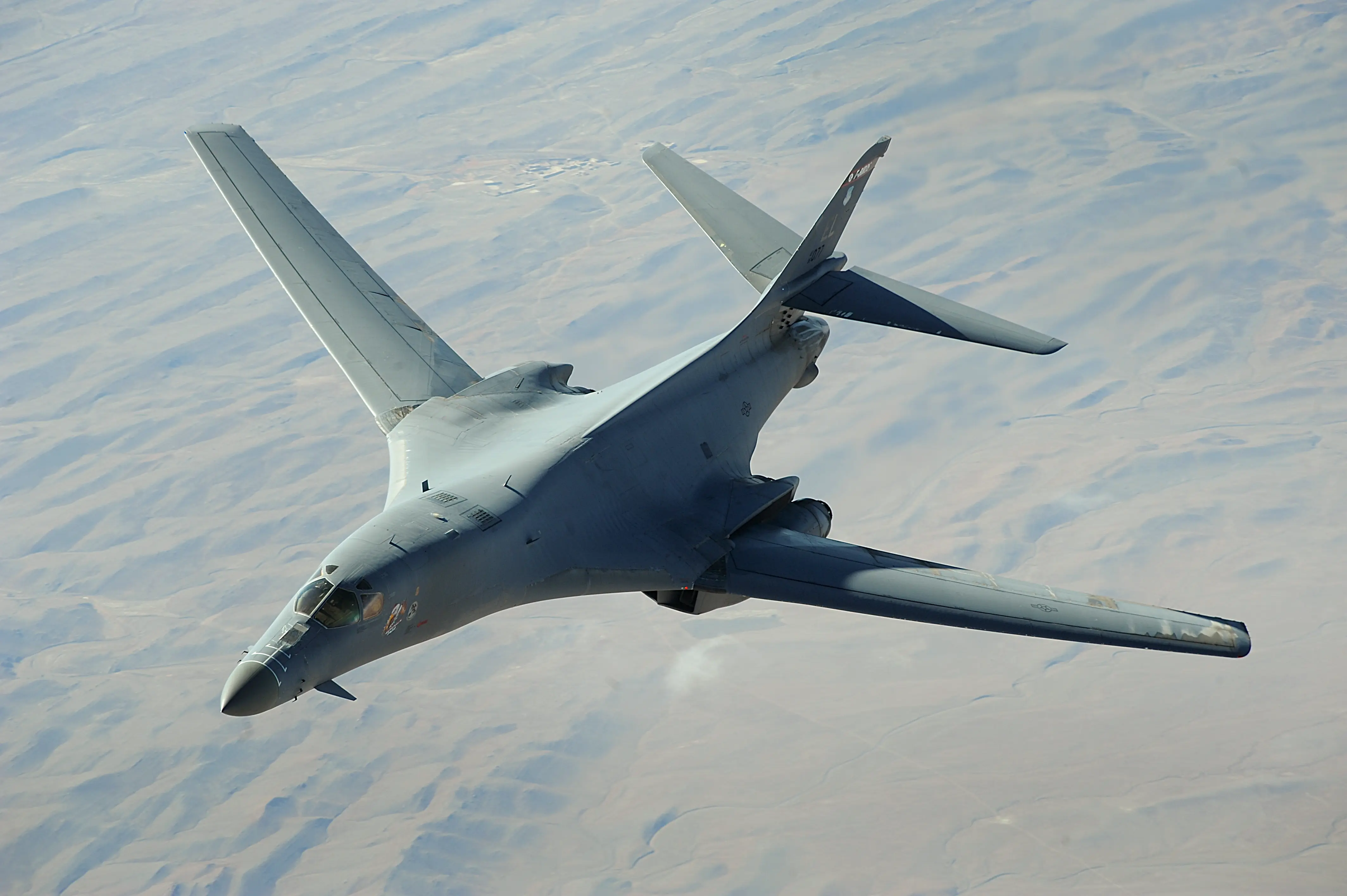
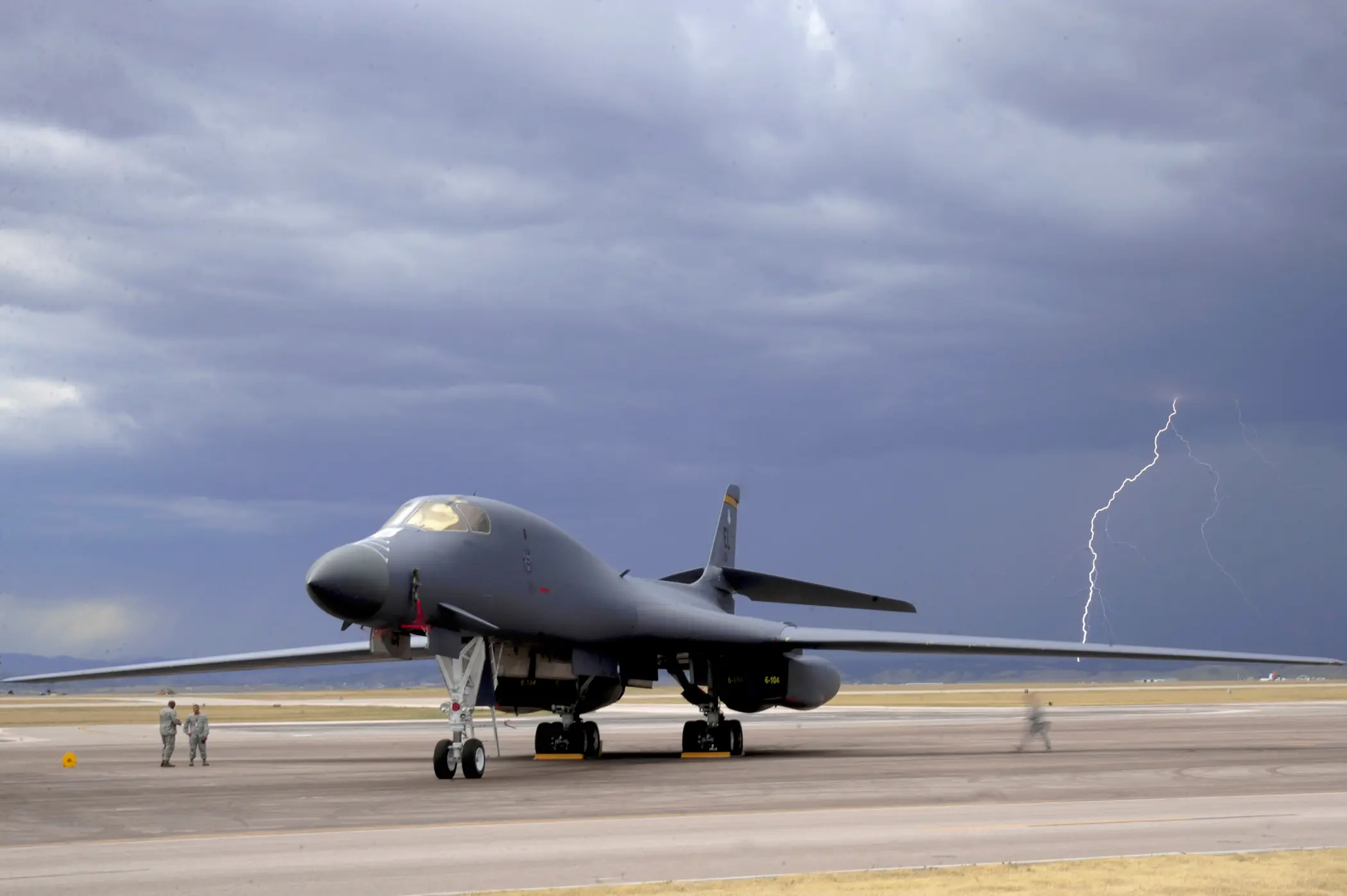
Recent weeks have seen US Air Force B‑1B bombers conducting flights near the Venezuelan coast and surrounding Caribbean islands. The B‑1B Lancer continues to demonstrate its operational significance decades after entering service. Its presence in various global theatres proves not only the United States’ ability to project power rapidly but also the continued relevance of legacy platforms in modern air operations. With ongoing upgrades and strategic tasking, the B‑1B remains a versatile asset capable of responding to diverse mission demands, from precision strike to deterrence, affirming its enduring value in 2025 and beyond.
2 / 8
(Photograph: wikimedia commons)
Swept‑Wing Variable Geometry Design
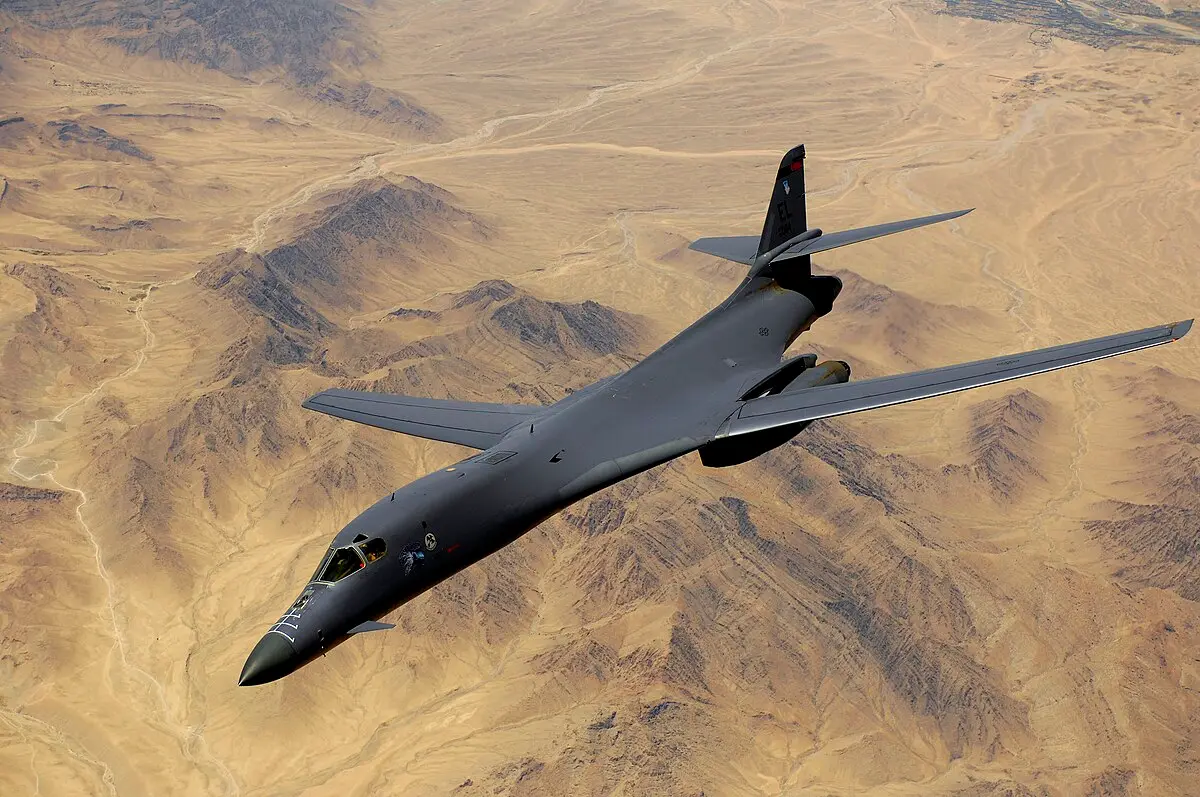
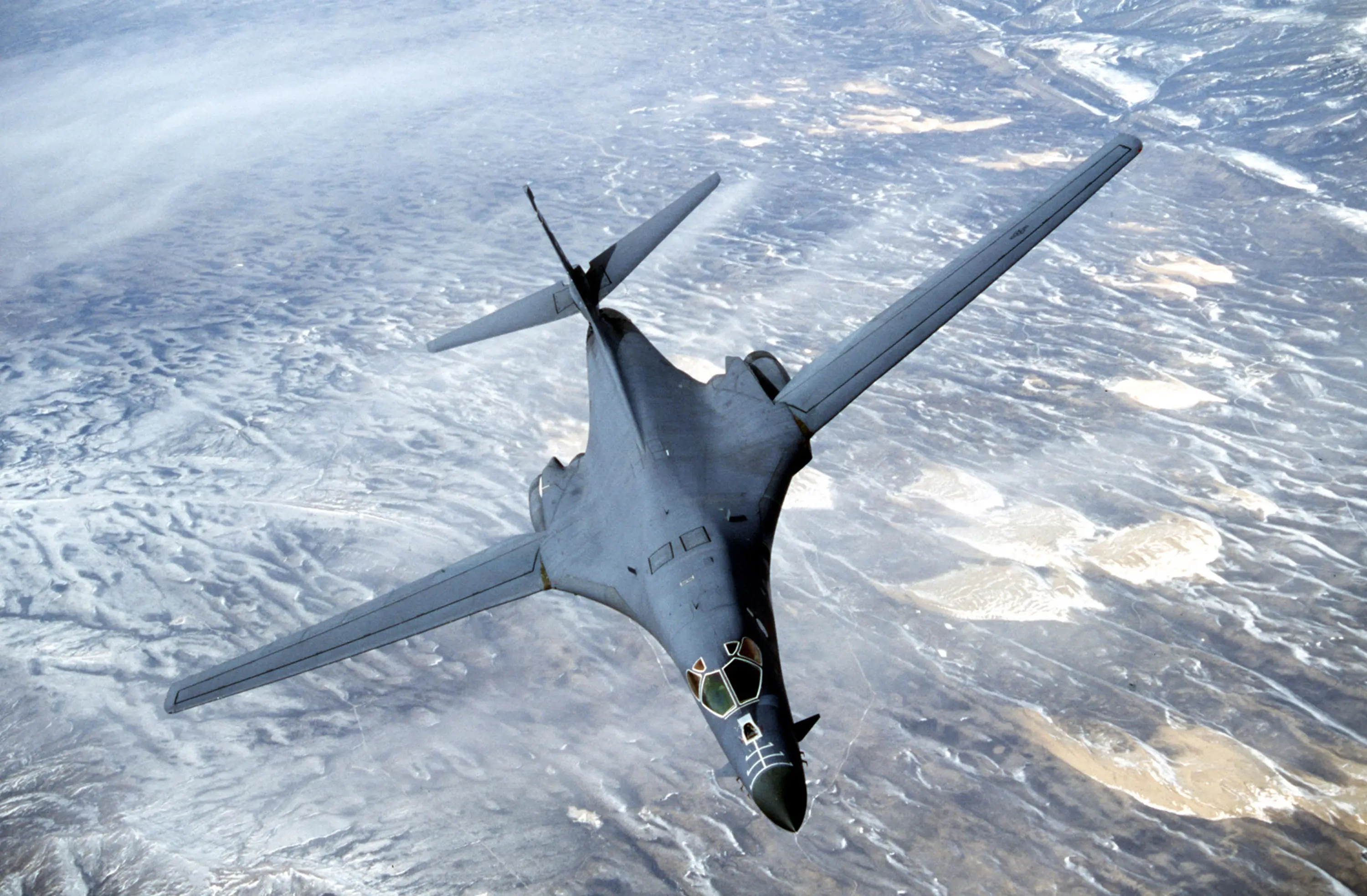
One of the key design features of the B‑1B is its variable‑geometry (swept‑wing) configuration. During take‑off and landing, the wings extend forward, providing a larger wing area for lift. In high‑speed, low‑level penetration or supersonic flight, the wings sweep aft, reducing drag and enhancing manoeuvrability. This adaptability allows the aircraft to operate across a wide envelope of speed and altitude, significantly contributing to its longevity as a viable strategic platform.
3 / 8
Blended Wing‑Body and Structural Mode Control
The B‑1B features a blended wing‑body design that integrates the wing and fuselage contours, which helps reduce structural loads. Moreover, the aircraft utilises a Structural Mode Control System (SMCS) with vanes and dampers to reduce vibration and bending during high‑stress flight regimes. This structural sophistication ensures fewer fatigue issues over time, underpinning the aircraft’s enduring service life.
4 / 8
Advanced Engine and Fuel‑Capacity Architecture
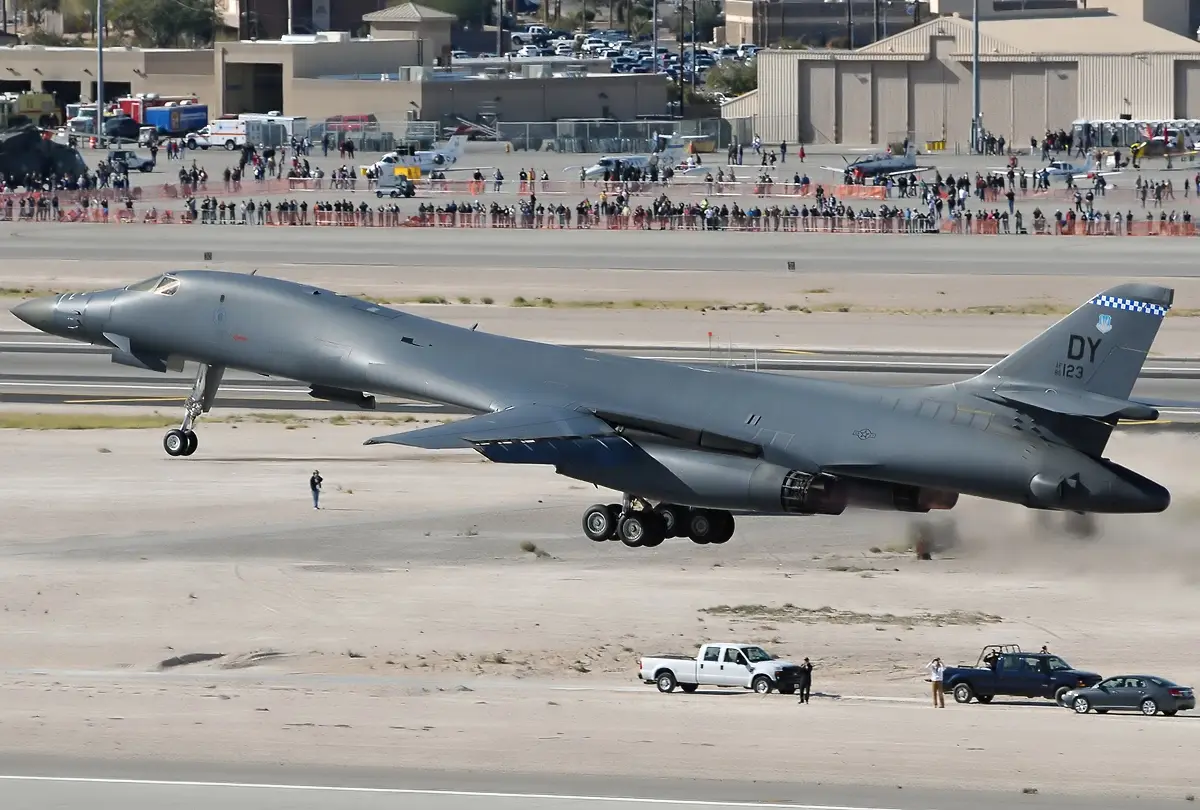
Powered by four General Electric F101‑GE‑102 turbofan engines with afterburners, the B‑1B delivers speeds exceeding Mach 1.2 at sea level and enjoys intercontinental range thanks to its large fuel capacity and internal design. The combination of high thrust and efficient aerodynamics ensures the platform remains operationally relevant four decades after its first flight.
5 / 8
Next‑Generation Avionics and Data‑Link Integration
To stay current, the B‑1B underwent a major overhaul of its mission systems. The installation of the Integrated Battle Station (IBS) combined new cockpit displays, fully integrated data links, and advanced sensor suites. This upgrade enhances situational awareness, target engagement, and networked operations—crucial capabilities in modern strike missions.
6 / 8
Modular Weapons Pylon System and Payload Flexibility
Perhaps the most recent innovation keeping the B‑1B at the cutting edge is the Load Adaptable Modular (LAM) pylon system. These external pylons expand the aircraft’s ordnance carriage capacity, enabling it to carry hypersonic, long‑range stand‑off weapons and thus future‑proofing the platform’s strike relevance in evolving threat environments.
7 / 8
Integration of Terrain‑Following Radar and Navigation Systems
The B‑1B’s ability to conduct low‑level penetration missions relies on its terrain‑following radar, Doppler sensors, GPS‑aided inertial navigation, and synthetic aperture radar. These systems enable precise flight in environments with limited ground references, reducing mission risk and extending operational viability in contested airspace.
8 / 8
(Photograph: Wikimedia Commons)
Frequent Upgrade and Sustainment Programmes
Beyond its design features, the B‑1B fleet continues to benefit from robust sustainment and upgrade programmes. Replacement of obsolete systems, structural refurbishments, and electronics revitalisation keep the aircraft ready for future missions.