'4,500 rounds a minute': The terrifying, autonomous 'R2-D2' keeping USS Abraham Lincoln alive

If an enemy missile slips past the strike group, the USS Abraham Lincoln relies on the Phalanx CIWS. Discover the terrifying, autonomous ‘R2-D2’ that shreds supersonic threats with a wall of tungsten.

The Ultimate Last Resort
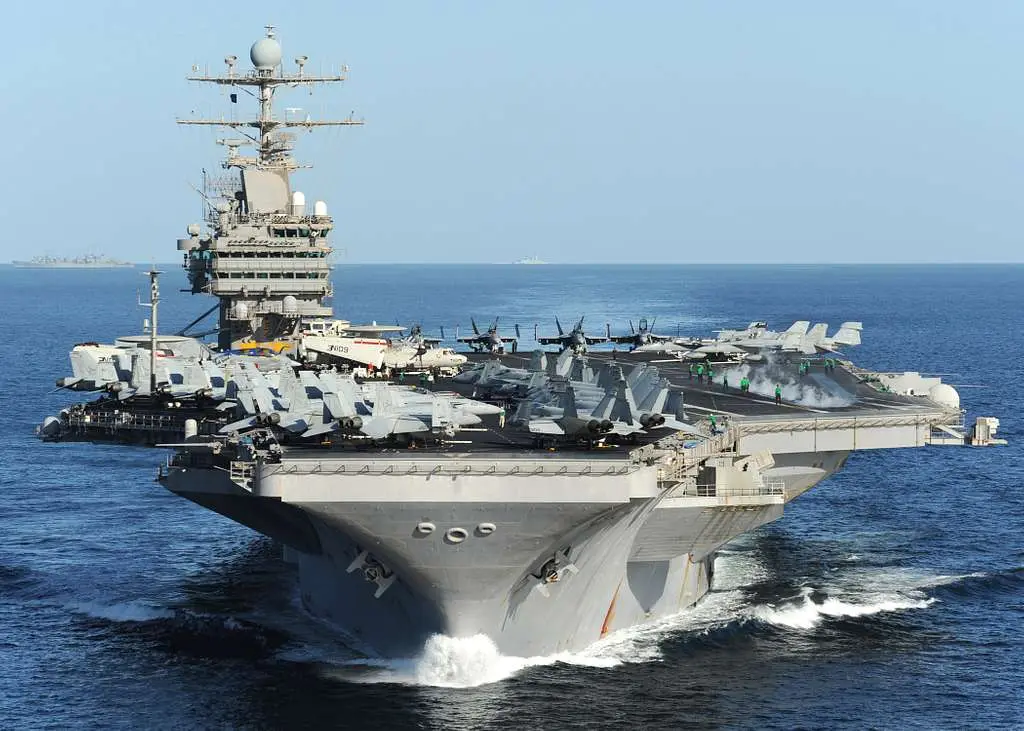
A Nimitz-class supercarrier operates within a massive, layered defensive bubble. Enemy threats must survive F-35C fighter patrols, electronic jamming, and the guided-missile destroyers escorting the ship. But if a sea-skimming anti-ship cruise missile manages to slip through that entire multi-billion-dollar net, the Lincoln relies on one final, terrifying goalie: the Phalanx Close-In Weapon System (CIWS).
The 'R2-D2' with a Gatling Gun
To the casual observer, the CIWS mounts on the carrier's sponsons look slightly comical—often compared to a giant, white R2-D2. However, that white dome isn't a head; it is a highly advanced, dual-radar radome housing both search and track antennas. Bolted directly beneath that brain is a devastatingly lethal, six-barrel 20mm M61 Vulcan Gatling cannon.
Upgrading the Arsenal: 4,500 Rounds a Minute
While early CIWS models fired 3,000 rounds per minute, the modernized Block 1B variants on the Lincoln have been cranked up to a staggering 4,500 rounds a minute. Furthermore, while the Navy previously used controversial depleted uranium, the modern Phalanx spits a relentless stream of heavy Tungsten Armor-Piercing Discarding Sabot (APDS) rounds, designed to punch straight through military-grade steel.
The Autonomous Kill Chain
Human reflexes are completely useless against a supersonic missile appearing just miles from the ship. Because of this, the CIWS can be switched into a fully autonomous mode. In fractions of a second, the system's internal computer can independently detect an incoming threat, track its trajectory, confirm it is hostile, open fire, and perform a kill-assessment—all without a human ever pulling a trigger.
The 'Wall of Steel' Physics
The CIWS doesn't aim to simply ‘explode’ the incoming missile. It calculates the threat's exact flight path and throws up an impenetrable wall of tungsten directly in front of it. The goal is to physically shred the incoming missile's aerodynamic airframe and detonate its high-explosive warhead in mid-air, raining harmless shrapnel into the ocean instead of the carrier's hull.
The Block 1B Surface Threat
In modern geopolitical flashpoints like the Red Sea and Persian Gulf, the threats aren't just in the sky. The Lincoln's modernized CIWS features an integrated Forward Looking Infrared (FLIR) camera. This allows operators to manually take control of the Gatling gun, turning the weapon downward to shred asymmetric surface threats, such as explosive-laden fast-attack drone boats deployed by proxy forces.
The Sound of Survival
When the CIWS fires, it doesn't sound like a traditional machine gun; the extreme cyclic rate blends the gunshots into a single, deafening mechanical roar often described as an ‘angry buzzsaw’ or a ripping canvas sound (BRRRRRT). For the 5,000 sailors aboard the Lincoln, it is the most terrifying yet comforting sound on earth—the sound of a lethal threat being neutralized seconds before impact.
)
)

)
)