‘10 seconds that matter’: 5 steps to survive an earthquake

Surviving an earthquake requires acting within 10 seconds. Authorities advise following the drop, cover, and hold on method. Staying indoors during tremors and evacuating only after the shaking stops reduces fatal injury risks by 50 per cent.
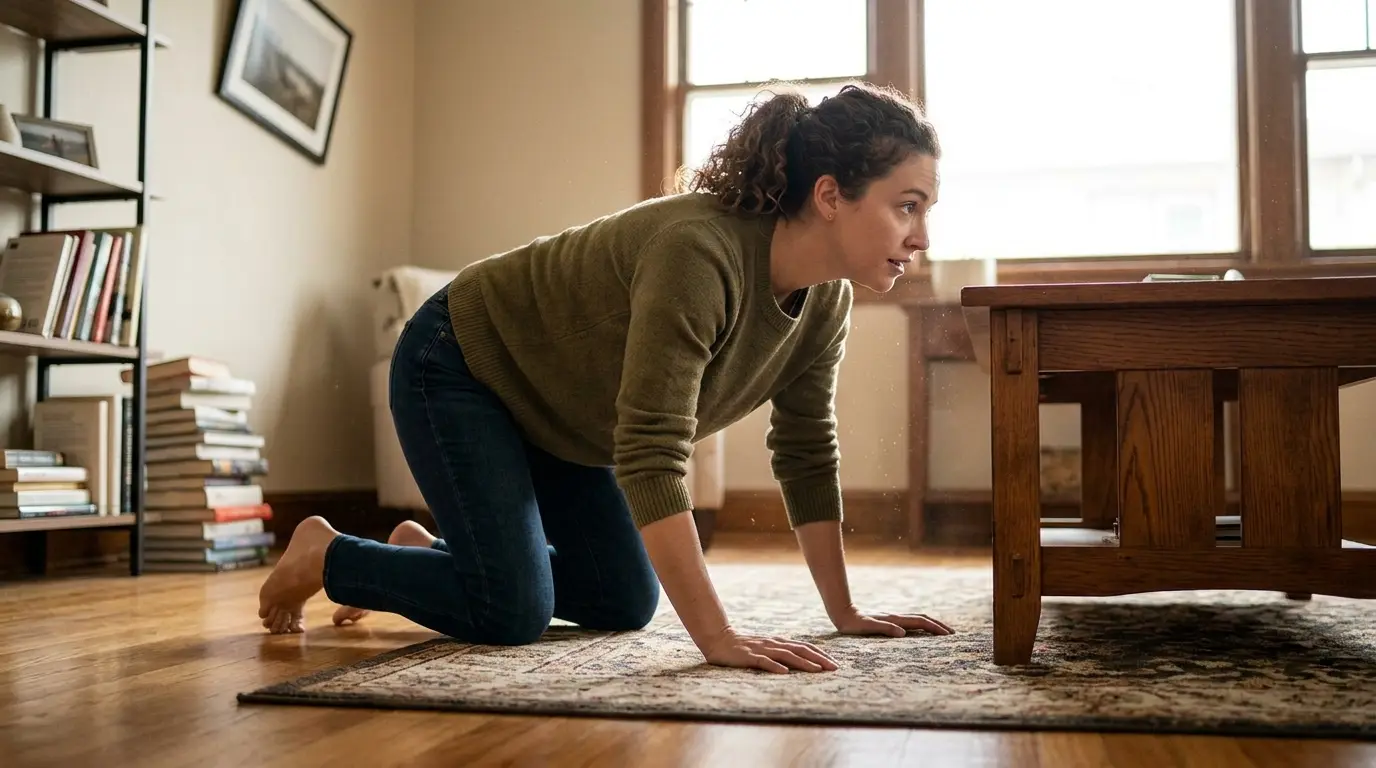
Drop to the ground
The US Geological Survey advises dropping to your hands and knees immediately when the shaking begins. This stable position prevents the violent tremors from knocking you over and allows you to crawl to a nearby shelter safely.
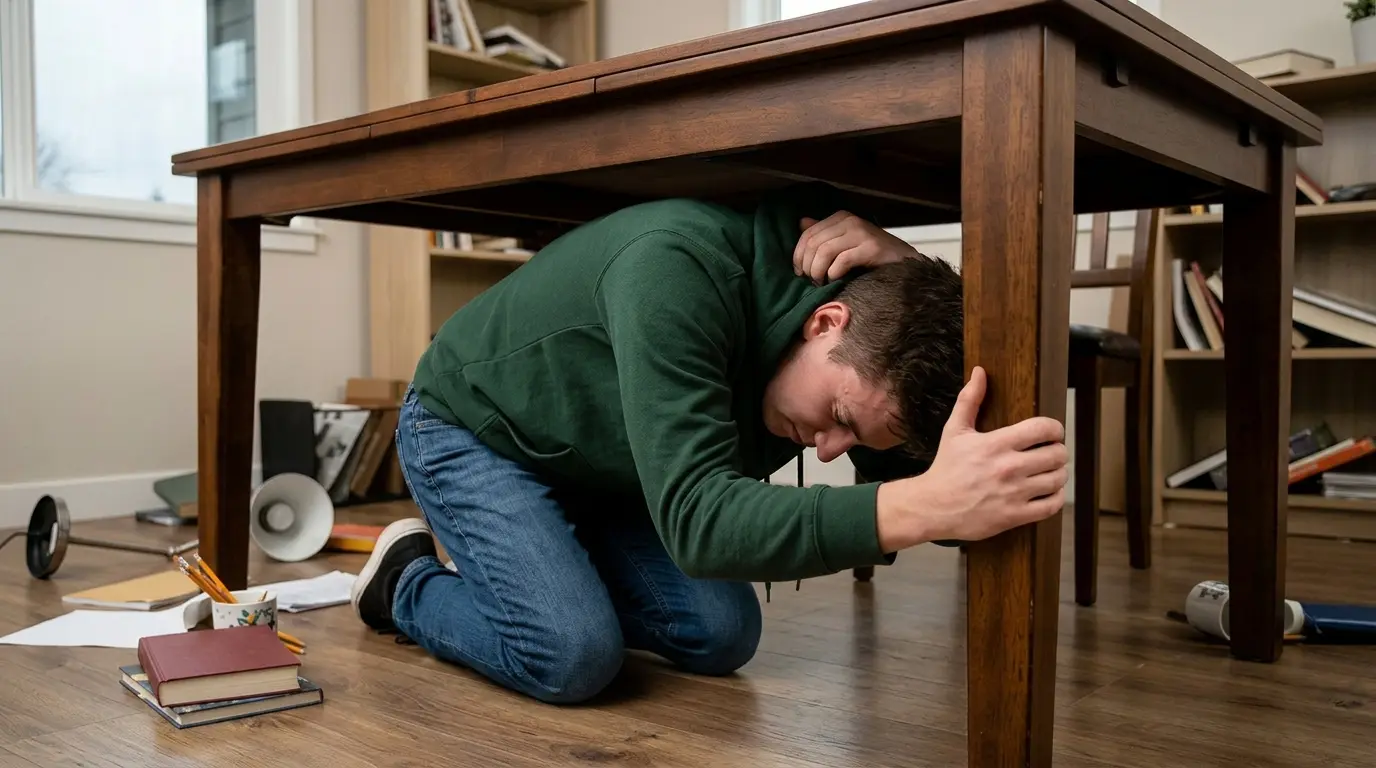
Cover your head and neck
Most seismic injuries occur from falling debris like ceiling fixtures, glass, or plaster. The Federal Emergency Management Agency recommends getting under a sturdy desk or table, using your arms to shield your head and neck entirely.
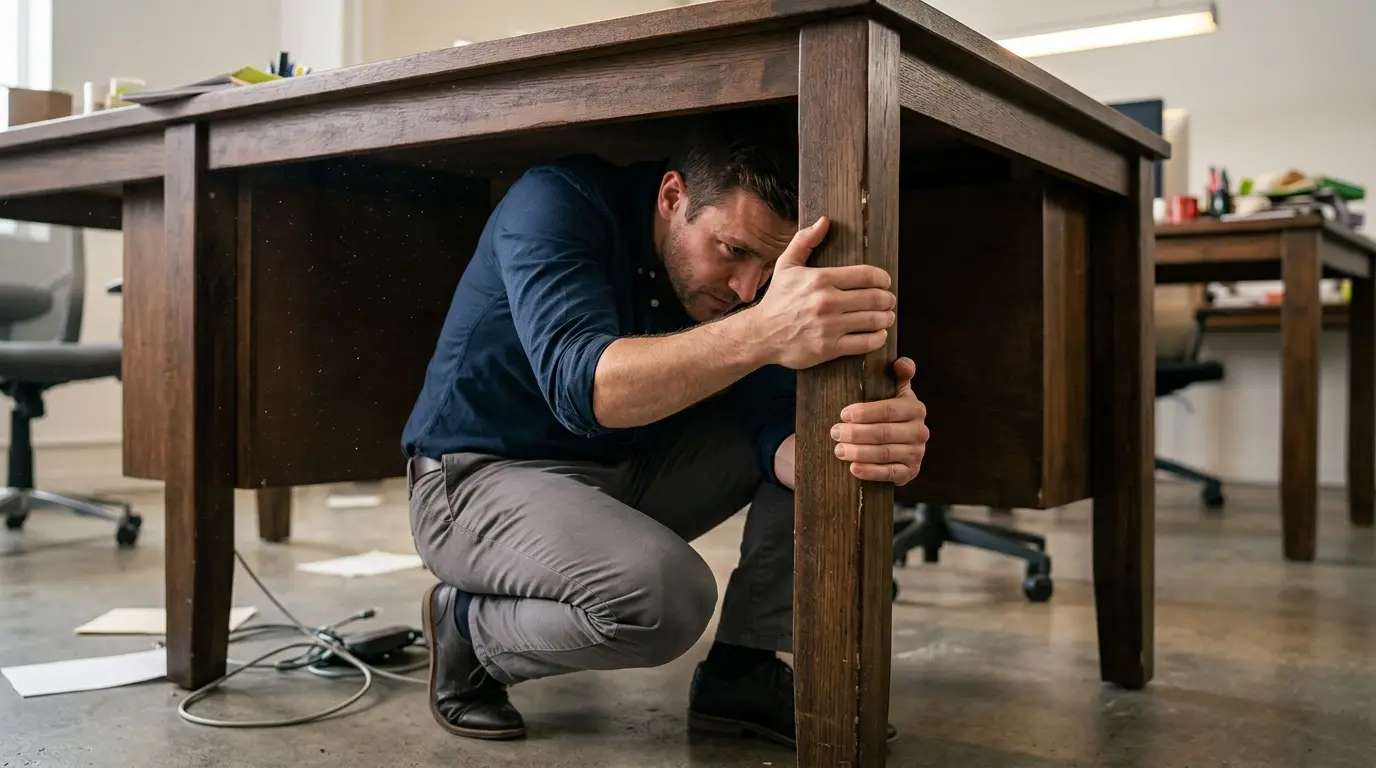
Hold on firmly
Violent tremors can cause heavy furniture to shift rapidly across the room. Disaster response experts suggest holding on tightly to one of the desk legs so your protective shelter moves with you until the shaking completely stops.
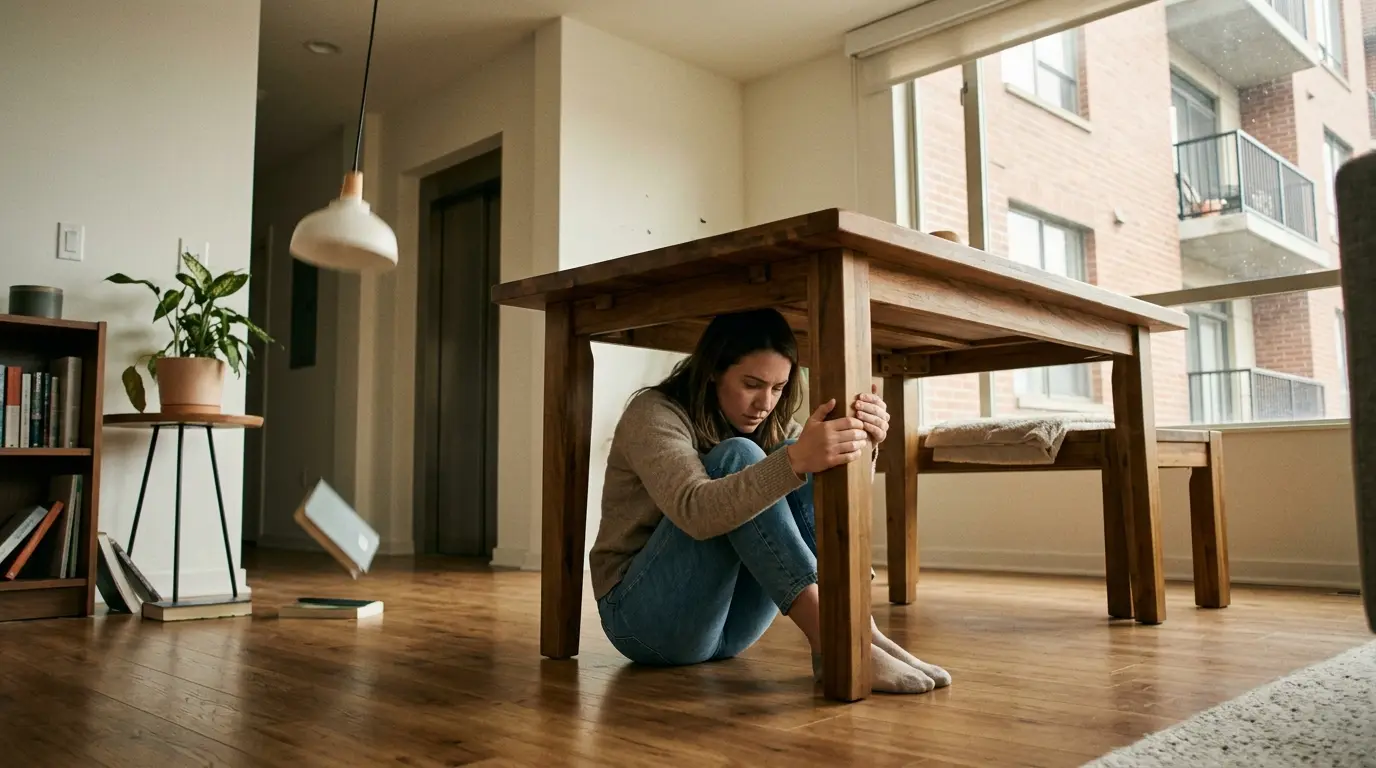
Stay exactly where you are
Attempting to run outside while the ground moves increases the risk of being crushed by exterior facades. The National Disaster Management Authority strongly warns against using stairs or lifts, advising people to remain indoors during the quake.

Evacuate only after the shaking stops
Once the tremors completely subside, exit the building calmly using the stairs. Structural engineers recommend moving to an open assembly area away from power lines, trees, and damaged buildings to avoid hazards from potential aftershocks.
)
)

)
)