10 flight-control features that help the Su-57 fighter jet in high-angle turns

Su-57 turns 30 degrees per second using relaxed stability managed by KSU-50 computer LEVCON vortex lift 3D thrust vectoring all-moving stabilizers blended fuselage high thrust ratio differential engine control advanced surfaces and anti-spin protection for high-angle dominance
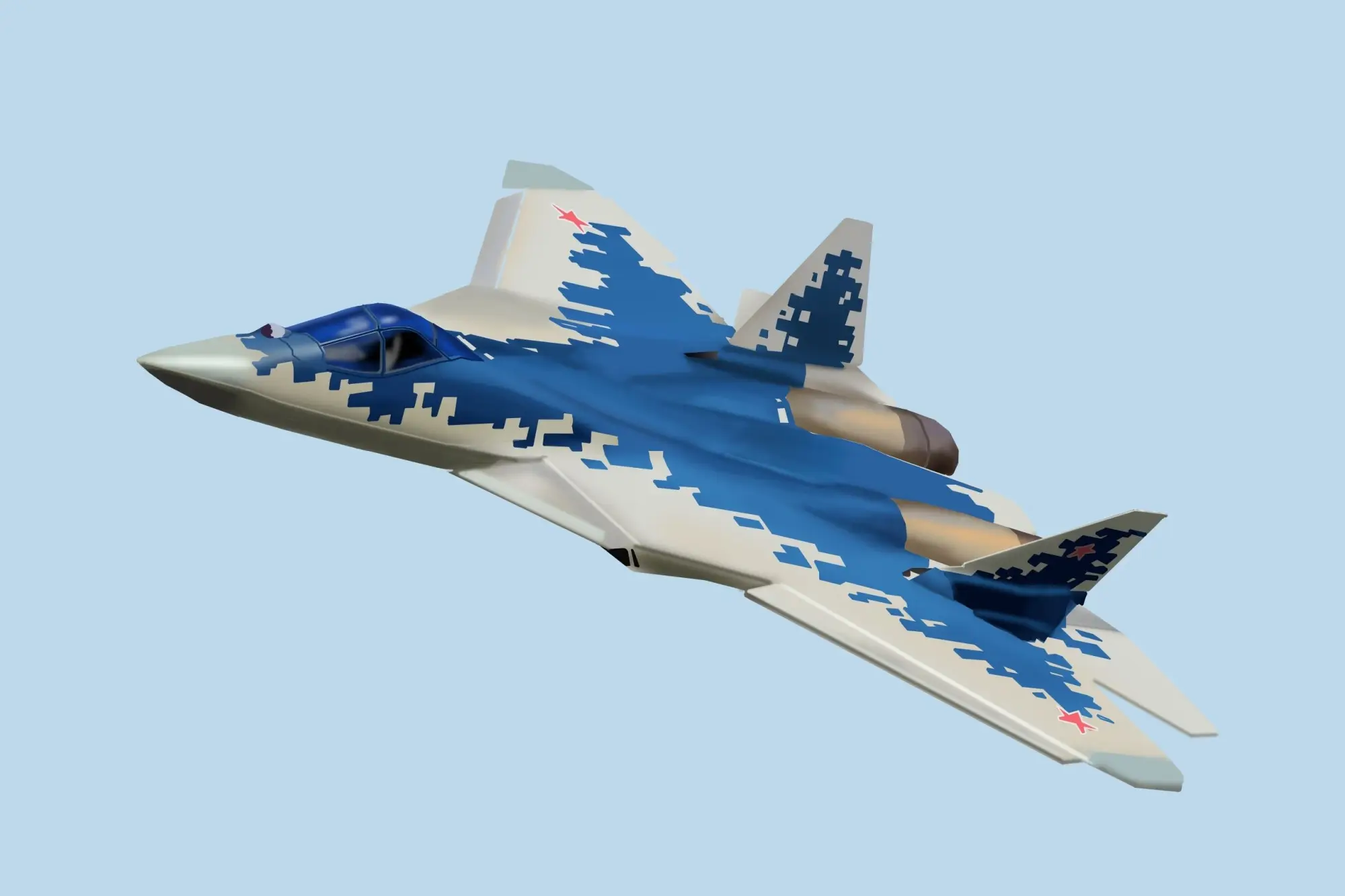
Relaxed Stability Design
The Su-57 operates with inherent aerodynamic instability allowing extremely rapid attitude changes during high-angle turns. Conventional stable aircraft resist rapid direction changes; Su-57's unstable design responds instantly to pilot inputs. The KSU-50 flight control system continuously compensates maintaining artificial stability. This counterintuitive approach enables 30-degree-per-second sustained turns impossible for stable fighters. Pilots achieve precise nose-pointing without control lag in combat situations.
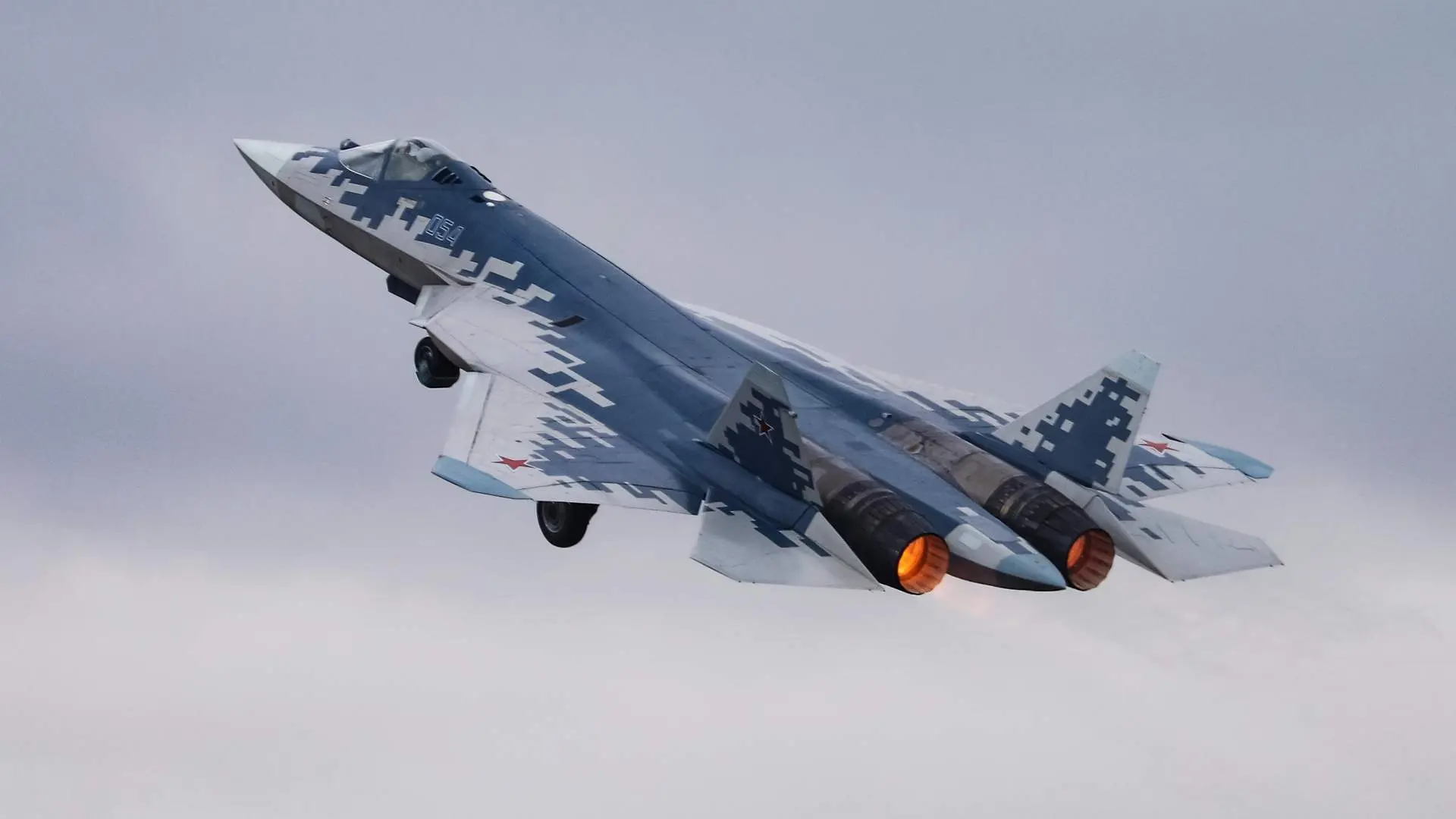
KSU-50 Flight Control Computer
KSU-50 digital fly-by-wire system automatically manages aircraft instability coordinating all control surfaces and engine thrust. Real-time sensors feed angle-of-attack data enabling millisecond response during radical maneuvers. The computer reduces pilot workload by handling stability compensation while pilots focus on tactics. Redundant architecture ensures no single failure compromises high-angle turn performance. Central integration achieves 30 degrees per second sustained turning capability.
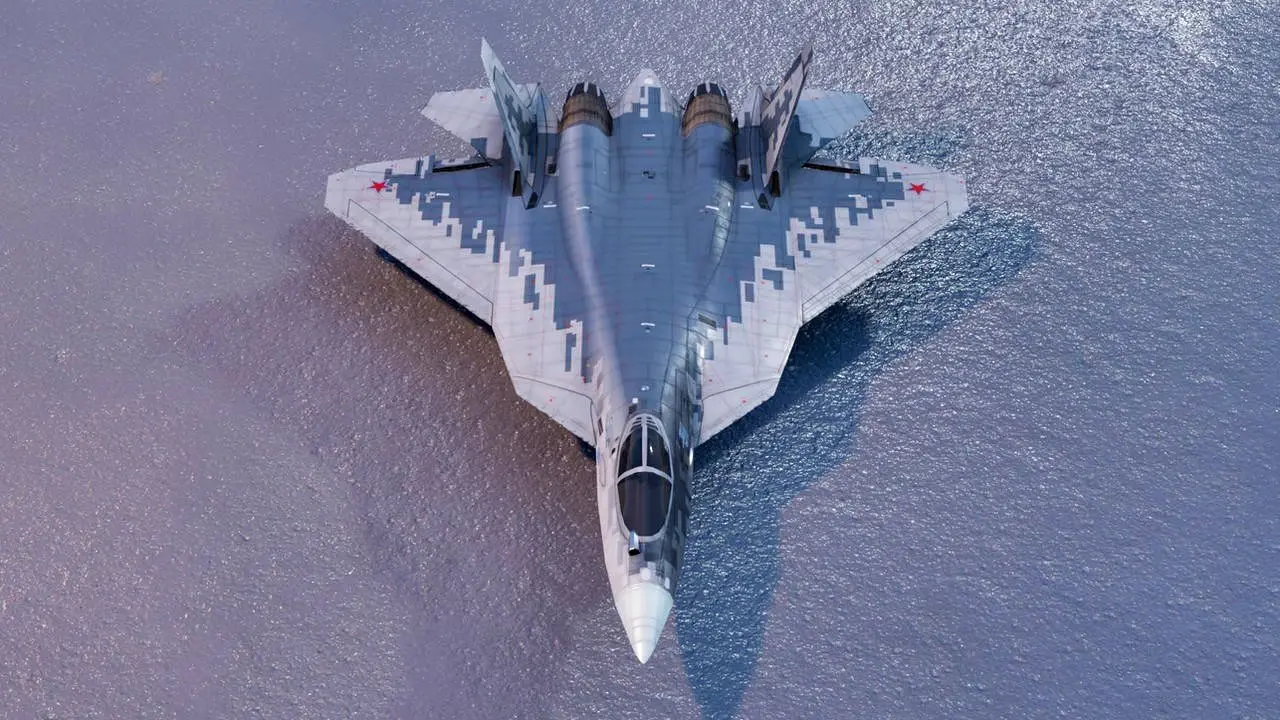
Leading-Edge Vortex Controllers (LEVCONs)
LEVCONs at wing roots generate powerful vortices providing additional lift at high angles of attack up to 60 degrees. These electrically controlled surfaces prevent airflow separation crucial for low-speed high-angle maneuvering. Unlike traditional canards increasing drag, LEVCONs maintain stealth profile while serving similar pitch control function. Testing confirms significant lift increase delaying main wing stall during extreme turns. Su-57 pilots sustain maneuvers beyond conventional aircraft limits.
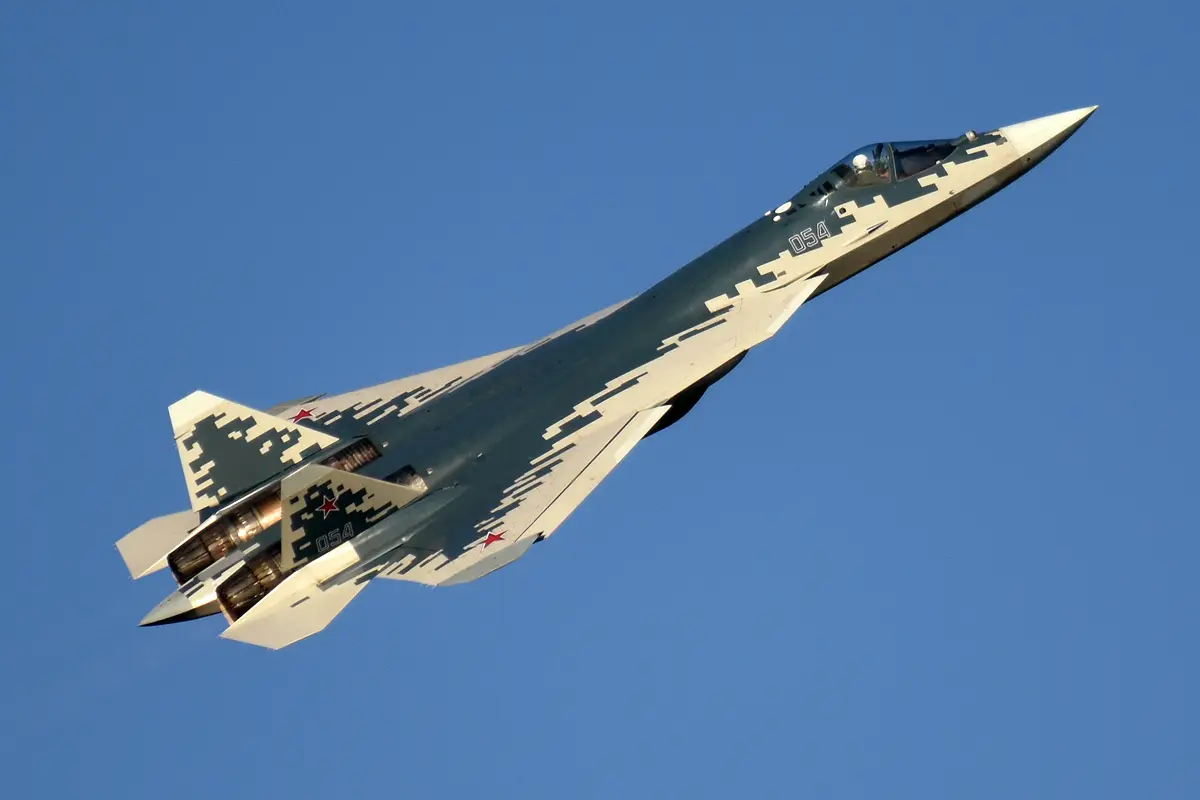
3D Thrust Vectoring Nozzles
Saturn AL-41F1 engines feature nozzles deflecting across pitch roll and yaw axes providing directional control at low speeds. When aerodynamic surfaces lose effectiveness during high-angle turns vectored thrust maintains full authority. Nozzle deflection creates control moments independent of airflow conditions. Future Izdeliye 30 engines will enhance this capability further. Multi-axis vectoring sustains 30-degree-per-second turns through stalled flight regimes.
All-Moving Stabilizers
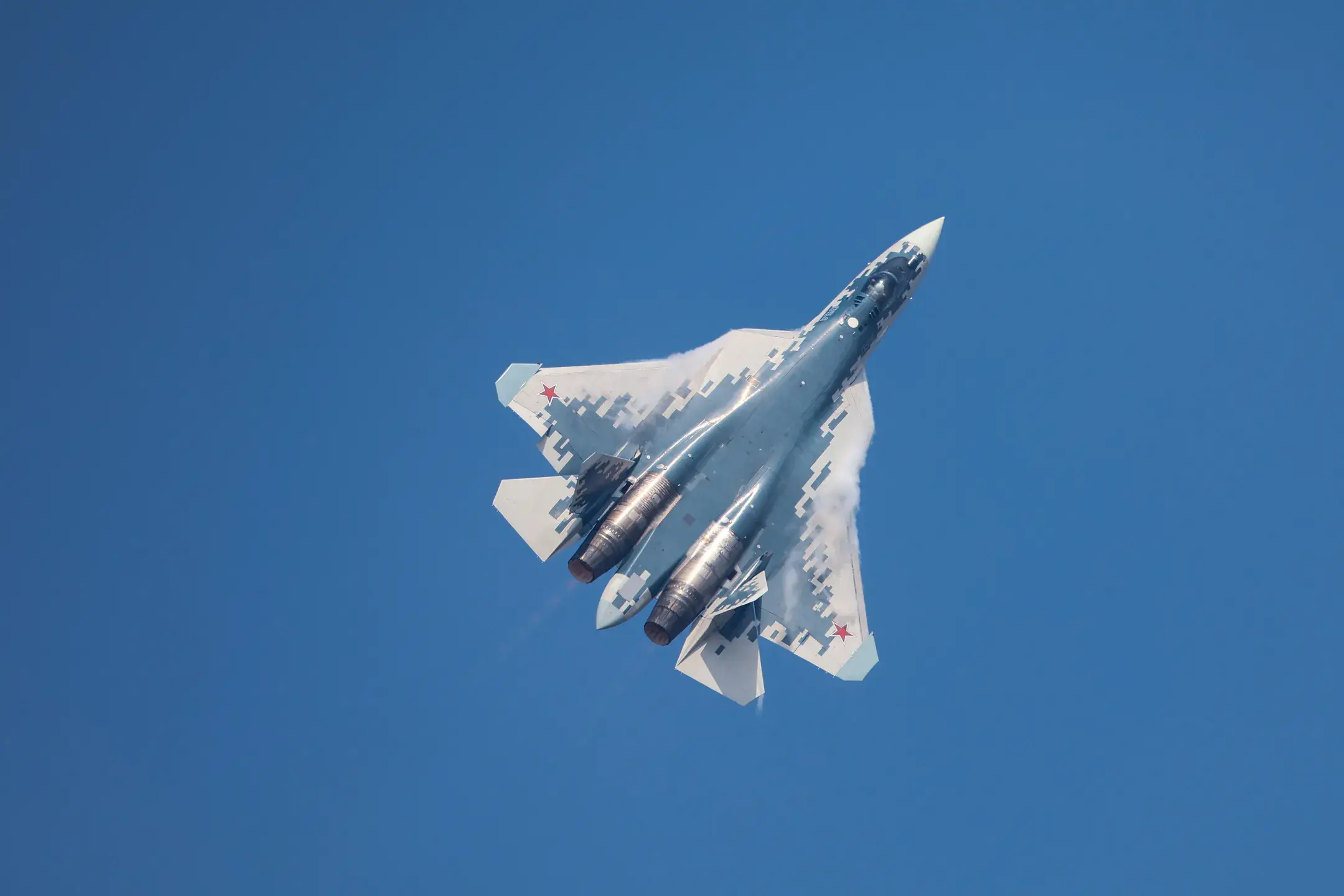
Both horizontal stabilators and vertical rudders move completely providing maximum control authority compared to conventional hinged surfaces. High-angle turns degrade traditional control effectiveness; all-moving design eliminates this limitation. Full surface movement delivers pitch and yaw control throughout extreme flight envelopes. Coupled with LEVCONs and thrust vectoring all-moving stabilizers enable precision control during sustained maximum-rate turns.
Blended Wing-Body Fuselage
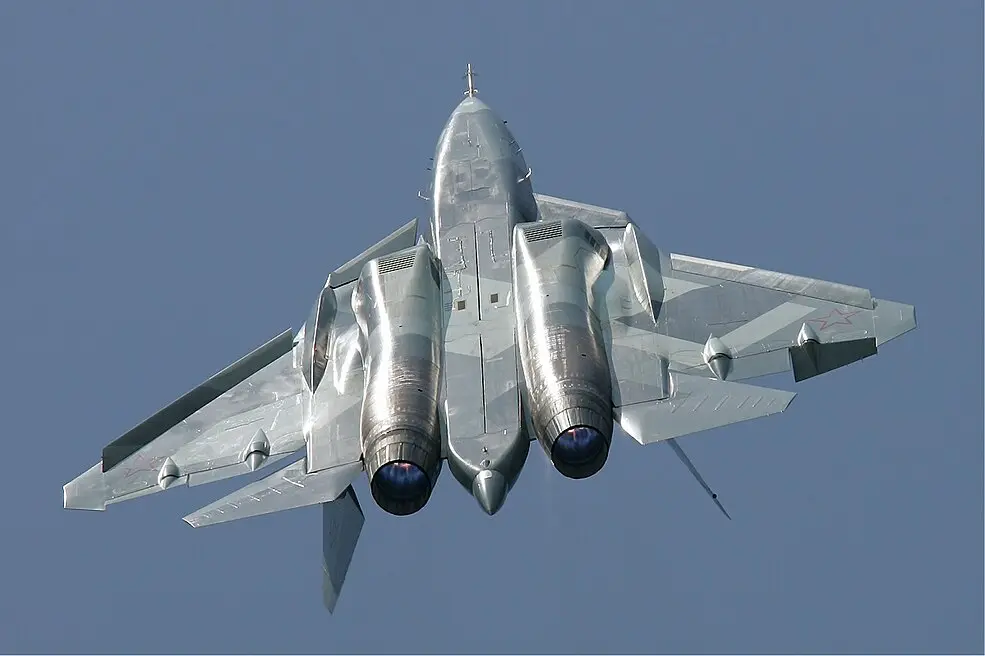
Wide flat fuselage design generates substantial lift reducing drag during high-angle turns. Blended configuration contributes significantly to total aircraft lift unlike conventional fighters relying primarily on wings. Fuselage lift delays flow separation enabling sustained high-angle performance. This distributed lift architecture supports 30-degree-per-second turns longer than competitors. Unique airframe shape optimises turning efficiency across flight regimes.
High Thrust-to-Weight Ratio
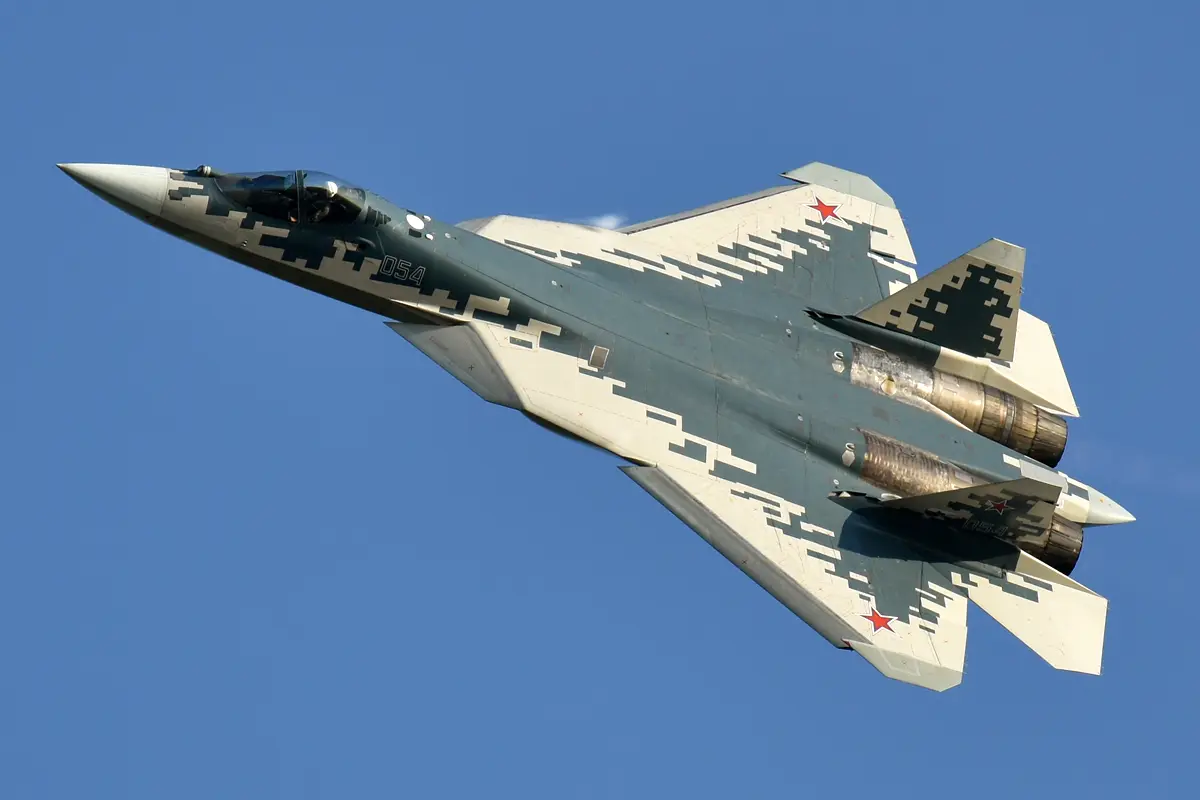
Powerful engines deliver 1.2 thrust-to-weight ratio enabling energy-intensive high-angle maneuvers without speed decay. Current AL-41F1 engines provide 117.7 kilonewtons dry thrust; future Izdeliye 30 powerplant increases performance further. High power margins maintain control authority at low dynamic pressure. Sustained 7-8g loading requires continuous thrust unavailable to lower-powered fighters. Excess power supports rapid energy recovery after extreme turns.
Differential Engine Control
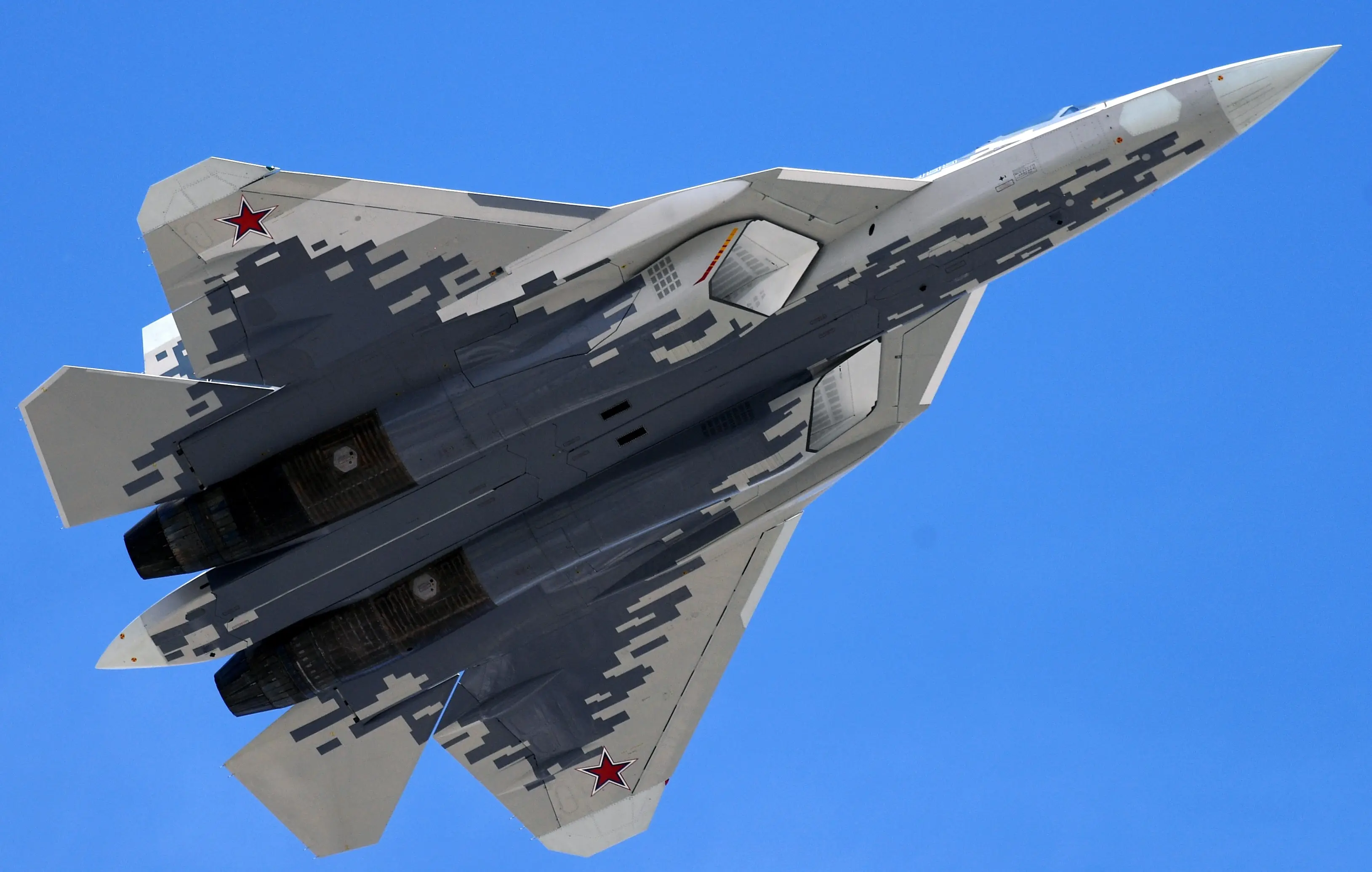
3D thrust vectoring system moves left and right nozzles independently creating powerful control moments in all axes. Asymmetric nozzle deflection generates immediate roll response supplementing aerodynamic controls. During high-angle turns where wings stall differential thrust maintains multi-axis authority. Pilots command precise attitude changes through engine asymmetry. This capability enhances 30-degree-per-second sustained turn performance.
Advanced Control Surfaces
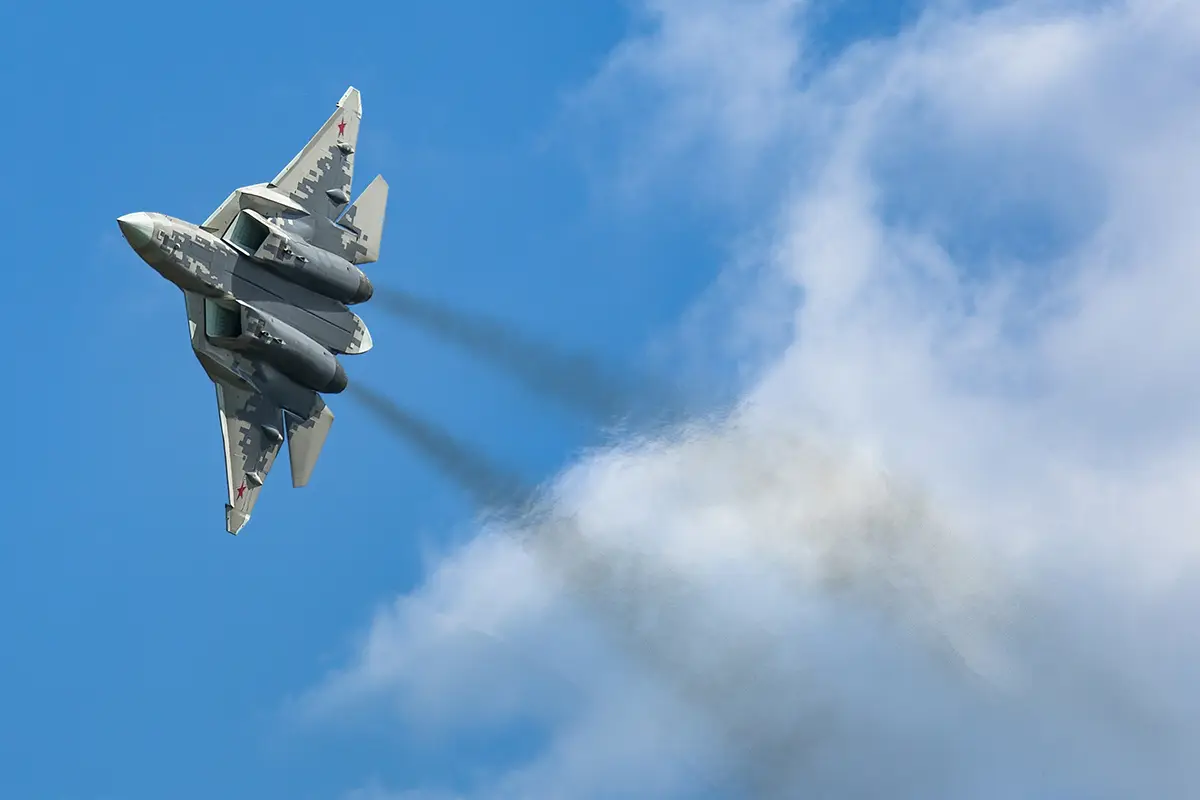
Flaperons and multiple control surfaces work in concert managed by KSU-50 algorithms optimising aerodynamic efficiency. High-angle turns require coordinated surface deflection maximising lift while minimising drag. Advanced flight control laws distribute control effort across all available surfaces. Integration prevents conflicting aerodynamic moments during extreme maneuvers. This holistic surface management supports superior sustained turn capability.
Built-in Anti-Spin Protection
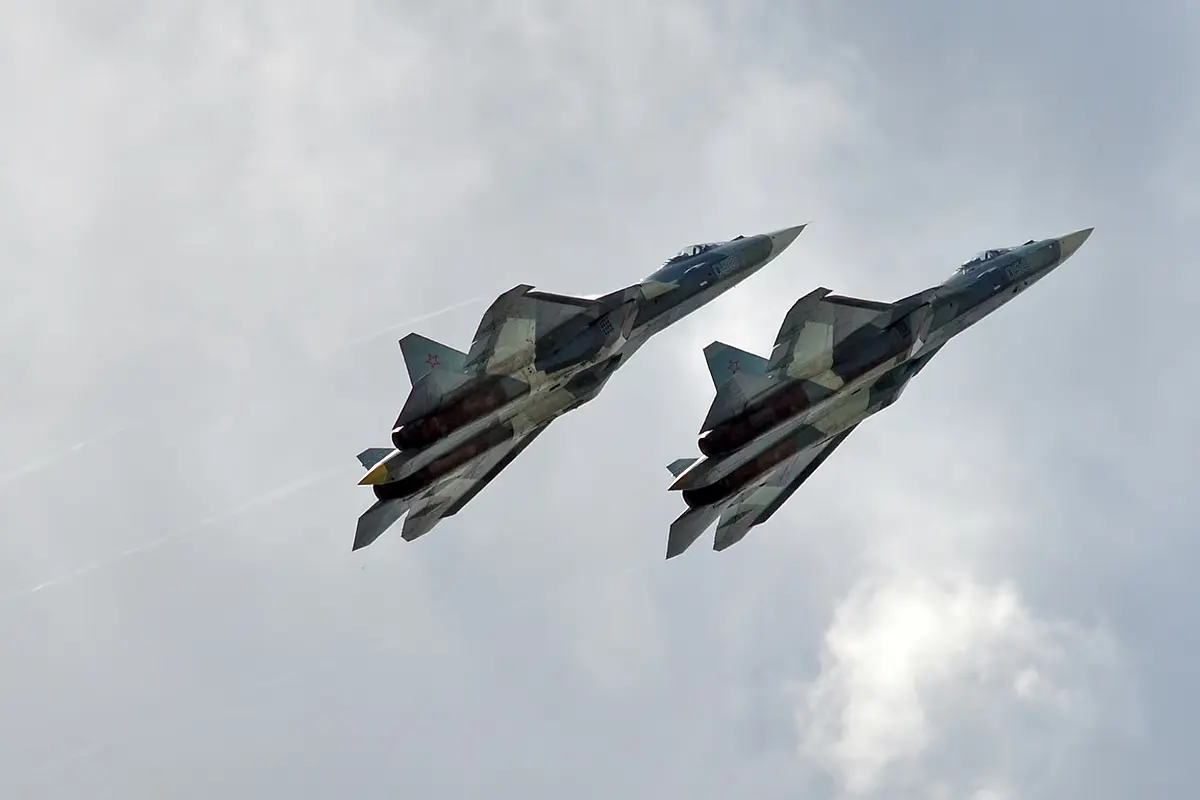
Integrated design makes Su-57 highly departure-resistant ensuring rapid recovery from stalls or spins. Pilots push aerodynamic limits safely knowing automatic systems prevent uncontrolled departures. KSU-50 monitors flight parameters intervening before spin entry. Combined control features enable controlled flight beyond conventional stall limits. This safety margin allows aggressive high-angle turn execution during combat without departure risk.
)
)
)
)
)