'We can't defend': Why Cleveland Ohio meteor hit is a serious wake-up call for humanity

Meteors strike the Earth's atmosphere daily, but they are almost entirely invisible during the day. For a meteor to be visible against a bright blue morning sky, as this one was at 8:57 a.m, it must be overwhelmingly luminous and incredibly powerful.
1. A 7-Ton Asteroid at Hypersonic Speed
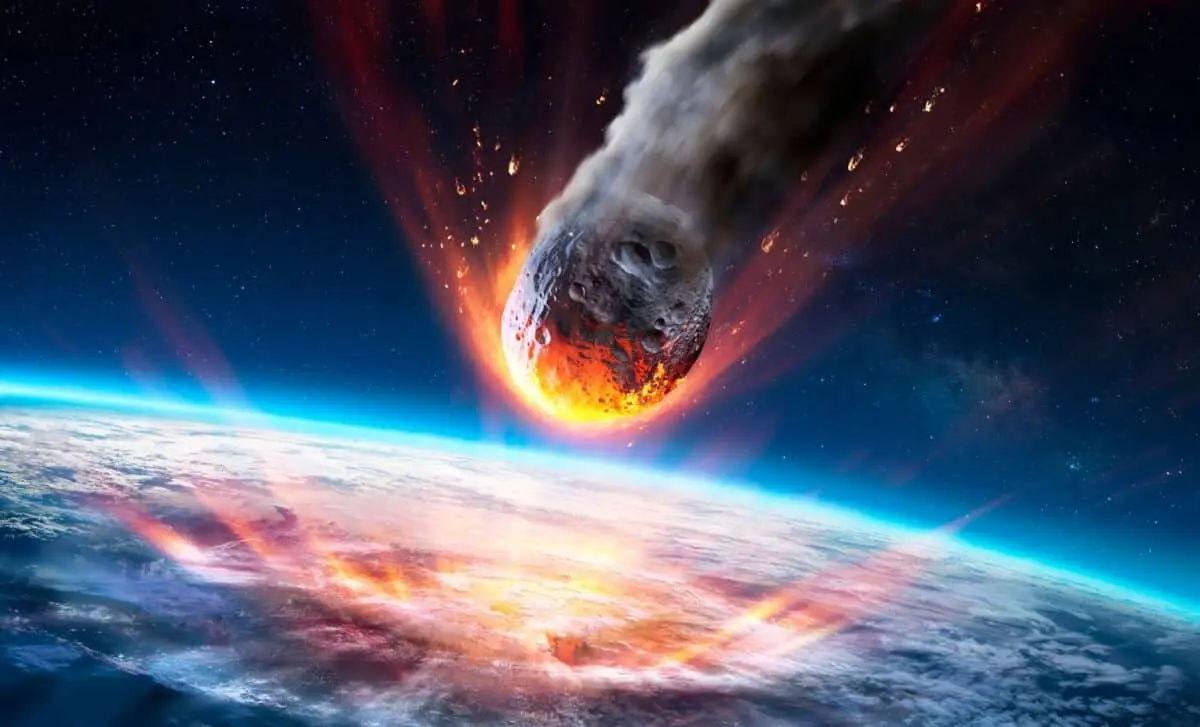
This was not a harmless shooting star. NASA’s Meteoroid Environments Office confirmed that the object was a solid asteroid measuring roughly 6 feet in diameter and weighing an estimated 7 tons. It slammed into the Earth's atmosphere traveling at an astonishing 45,000 miles per hour. It was first detected about 50 miles above Lake Erie, near Lorain, before hurtling southeast through the upper atmosphere.

2. An Explosion Equivalent to 250 Tons of TNT
When the asteroid fragmented roughly 30 miles above Valley City, Ohio, the sheer kinetic energy released was catastrophic. NASA estimates the mid-air explosion unleashed the energy equivalent of 250 tons of TNT. To put that into perspective, that is a massive, military-grade detonation occurring directly above a heavily populated American metropolitan area.
3. A Rare "Daylight Fireball"
Meteors strike the Earth's atmosphere daily, but they are almost entirely invisible during the day. For a meteor to be visible against a bright blue morning sky, as this one was at 8:57 a.m, it must be overwhelmingly luminous and incredibly powerful. This "daylight fireball" was so intense it was visually confirmed by eyewitnesses across at least 10 US states, Washington D.C., and Ontario, Canada.

4. A Shockwave That Triggered Seismometers
The defining feature of this event was the deafening sonic boom and subsequent pressure wave. Because the asteroid was massive and moving much faster than the speed of sound, its fragmentation sent a violent shockwave crashing down to the Earth's surface. The force was strong enough to shake houses, rattle windows, and convince residents that a plane had crashed or a chemical plant had exploded. The impact wave was so intense it was physically recorded by ground-based earthquake seismometers in Lorain County.
5. The Planetary Defense Blindspot
The most alarming aspect of the March 17 meteor is that no one saw it coming. NASA and other space agencies actively track large Near-Earth Objects (NEOs), but this asteroid, at 6 feet across, was just below the size threshold of what current orbital tracking systems can detect in the darkness of space. It essentially snuck through Earth's planetary defence systems, proving that a rock capable of unleashing a 250-ton TNT explosion can hit a populated area with absolute zero warning.

6. The Chelyabinsk Comparison
While no injuries were reported in Ohio, scientists point to a very similar event to explain the danger. In 2013, a slightly larger meteor exploded about 15 miles above Chelyabinsk, Russia. The resulting shockwave from that airburst blew out windows across the city and injured over 1,600 people. The Ohio meteor was smaller, but it serves as a stark reminder that if this asteroid had been just slightly larger, or made of denser metallic material that allowed it to penetrate deeper into the atmosphere before detonating, the damage in Cleveland could have been devastating.

7. The Hunt for Surviving Meteorites
The danger isn't just in the airburst; it's in the debris. NASA confirmed that the asteroid did not entirely vapourize. Fragments of the space rock, now classified as meteorites, survived the explosion and rained down toward the ground. Officials believe debris was scattered in the vicinity of Medina County, Ohio. Scientists are now rushing to locate these fragments to study the composition of the asteroid, while authorities urge the public not to handle any unusual space rocks they might find.
)
)
)
)
)