'US vs Iran’: What can be the reason Iran is not afraid of USS Abraham Lincoln?

Iran relies on asymmetric warfare, geography, and cost-effective weapons to counter US naval power. By utilising swarm boats, narrow straits, and cheap drones, Tehran aims to make the Persian Gulf too risky for American carriers.
The Asymmetric Doctrine
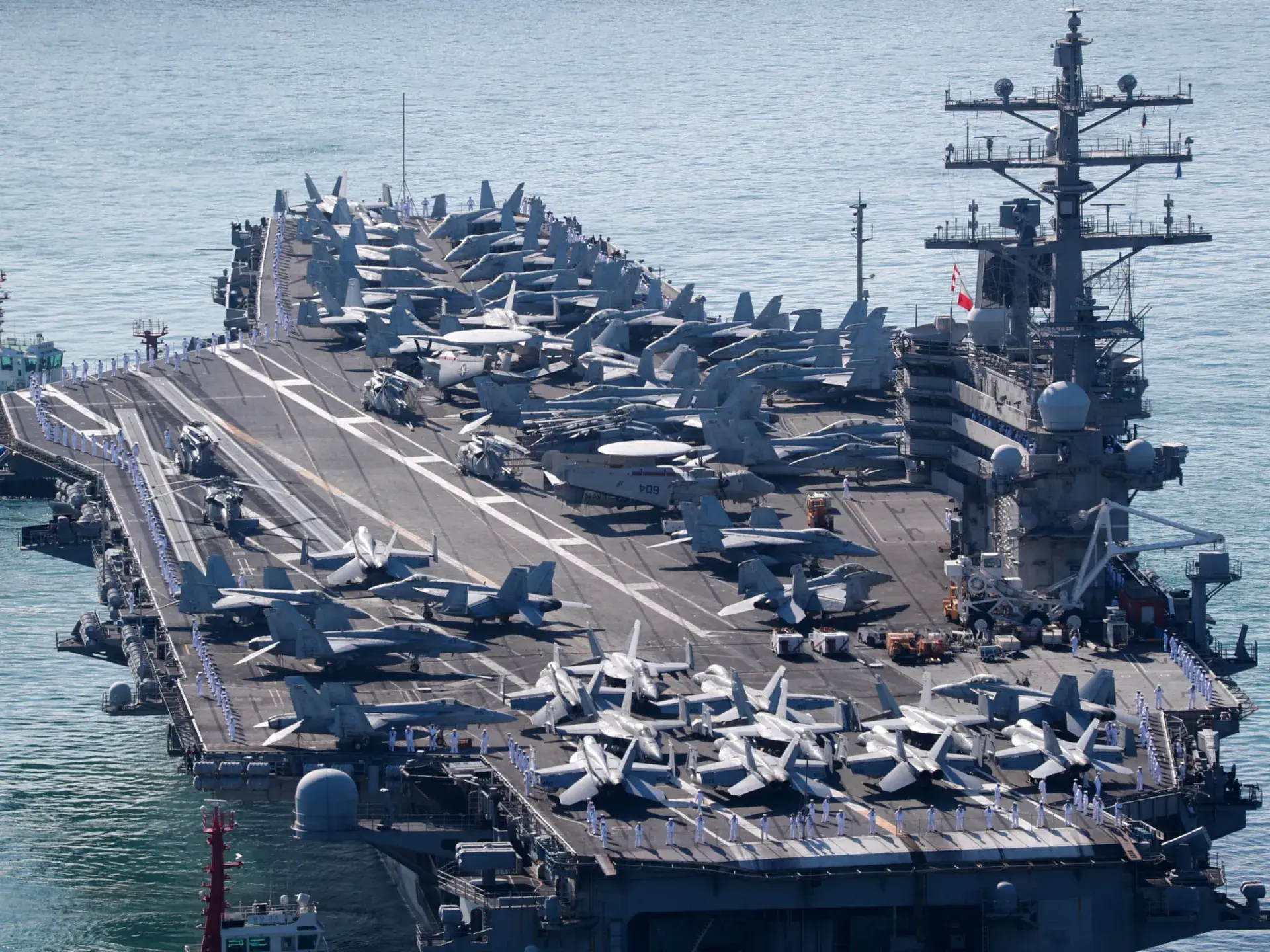
Iran does not try to match the US Navy ship-for-ship, which would be impossible. Instead, the Islamic Revolutionary Guard Corps (IRGC) uses asymmetric warfare to level the playing field. This involves using unconventional tactics and smaller, cheaper weapons to inflict maximum damage on expensive American assets like the USS Abraham Lincoln.
The Strait of Hormuz Trap
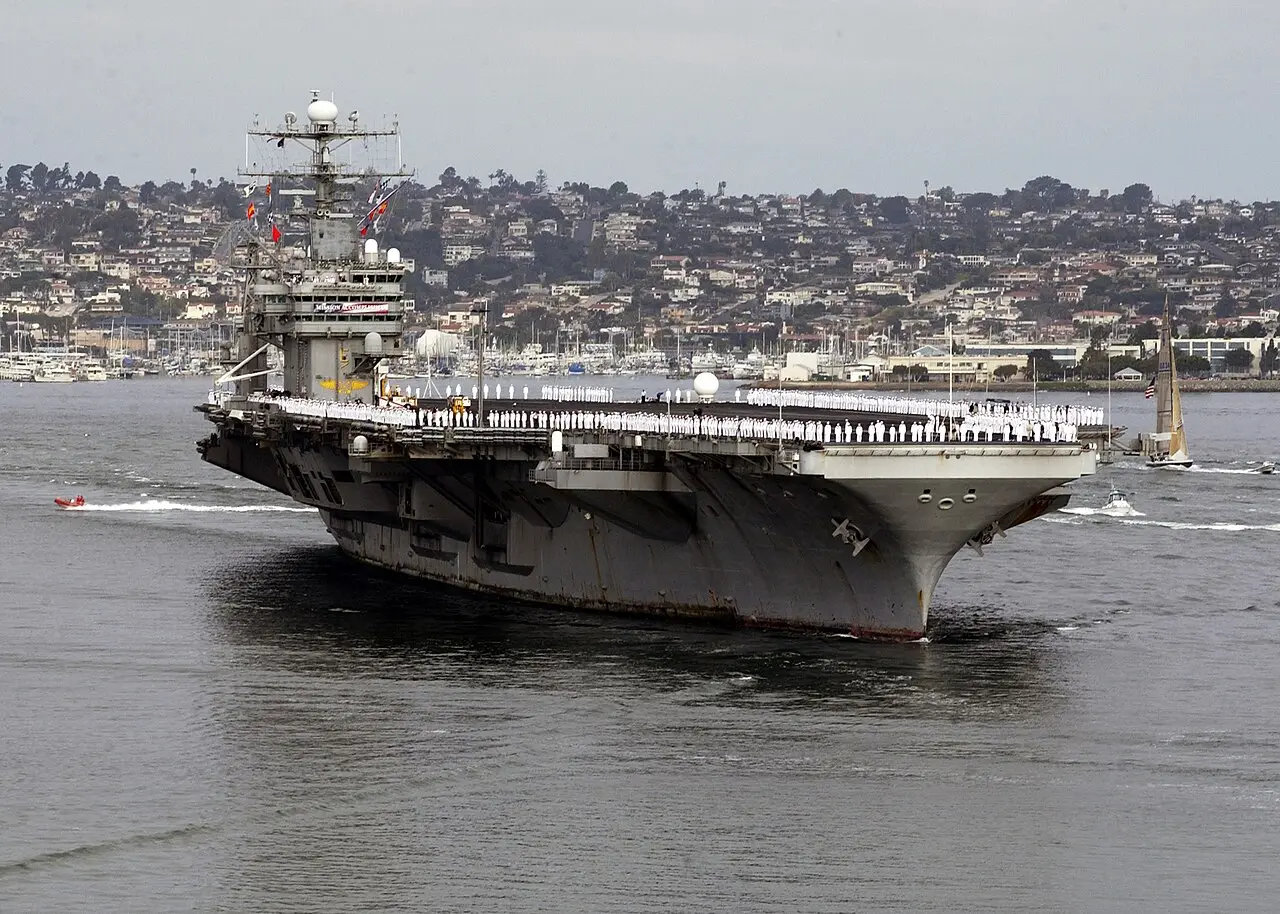
The Persian Gulf enters the ocean through the Strait of Hormuz, which is only 34 kilometres wide at its narrowest point. Large aircraft carriers have limited room to manoeuvre here, making them predictable targets. Iran controls the northern coast and can easily target ships in these confined waters from land-based missile batteries.
Swarm Boat Tactics
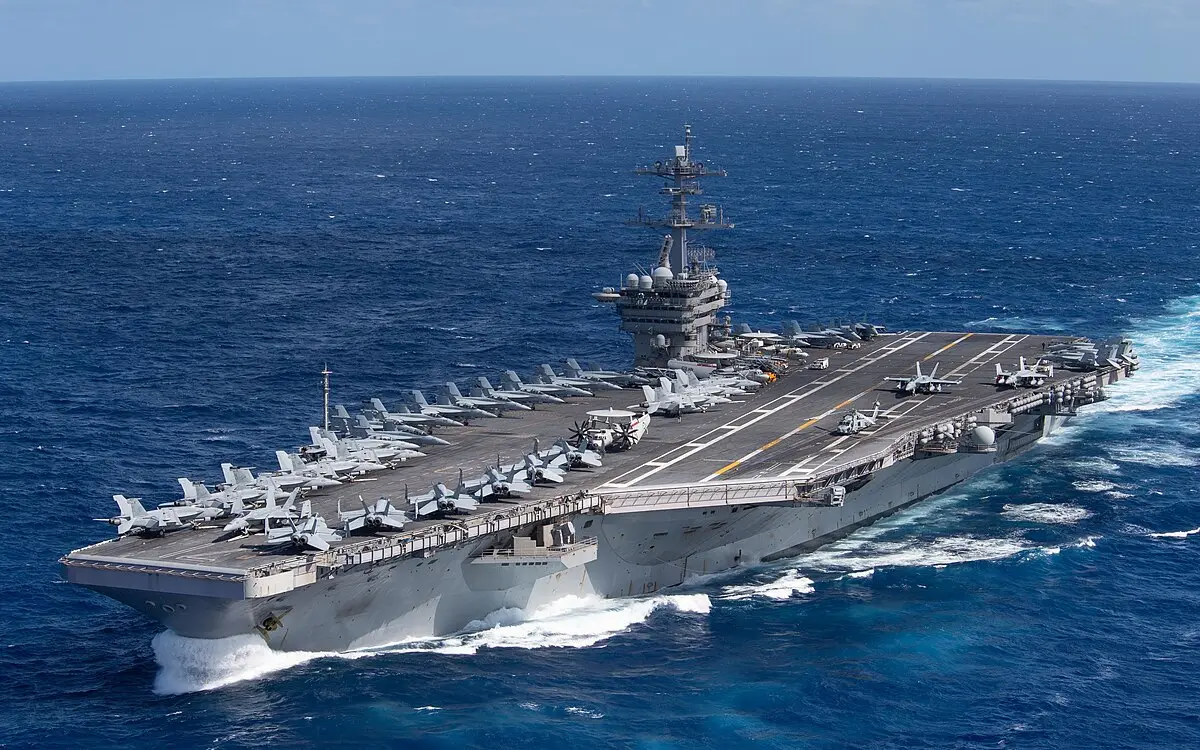
The IRGC Navy operates hundreds of small, fast attack craft armed with machine guns, rockets, and torpedoes. These speedboats practice ‘swarm tactics’, attacking a single large ship from multiple directions simultaneously. US defensive systems are designed to stop missiles, but tracking hundreds of small boats at once is extremely difficult.
‘Carrier Killer’ Missiles
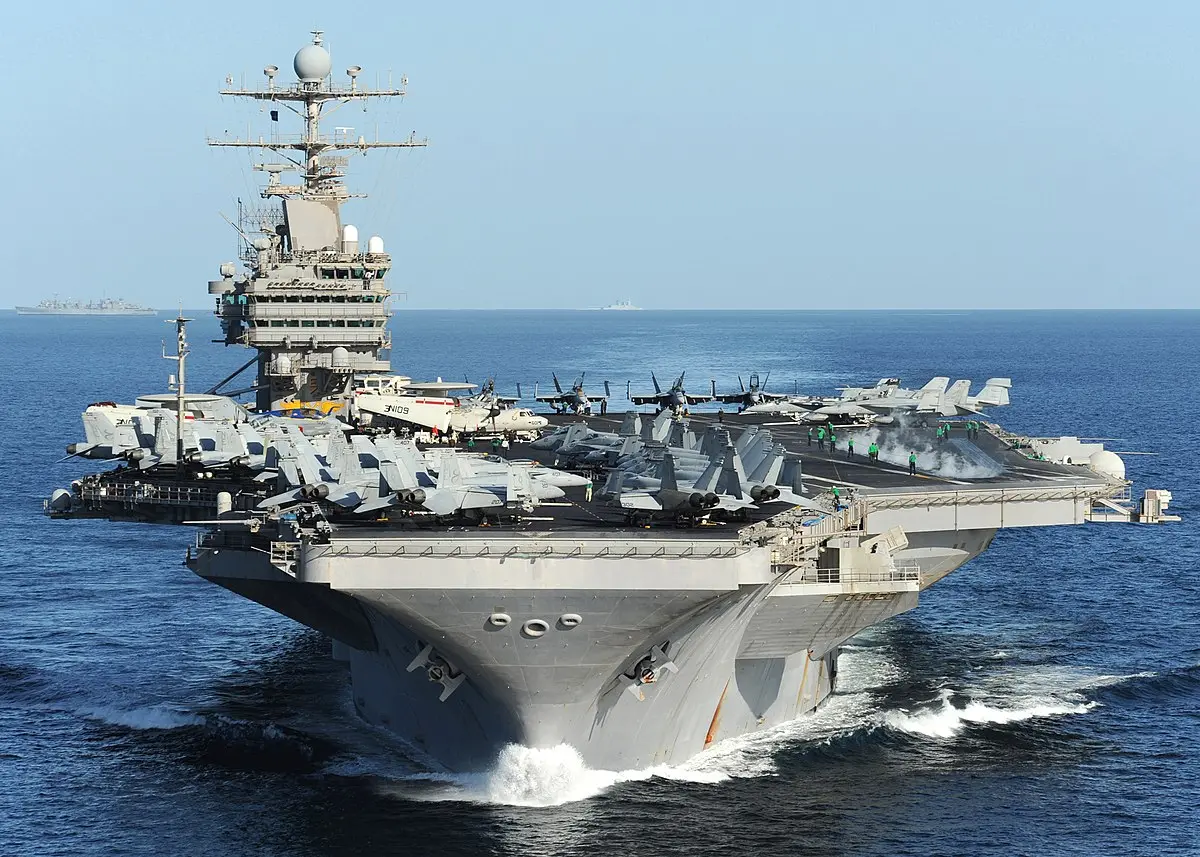
Iran has developed specific anti-ship ballistic missiles (ASBMs) like the ‘Khalij Fars’. These missiles are designed to target moving vessels at sea with a range of 300 kilometres or more. Tehran claims these weapons travel at supersonic speeds, reducing the reaction time available for the USS Abraham Lincoln’s defence systems.
Cheap Drones vs Expensive Defences
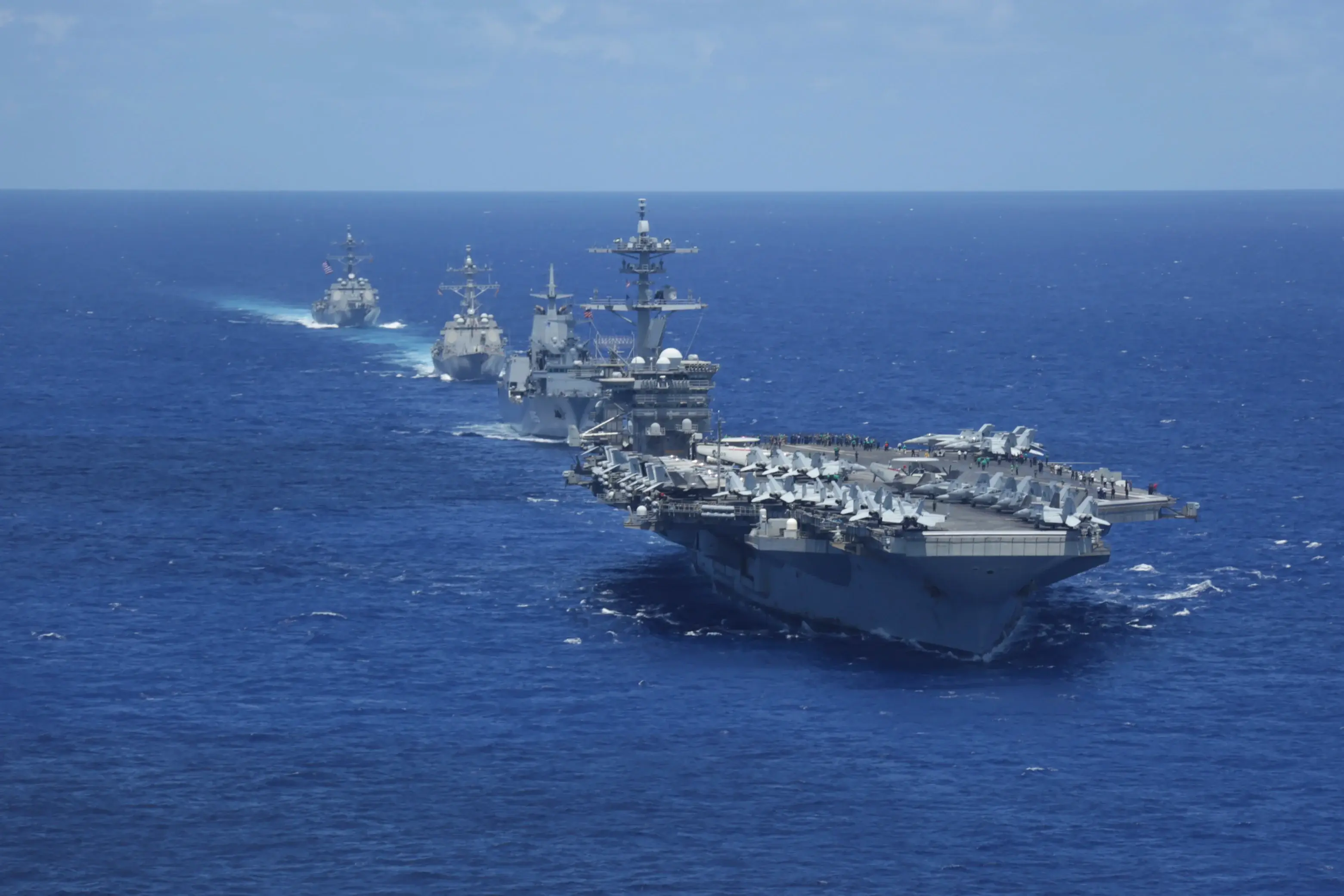
Iran uses mass-produced drones, such as the Shahed series, which cost a fraction of a US interceptor missile. A swarm of cheap drones can overwhelm a carrier’s air defence radar. Even if the US shoots them down, the cost difference creates a sustainable economic advantage for Iran during a prolonged conflict.
Ghadir-Class Submarines
Iran’s navy utilises Ghadir-class midget submarines tailored for the shallow waters of the Persian Gulf. Unlike large nuclear submarines, these small vessels can hide near the seabed and wait in ambush. They are difficult to detect with sonar in noisy coastal waters and carry heavy torpedoes capable of damaging large warships.
Massive Naval Mine Arsenal
Mines are a low-tech but highly effective threat in narrow waterways. Iran possesses thousands of naval mines that can be deployed quickly by small boats or submarines. Striking a single mine can take a multibillion-dollar warship out of action, making the Strait of Hormuz a dangerous zone for any navy.
Hypersonic Missile Claims
Tehran recently unveiled the ‘Fattah-2’ missile, claiming it has hypersonic glide capabilities. While western experts debate its true effectiveness, a functional hypersonic weapon would be a game-changer. These missiles fly at lower altitudes and manoeuvre unpredictably, making them challenging for traditional US Aegis defence systems to intercept.
The Economic Calculation
Replacing a supercarrier like the USS Abraham Lincoln costs roughly $13 billion, while an Iranian missile or drone costs relatively little. Iran believes the US is risk-averse and will hesitate to expose such an expensive asset to cheap attacks. This ‘cost imposition’ strategy is central to Tehran’s confidence in a potential standoff.
Historical War Games
Iran’s confidence is partly rooted in studies like the US military’s own ‘Millennium Challenge 2002’ wargame. In that simulation, a fictional adversary using swarm tactics and motorcycle messengers managed to ‘sink’ a US carrier fleet. This history reinforces the belief in Tehran that superior technology does not guarantee victory.
)
)
)
)
)