'The CO₂/H₂O ratio': What it tells us about 3I/ATLAS’ birthplace

Detection of CO₂, CO, and OCS, alongside water, suggests 3I/ATLAS incorporated ices from a cold, outer disk where volatiles could freeze without being destroyed by radiation from the young parent star.
1. 3I/ATLAS Shows an Unusually High CO₂/H₂O Ratio for a Comet
Early spectroscopic measurements indicate that 3I/ATLAS has a CO₂/H₂O ratio higher than what is common in many Solar System comets. Elevated CO₂ relative to water means the nucleus contains large amounts of carbon dioxide ice that has survived for billions of years, a strong indicator that the comet formed in extremely cold regions of its home planetary system.
2. High CO₂ Indicates Formation Far Beyond the Snow Line
In protoplanetary disks, water ice condenses relatively close to the star, but CO₂ ice condenses much farther out, at temperatures below 70–90 K. A high CO₂/H₂O ratio implies that 3I/ATLAS originated in a region well beyond the water-ice snow line, similar to the Kuiper Belt or Oort Cloud region of another star system.
3. Its Volatile Mix Suggests a Cold, Slow-Building Protoplanetary Disk Environment
Detection of CO₂, CO, and OCS, alongside water, suggests 3I/ATLAS incorporated ices from a cold, outer disk where volatiles could freeze without being destroyed by radiation from the young parent star. This chemical fingerprint aligns with bodies formed in the outermost, low-temperature zones of exoplanetary systems.
4. The Ratio Also Suggests Minimal Early Heating From Its Parent Star
If 3I/ATLAS had spent much time near its home star, CO₂ would have been depleted long ago. The preservation of high CO₂/H₂O implies the object was never significantly heated, and was likely ejected early, during the chaotic phase of giant planet formation — before it could warm enough to lose its volatile ices.
5. Its Chemistry Differs From Many Solar System Comets
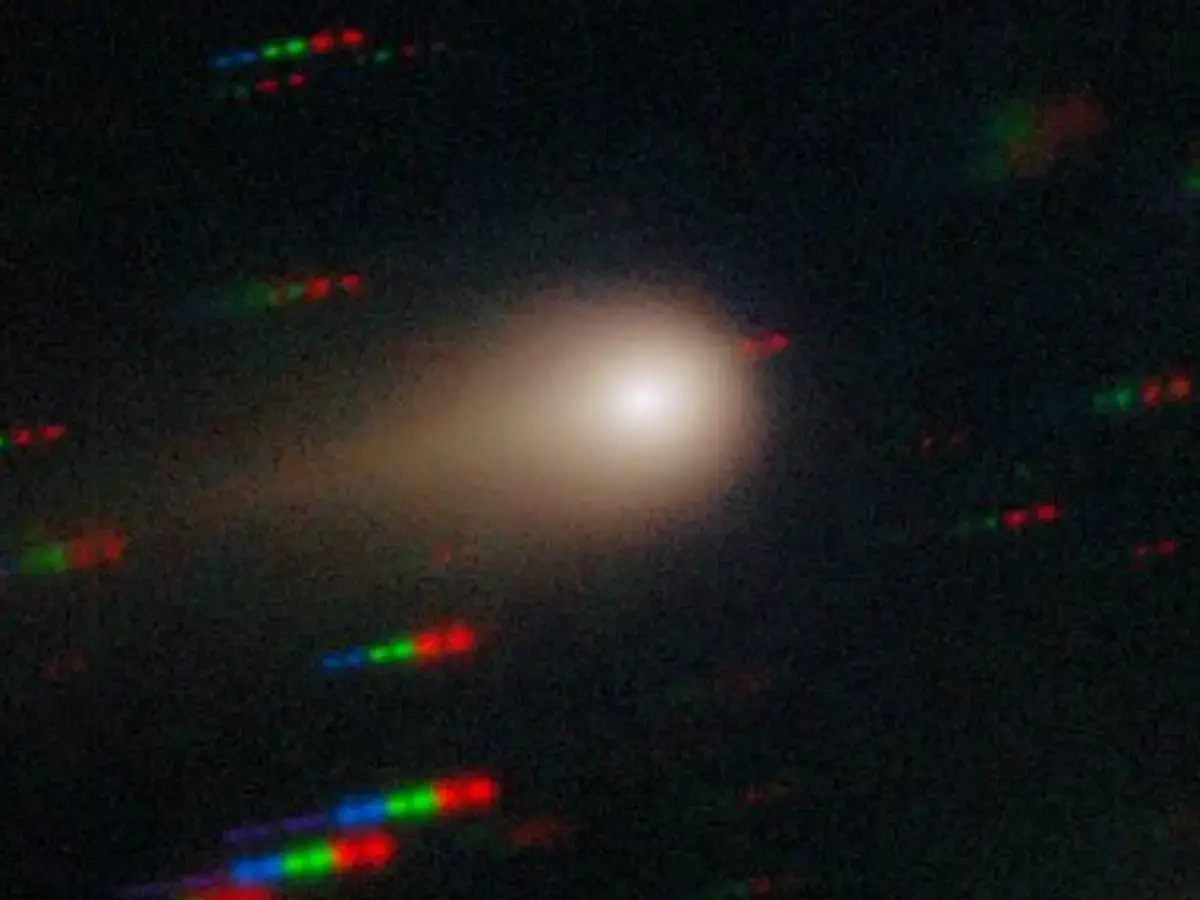
While some Solar System comets show elevated CO₂, many have water-dominated volatile profiles. 3I/ATLAS’ CO₂-rich signature suggests that extrasolar comet populations may be chemically distinct. This supports the idea that planetary systems vary widely in disk chemistry, temperature gradients, and snow-line positions.
6. High CO₂ May Reflect Long-Term Interstellar Preservation of Volatiles
The comet likely spent billions of years in interstellar space, exposed to cosmic rays. CO₂ is more resilient to cosmic-ray processing than longer carbon chains. Its survival indicates both deep cold storage and a composition that resisted radiation breakdown, strengthening the case for a cold-birth, cold-travel history.
7. The CO₂/H₂O Ratio Helps Narrow Down 3I/ATLAS’ Origin Zone
Combining all evidence —
- high CO₂/H₂O ratio,
- preserved volatiles,
- carbon-chain depletion,
- nickel-bearing species —
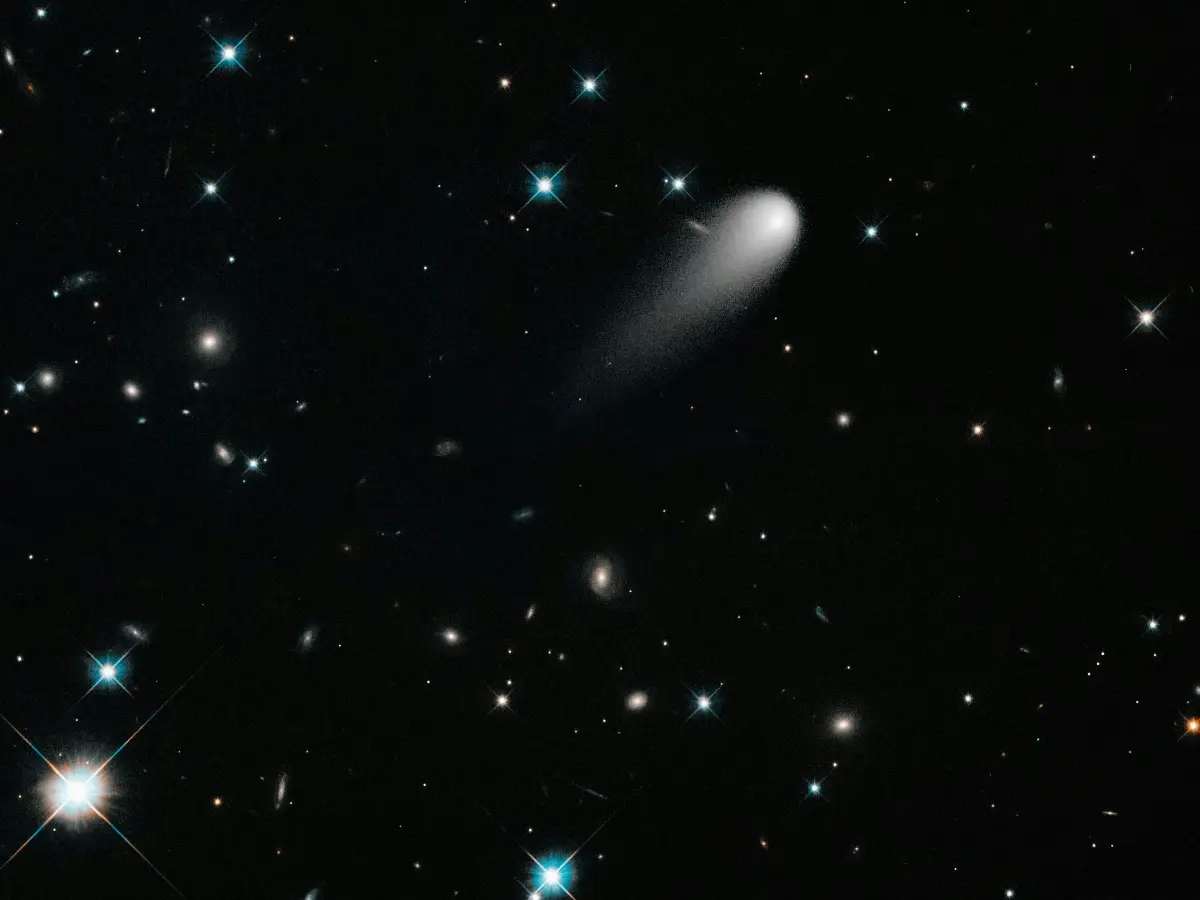
astronomers infer that 3I/ATLAS most likely originated in the outer, icy reservoirs of a distant exoplanetary system, analogous to the Kuiper Belt or Oort Cloud around our Sun. This places its birthplace far from its parent star, in a zone where volatile molecules could freeze, accumulate, and survive for gigayears.
)
)
)
)
)