'Storm warning': What does the USS Abraham Lincoln do when big waves hit?

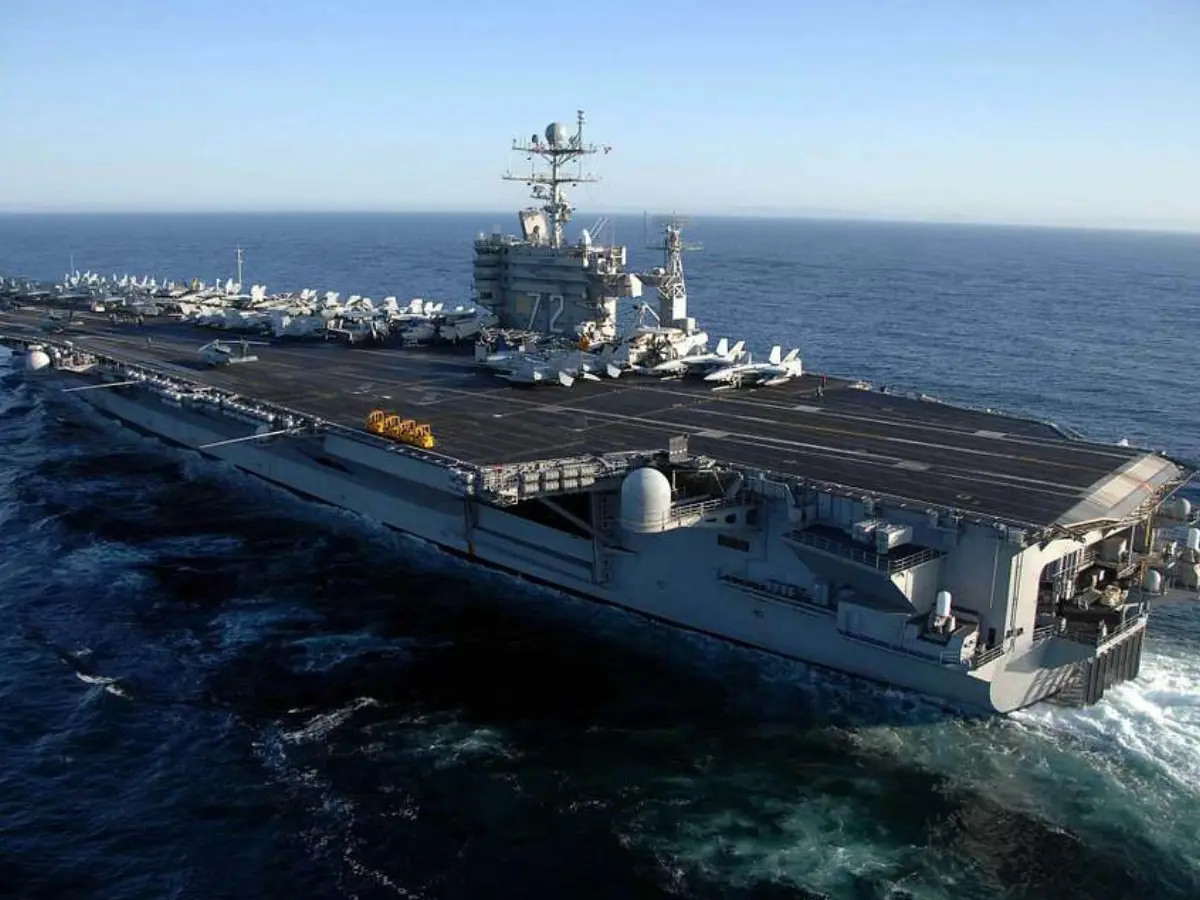
The USS Abraham Lincoln uses its 100,000-tonne mass, 333-metre length, and nuclear speed to handle severe ocean storms. From steering into waves to using heavy steel chains for aircraft, the crew employs strict protocols to ensure safety and stability in the roughest seas.
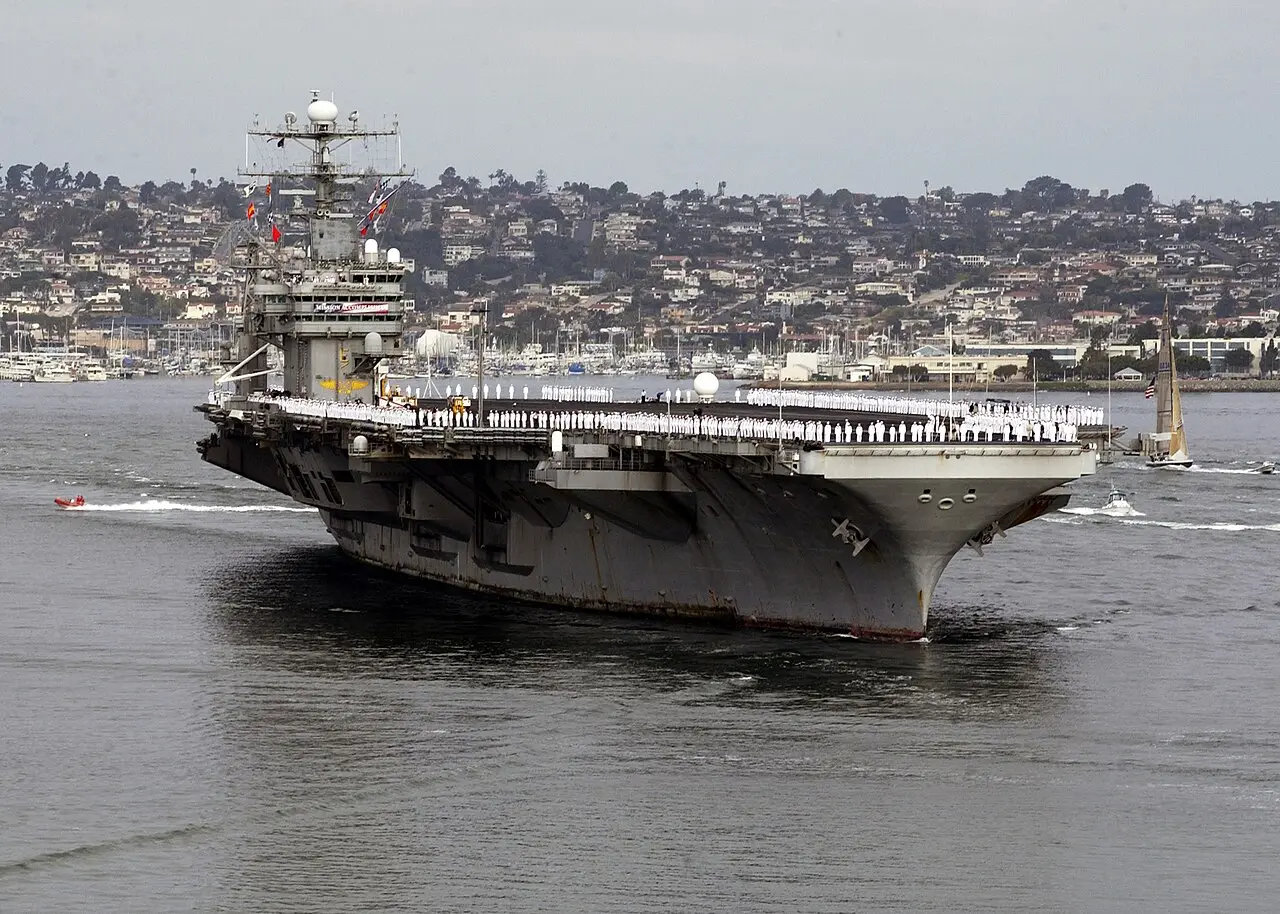
100,000 Tonnes Displacement
The sheer mass of the USS Abraham Lincoln provides immense stability against rough seas. Displacing approximately 100,000 tonnes, the ship sits deep in the water, making it resistant to the violent tossing that affects smaller vessels. Its size allows it to ride through waves that would swamp a destroyer.
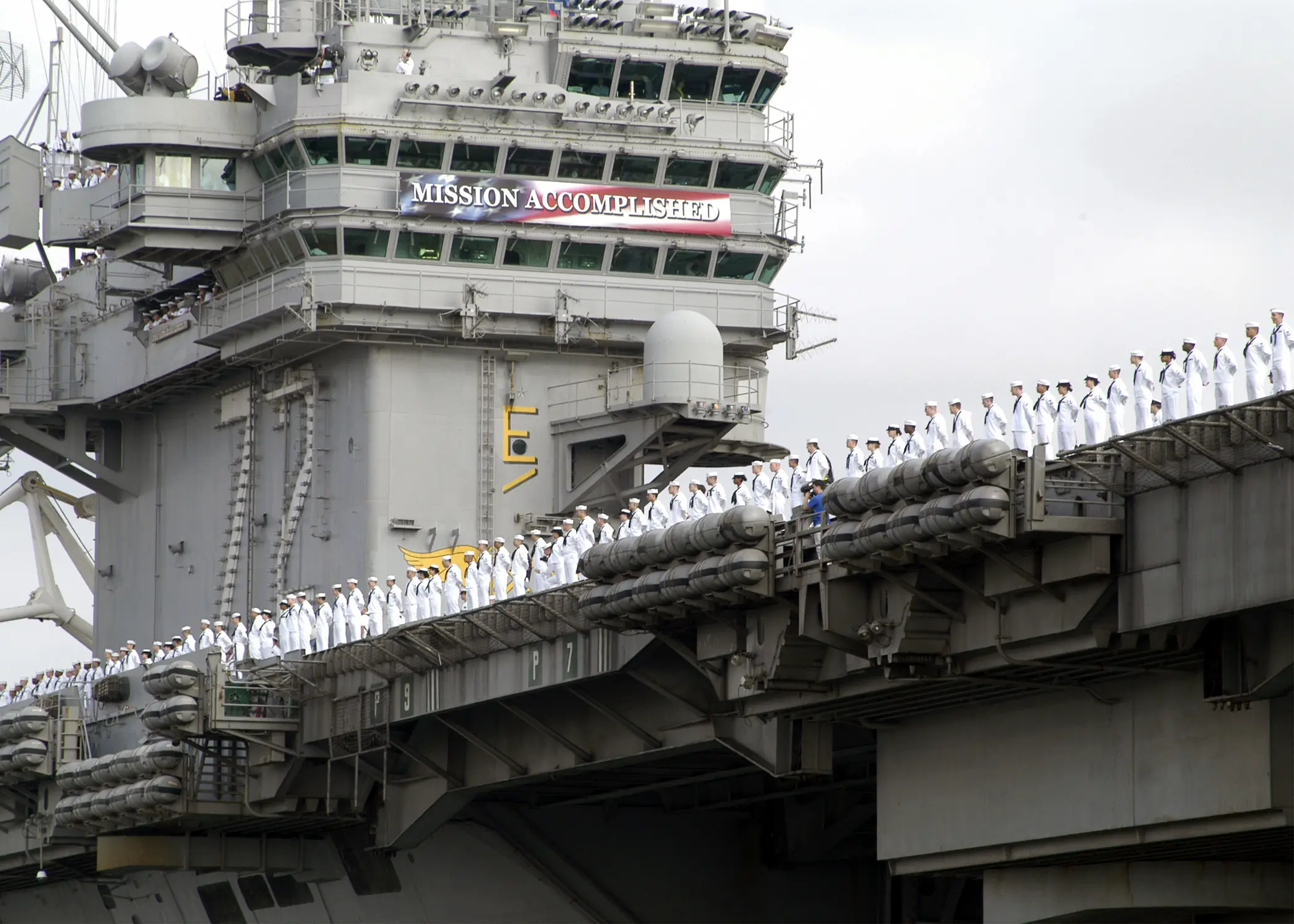
333 Metres of Length
Spanning 333 metres (1,092 feet), the carrier is long enough to span across the crests of multiple waves. This structural advantage prevents the ship from pitching violently into deep troughs. The long hull cuts through the water rather than riding over every single swell, smoothing out the ride.
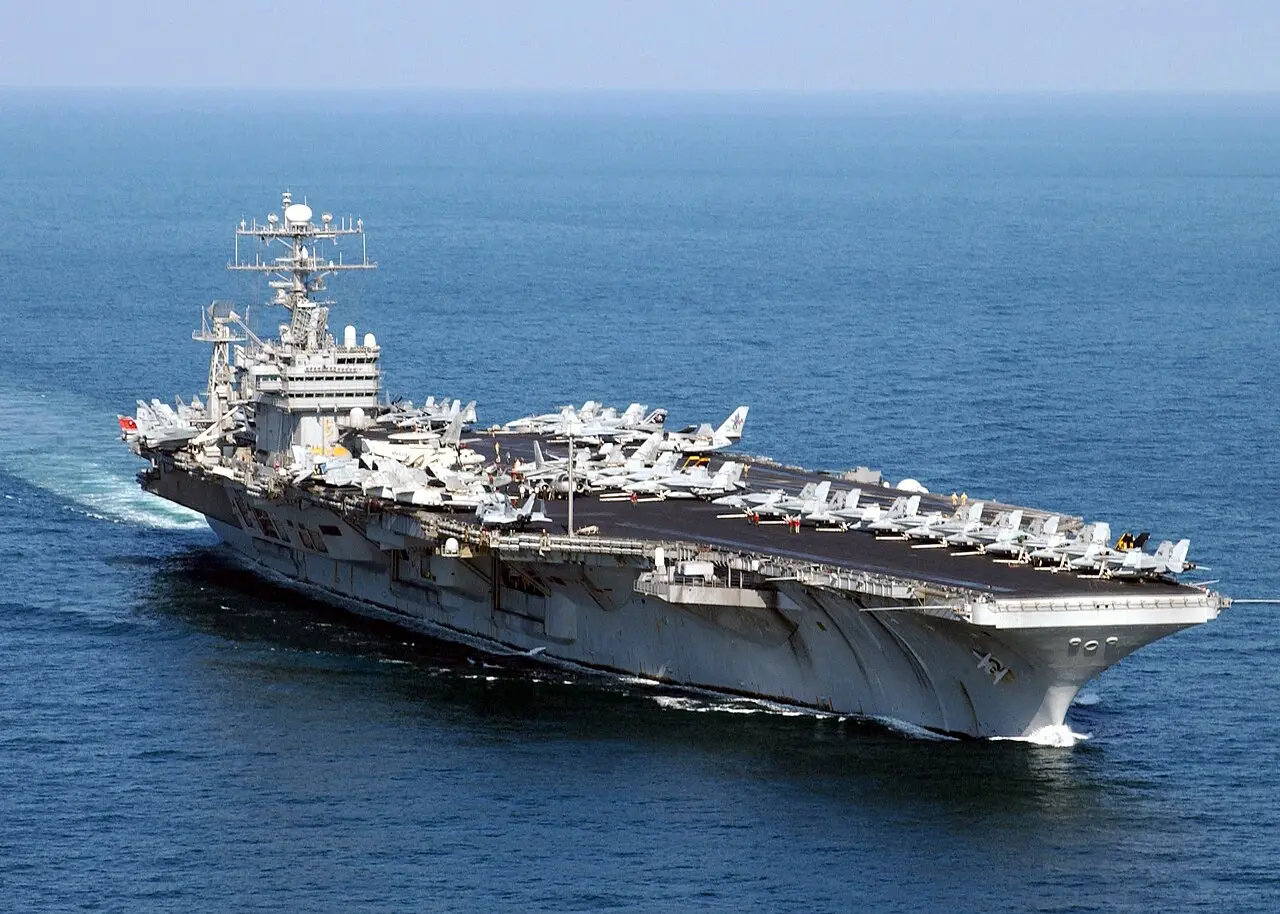
Nuclear Speed Advantage
Powered by two A4W nuclear reactors, the ship can sustain speeds of over 30 knots (56 km/h). This allows the captain to outrun developing storms or manoeuvre quickly around the worst weather cells. Unlike diesel ships, it has unlimited range to take long detours to avoid danger.
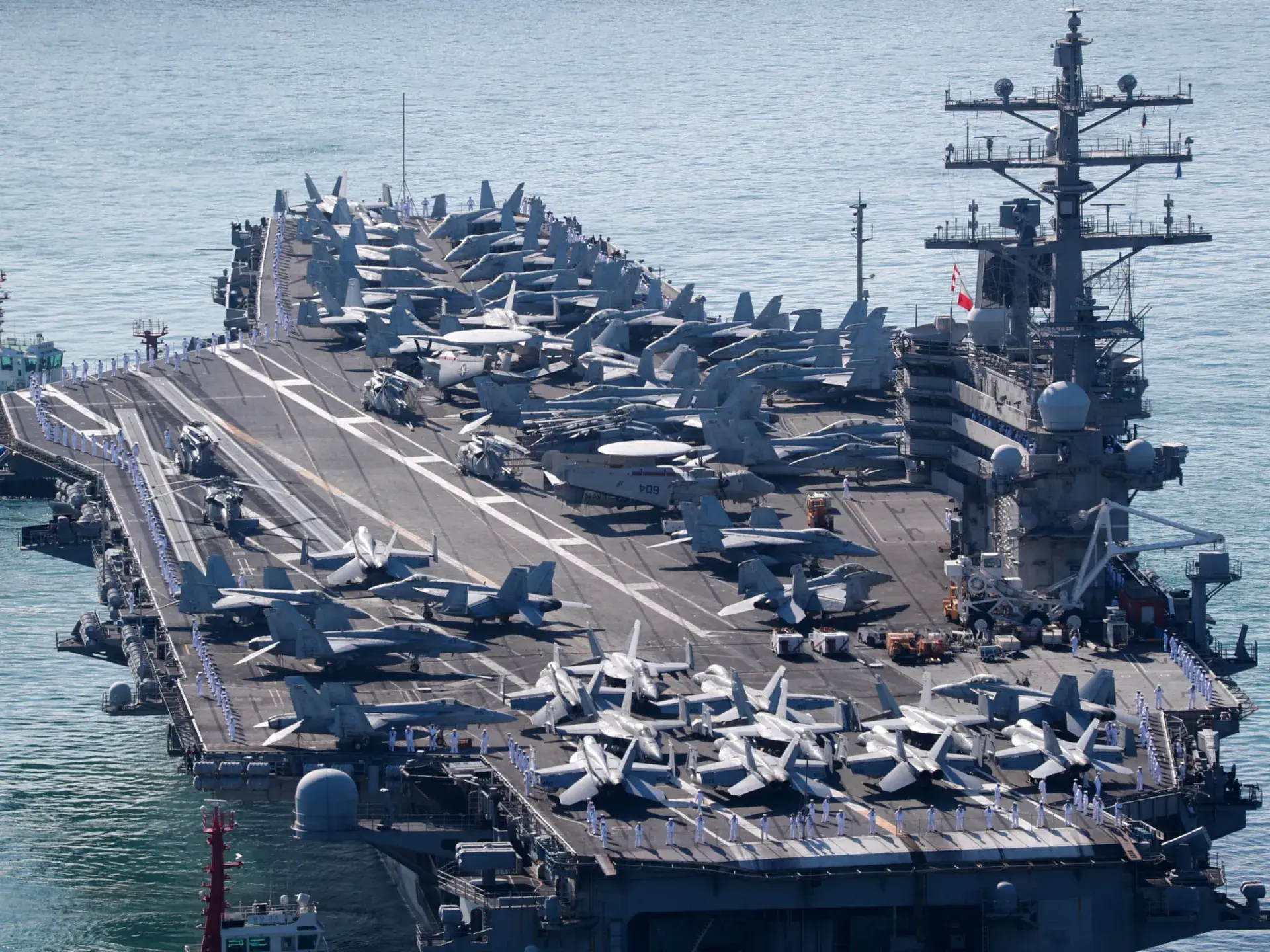
Steering Into Waves
When a storm is unavoidable, the standard procedure is to steer the bow directly into the waves. Taking big swells head-on reduces the risk of rolling, which is far more dangerous for a tall ship. This controlled approach keeps the vessel stable and protects the aircraft on deck.
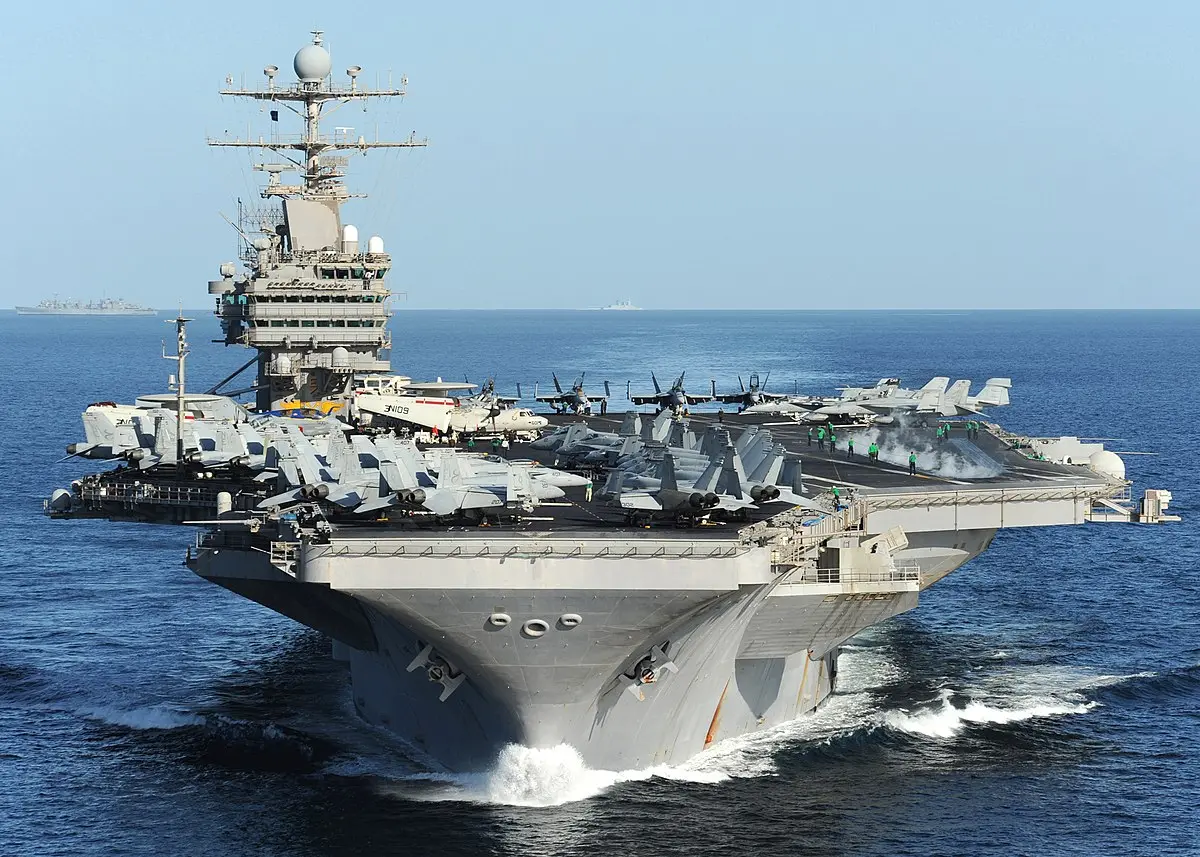
Securing the Aircraft
Aircraft on the flight deck are vulnerable to sliding during heavy rolls. Crews use "heavy weather tie-downs," doubling or tripling the number of steel chains securing each jet to the deck. Up to 20 chains may be used per aircraft to ensure they remain immovable against wind and gravity.
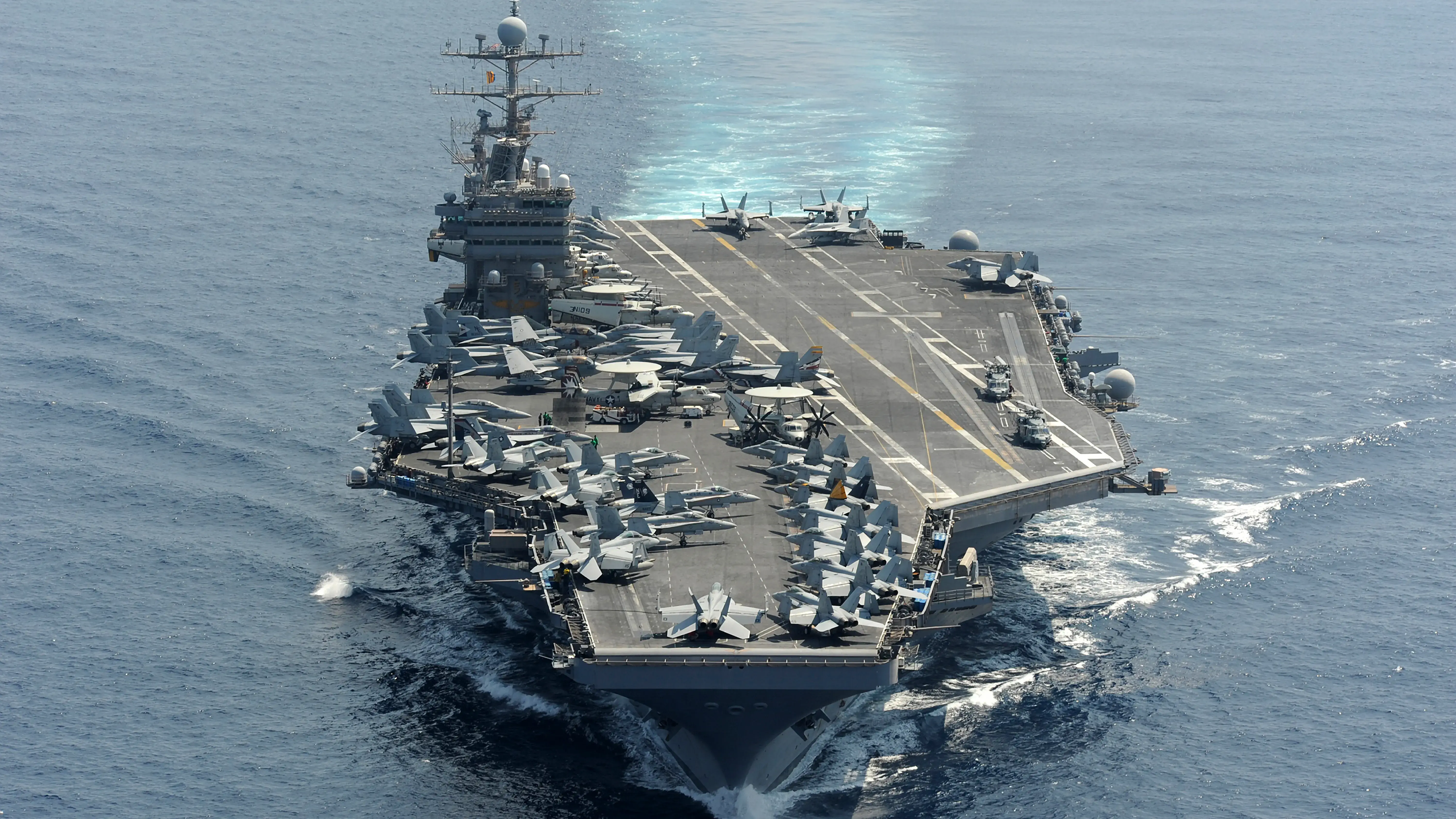
Closing Hangar Bays
The massive hangar bay doors, which are usually open for ventilation and aircraft movement, are sealed tight. These heavy steel doors prevent seawater from flooding the lower decks, which could destabilise the ship. This watertight integrity is crucial for maintaining buoyancy during high sea states.
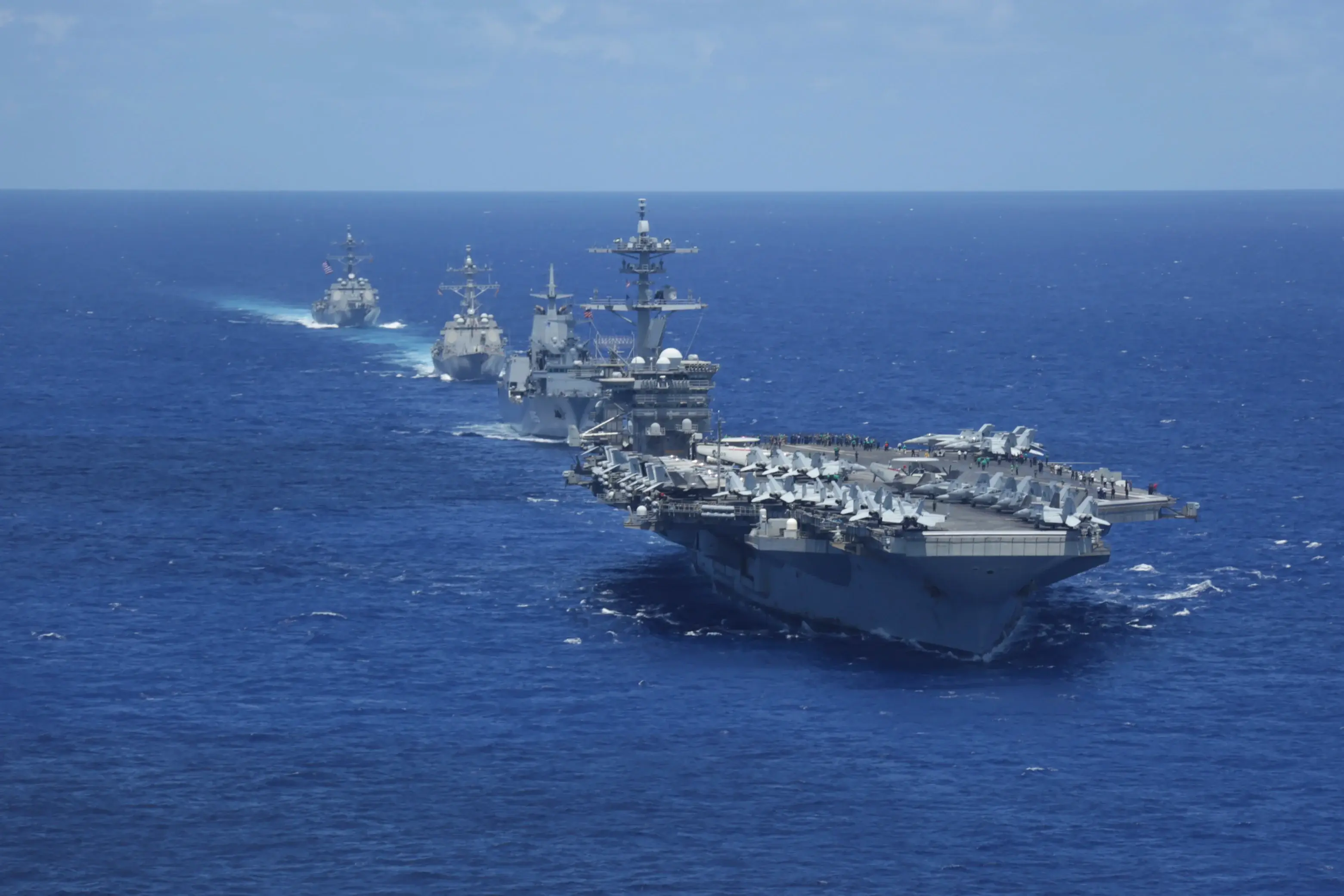
Flight Ops Suspension
In extreme conditions, flight operations are suspended to protect pilots and deck crews. The risk of a "ramp strike" or a plane being blown overboard is too high during severe pitching. The flight deck is cleared of all non-essential personnel, and equipment is lashed down securely.
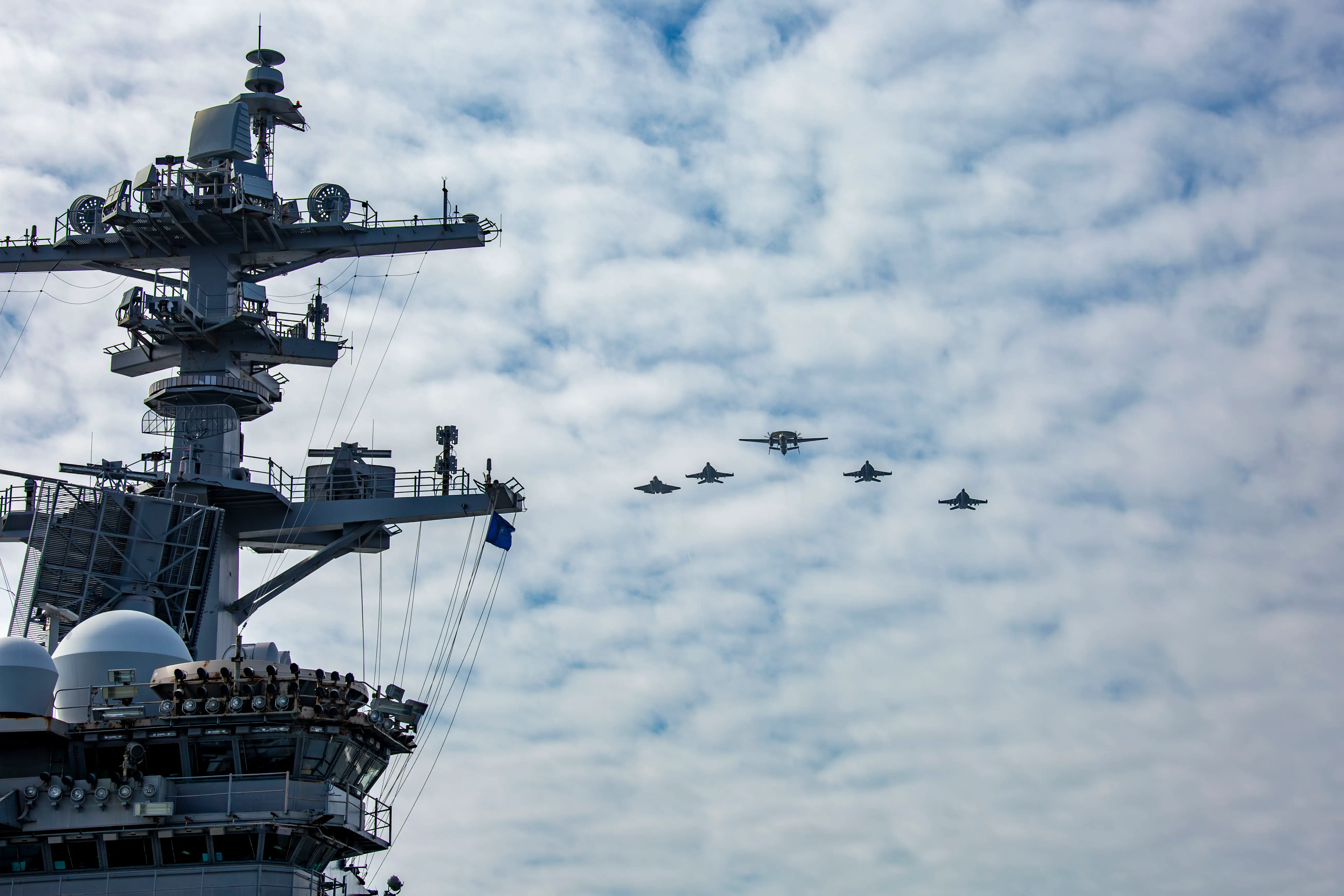
Wide Hull Stability
Despite its top-heavy appearance, the carrier relies on form stability. Because the hull is so wide, when the ship tips, the underwater volume shifts significantly to the low side. This creates a powerful lifting force (righting moment) that physically pushes the ship back to an upright position, preventing capsizing even in severe rolls.
Monitoring Escort Ships
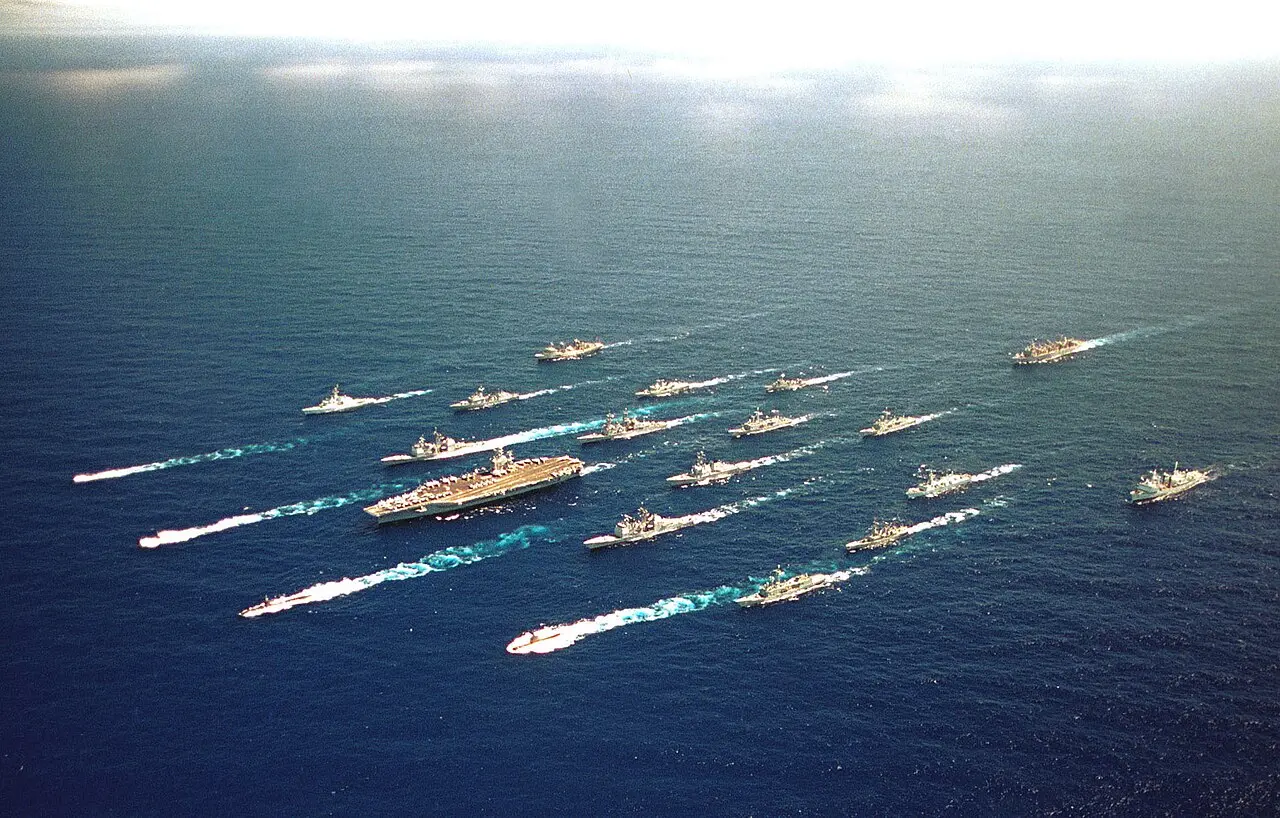
While the carrier is stable, its escort destroyers and cruisers often struggle in 20-foot waves. The Strike Group Commander on the Lincoln monitors the smaller ships, sometimes slowing the group down. The carrier effectively acts as a shepherd, ensuring the smaller vessels are not battered by high speeds in rough water.
Crew Safety Protocols
Inside the ship, the crew of over 5,000 secures all loose gear, from laptops to mess hall trays. Movement is restricted to essential areas to prevent falls and injuries during sudden lurches. Lifts/elevators may be shut down to prevent accidents, and the medical team stands by for rough-weather injuries.
)
)
)
)
)