'Speedboats vs carrier': Why the naval tactics of Iran completely fail against the USS Abraham Lincoln

Iran’s speedboat swarm tactics face a massive hurdle against the USS Abraham Lincoln. From Aegis shields to superior air power, the US carrier group remains a dominant force.

The ‘Mosquito’ Swarm
Iran’s IRGC Navy relies on over 1,500 small attack boats designed for numerical density rather than durability. These craft, capable of speeds up to 110 knots, aim to overwhelm a target’s sensors by attacking from all sides at once. However, this strategy assumes the target remains static and blind, which is rarely the case for a strike group.

Eyes in the Sky
The USS Abraham Lincoln is never surprised because of the E-2D Hawkeye, a high-altitude radar platform. These ‘eyes in the sky’ can detect low-flying drones and small boats from hundreds of kilometres away, well before they enter strike range. This early warning allows the carrier to reposition or launch counter-strikes while the swarm is still near the coast.

The Aegis Shield
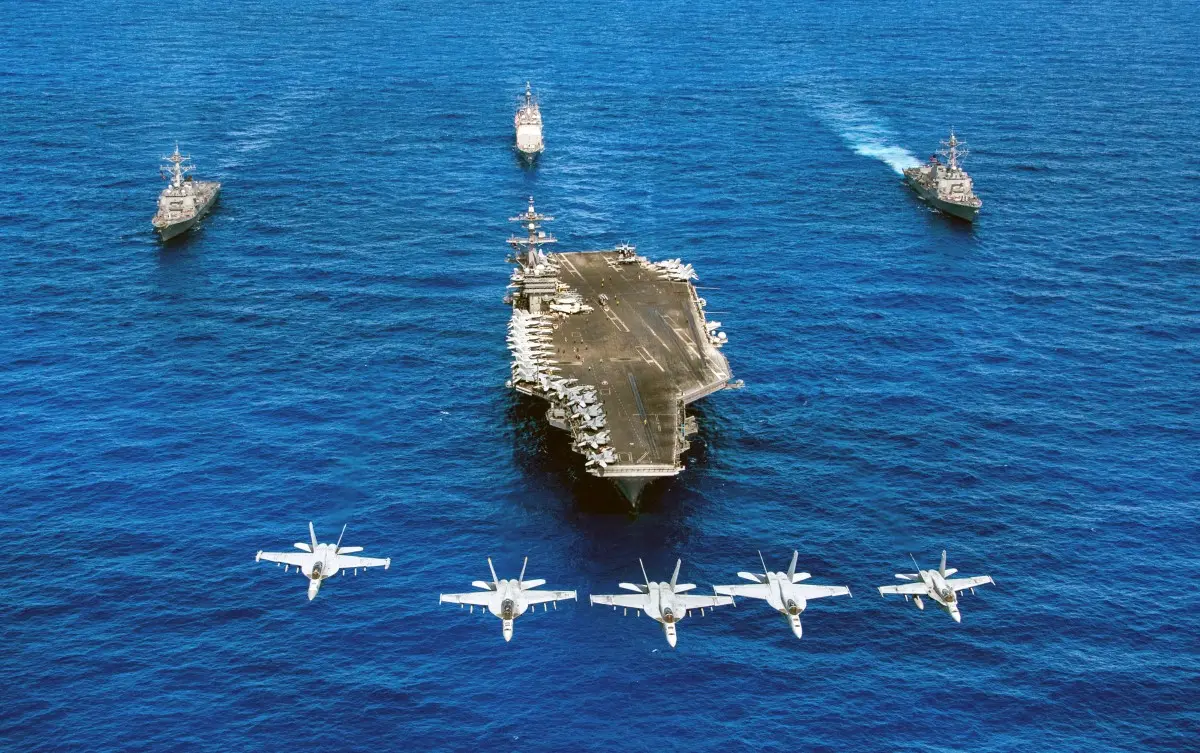
Protecting the carrier are Arleigh Burke-class destroyers equipped with the Aegis Combat System. This radar can track more than 100 targets simultaneously and guide SM-2 or SM-6 missiles to intercept them at long distances. Modern upgrades ensure these systems can distinguish between small boats and sea clutter in difficult coastal waters.
Air Wing Dominance
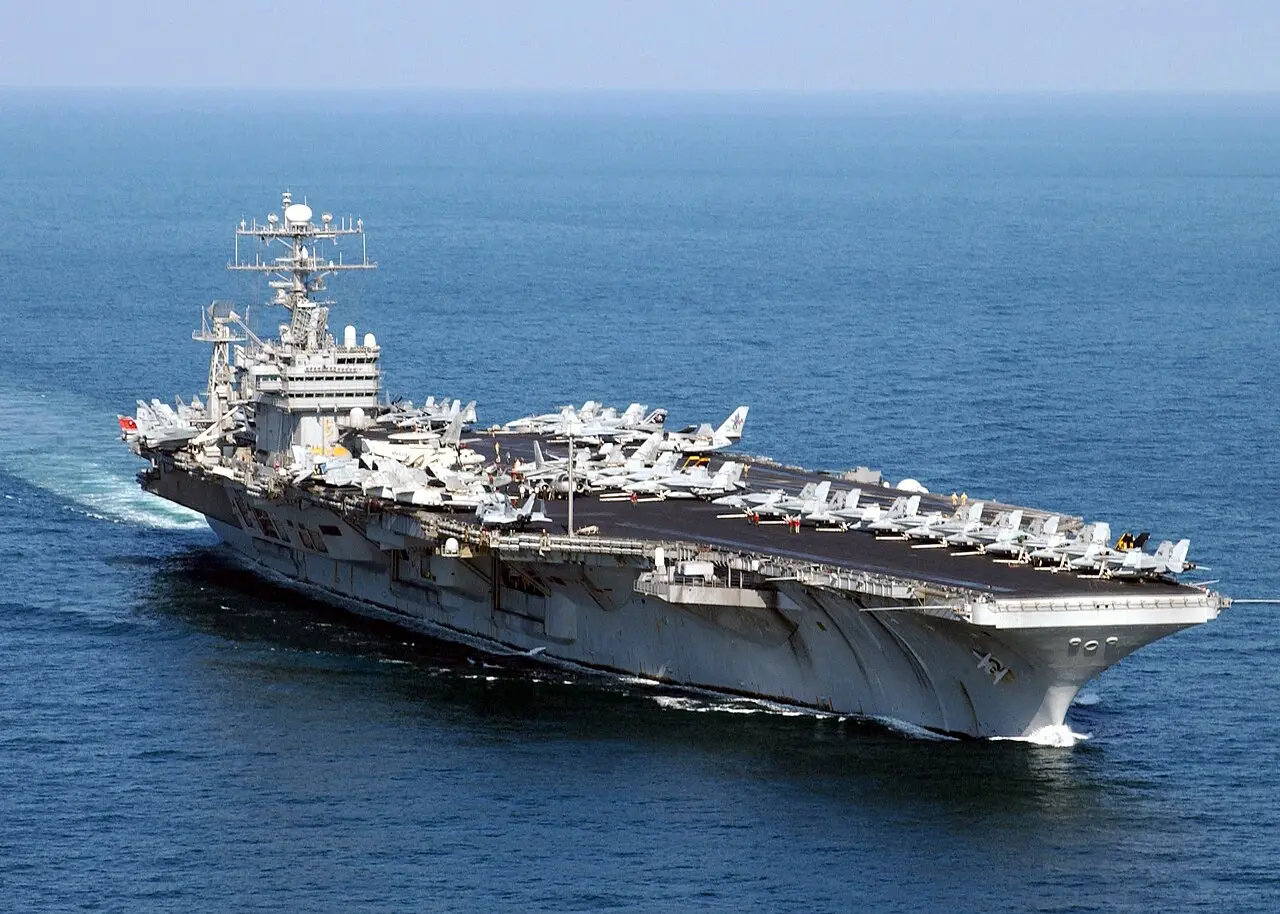
The carrier’s air wing, including F-35C stealth jets and Super Hornets, provides a massive tactical advantage. These aircraft use precision-guided munitions to pick off individual speedboats from altitudes where the boats cannot fire back. Helicopters like the MH-60R also use Hellfire missiles to dismantle swarms before they reach the carrier’s inner perimeter.
The Iron Wall
For any boat that manages to close the distance, the Phalanx Close-In Weapon System (CIWS) acts as a final safeguard. This radar-guided Gatling gun fires 4,500 rounds per minute, creating a ‘wall of lead’ to shred incoming craft. Terminal defences also include 25mm machine guns and SeaRAM missiles designed specifically for fast-moving surface threats.
Electronic Warfare Edge
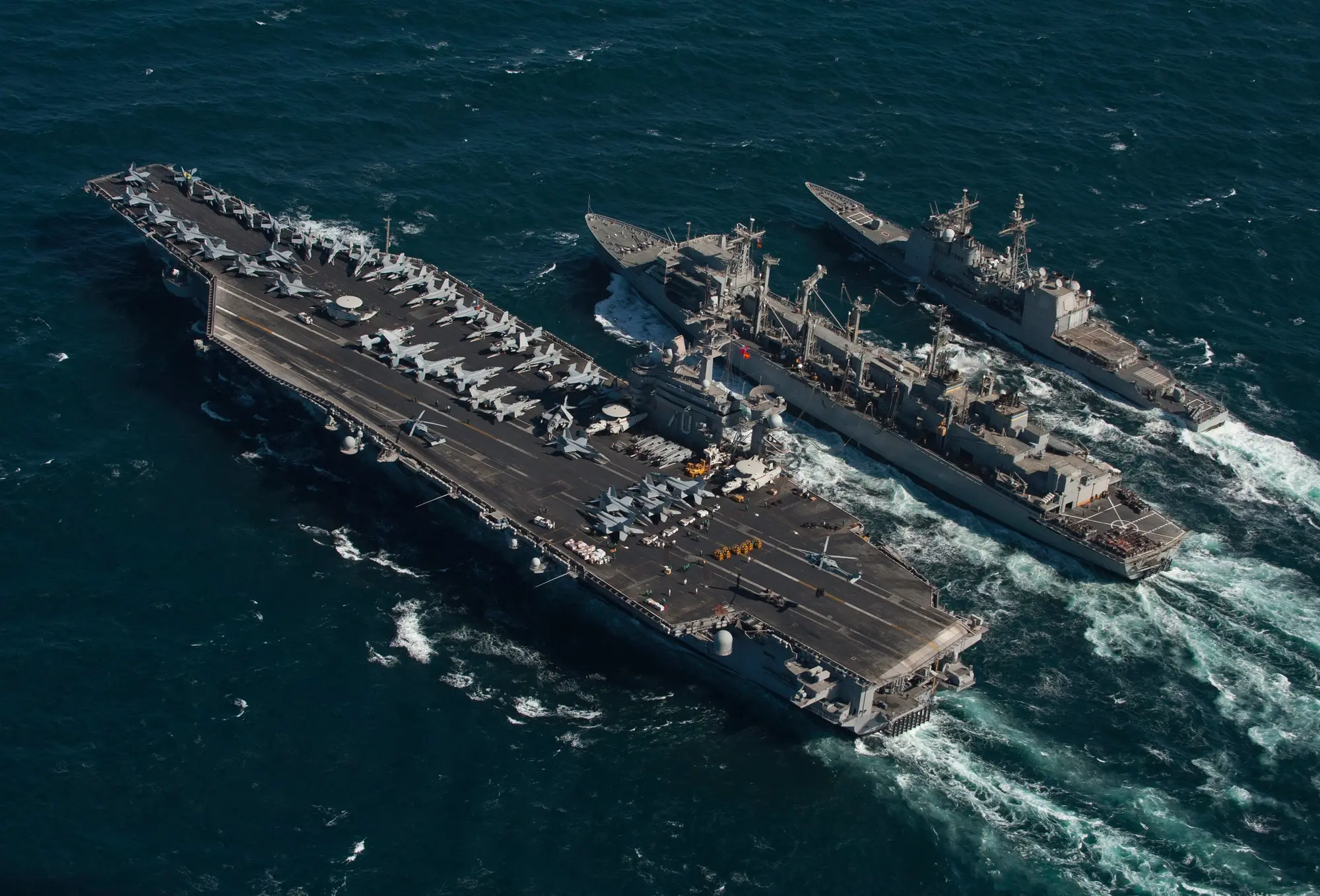
US vessels utilise advanced electronic suites like the AN/SLQ-32 to jam the signals Iran uses to coordinate its swarms. By disrupting GPS and radio links, the Navy renders ‘smart’ drones and missile-boats blind and uncoordinated. Without central command, the individual boats become easy, isolated targets for secondary deck guns.

Range and Endurance
Unlike the short-range Iranian boats, the nuclear-powered USS Abraham Lincoln can stay at sea indefinitely. In March 2026, satellite data showed the carrier repositioning 1,100 kilometres away from Iran to avoid coastal harassment. By operating in deep water, the US Navy forces the swarm to leave the safety of its own shores, where it lacks the fuel to survive.
)
)
)
)
)