'Red hallways': Why the USS Abraham Lincoln uses red lights after sunset

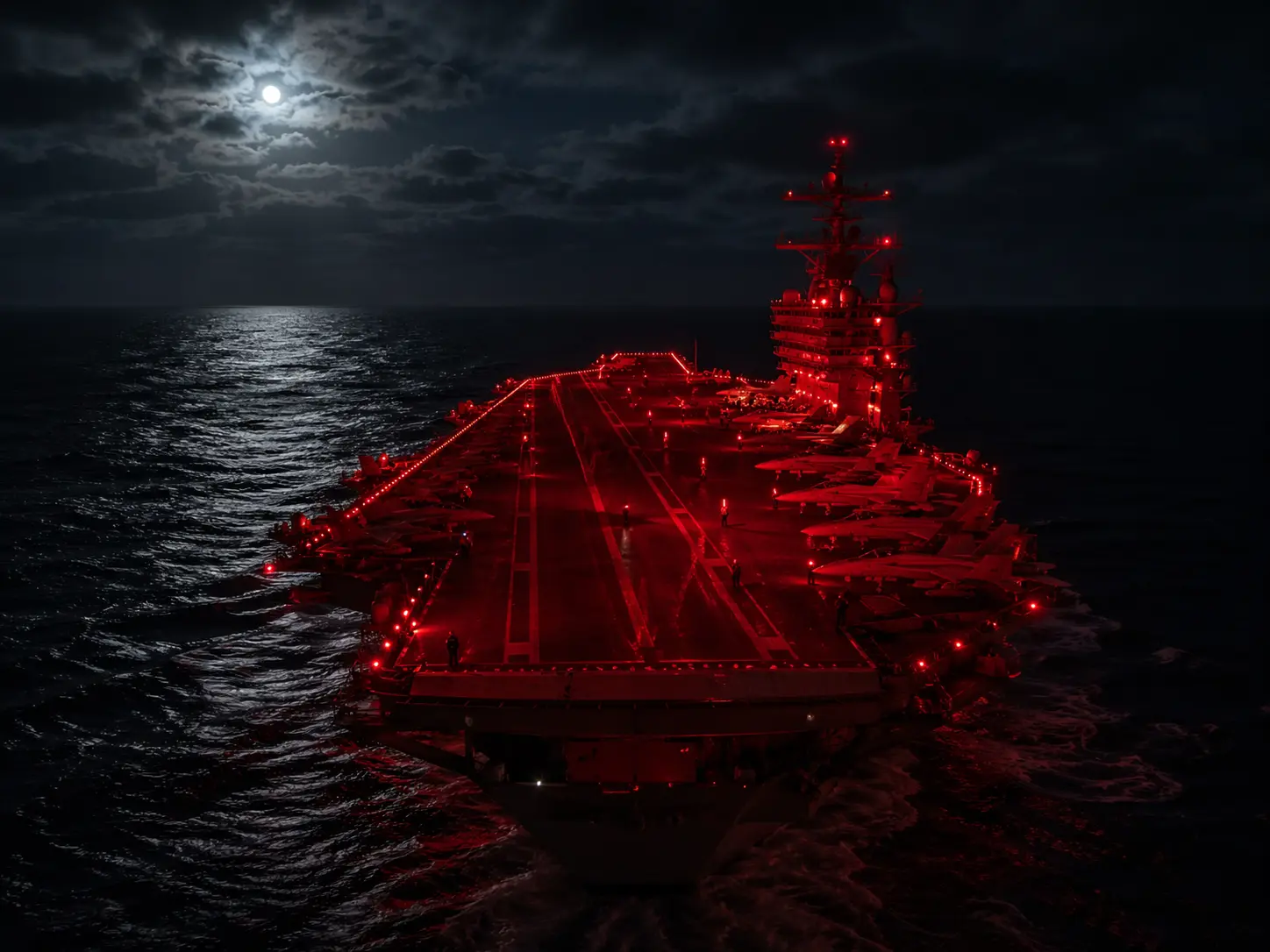
The USS Abraham Lincoln uses red interior lighting after sunset to preserve the night vision of its crew. This specific wavelength protects rod cells, ensuring optimal safety and stealth during complex maritime operations in the dark.
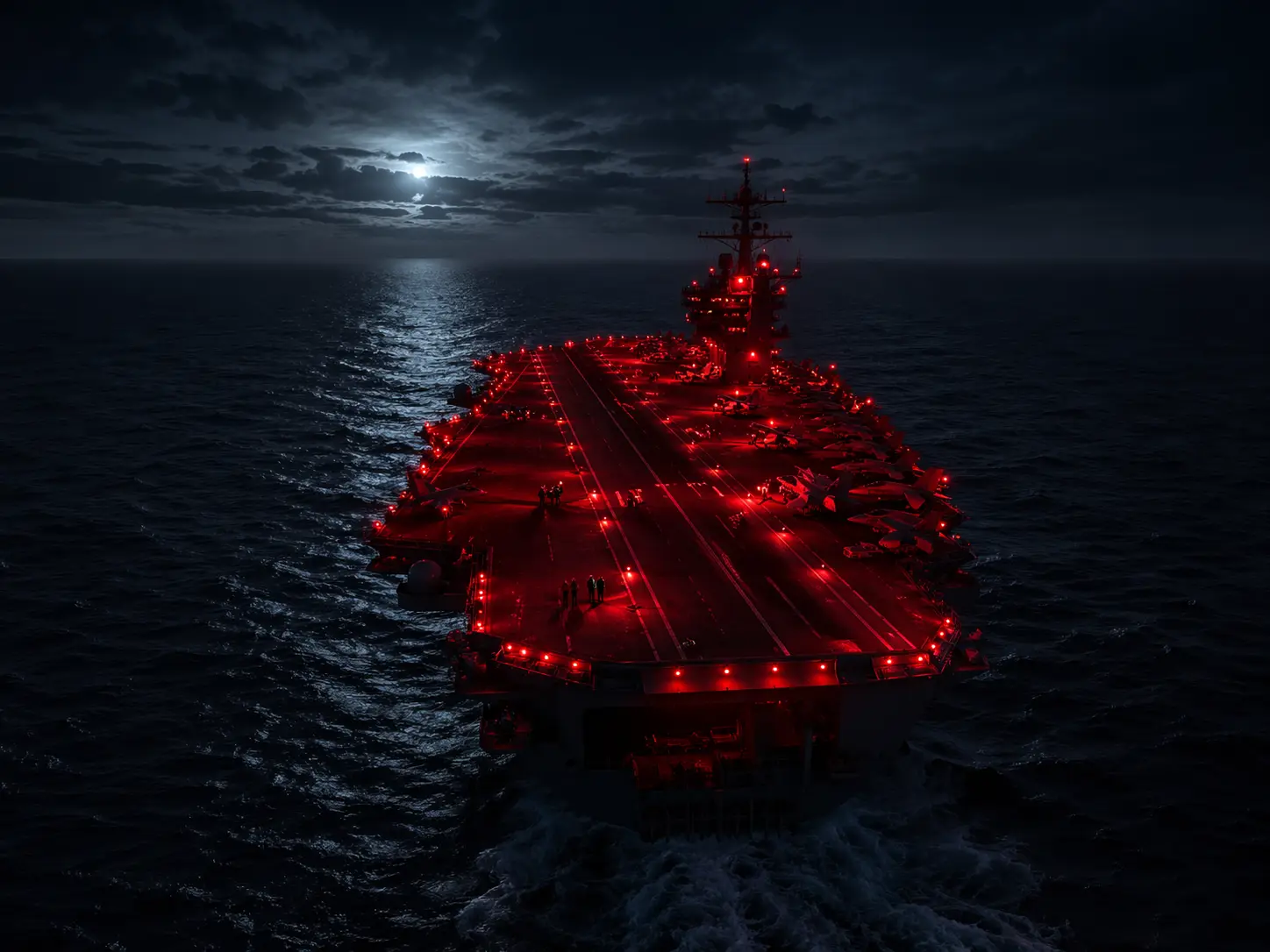
Protects 30-minute night vision
The human eye needs about 30 minutes to fully adjust to low-light conditions. Red interior lighting helps the crew maintain this crucial biological adaptation. This allows sailors to move from inside the ship to the dark flight deck without losing their vision.
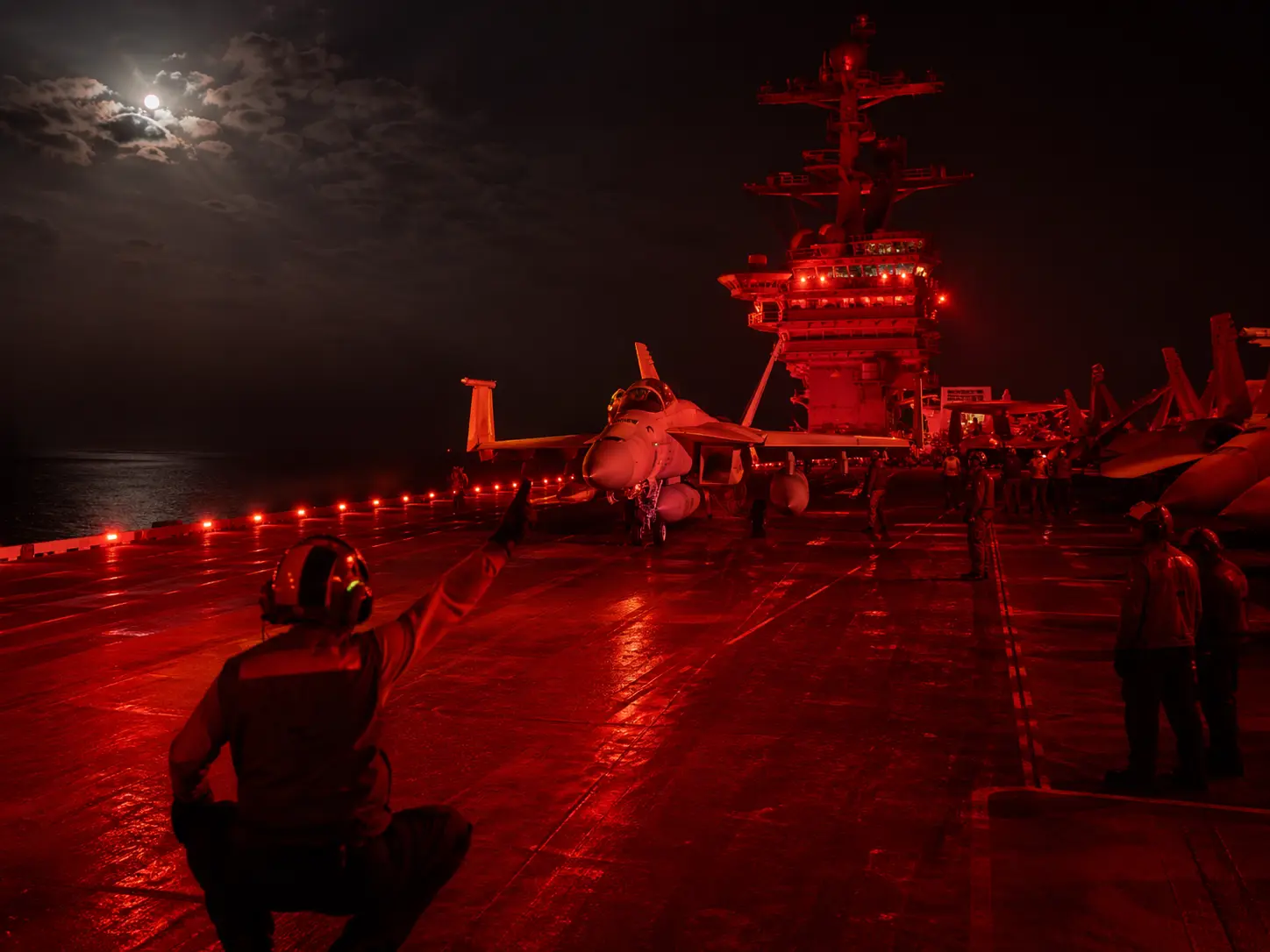
Emits 620-750 nanometre wavelengths
Red light operates on a longer wavelength ranging from 620 to 750 nanometres. The retina's rod cells, which process vision in the dark, are much less sensitive to these specific frequencies. This prevents the sudden visual impairment caused by bright white illumination.
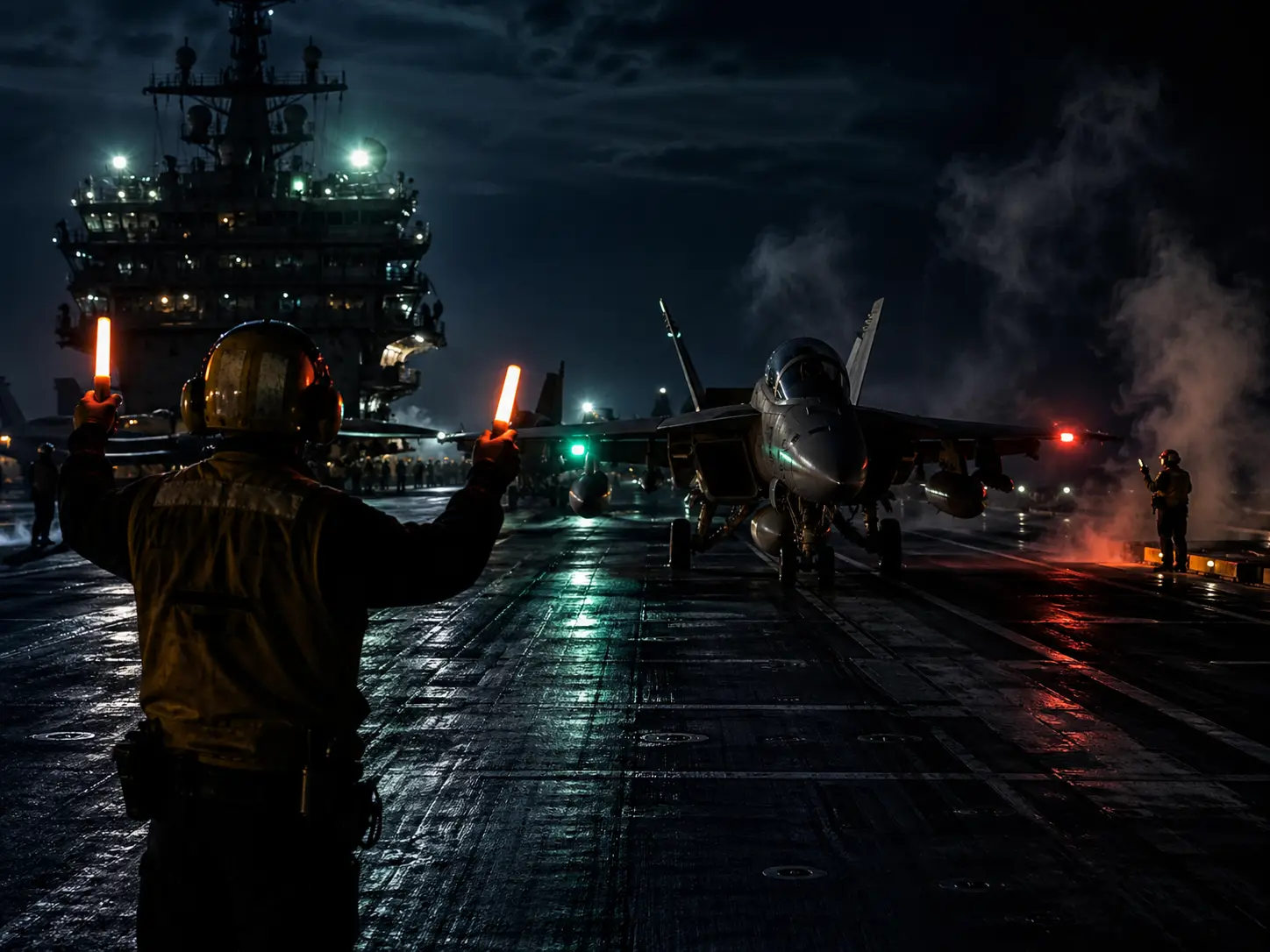
Guards 3,200 ship crew
The carrier houses a massive crew working relentlessly through overlapping day and night shifts. The red lights act as a clear environmental signal that the vessel has transitioned into nighttime operations. This visual cue helps maintain strict operational discipline across all onboard departments.
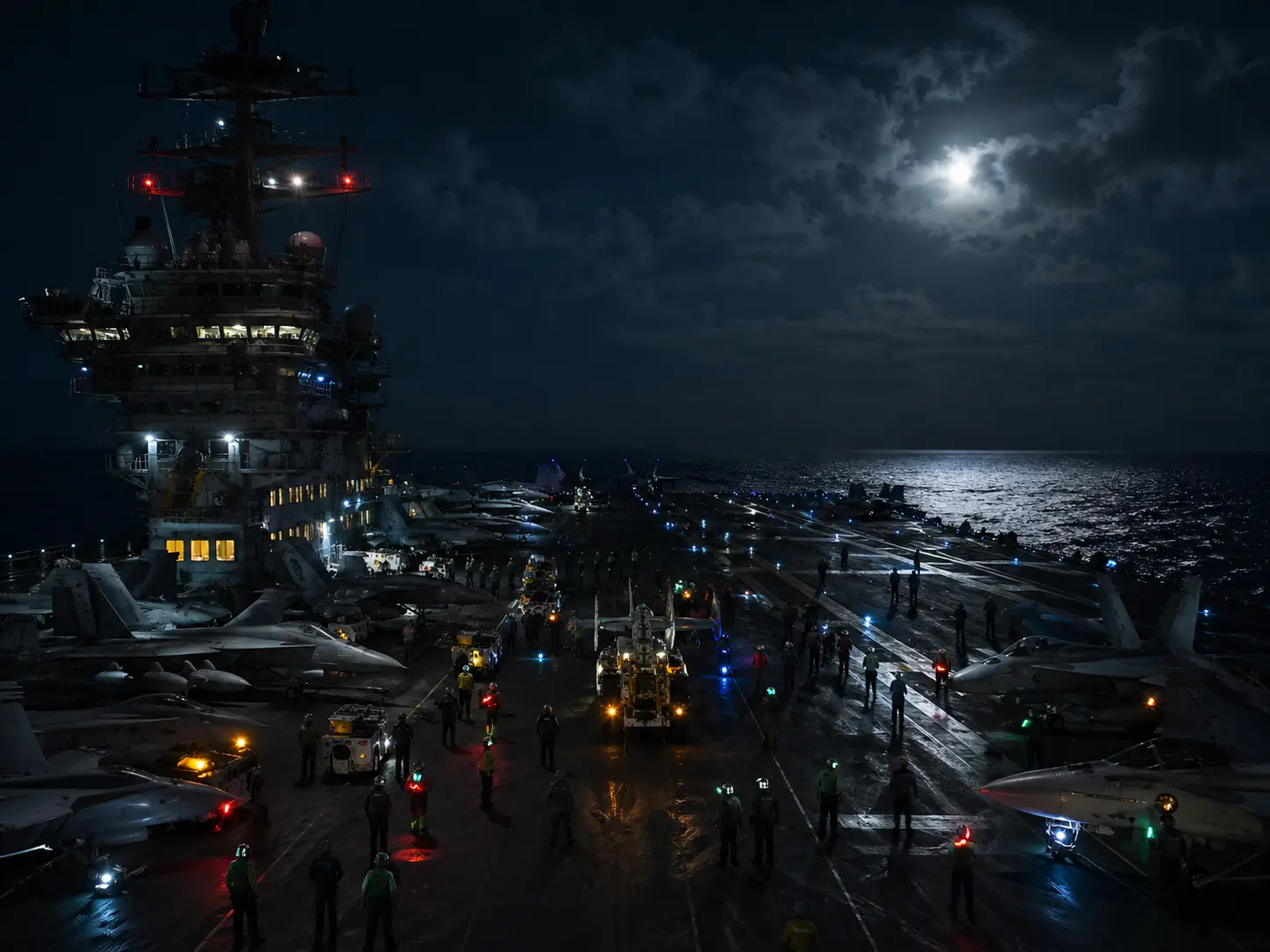
Sustains 24-hour combat alert
Modern naval navigation relies heavily on digital electronic charting systems and complex radar screens. Red lighting causes significantly less screen reflection compared to standard white bulbs. This ensures radar operators maintain precise situational awareness during critical overnight maritime patrols.
Hides 1,092-foot carrier length
A massive warship emitting bright white light easily gives away its position to adversaries across the open ocean. Red illumination significantly reduces the visible light signature of the carrier from a distance. This strict security measure makes the vessel much harder to detect visually.
Secures 100,000-ton ship safety
Navigating a vessel of this immense displacement at night requires extreme caution and absolute secrecy. By keeping the ship's interior cast in red, the crew prevents accidental light leaks from open hatches. This fundamental tactic protects the entire carrier strike group from optical detection.

Aids 2,480 wing personnel
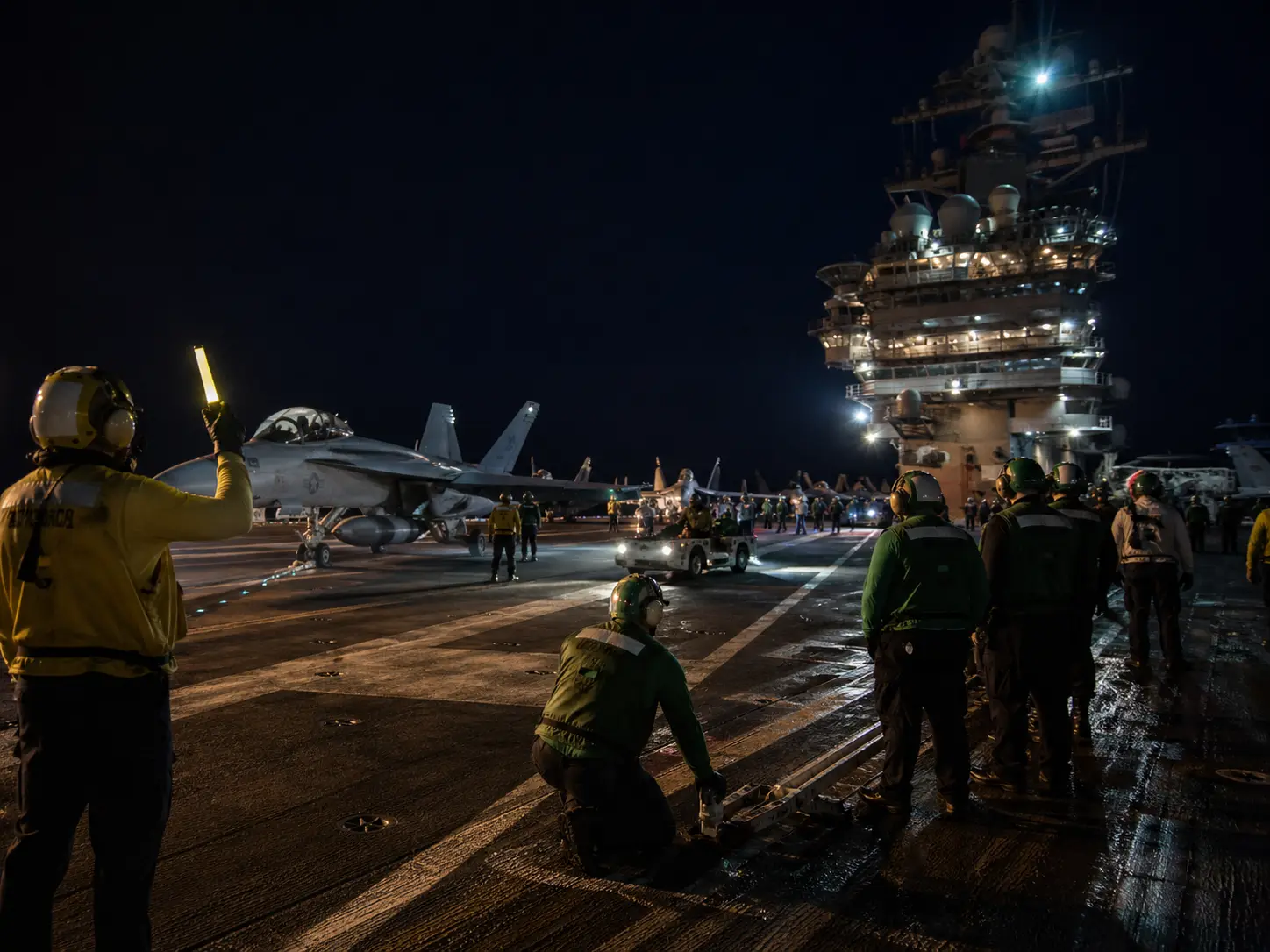
The aviation personnel rely on total darkness to coordinate jet launches and trap landings safely. Transitioning from a red-lit ready room directly to the pitch-black flight deck ensures their eyes are prepared. This immediate physiological readiness is vital for the survival of the aviators.
)
)
)
)
)