'Red Deck': Why the USS Abraham Lincoln turns completely red during night operations

The USS Abraham Lincoln uses strict 620-nanometre red lighting during night operations to preserve the crew's biological night vision, preventing temporary blindness and ensuring safety.
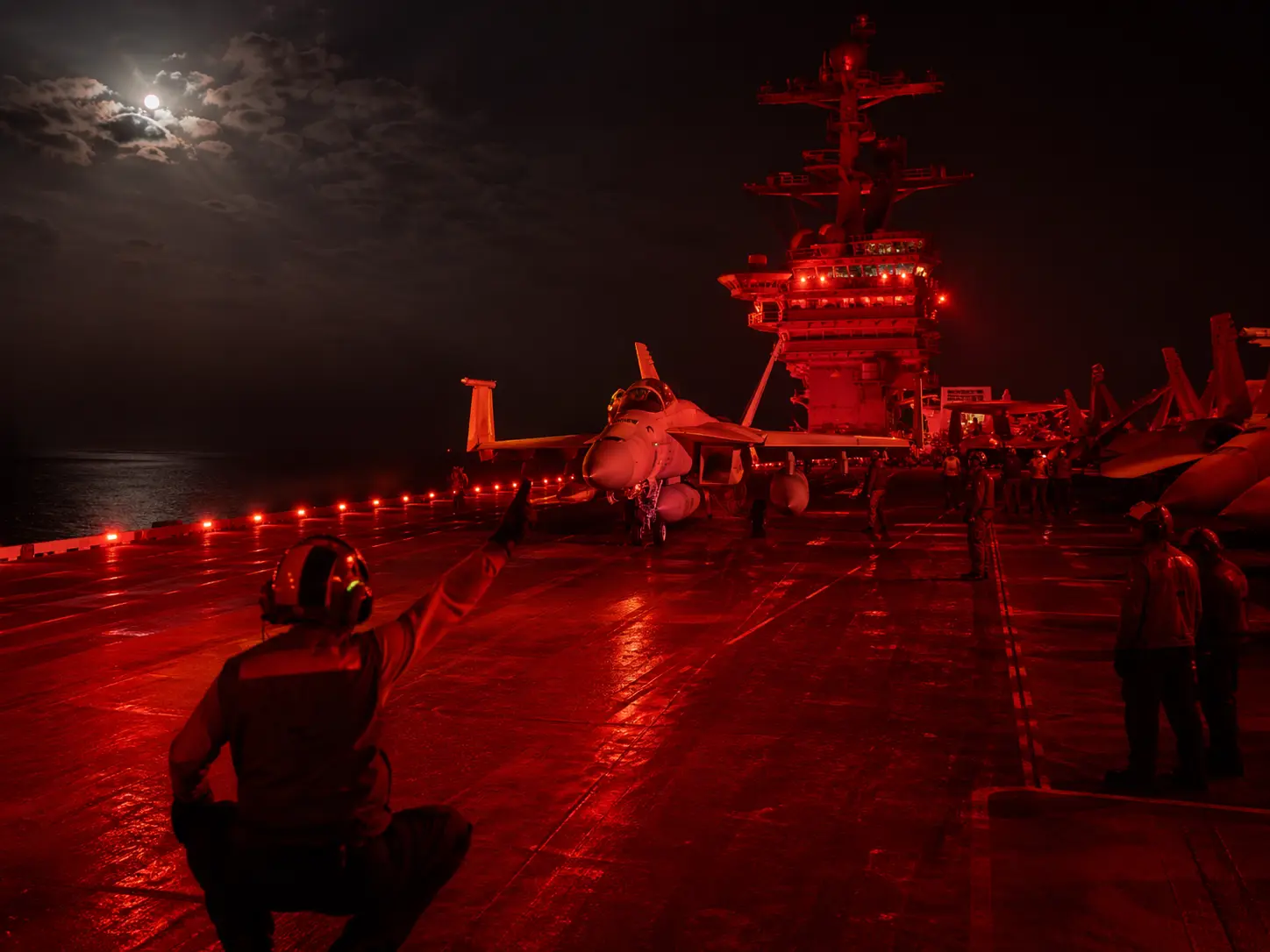
100 Per Cent White Light Ban
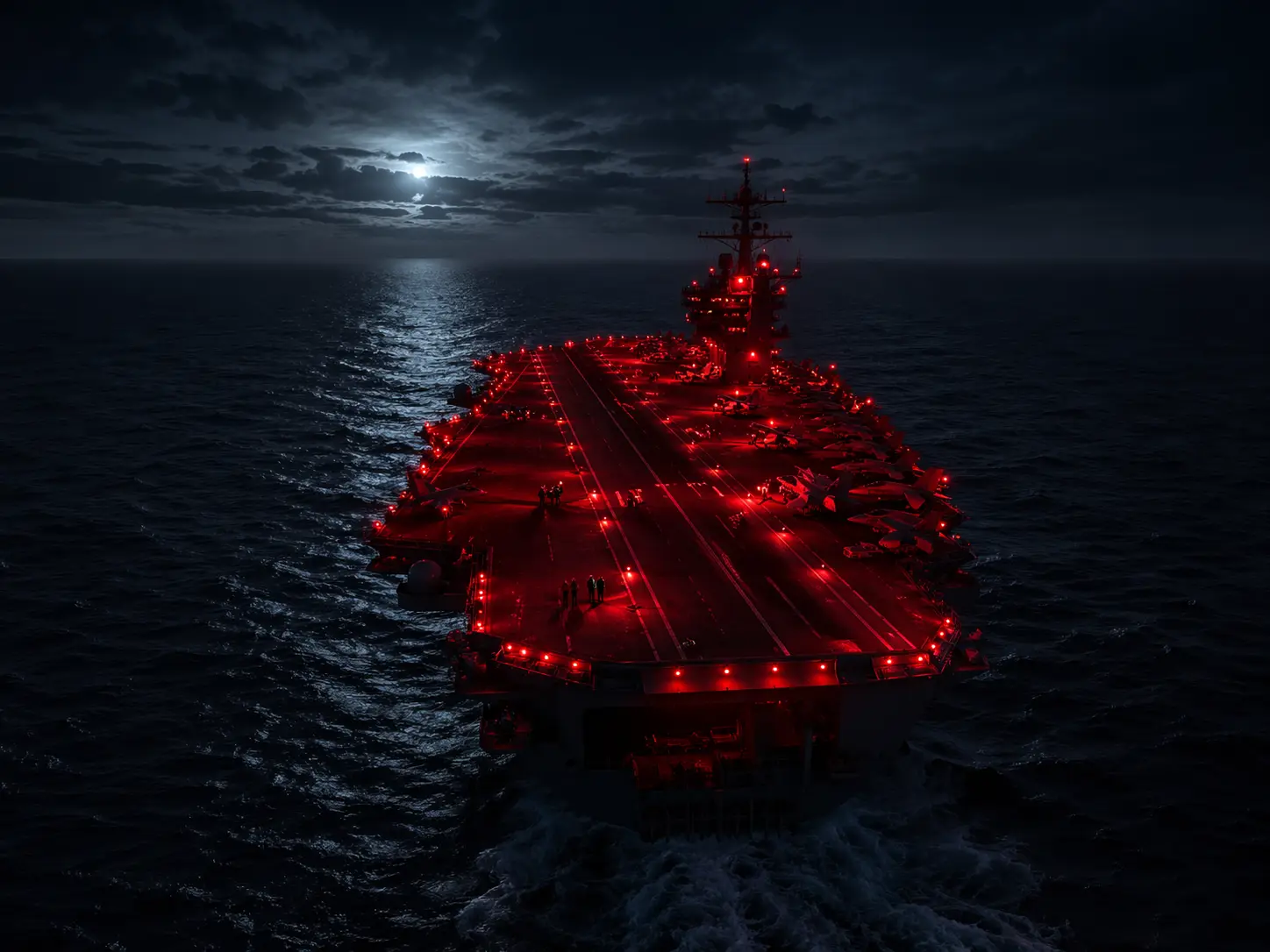
During night operations, the USS Abraham Lincoln entirely bans white light on the flight deck and in connecting passageways. The ship relies on low-intensity red floodlights to illuminate the workspace. This ensures the crew can perform complex aviation tasks without losing their critical night vision.
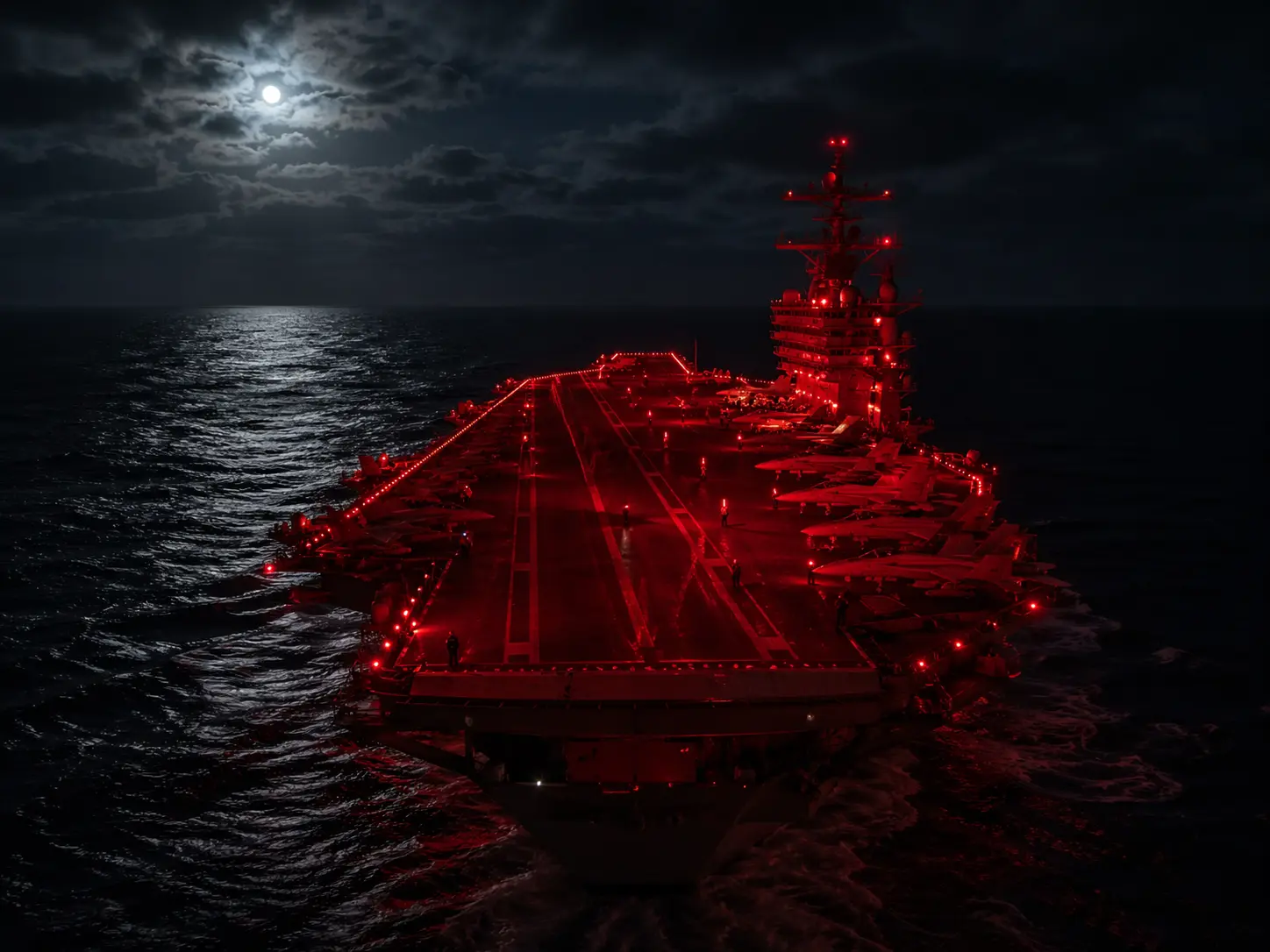
30-Minute Dark Adaptation
The human eye requires roughly 30 minutes to fully adapt to pitch-black environments and build up rhodopsin, the protein that enables scotopic vision. On an active Nimitz-class carrier deck, sailors do not have the time to wait for their eyes to adjust. Red lighting bypasses this biological delay entirely.
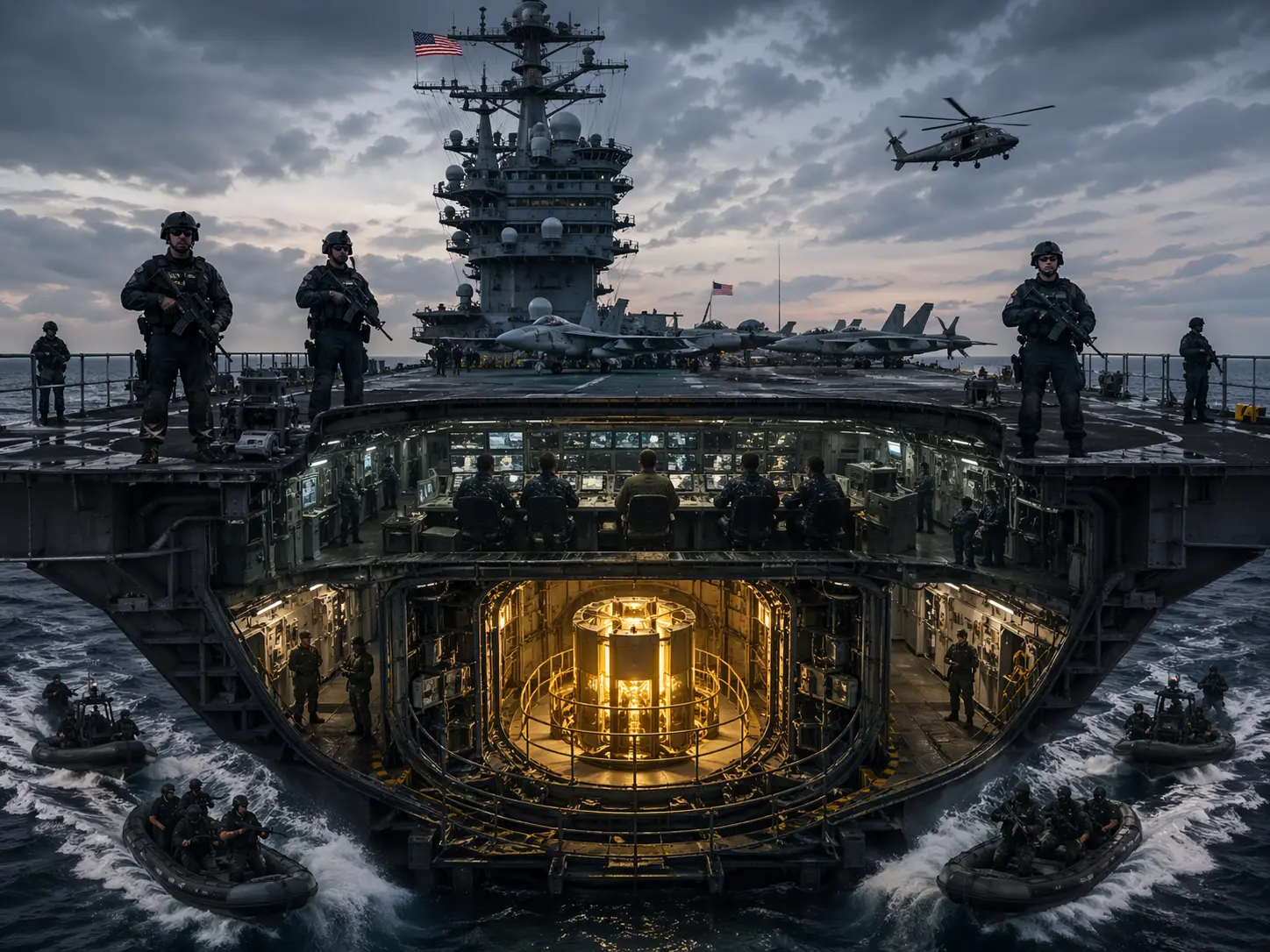
620-Nanometre Red Wavelengths
The rod cells in the human retina are highly sensitive to low light but remain practically blind to wavelengths above 620 nanometres. By strictly using red light, the USS Abraham Lincoln allows sailors to see their instruments clearly while their eyes remain naturally adapted to the surrounding oceanic darkness.
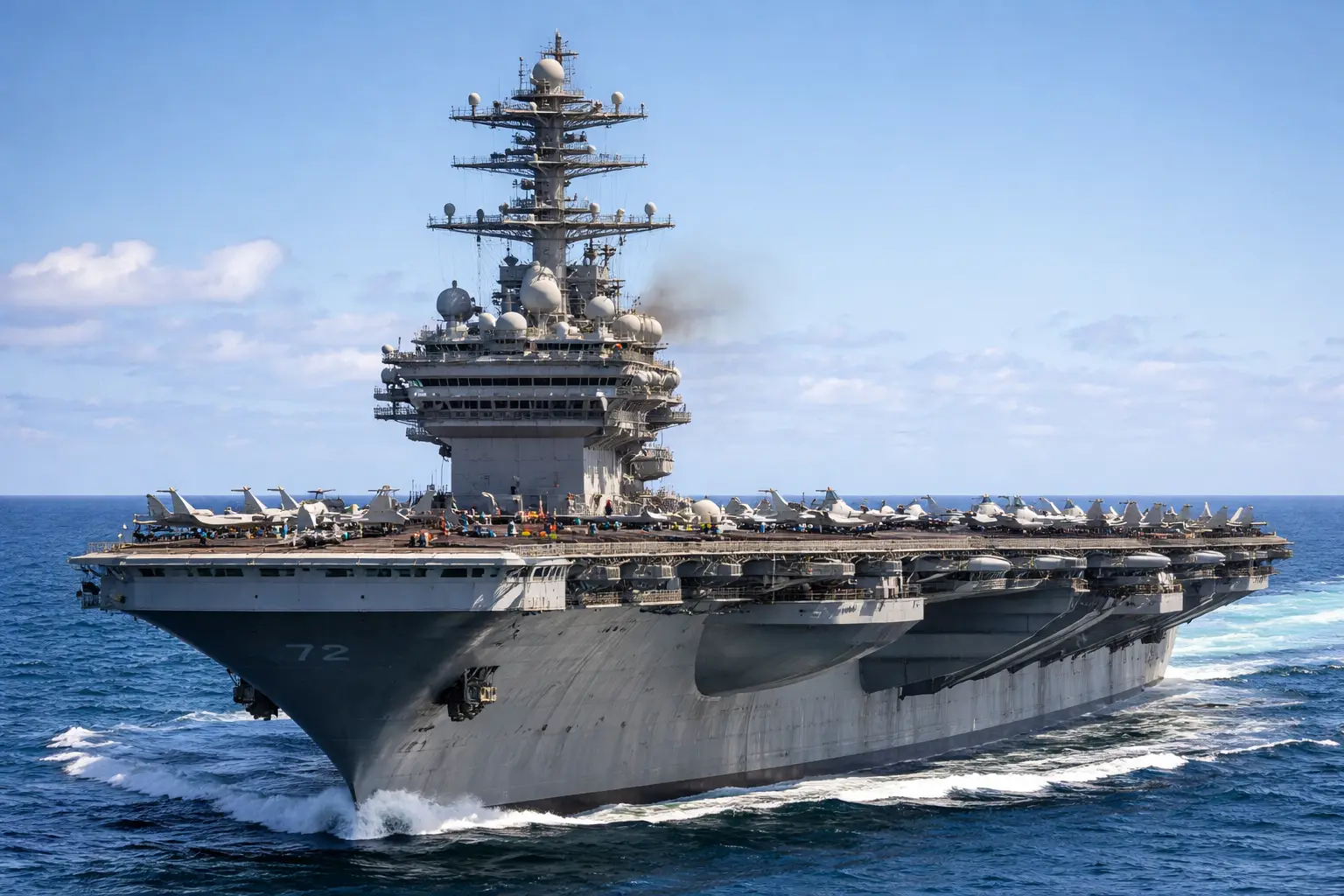
140-Knot Approach Speeds
When an F/A-18 Super Hornet pilot approaches the carrier at approximately 140 knots, clear visibility of the deck is an absolute necessity. Sudden exposure to white light would cause temporary blindness and disorientation. The red deck environment prevents hazardous glare from disrupting the pilot's final descent.
100-Metre Landing Zone
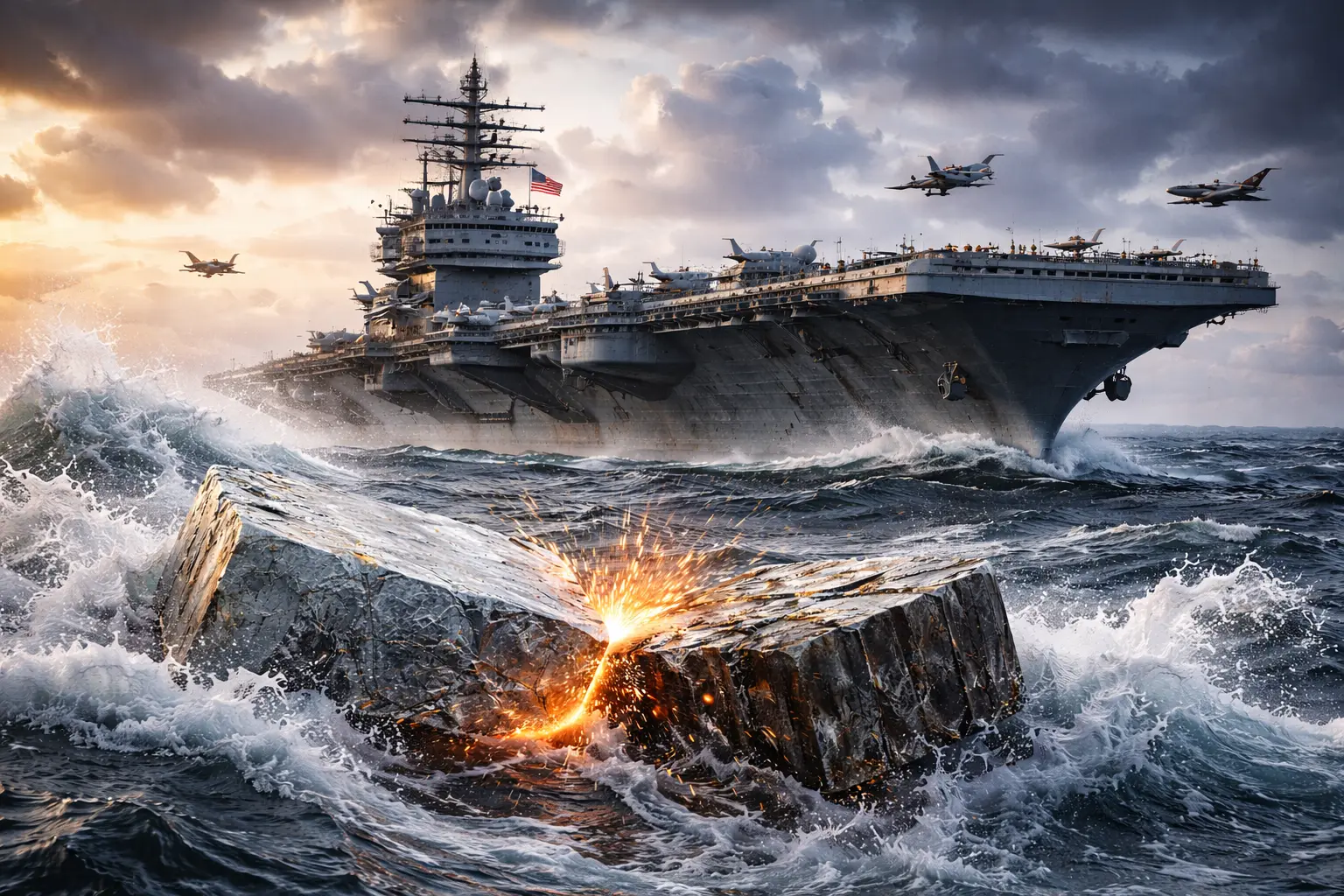
While the entire angled flight deck of a Nimitz-class supercarrier is approximately 240 metres long, the critical target area containing the arresting wires is roughly 100 metres, demanding absolute precision from the aviator. Without blinding white light washing out the deck, the pilot can clearly spot the amber "meatball" and red wave-off lights of the Improved Fresnel Lens Optical Landing System (IFLOLS) to maintain a safe and accurate glide slope.
100,000-Tonne Ship Navigation
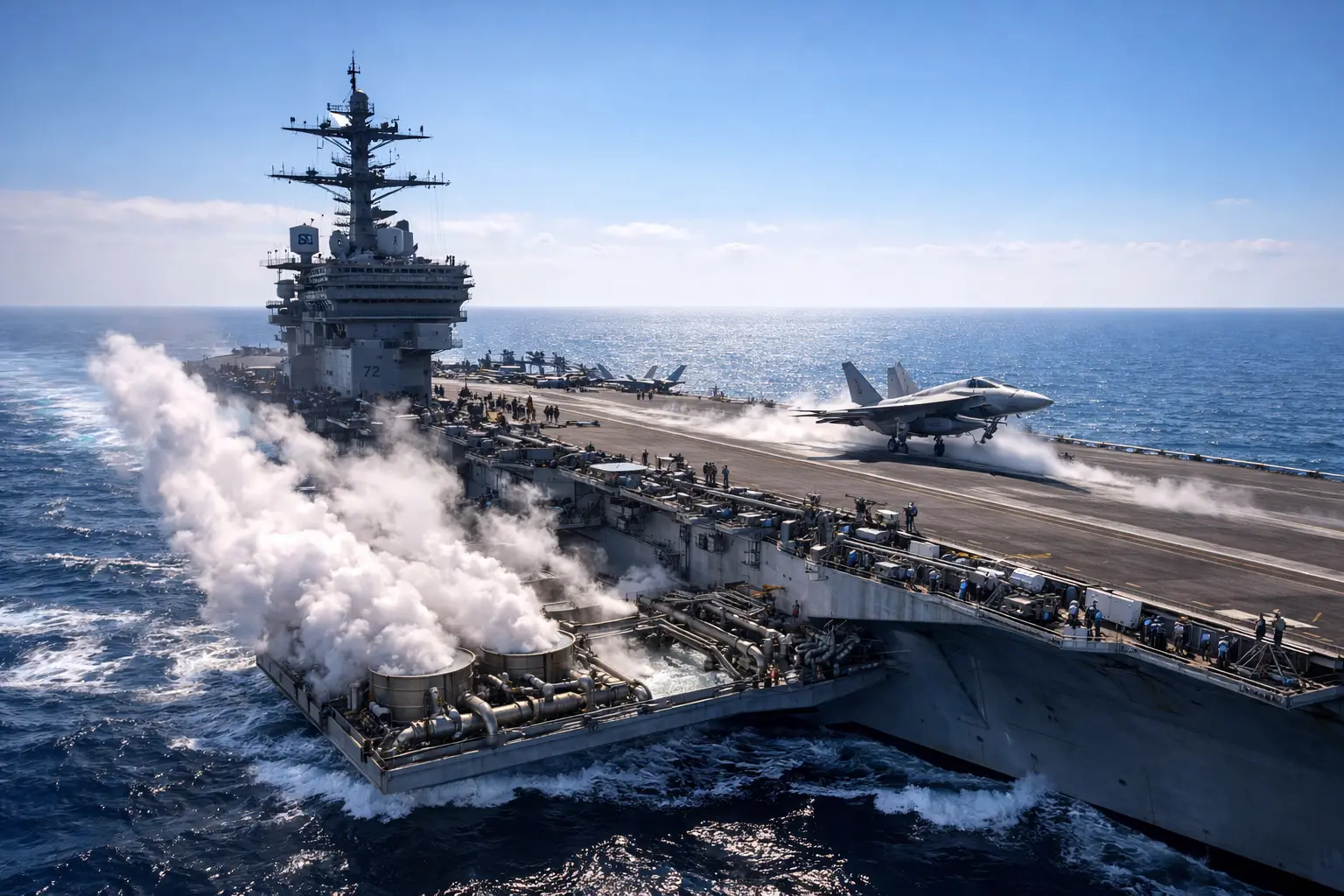
Navigating a 100,000-tonne vessel through the open ocean requires the bridge crew to spot distant ships and faint horizon lines. Red lighting inside the primary flight control and bridge prevents internal reflections on the windows. This guarantees watchstanders maintain an unobstructed view of the maritime environment.
100 Per Cent Operational Focus
Operating near jet intakes and exhaust blasts in total darkness requires immense concentration and spatial awareness. The strict red light protocol ensures deck crews, wearing colour-coded safety gear and carrying illuminated wands, can safely marshal aircraft. It provides just enough visibility to maintain strict operational safety.
)
)
)
)
)