'Nitrogen': Why the USS Abraham Lincoln fills jet tyres with special gas instead of air

The USS Abraham Lincoln uses compressed nitrogen gas for jet tyres to prevent fires, eliminate moisture, and maintain 375 PSI. The ship stores it at -196°C before safely servicing aircraft recovering at strict 44,000-pound maximum landing weights.
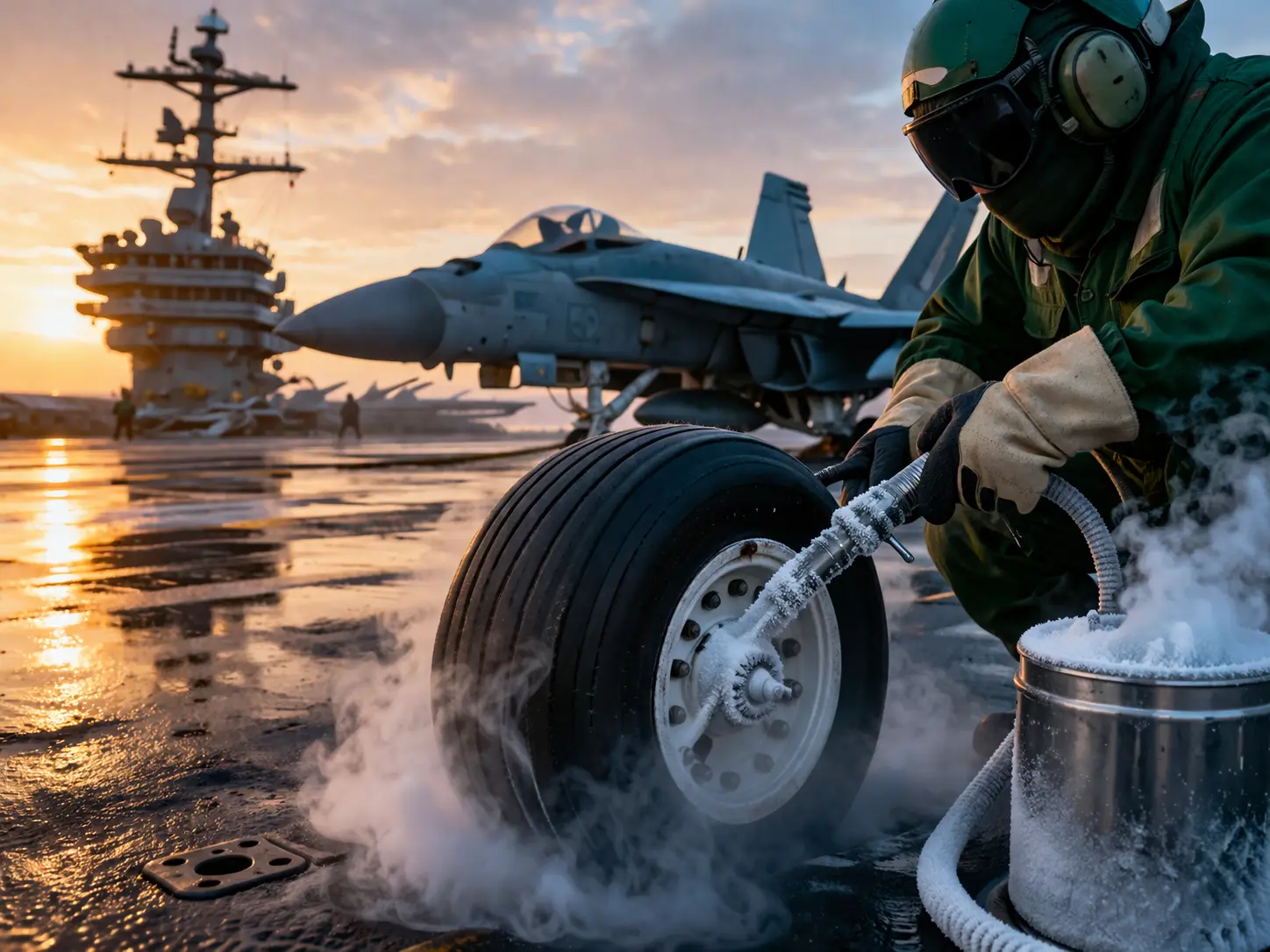
44,000-pound max landings
F/A-18 Super Hornets face strict maximum trap weight limits of 44,000 pounds during aircraft carrier recoveries. To support this immense physical stress, the USS Abraham Lincoln relies on compressed nitrogen gas. This specialized gas maintains predictable pressure stability far better than regular atmospheric air.
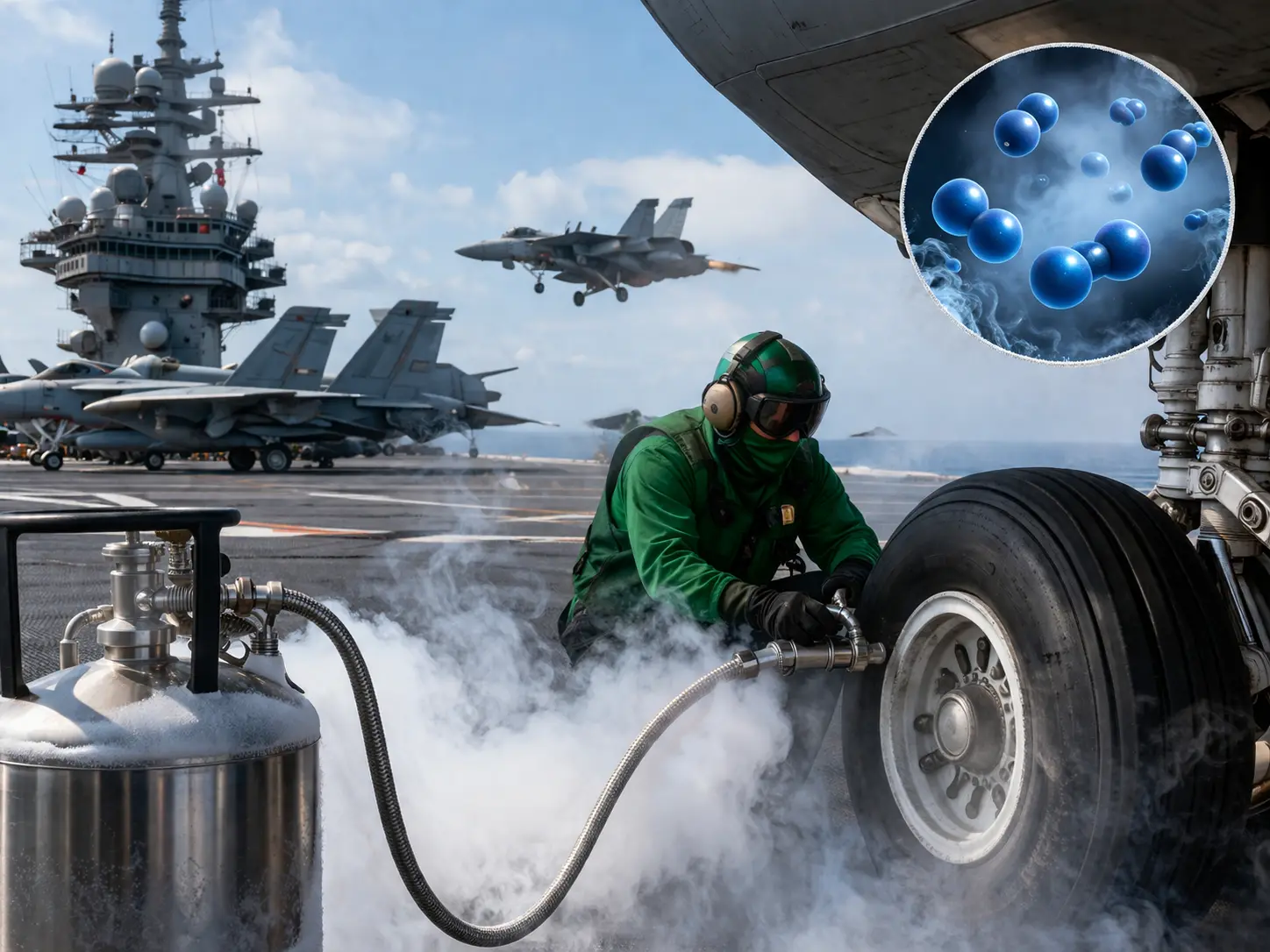
Steady at 375 PSI
Military aircraft require extreme tyre pressures to safely carry heavy fuel and weapon payloads. The nose tyres of carrier-based F/A-18 jets operate at a staggering 375 PSI afloat. Nitrogen molecules reduce natural pressure leaks, keeping tyres fully inflated for extended deployment periods.
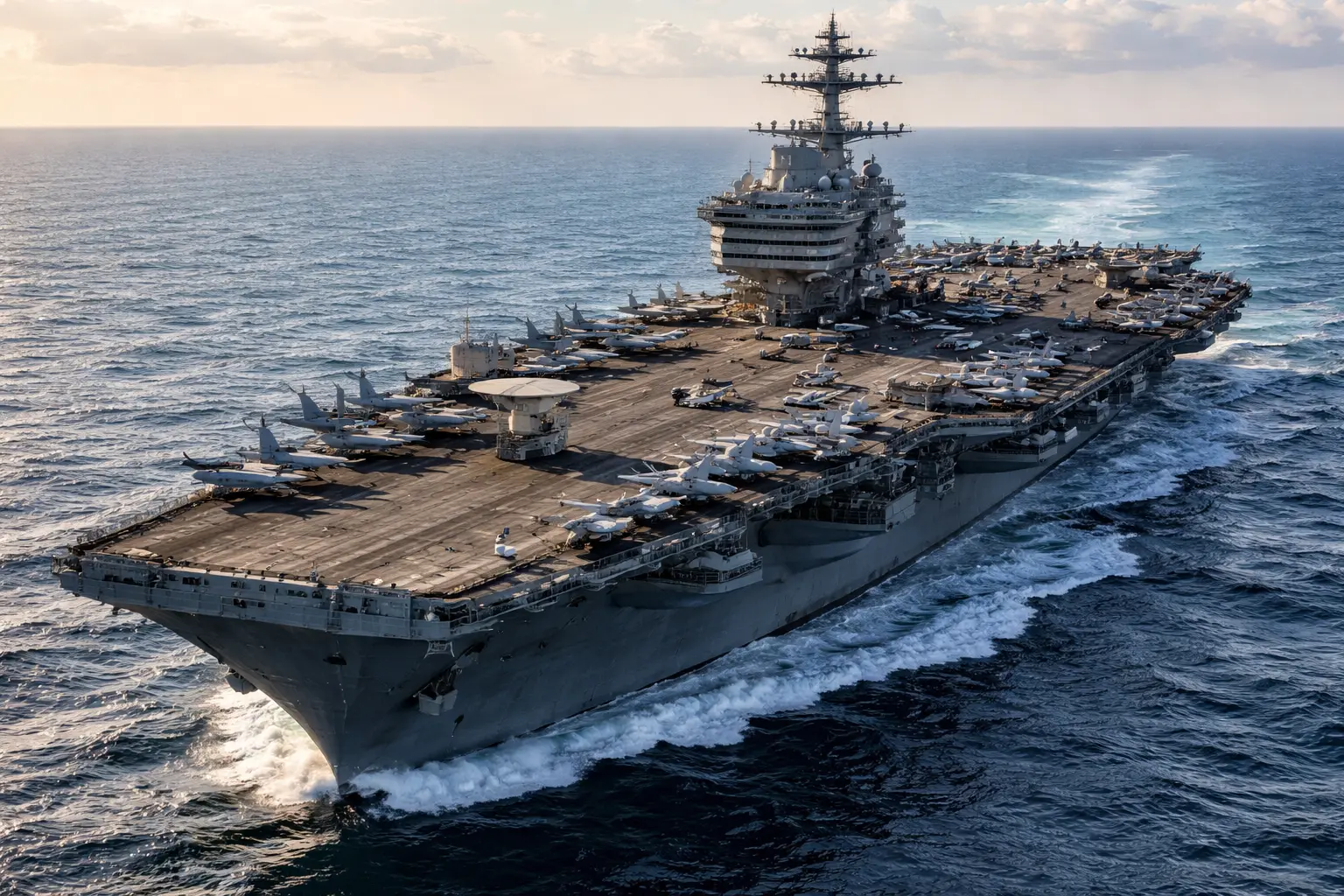
Prevents 260°C brake fire
Heavy carrier landings generate immense friction, heating wheel assemblies to peak temperatures around 260°C. If a tyre bursts, the 21 per cent oxygen in standard atmospheric air acts as an instant accelerant. Nitrogen is an inert gas that suffocates sparks by starving them of oxygen, preventing deadly flight deck fires.
Stops 21% oxygen rot
The oxygen found in regular air slowly oxidises rubber and corrodes metal wheel rims from the inside out over time. Filling tyres with 100 per cent pure nitrogen halts this chemical degradation entirely. This extends the service life of naval aviation equipment and reduces necessary maintenance cycles.
Stored at -196°C liquid
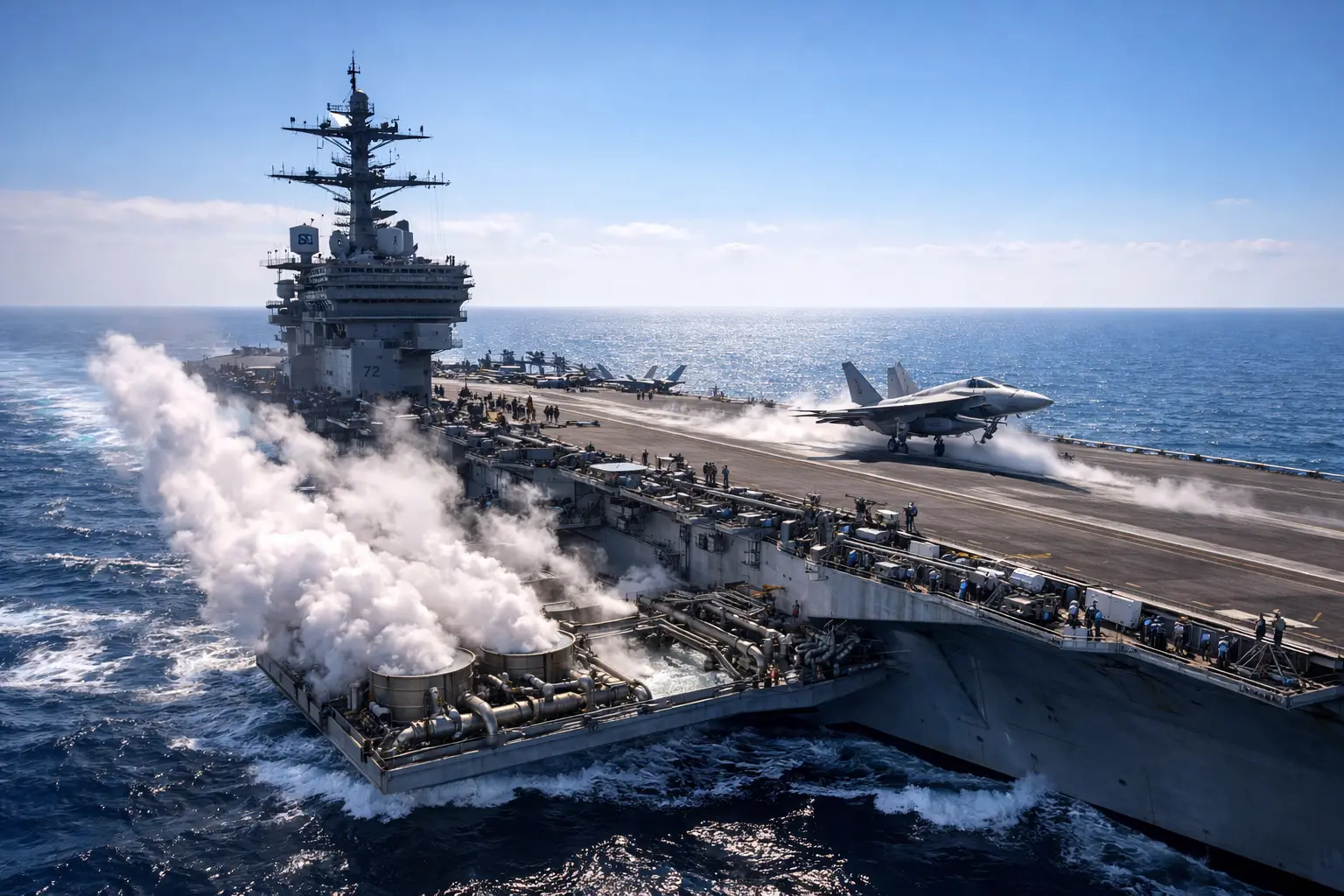
While the tyres use compressed gas, the aircraft carrier generates the element as liquid nitrogen in specialized O2N2 plants. The ship keeps the liquid at a freezing -196°C to save crucial storage space. Operators safely manage this cryogenic material before it is processed for flight operations.
Uses 3,500 PSI bottles
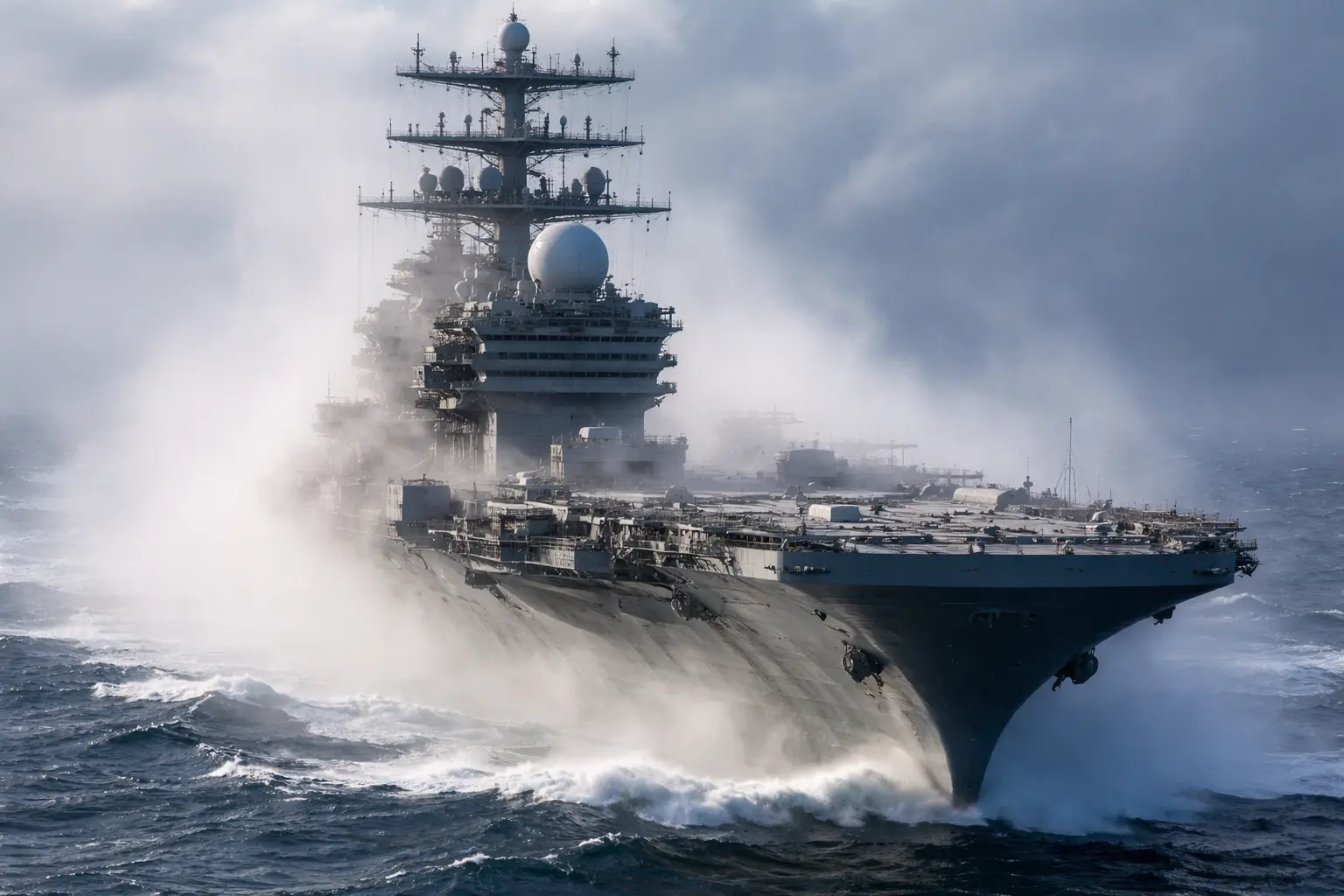
When flight operations commence, the liquid nitrogen is converted into a gas and pumped into 3,500 PSI bottles. These bottles are stacked onto mobile NAN servicing carts to reach the aircraft. This system allows aviation mechanics to safely pressurise jet tyres directly on the active flight deck.
Zero moisture at 30,000ft
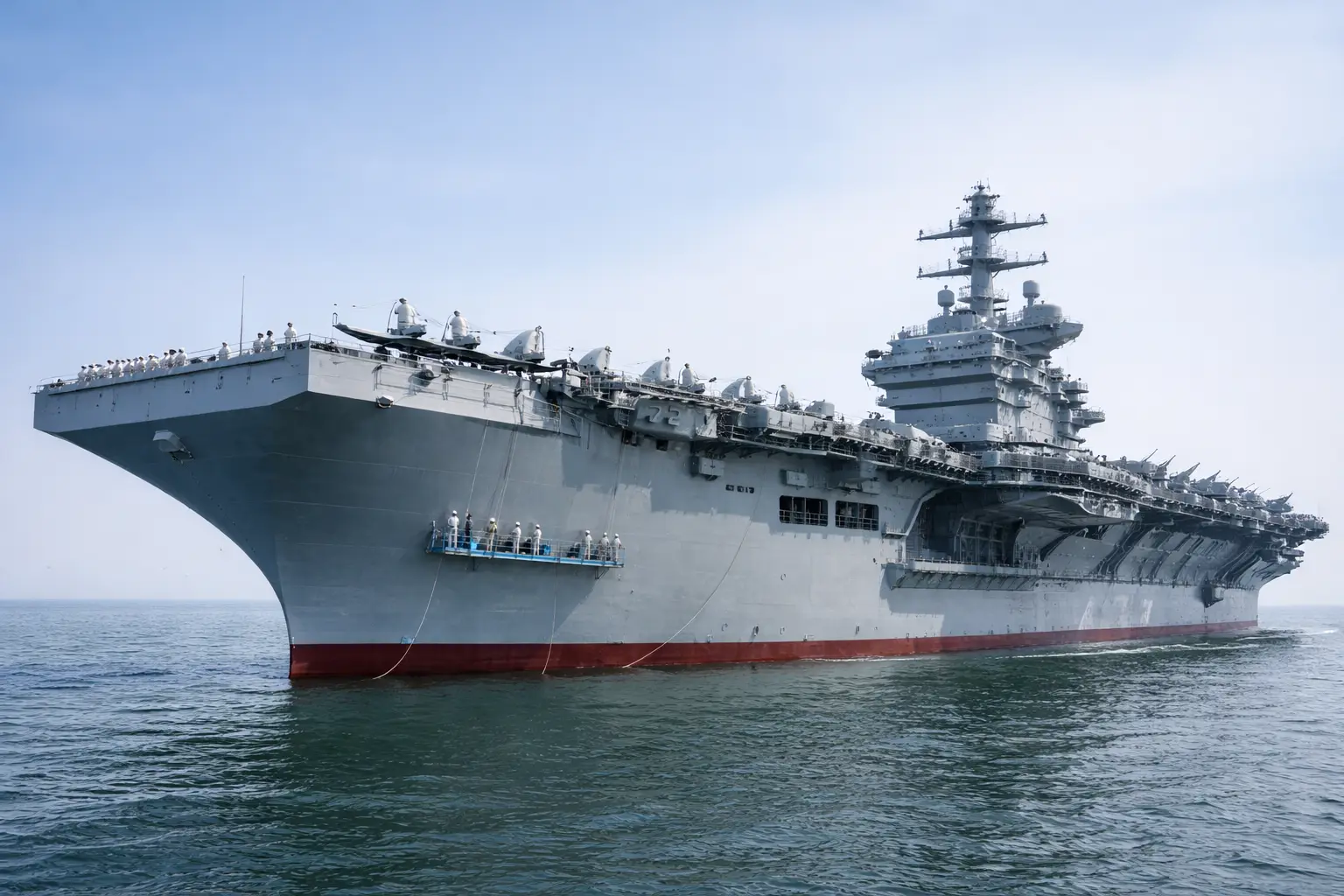
Fighter jets cruising at 30,000 feet routinely face freezing atmospheric temperatures. Standard air contains water vapour that freezes, which causes wild, unpredictable pressure fluctuations and forms ice crystals that can damage delicate valve seals. Pure nitrogen gas features absolutely zero moisture, ensuring stable tyre pressure and perfectly intact seals during high-altitude combat missions.

)
)

)