'Moving to Iran': How USS Gerald R. Ford helped in capturing Venezuela's President?

To legally and strategically pave the way for kinetic military action, the U.S. State Department designated the “Cartel of the Suns” a decentralised network allegedly headed by Maduro, as a Foreign Terrorist Organization (FTO).
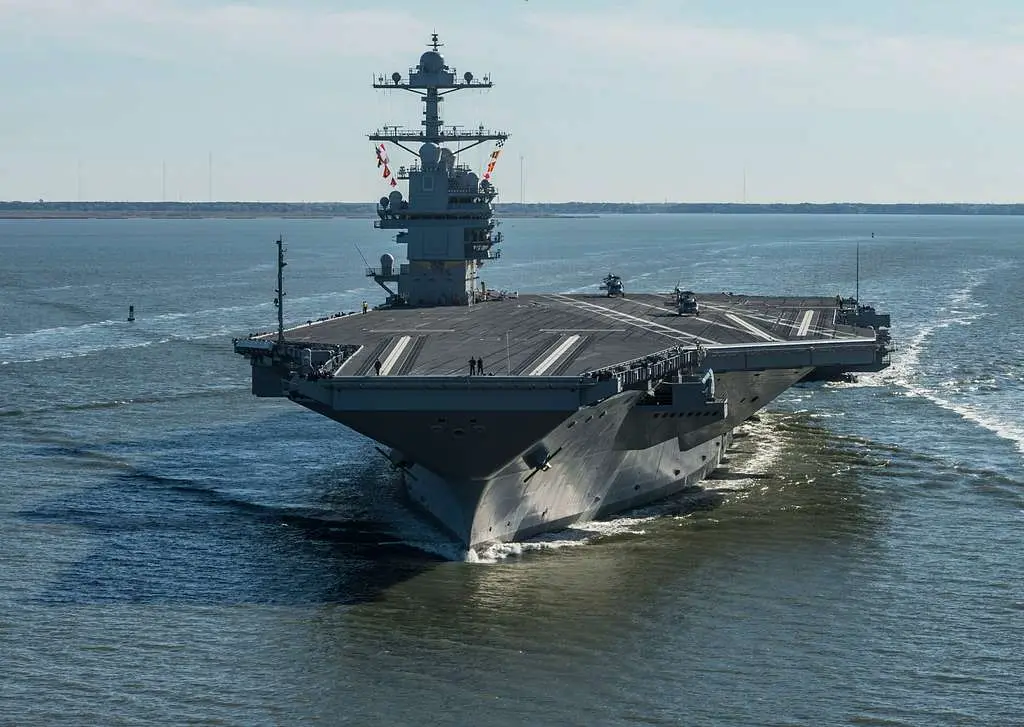
1. The Caribbean Buildup and Operation Southern Spear
In late 2025, the Trump administration initiated the largest U.S. naval buildup in the Caribbean since the 1962 Cuban Missile Crisis. Officially framed as a counter-narcotics mission under Joint Task Force Southern Spear, this deployment was anchored by the arrival of the USS Gerald R. Ford carrier strike group. The move intentionally positioned the world's most advanced warship mere hundreds of miles from the Venezuelan coast to project overwhelming military power and intimidate Nicolás Maduro's government.
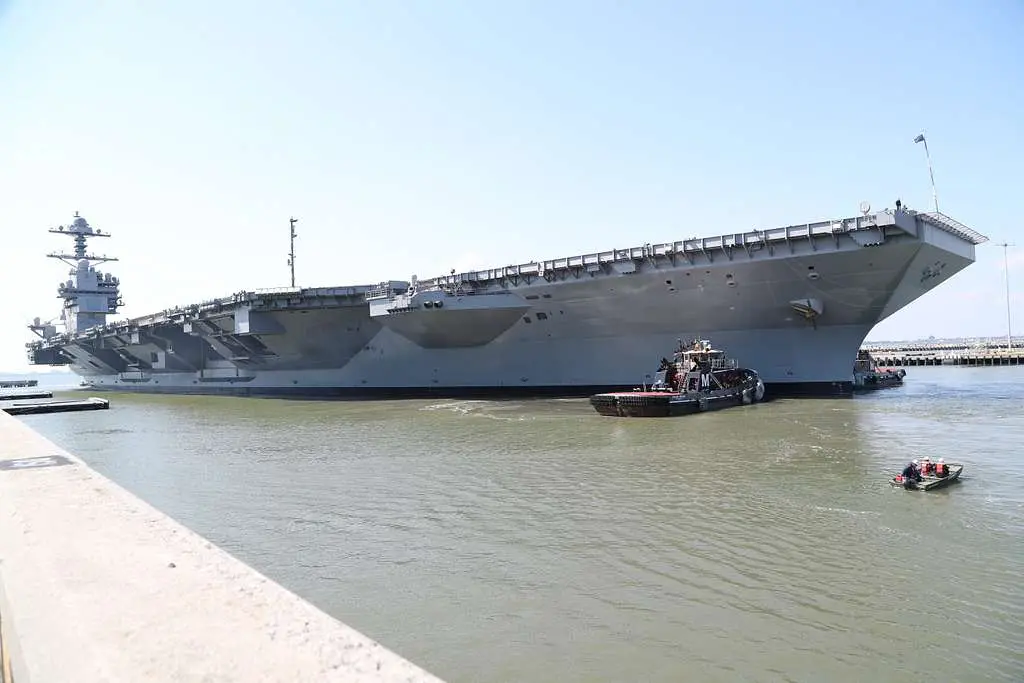
2. Terrorist Designations and Strategic Escalation
To legally and strategically pave the way for kinetic military action, the U.S. State Department designated the “Cartel of the Suns” a decentralised network allegedly headed by Maduro, as a Foreign Terrorist Organization (FTO). This crucial classification fundamentally shifted the rules of engagement, allowing the Pentagon to treat the Venezuelan leadership as "unlawful combatants" and legally justify expanded military strikes on state infrastructure to dismantle the alleged narco-terrorist network.
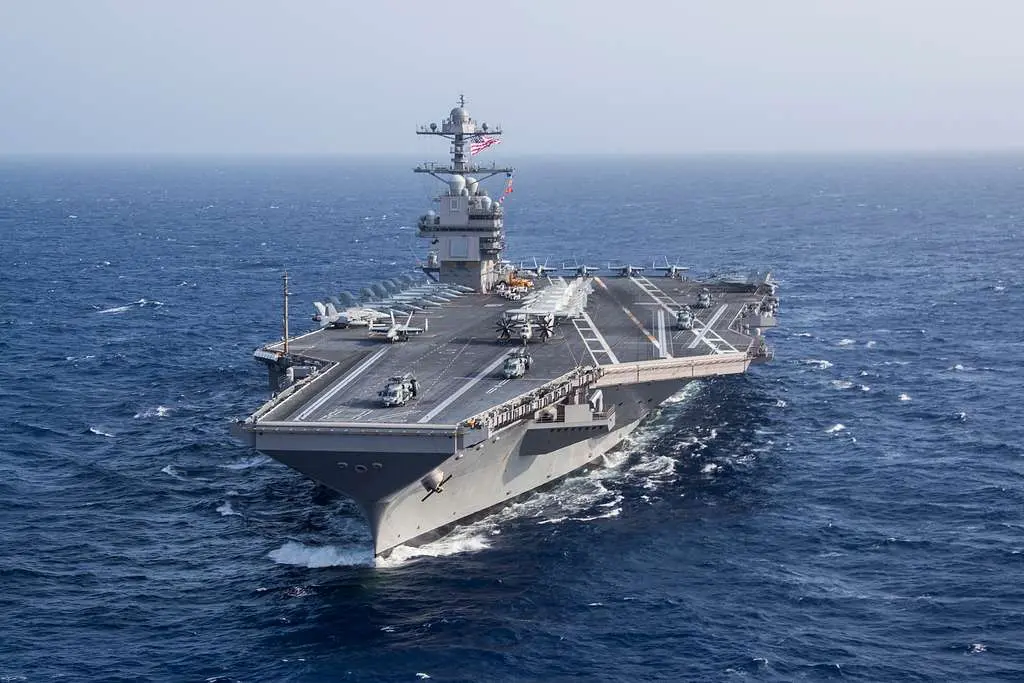
3. The Ford’s Intelligence and Aerial Dominance
Stationed near Puerto Rico, the USS Gerald R. Ford utilized its massive air wing to completely dominate the region's airspace. Equipped with squadrons of F/A-18 Super Hornets and advanced electronic warfare jets, the colossal carrier established total maritime domain awareness. It provided continuous top-cover fire support, critical intelligence gathering, and a secure operational shield that effectively neutralized any potential counterattacks from the Venezuelan military.
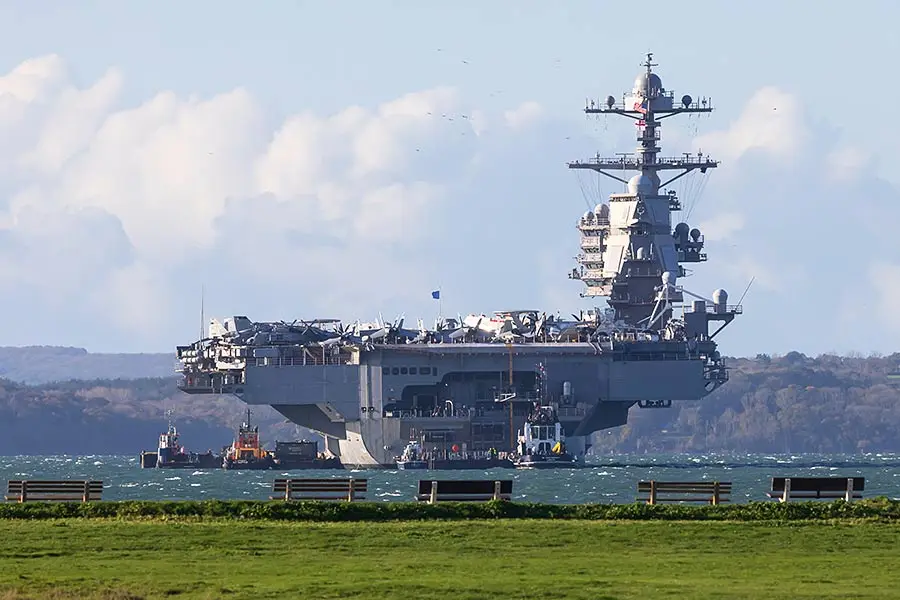
4. The January 3 Predawn Capture of Maduro
The escalating pressure campaign culminated on January 3, 2026, when U.S. armed forces executed a daring, predawn raid in Caracas. Backed by the immense firepower, logistical coordination, and airspace control provided by the Ford carrier strike group, American special operations forces successfully bypassed conventional military defenses. The swift decapitation strike resulted in the capture of Nicolás Maduro, effectively neutralizing his regime without the need for a prolonged, traditional ground invasion.
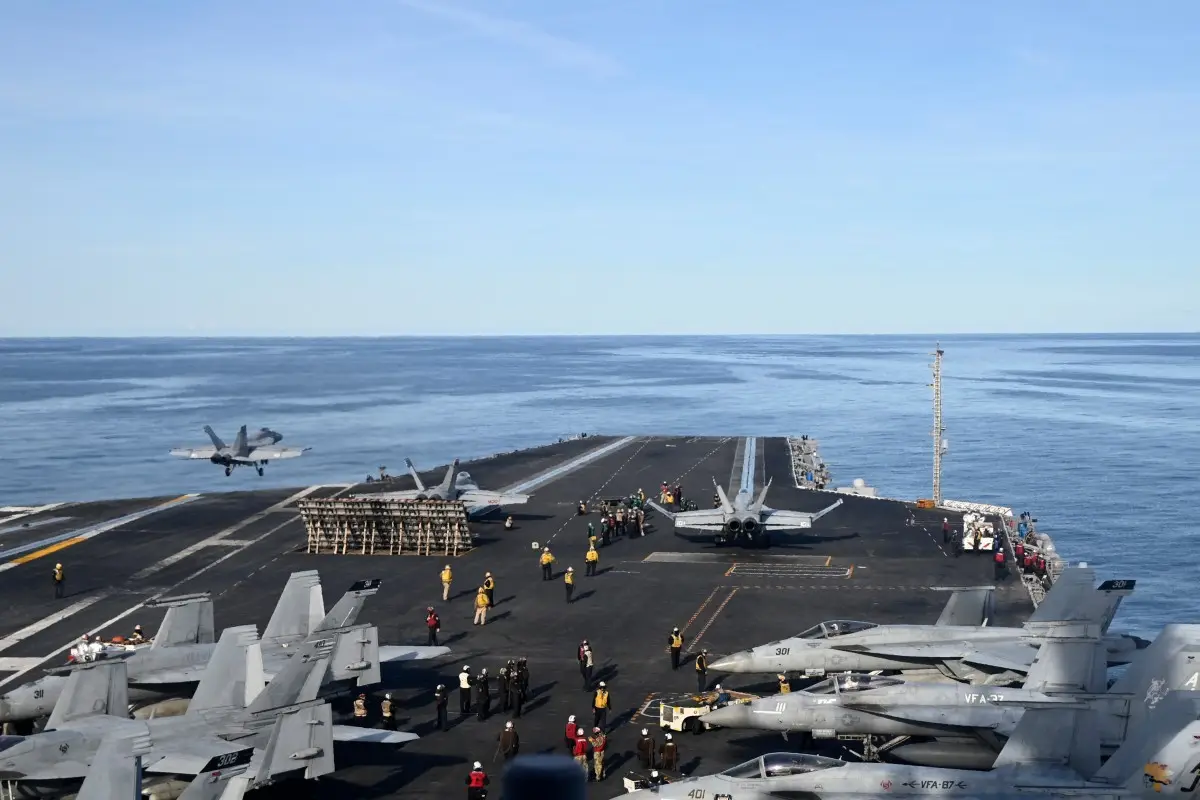
5. A Swift Pivot from Venezuela to the Persian Gulf
Following the successful capture of the Venezuelan president, the USS Gerald R. Ford’s mission in the Western Hemisphere was abruptly concluded. Instead of returning to its home port in Norfolk, Virginia, for scheduled dry-dock maintenance and upgrades, the warship received sudden orders in February 2026. The colossal carrier was immediately redirected to sail from the Caribbean Sea toward the Middle East, significantly extending the already grueling deployment of its crew.
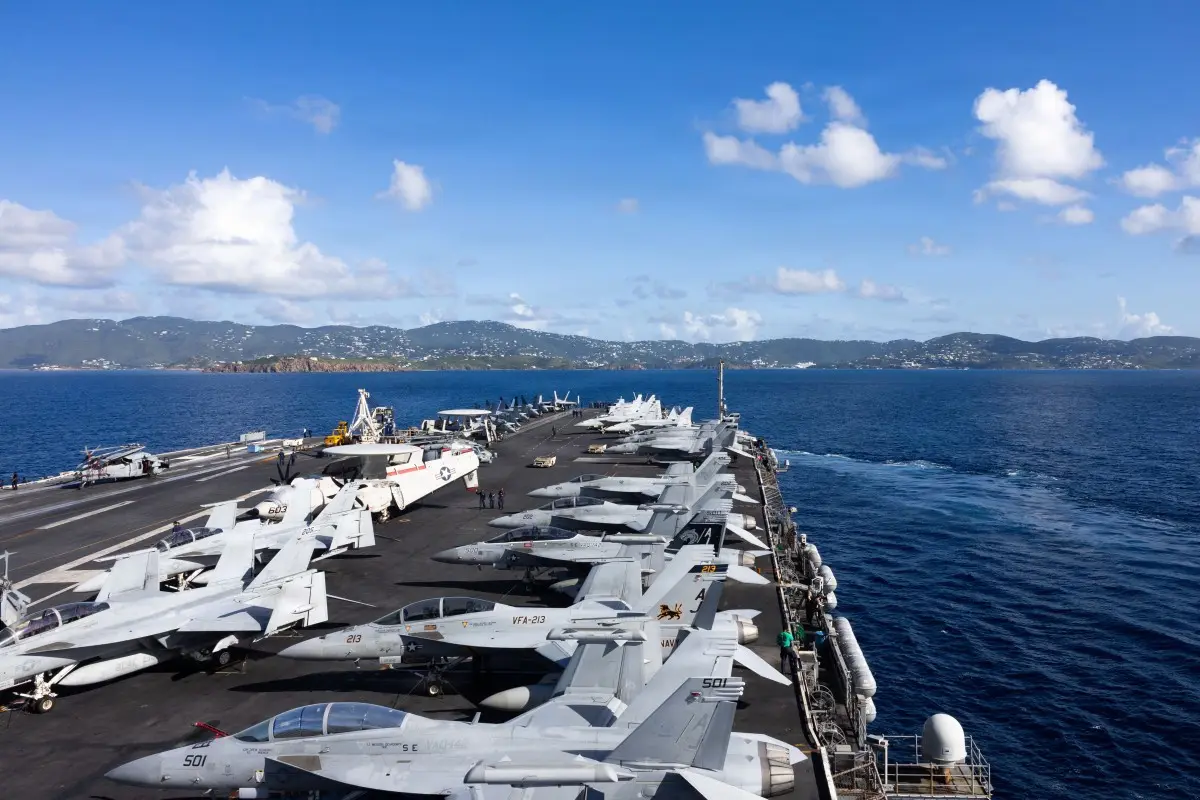
6. Joining the USS Abraham Lincoln
The Ford is currently transiting to the Persian Gulf, where it is slated to merge its operational capabilities with the USS Abraham Lincoln carrier strike group. This convergence creates a rare and formidable dual-carrier naval presence, exponentially multiplying American maritime firepower. By placing dozens of tactical aircraft, guided-missile destroyers, and immense strike capabilities directly at the doorstep of the Islamic Republic, Washington aims to assert undeniable regional dominance.

7. "Traumatic" Warnings and the Iranian Standoff
This massive redeployment is designed to apply maximum military pressure on Tehran to coerce it into a new, comprehensive nuclear agreement. With indirect diplomatic talks stalling in Oman, the U.S. administration is utilising the recent success in Venezuela and references to past operations like “Midnight Hammer” as stark warnings. Washington has explicitly signaled that any failure to reach a deal will result in severe military consequences, leaving Gulf Arab nations deeply concerned about the rising potential for an all-out regional war.
)
)
)
)
)