'Moment of unity': Why every human should watch 3I/ATLAS on 29 October as per Michio Kaku

Famed theoretical physicist Michio Kaku believes 3I/ATLAS isn’t just another celestial object, it could be a once-in-a-lifetime event. Here’s why he thinks everyone on Earth should keep an eye on it this 29 October.
1. It Could Be the Closest Look Yet at an Interstellar Visitor
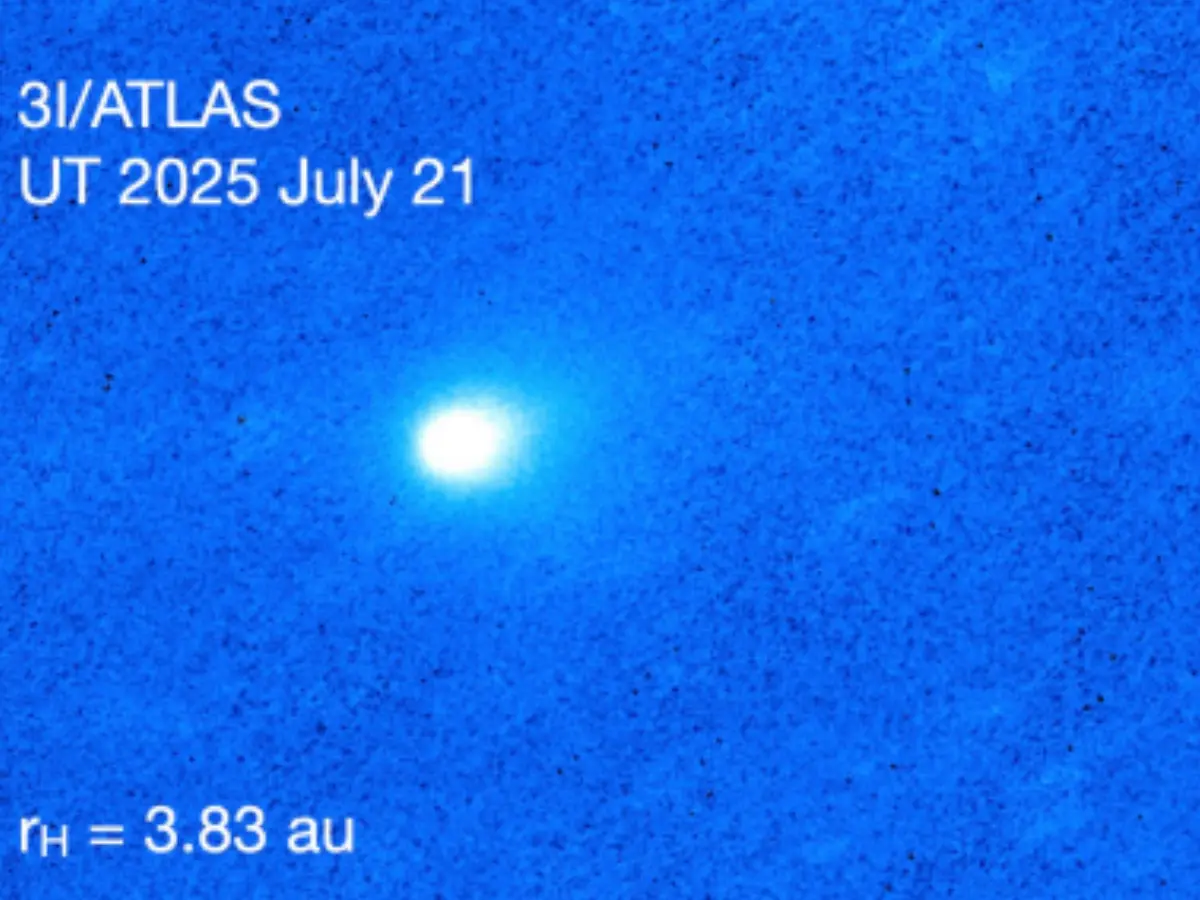
Kaku notes that 3I/ATLAS is only the third confirmed object to enter our Solar System from interstellar space. Observing it could help scientists decode how material or technology, travels between star systems.
2. A Test for Our Planetary Defence Systems
According to Kaku, tracking 3I/ATLAS will test how ready we are to detect and respond to high-velocity cosmic objects. He warns that studying it closely may help prepare us for more dangerous interstellar visitors in the future.
3. It May Reveal New Physics
Kaku suggests that the object’s unusual acceleration, unexplained by gravity or gas emissions, could hint at unknown physical forces or propulsion methods, potentially expanding our understanding of cosmic mechanics.
4. It’s an Opportunity for Global Scientific Collaboration
The 29 October observation window is expected to involve telescopes from across the world. Kaku calls this a “moment of unity,” where collective human curiosity transcends national boundaries.
5. The Object’s Structure Could Be Artificial
Kaku admits that while the odds are low, 3I/ATLAS could display patterns of intelligent design, such as a reflective, thin, or geometric surface. This could redefine humanity’s view of itself in the universe.
6. It’s a Real-Time Cosmic Experiment
Kaku says events like this rarely align with perfect visibility for Earth-based instruments. Observing 3I/ATLAS on 29 October may give scientists live data on how interstellar matter interacts with the Sun’s magnetic field.
7. It Reminds Humanity of Its Cosmic Fragility
Finally, Kaku frames 3I/ATLAS as a symbol of humility, a reminder that our Solar System is not isolated. Watching it, he says, connects us to the vast and unpredictable forces that shape our existence.
Conclusion
For Michio Kaku, 3I/ATLAS isn’t just a passing rock, it’s a cosmic messenger. Whether it brings new science, new mysteries, or something far stranger, 29 October could mark a turning point in how humanity looks at the stars.
)
)
)

)