'Hypersonic': Can Iran attack Washington DC in retaliation with its ballistic missiles?

Western intelligence agencies have long monitored Iran's civilian space program, noting that the technology required to launch a satellite into orbit (Space Launch Vehicles, or SLVs) is virtually identical to the technology needed to build an ICBM.

1. The Core Question: Can Iran Reach the US Homeland?
To hit the US East Coast from Iran requires an Intercontinental Ballistic Missile (ICBM) with a minimum range of approximately 10,000 kilometers (over 6,200 miles).

2. The Limits of Iran's Current Arsenal
The physical reality of Iran's missile program is strictly regional. Tehran’s most advanced and longest-range operational ballistic missiles, such as the Sejjil, the Khorramshahr, and the Emad, have maximum ranges officially capping out between 2,000 and 2,500 kilometers. While this easily places all of Israel, Eastern Europe, and the entire Arabian Peninsula within the crosshairs, it leaves the missiles mathematically thousands of miles short of reaching North American shores.
3. The "Hypersonic" Factor: Speed Does Not Equal Range
Iran has aggressively touted its development of hypersonic weapons, specifically the "Fattah-1" and "Fattah-2" missiles, which are designed to travel at over five times the speed of sound and maneuver unpredictably to evade air defenses. However, while these hypersonic glide vehicles represent a major leap in evasion technology, they do not solve the range problem. The Fattah missiles have a claimed maximum range of just 1,400 kilometers, making them a severe tactical threat to neighboring countries, but completely irrelevant to the US mainland.

4. The True Targets: American Bases in the Crosshairs
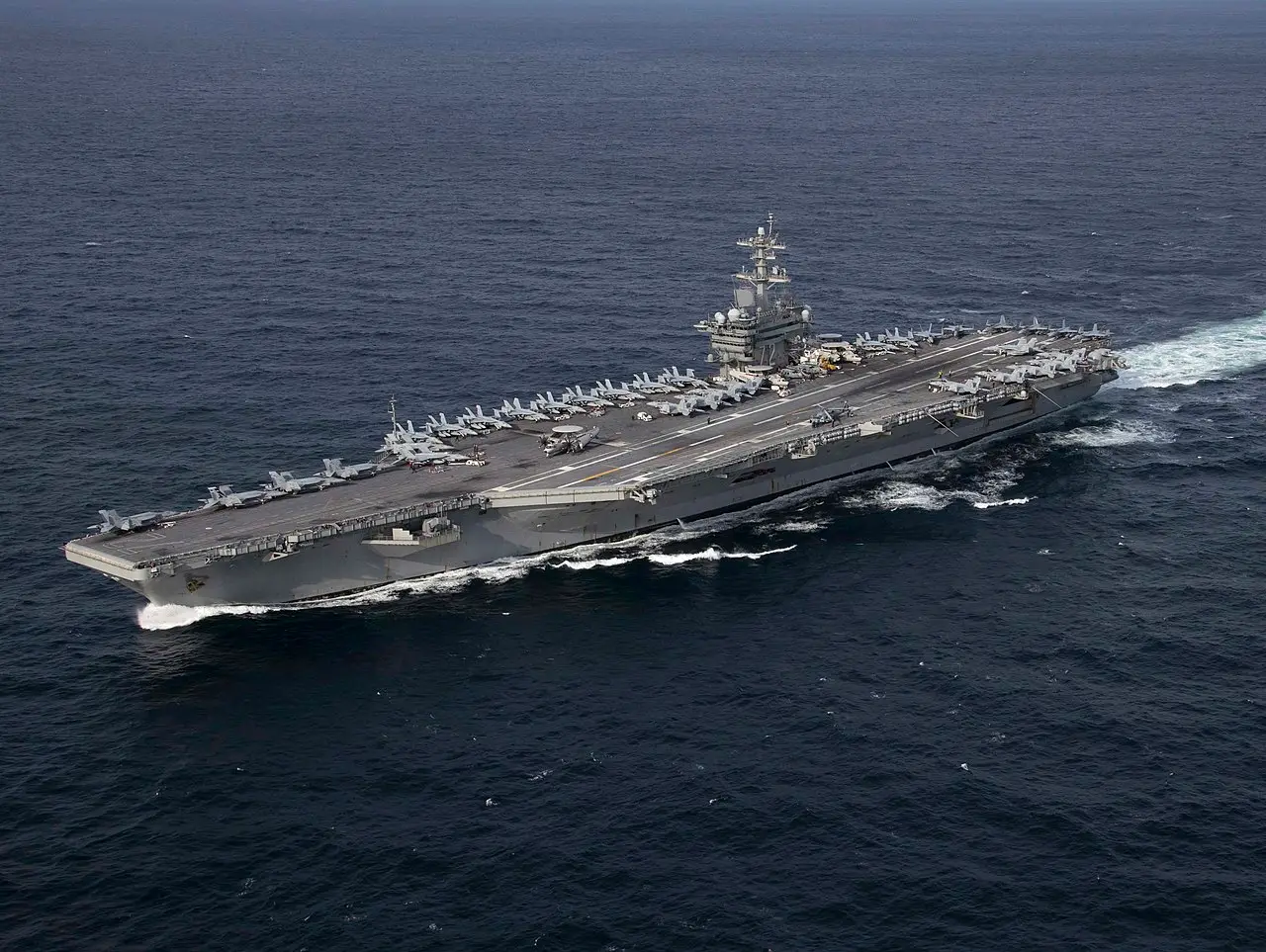
Because Iran cannot reach the United States directly, its deterrence strategy relies on holding American forward-operating bases hostage. The US military maintains dozens of massive installations across the Middle East, including the Fifth Fleet in Bahrain, Al Udeid in Qatar, and Al Dhafra in the UAE. These bases, housing tens of thousands of American troops and critical military hardware, are situated well within the 2,000-kilometer striking distance of Iran's medium-range ballistic missile (MRBM) network.

5. ICBM Ambitions and the Space Program
Western intelligence agencies have long monitored Iran's civilian space program, noting that the technology required to launch a satellite into orbit (Space Launch Vehicles, or SLVs) is virtually identical to the technology needed to build an ICBM. While Iran has successfully launched solid-fuel SLVs like the Ghaem-100, weapons experts emphasize that converting a space rocket into a survivable, weaponized ICBM capable of re-entering the atmosphere with a warhead is a massive technological hurdle that Iran has not yet successfully tested or crossed.

6. The Asymmetric and Covert Threat
While a direct missile launch from Tehran to Washington is off the table, defence analysts warn of asymmetric alternatives. If Iran is determined to strike the US homeland in retaliation, it is highly likely to utilize cyber warfare, targeting critical infrastructure like power grids, water treatment facilities, or financial institutions. Additionally, intelligence officials continuously monitor for the highly unlikely but theoretically possible scenario of Iran attempting to launch shorter-range cruise missiles from disguised commercial vessels positioned off the US coast.

7. American Homeland Defense Systems
Even if Iran were to suddenly unveil an untested ICBM capability, the US mainland is shielded by the Ground-based Midcourse Defence (GMD) system. Headquartered in Alaska and California, this multi-billion-dollar network of early-warning radars and kinetic interceptors is specifically designed to track and destroy incoming intercontinental ballistic missiles in space before they re-enter the atmosphere. While designed primarily with North Korea in mind, the system serves as the ultimate backstop against any rogue long-range launch from the Middle East.
So the short and definitive answer is no. As of early 2026, Iran does not possess the military capability to strike the continental United States directly from Iranian soil. Despite possessing the largest and most diverse missile arsenal in the Middle East, Iran currently has no fielded weapon system capable of traversing that distance.
)
)
)
)
)