'Greenland Nightmare': How a US B-52 carrying nuclear weapons crashed in 1968

In 1968, a US B-52 bomber carrying four hydrogen bombs crashed near Thule, Greenland. The accident spread radioactive debris across the ice, triggering a massive cleanup and ending airborne alerts.
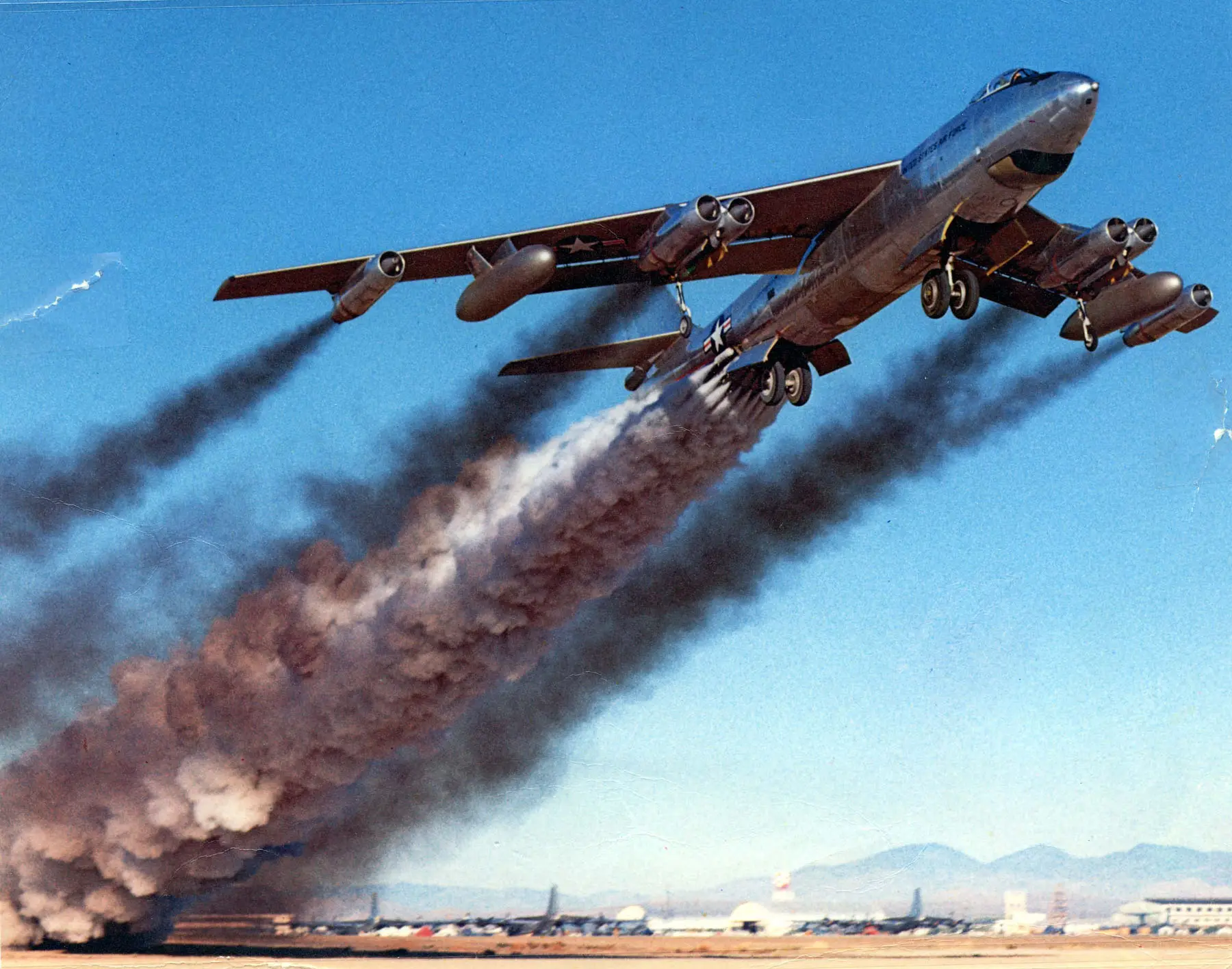
The mission begins
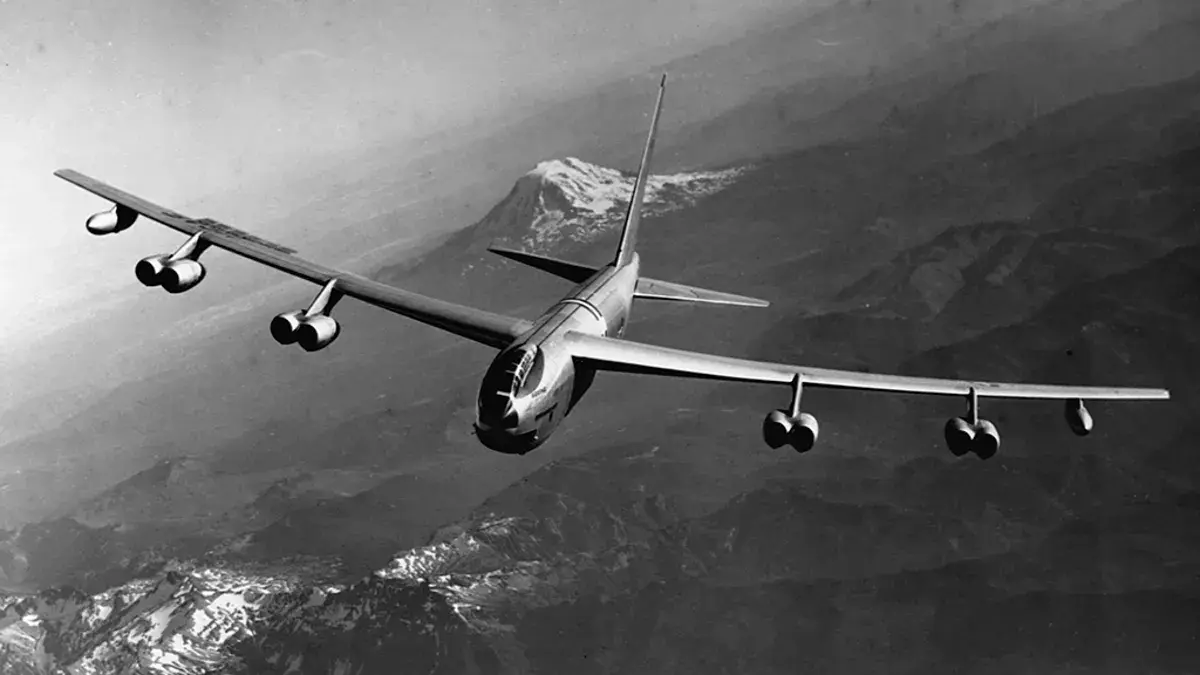
The B-52G Stratofortress took off from Plattsburgh Air Force Base in New York on a Cold War Hard Head mission. It was part of Operation Chrome Dome, a programme that kept nuclear-armed bombers in the air 24 hours a day to deter Soviet attacks. The crew was tasked with flying over Baffin Bay and the area surrounding Thule Air Base.
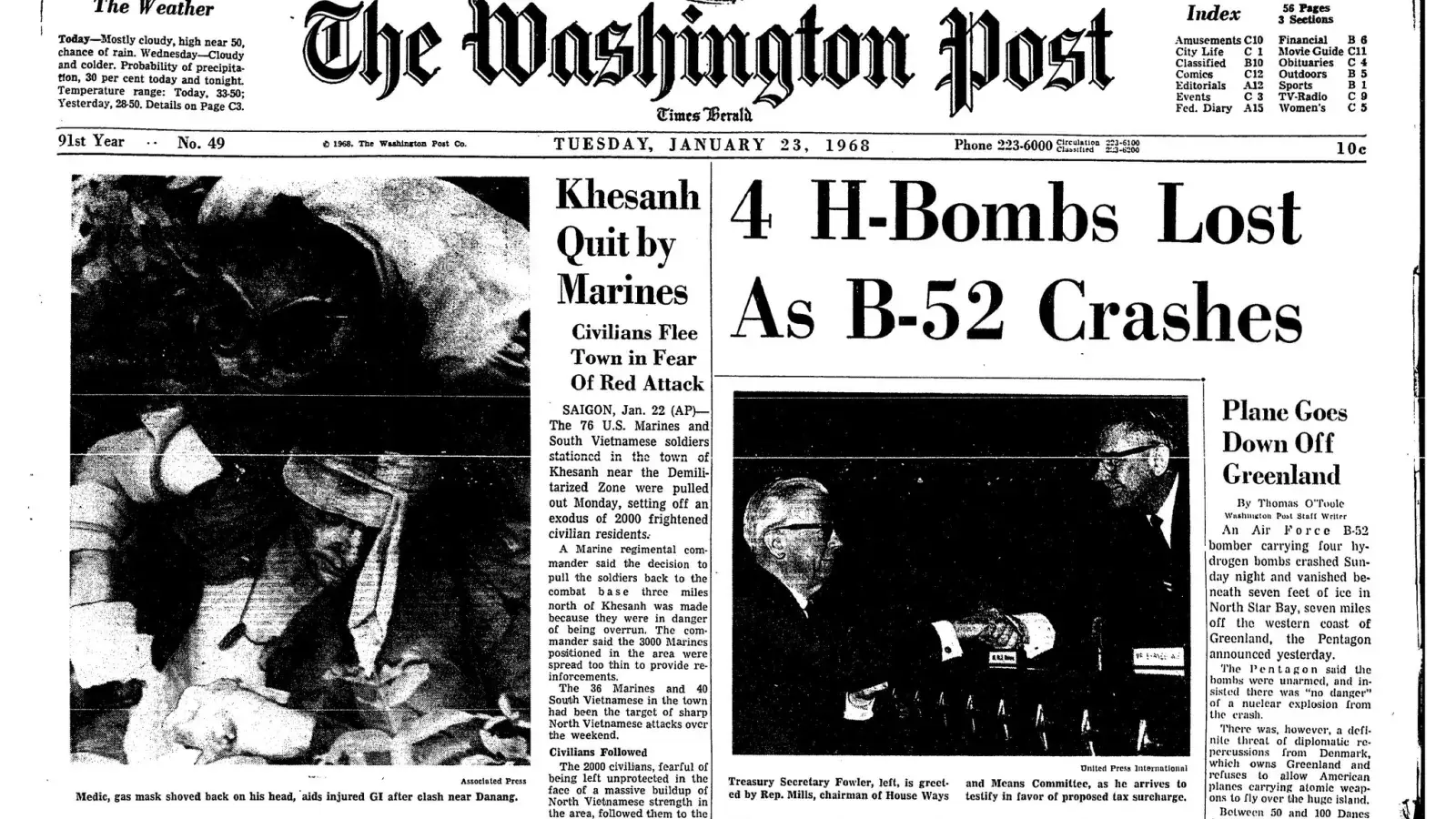
Fire in the cabin
Several hours into the flight, the aircraft commander, Captain John Haug, detected a burning smell in the cockpit. A fire had broken out in the lower crew compartment, likely caused by a stowage cushion blocking a heating vent. The situation deteriorated rapidly as smoke filled the cabin, disabling the aircraft’s electrical power and navigational instruments.
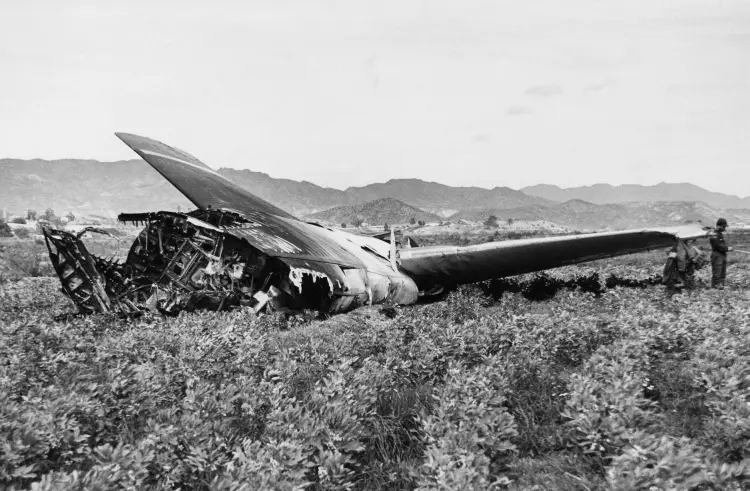
Emergency over Greenland
Realising the fire was uncontrollable, the pilot declared an emergency and requested permission to land at Thule Air Base. However, the smoke became too thick for the crew to see the instruments or fly safely. Captain Haug ordered the crew to bail out over Thule Air Base as the aircraft lost stability.
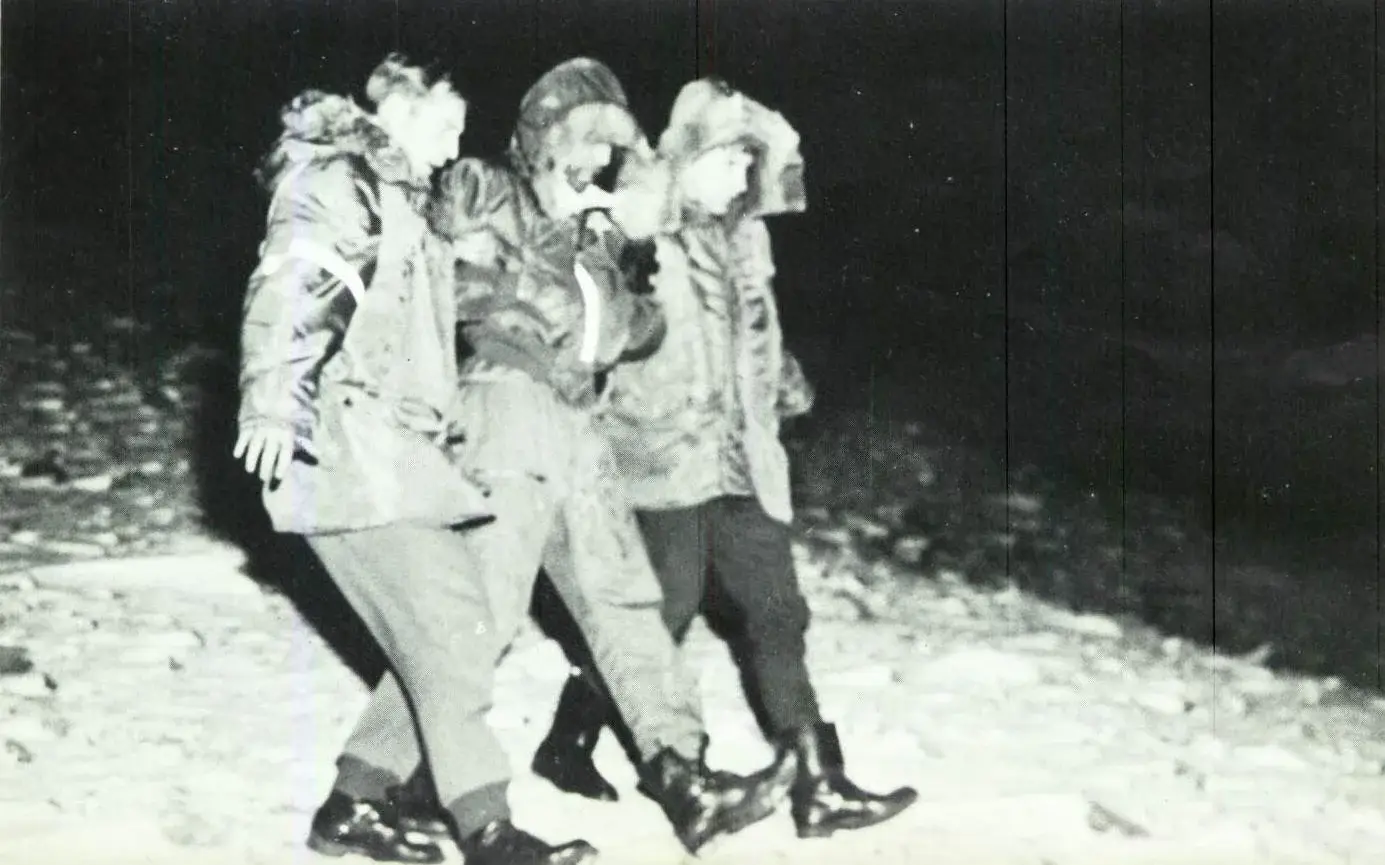
The crash impact
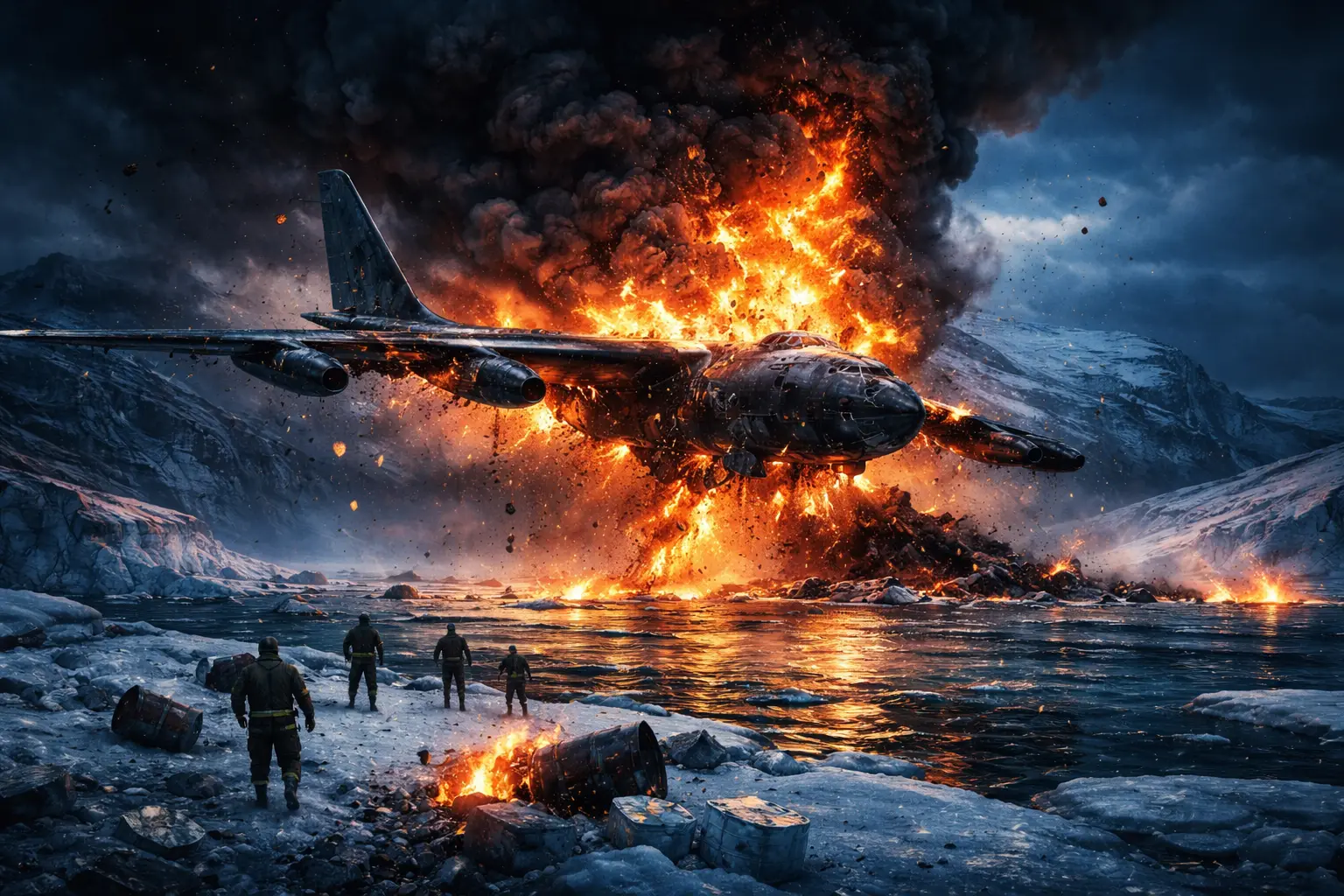
Six of the seven crew members successfully ejected and survived the incident, though some suffered injuries from the extreme cold. The abandoned B-52 bomber continued briefly before crashing onto the sea ice about 12 kilometres west of the Thule runway. The impact occurred at a high velocity, shattering the airframe instantly upon contact with the ice. The co-pilot, Leonard Svitenko, did not have an ejection seat (he gave it to the instructor pilot) and died while trying to bail out manually through a hatch.
Conventional explosion
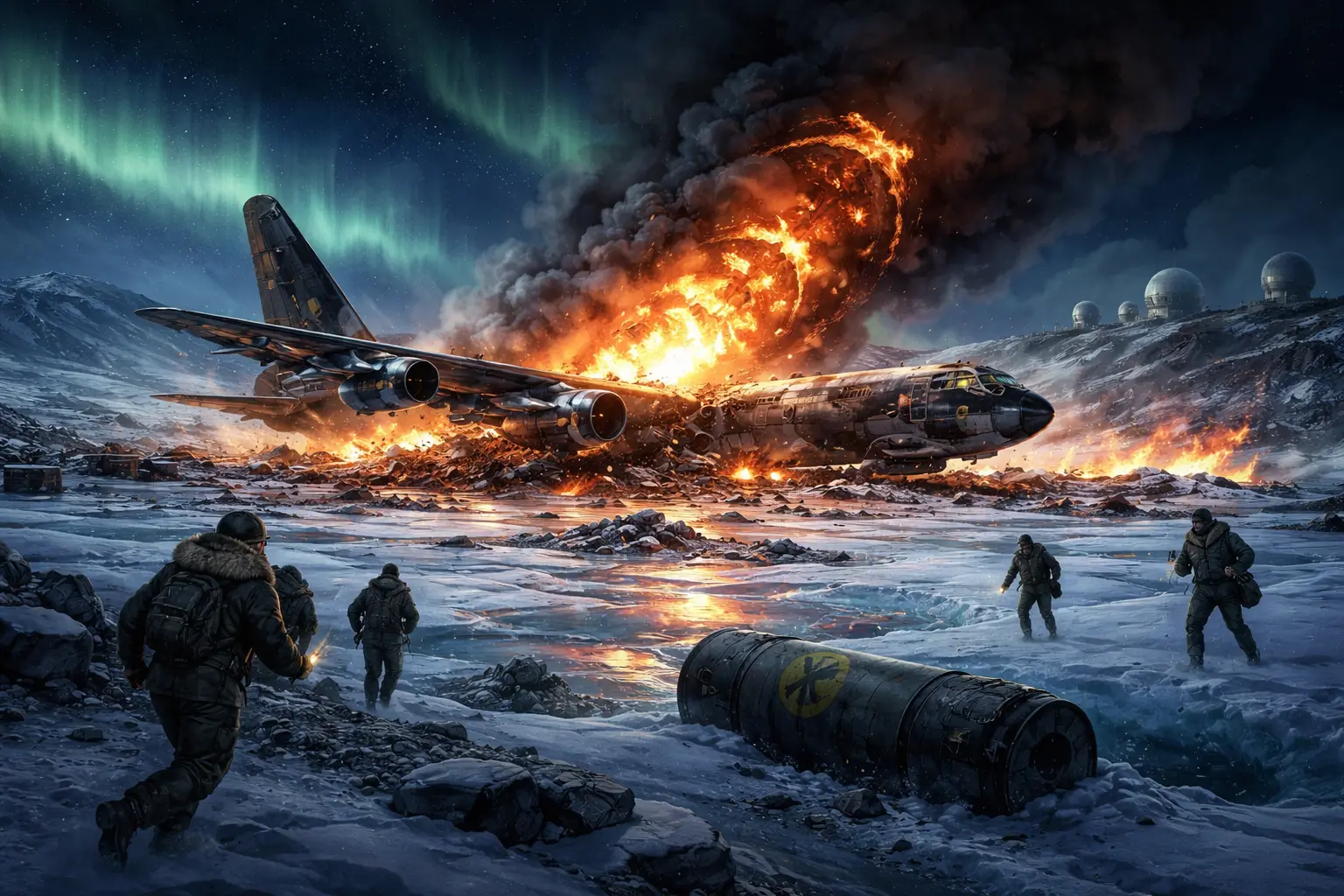
The bomber was carrying four B28FI thermonuclear bombs at the time of the accident. While a nuclear explosion did not occur, the conventional high explosives inside the weapons detonated upon impact. This blast fragmented the nuclear components and spread radioactive debris across a wide area of the frozen bay.
Radioactive contamination
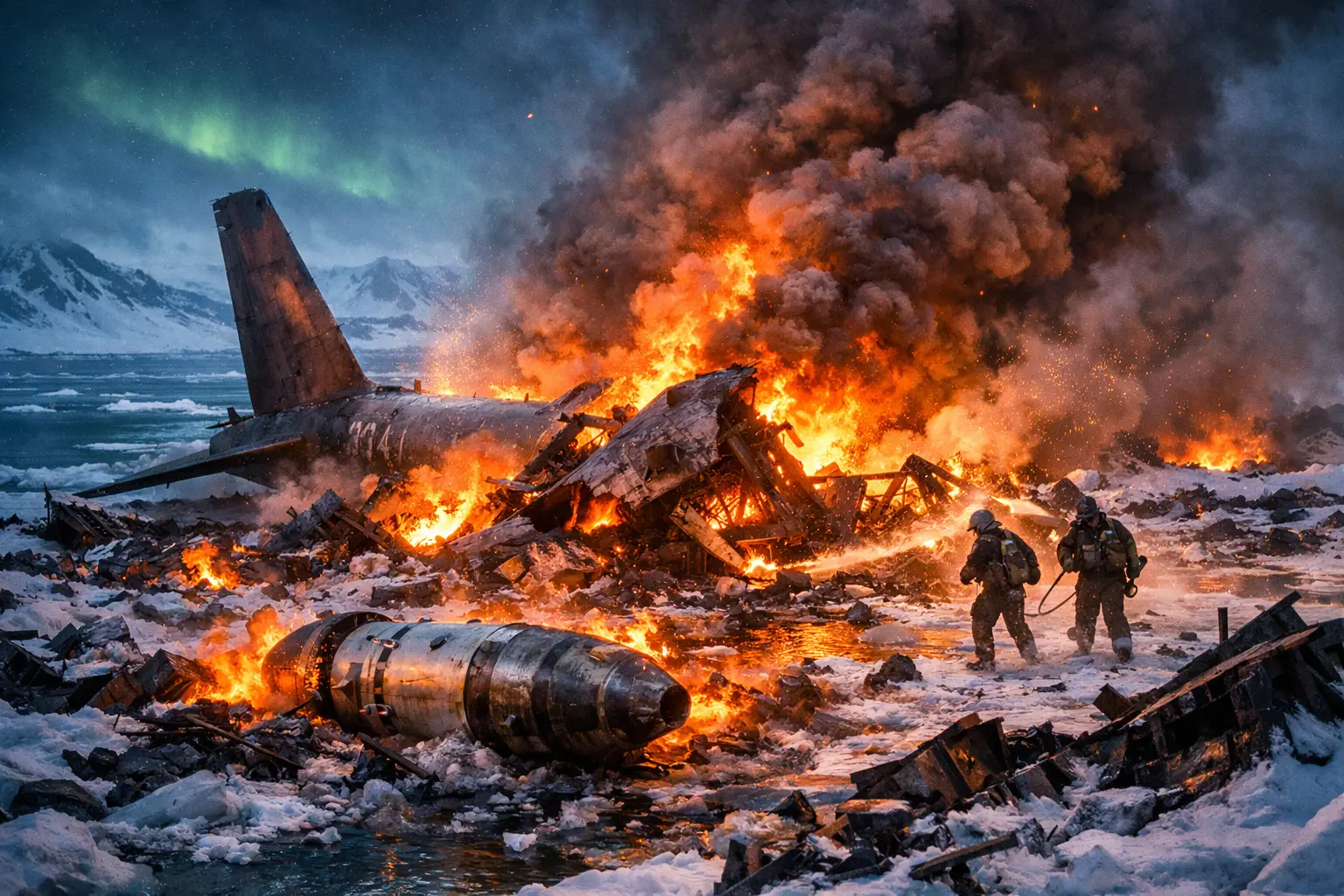
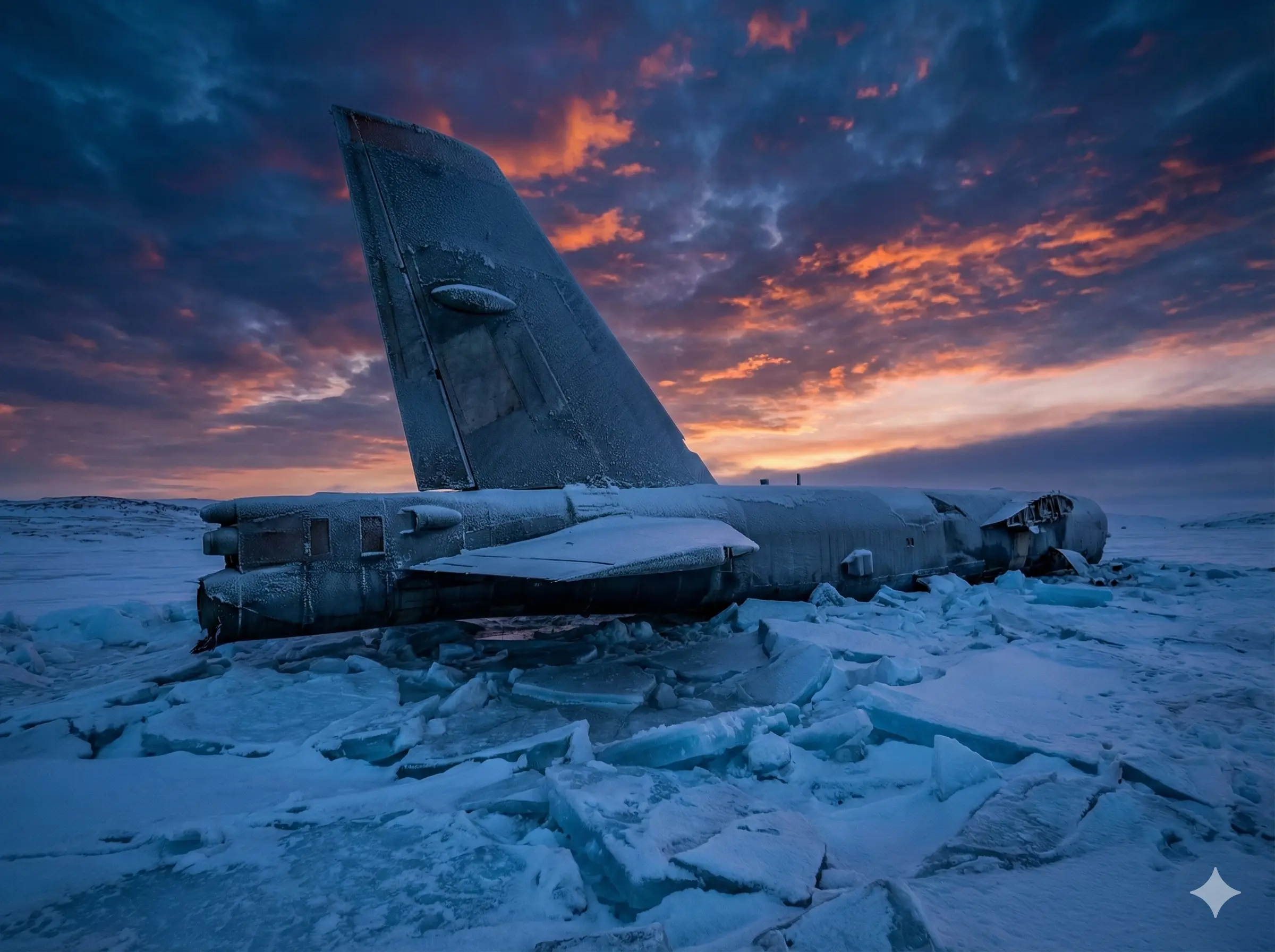
The explosion and subsequent fire scorched a teardrop-shaped area on the ice, roughly 700 metres long. The intense heat melted the ice momentarily, causing some wreckage to sink to the ocean floor. Large amounts of jet fuel burned for hours, dispersing plutonium and other radioactive contaminants into the snow and the air.
Project Crested Ice
The US and Danish governments immediately launched a massive cleanup operation code-named Project Crested Ice. Working in temperatures as low as -60 degrees Celsius, personnel removed contaminated snow and ice. They filled 67 huge tanks with radioactive debris, which were later transported to the US for disposal.
Search for the payload
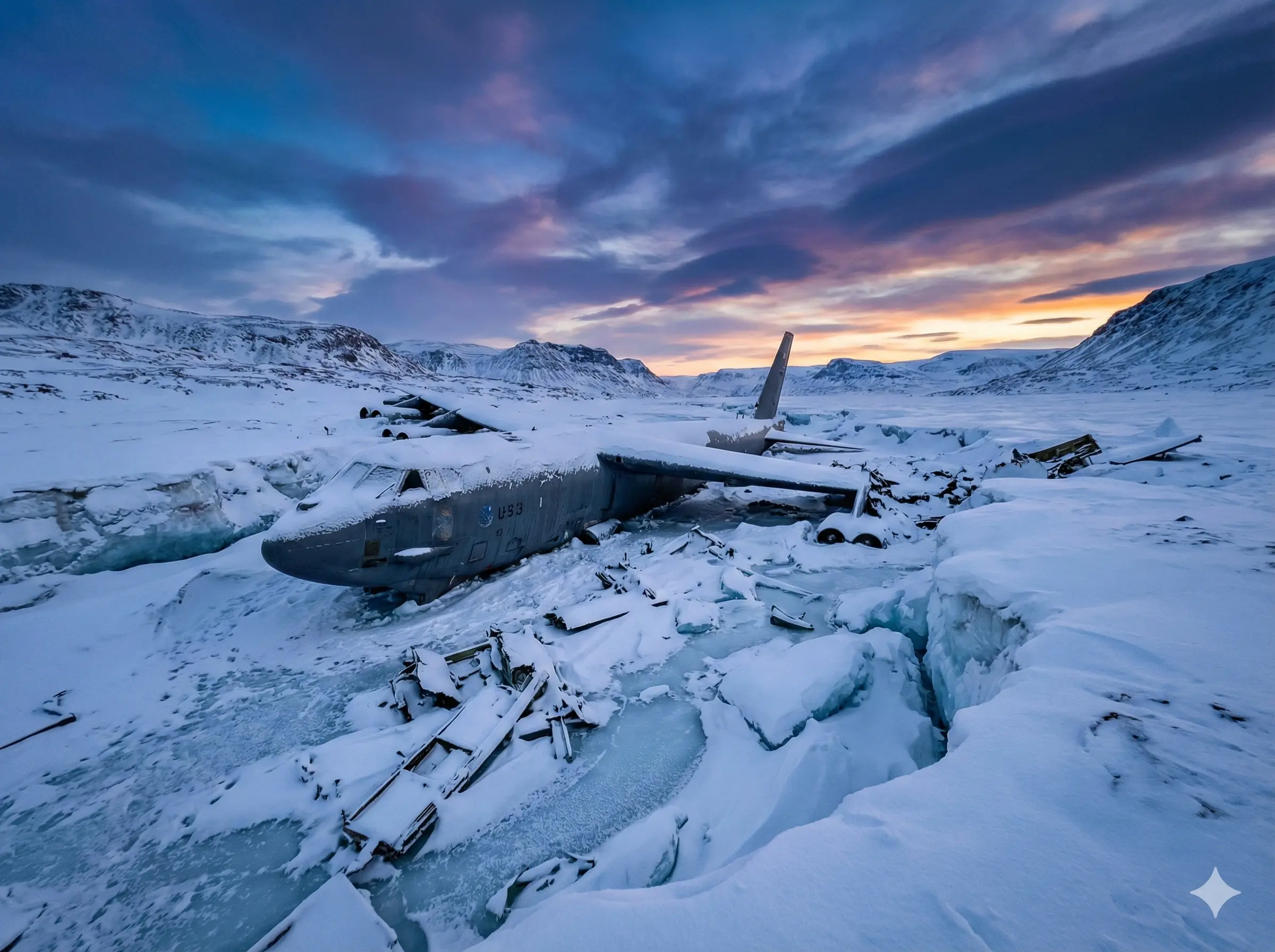
Recovery teams managed to locate and retrieve major components of only three weapons were recovered, while parts of the fourth remain missing. However, the search for the fourth weapon was complicated by the broken ice and underwater conditions. A submersible vessel was later used to scour the ocean floor for missing debris and uranium components.
End of Chrome Dome
The Thule accident highlighted the severe risks involved in keeping nuclear weapons constantly airborne. Following this crash and a similar incident in Spain two years prior, the US Defence Department cancelled Operation Chrome Dome. The Air Force switched to a safer ground alert system for its strategic bombers.
Long-term health concerns
Decades after the crash, workers involved in the cleanup reported various health issues, including cancer, which they attributed to radiation exposure. While studies by the Danish government initially found no significant link, the incident remains a contentious topic. It stands as a stark reminder of the environmental dangers posed by Cold War nuclear protocols.
)
)
)
)
)