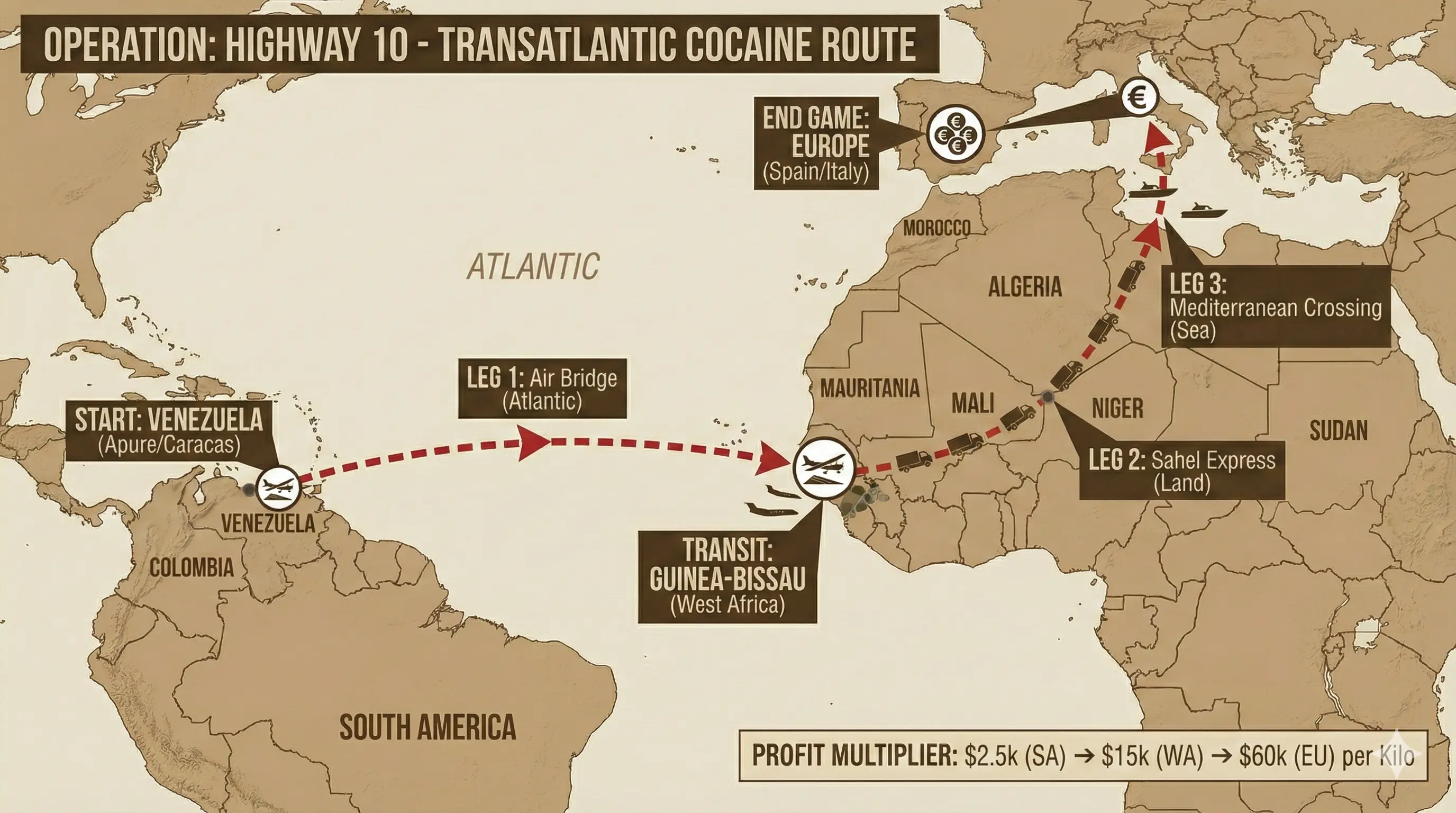
'Cocaine Superhighway': Check out the map of Nicholas Maduro's Highway 10, that moved drugs from Venezuela to Europe

From the coast, the route transforms from an air bridge into a desert caravan known as the "Sahel Express." The cocaine is broken down into smaller loads and packed into convoys of Toyota Hilux trucks that race across the lawless expanses of Mali and Niger.
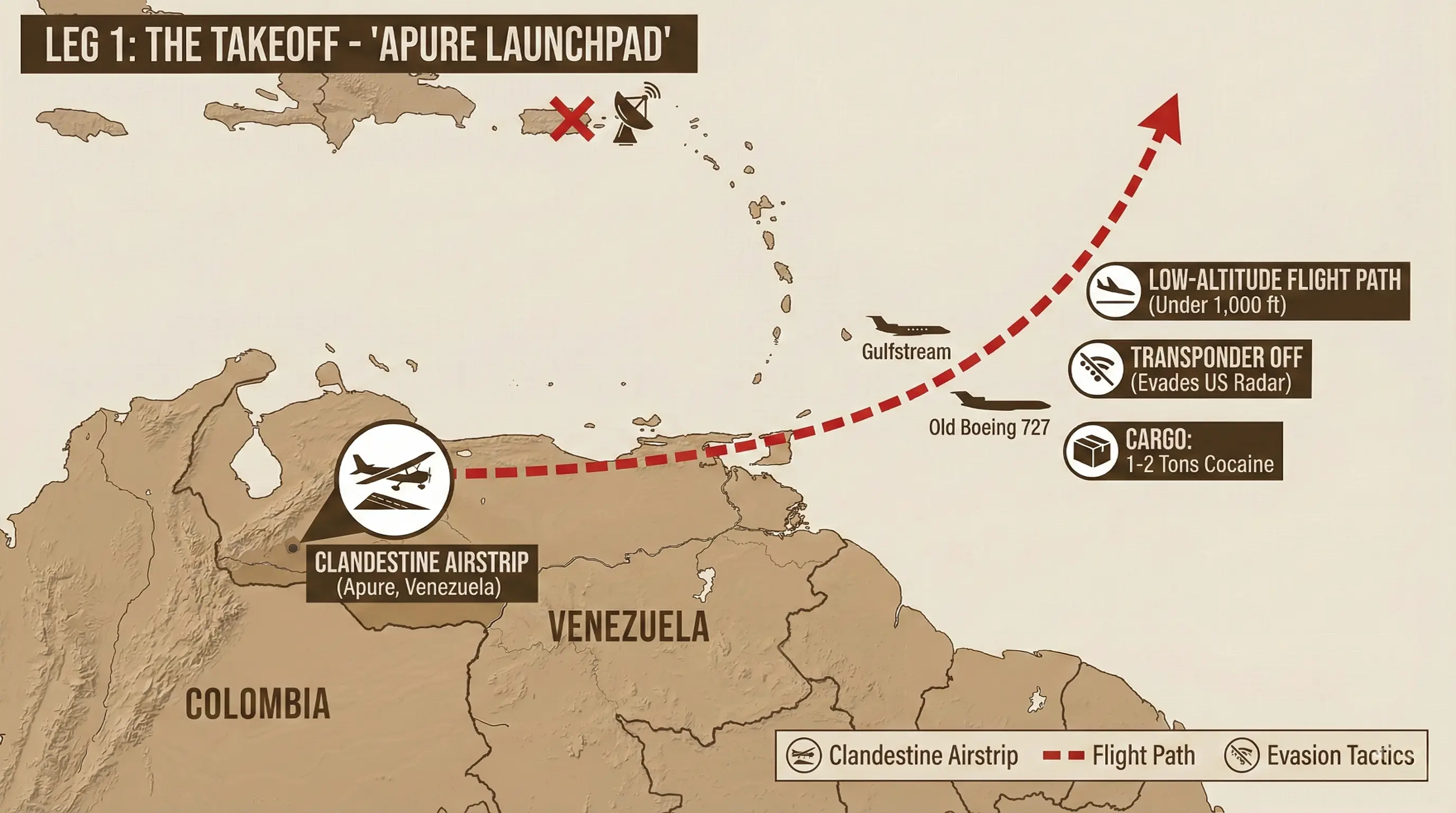
1. The "Apure" Launchpad: Where the State Becomes the Cartel
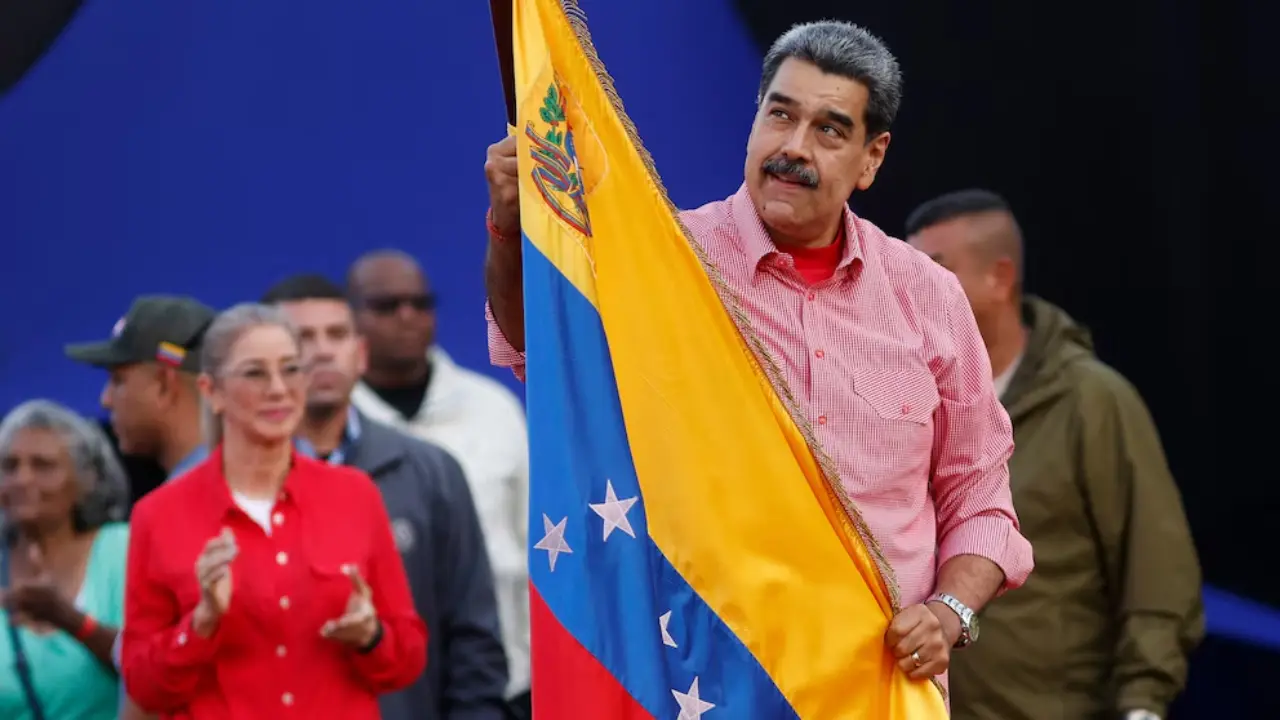
The journey begins in the remote Venezuelan state of Apure, a lawless region on the Colombian border that effectively functions as a privatised state for the "Cartel of the Suns." Intelligence reports confirm that Venezuelan military generals sanctioned the construction of clandestine dirt airstrips here to receive cocaine produced by FARC dissidents across the river. Instead of intercepting drugs, the Venezuelan National Guard provided a perimeter defence for these loading zones, turning the sovereign territory of a nation into the world’s safest logistics hub for narcotics.
2. The "Highway 10" Air Bridge: Flying Below the Radar
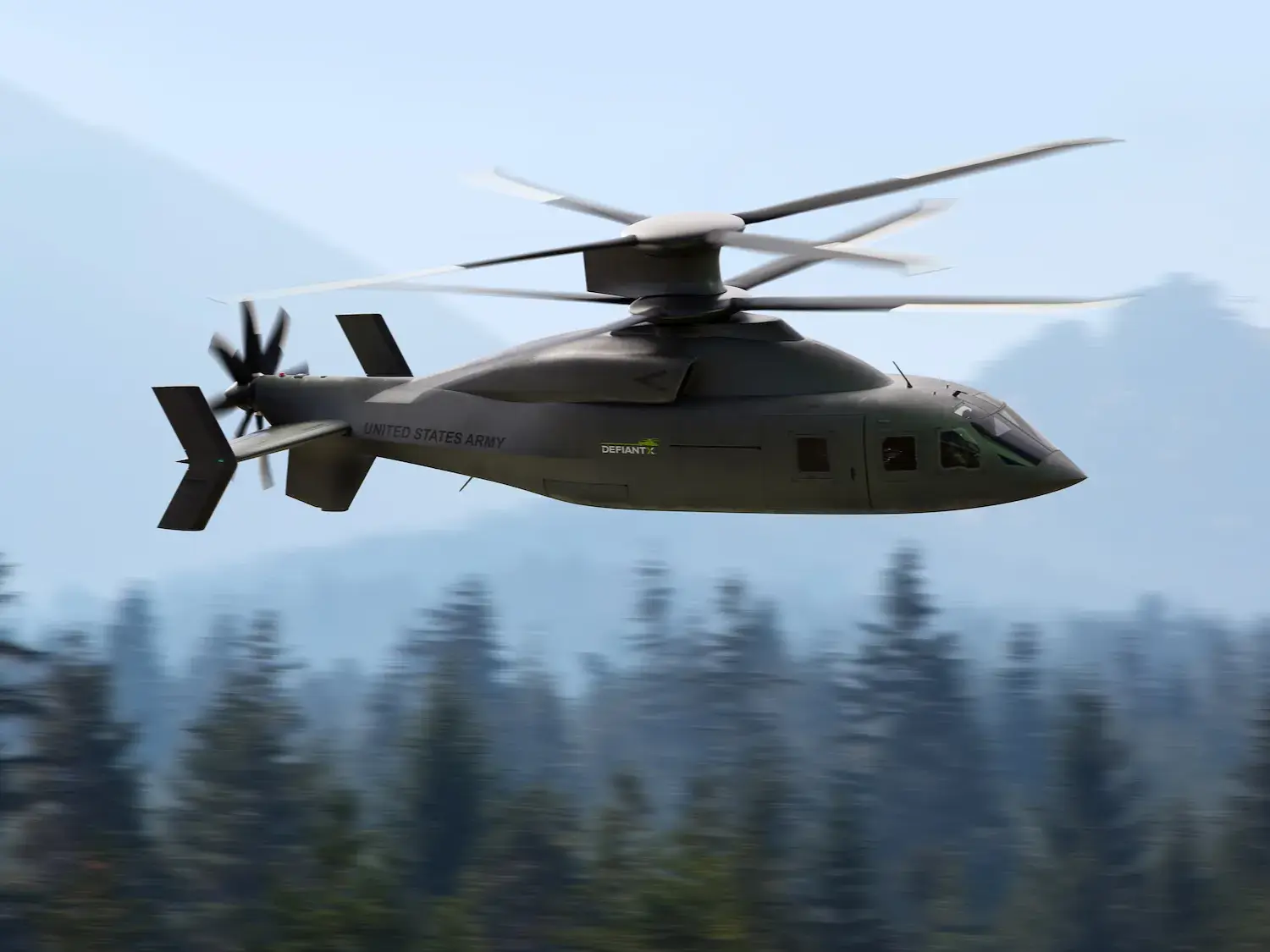
Once the cargo is loaded, typically 1 to 2 tons of pure cocaine, pilots take off on a geodesic path known to intelligence agencies as "Highway 10" because it hugs the 10th Parallel North. These "Ghost Flights" utilise aging Gulfstreams or turboprops and fly aggressively low, often skimming under 1,000 feet above the Atlantic Ocean to dodge US radar nets based in Puerto Rico. The pilots switch off their transponders the moment they hit international waters, flying blind for 4 to 5 hours across the open ocean in a high-stakes run where a single engine failure means disappearing forever.
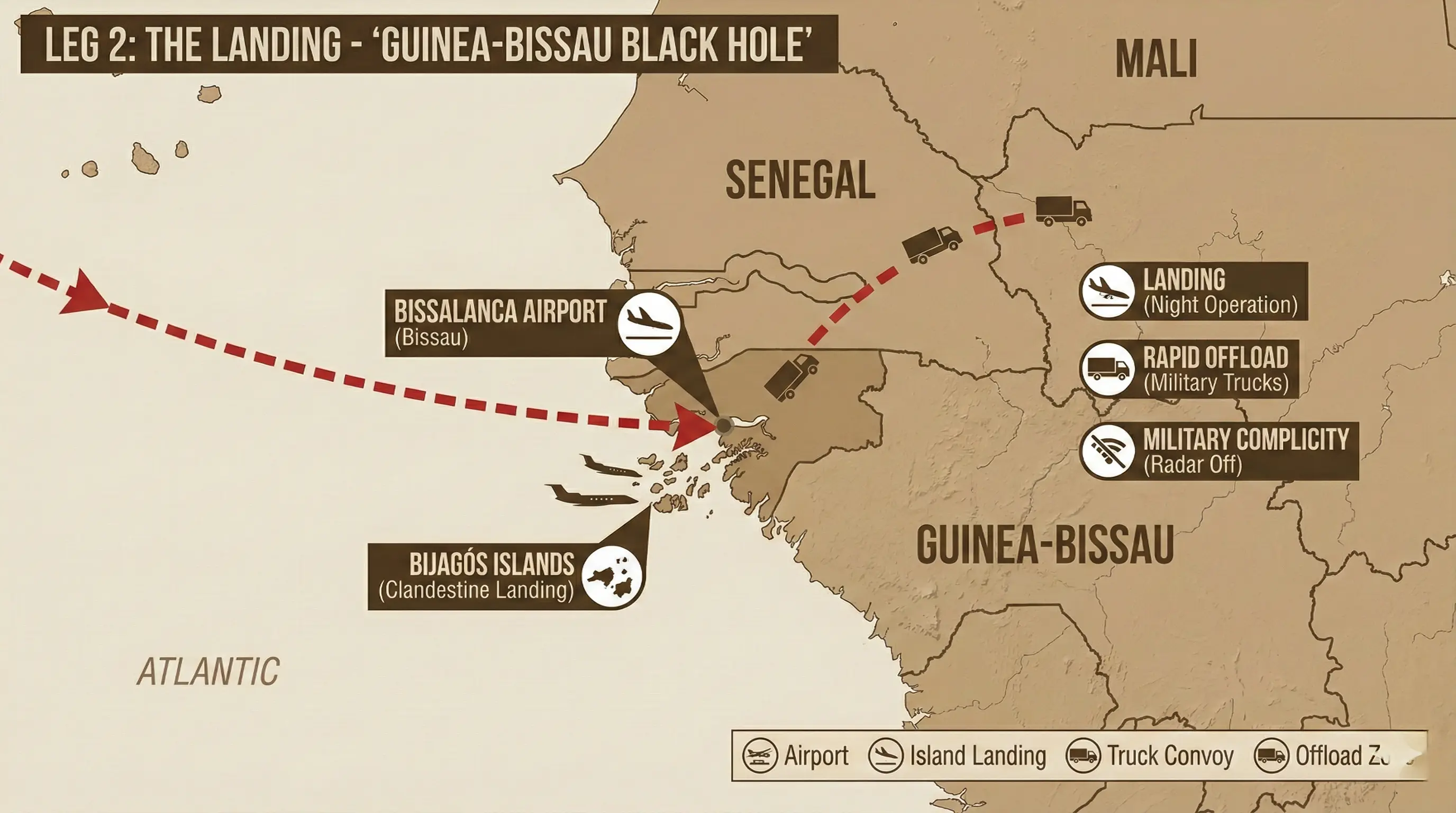
3. The Guinea-Bissau "Black Hole": The African Gateway
The transatlantic flight ends in West Africa, specifically in Guinea-Bissau, a tiny nation designated by the UN as the world's first true "Narco-State." The jets land on remote archipelagos like the Bijagós Islands or even military runways where corrupt local officials are paid to shut down air traffic control systems. The turnaround is NASCAR-fast: the cocaine is offloaded into military trucks within 20 minutes, and the aircraft is frequently doused with jet fuel and torched on the spot to destroy forensic evidence, leaving the savanna littered with the charred skeletons of executive jets.
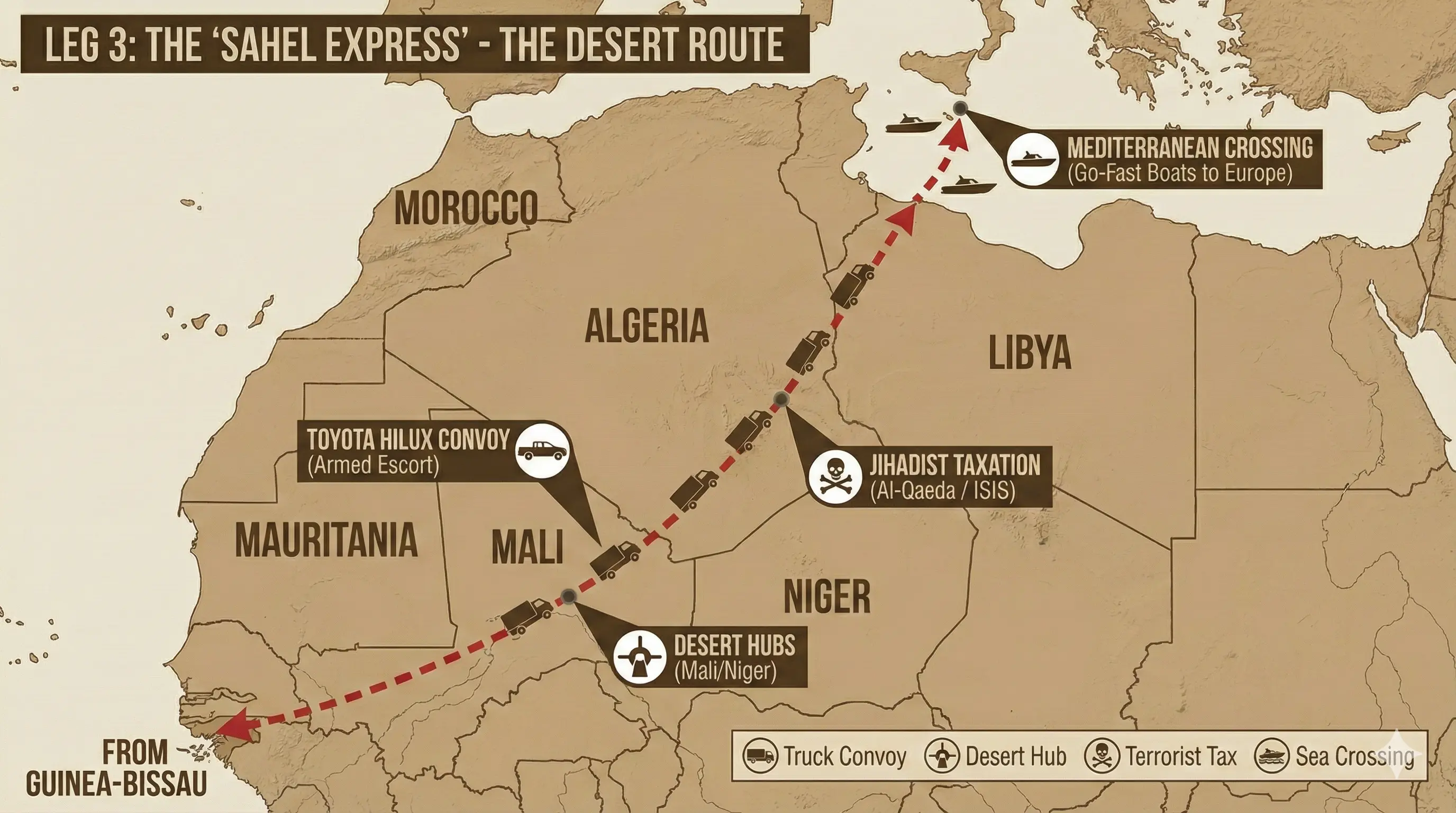
4. The "Sahel Express": The Terrorist Tax
From the coast, the route transforms from an air bridge into a desert caravan known as the "Sahel Express." The cocaine is broken down into smaller loads and packed into convoys of Toyota Hilux trucks that race across the lawless expanses of Mali and Niger. This leg is the most volatile, as it passes through territory controlled by jihadist groups like Al-Qaeda in the Islamic Maghreb (AQIM). These insurgents charge a "protection tax" to let the convoys pass, creating a terrifying feedback loop where European drug money directly finances Islamist terrorism in Africa.
5. The Mediterranean Crossing: From Desert to Sea
After surviving the Sahara, the contraband reaches warehousing hubs in Libya or Morocco, where the logistics shift to maritime smuggling. The drugs are concealed in commercial shipping containers or loaded onto high-speed "go-fast" boats for nightly runs across the Mediterranean. The destination is the "soft underbelly" of Europe, primarily the container terminals of Spain and Italy, where powerful crime syndicates like the ‘Ndrangheta are waiting to receive the shipment and handle final distribution.
6. The "Profit Multiplier": Why the Route Exists
The economics of this circuitous route are staggering. A kilo of cocaine that costs roughly $2,500 to produce in the Andes jumps to $15,000 the moment it lands in West Africa. By the time it crosses the Mediterranean and reaches the wholesale markets of Paris, London, or Berlin, that same kilo is worth upwards of $60,000. This 2,000% markup provides a bottomless war chest used to bribe officials across three continents, purchase advanced weaponry, and ensure that the flow of drugs continues regardless of individual arrests.
7. The "Narco-Diplomacy" Shield
What made this route unique was not just the logistics, but the diplomatic cover. Unlike traditional cartels that have to hide from the government, the "Highway 10" route was allegedly facilitated by Venezuelan diplomatic passports and state-owned aircraft. Investigations revealed that high-ranking officials used the cover of "diplomatic missions" to arrange safe passage for shipments, making it nearly impossible for international law enforcement to interdict the drugs without causing a major geopolitical incident, until the regime finally fell.
)
)
)
)
)