'Cargo Lifts': How the USS Abraham Lincoln moves tons of food from its lowest decks

Through complex at-sea replenishments, dedicated stores elevators, and package conveyors, the USS Abraham Lincoln effectively strikes down and transports the provisions necessary to feed sailors daily, ensuring sustained combat readiness during multi-month deployments.
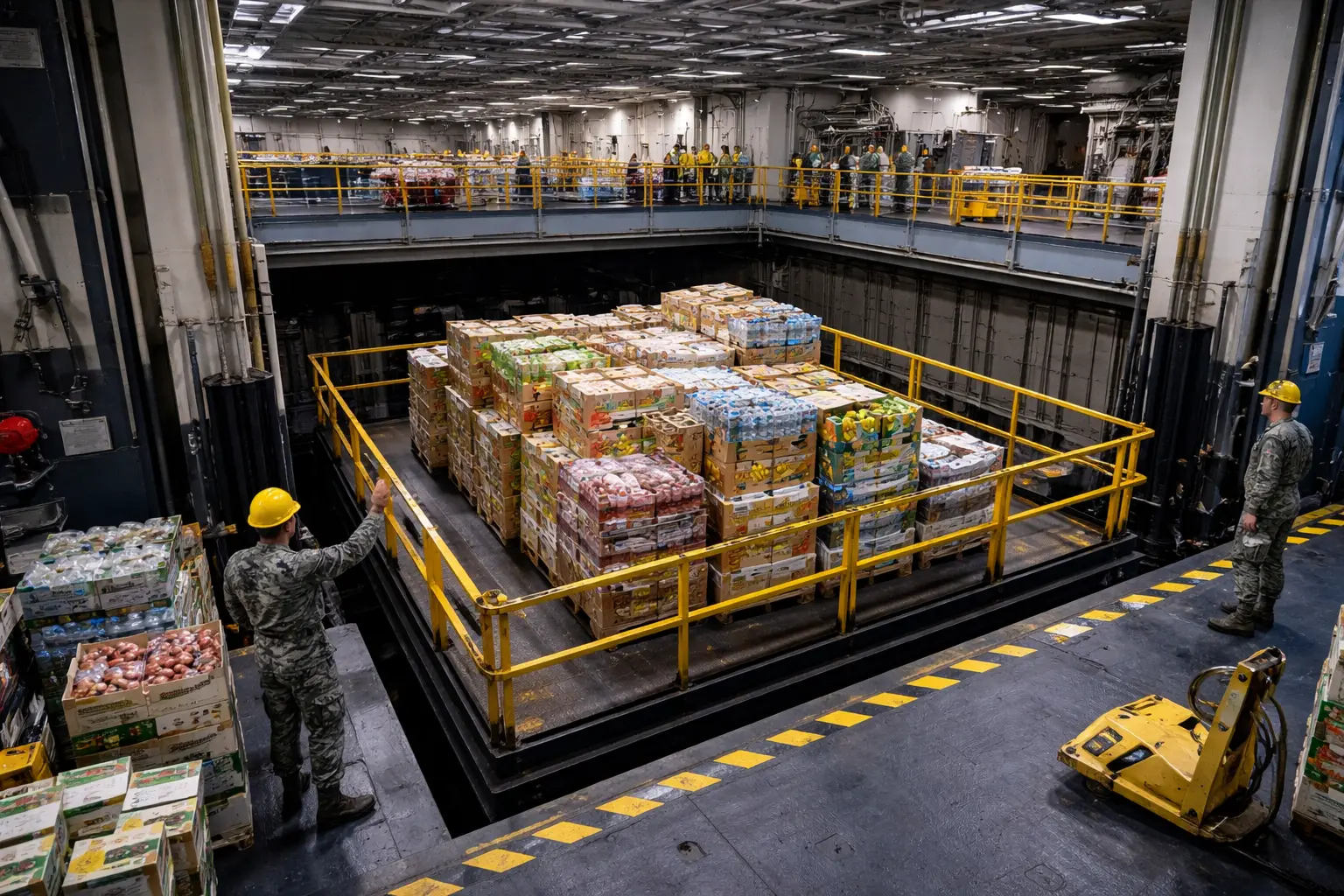
Massive daily meals
The USS Abraham Lincoln sustains a combined ship's company and Carrier Air Wing of roughly 5,000 to 6,000 personnel. Serving three to four meals a day requires the preparation of 15,000 to 18,000 meals daily. This massive culinary operation requires a highly choreographed internal supply chain to move dry goods, chilled items, and frozen rations without disrupting aviation operations.
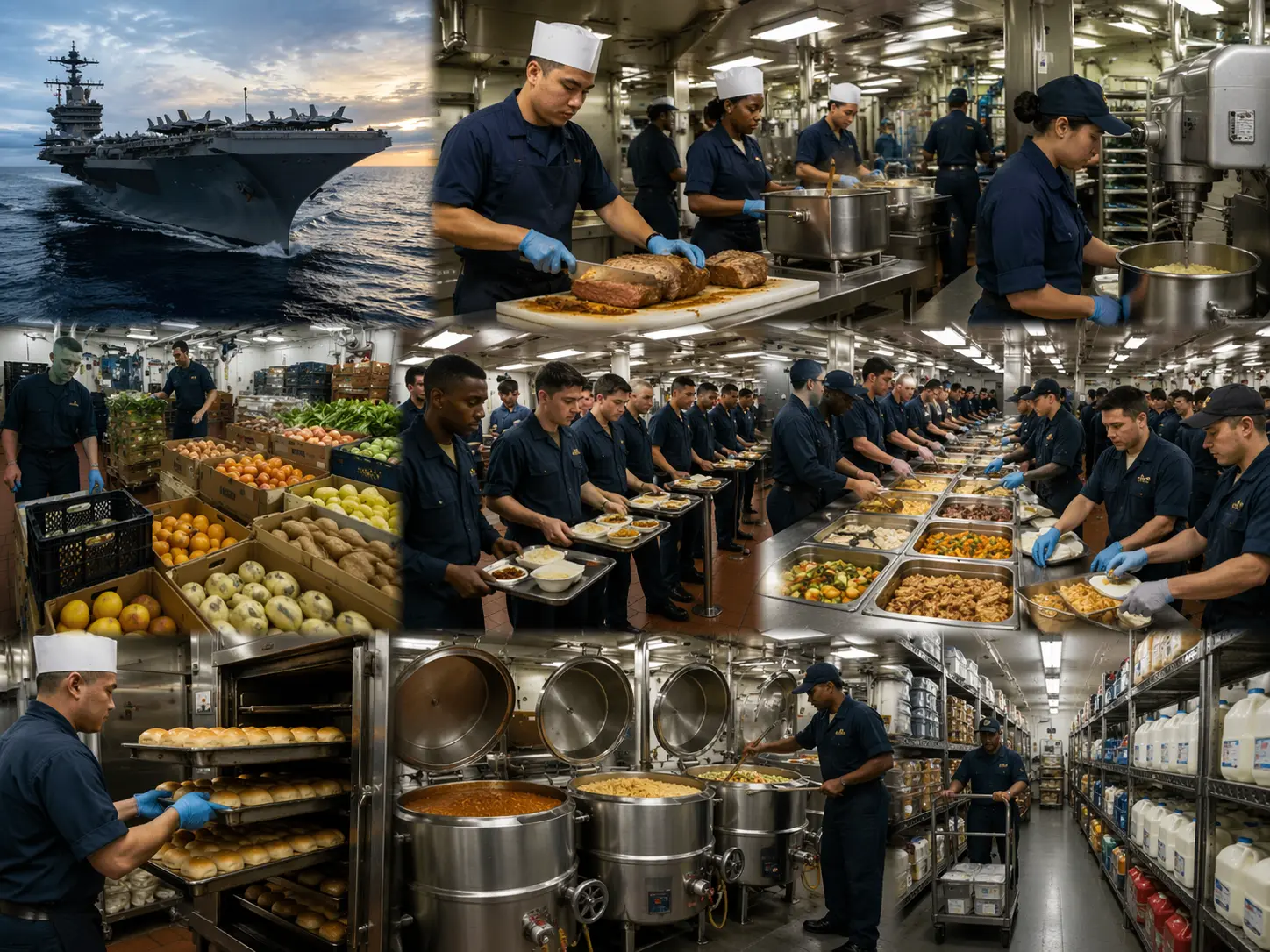
Sustained Logistical Endurance
Internally, Nimitz-class carriers carry enough food and provisions in their deep storage to operate completely independently for many days. However, through continuous cyclic replenishments and the efficiency of the ship's strike-down elevator systems, the USS Abraham Lincoln can maintain combat readiness throughout standard maritime deployments.
At-Sea Replenishment (UNREP/VERTREP)
Before food ever reaches the lowest decks, it must be brought aboard while underway. This is accomplished through Underway Replenishment (UNREP), utilizing tensioned highlines to transfer pallets from fast combat support ships, and Vertical Replenishment (VERTREP), where MH-60S Sea Hawk helicopters drop supply pallets directly onto the flight deck.
The "Strike Down" Process
Once pallets arrive on the flight deck or the hangar bay, the crew initiates the "strike down" process. Forklifts and pallet jacks quickly clear the staging areas, moving supplies to internal transport nodes. It is a time-critical evolution; stores must be struck down into the hull as swiftly as possible so the hangar bay and flight deck can be returned to operational status for launching and recovering aircraft.
Stores Elevators and Package Conveyors
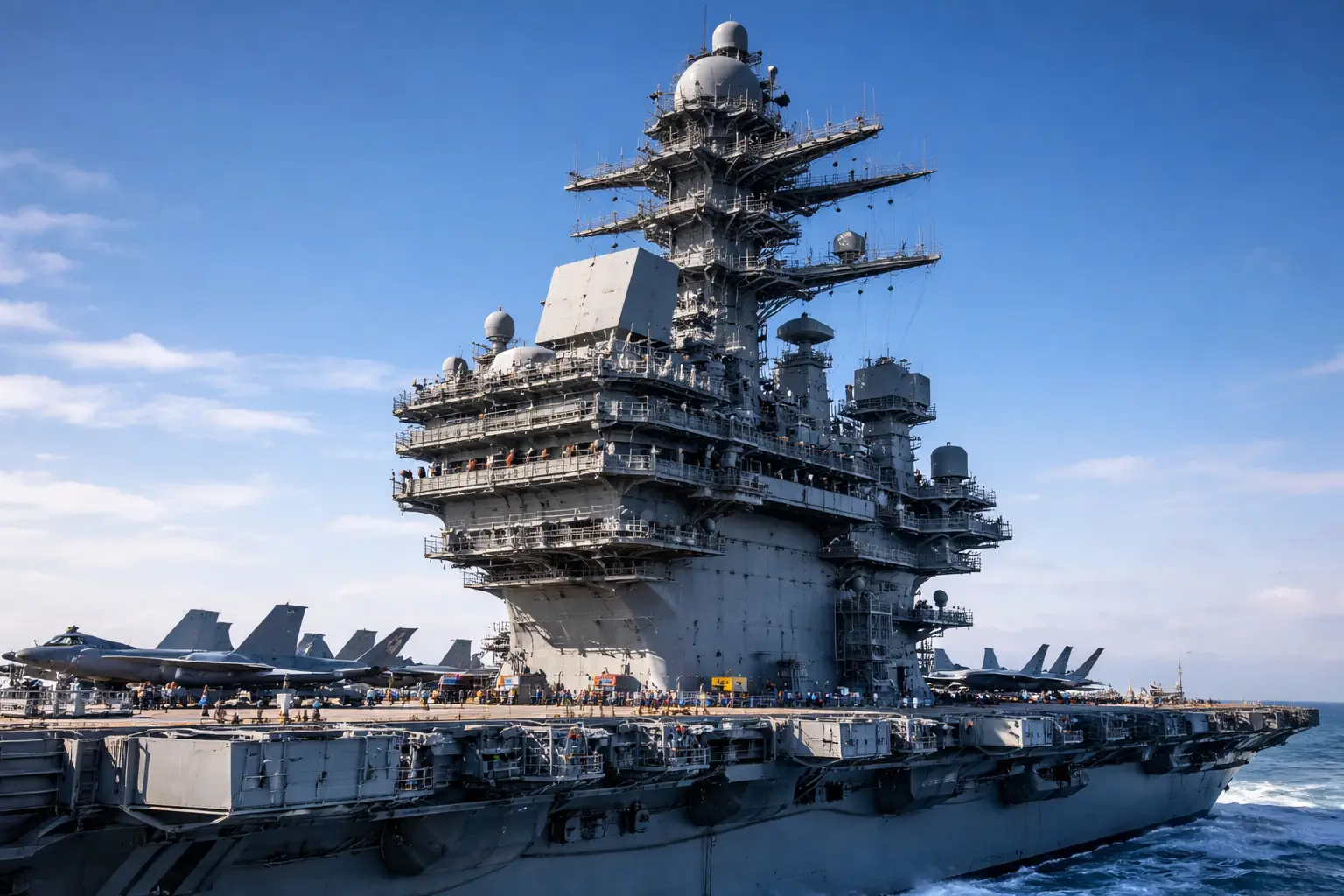
Rather than standard commercial "cargo lifts," Nimitz-class carriers utilize dedicated stores elevators, weapons elevators, and inclined package conveyors. Because traditional Nimitz-class infrastructure often requires breaking down large pallets, these vertical package conveyors act as the primary arteries, moving individual boxes deep into the ship’s hull through multiple deck levels down to the dry, chilled, and freeze storerooms.
Strict Weight Capabilities
There is a massive operational distinction in elevator capabilities. While the four edge-deck aircraft elevators are massive structures designed to lift roughly 130,000 pounds (65 tons) each, the internal supply mechanisms are built for volume over raw weight. The stores elevators and package conveyors are rated to handle continuous, smaller loads (often under a few thousand pounds per trip) to keep high-frequency supply lines moving to the galleys.
Feeding the Five Messes
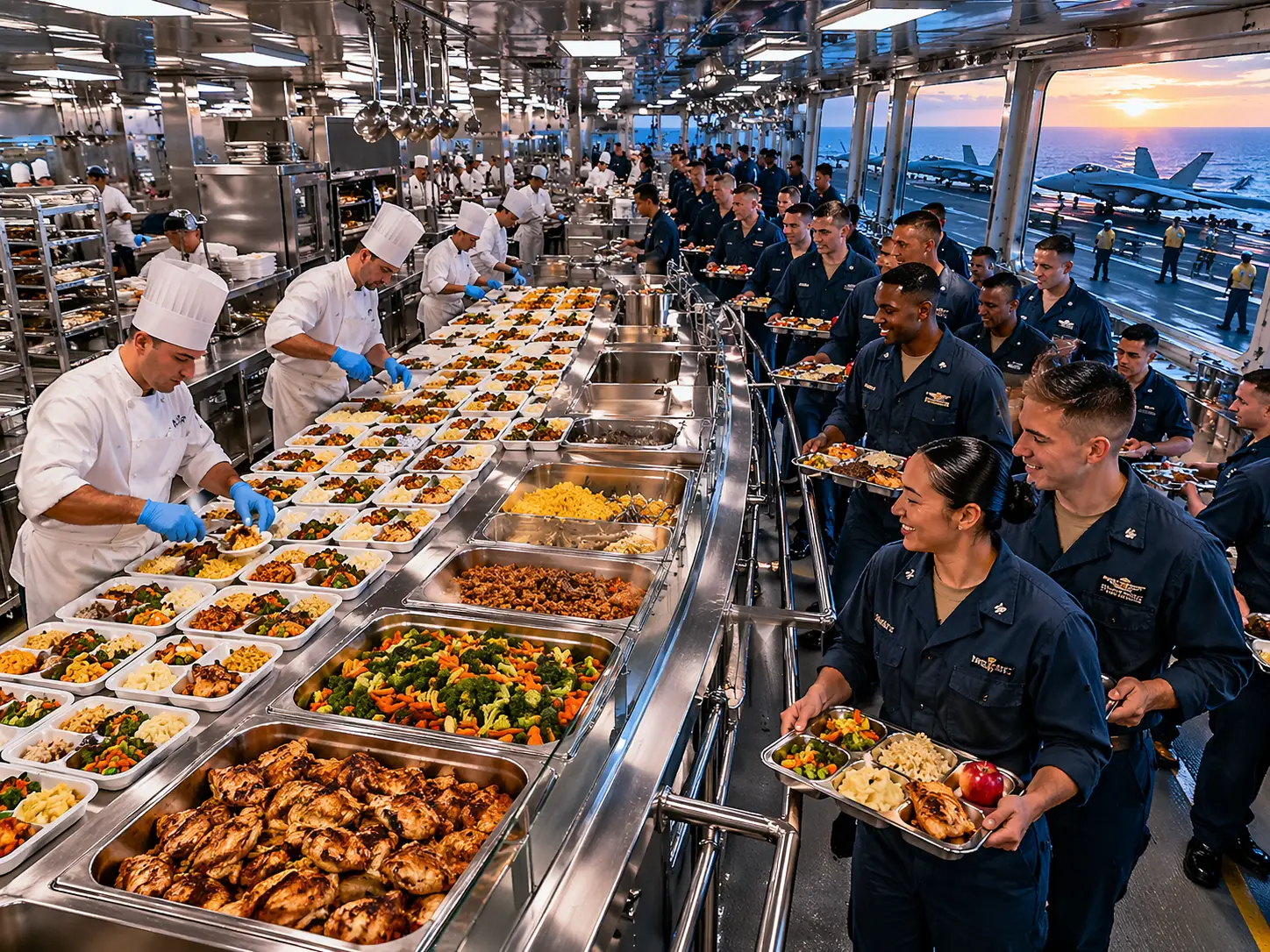
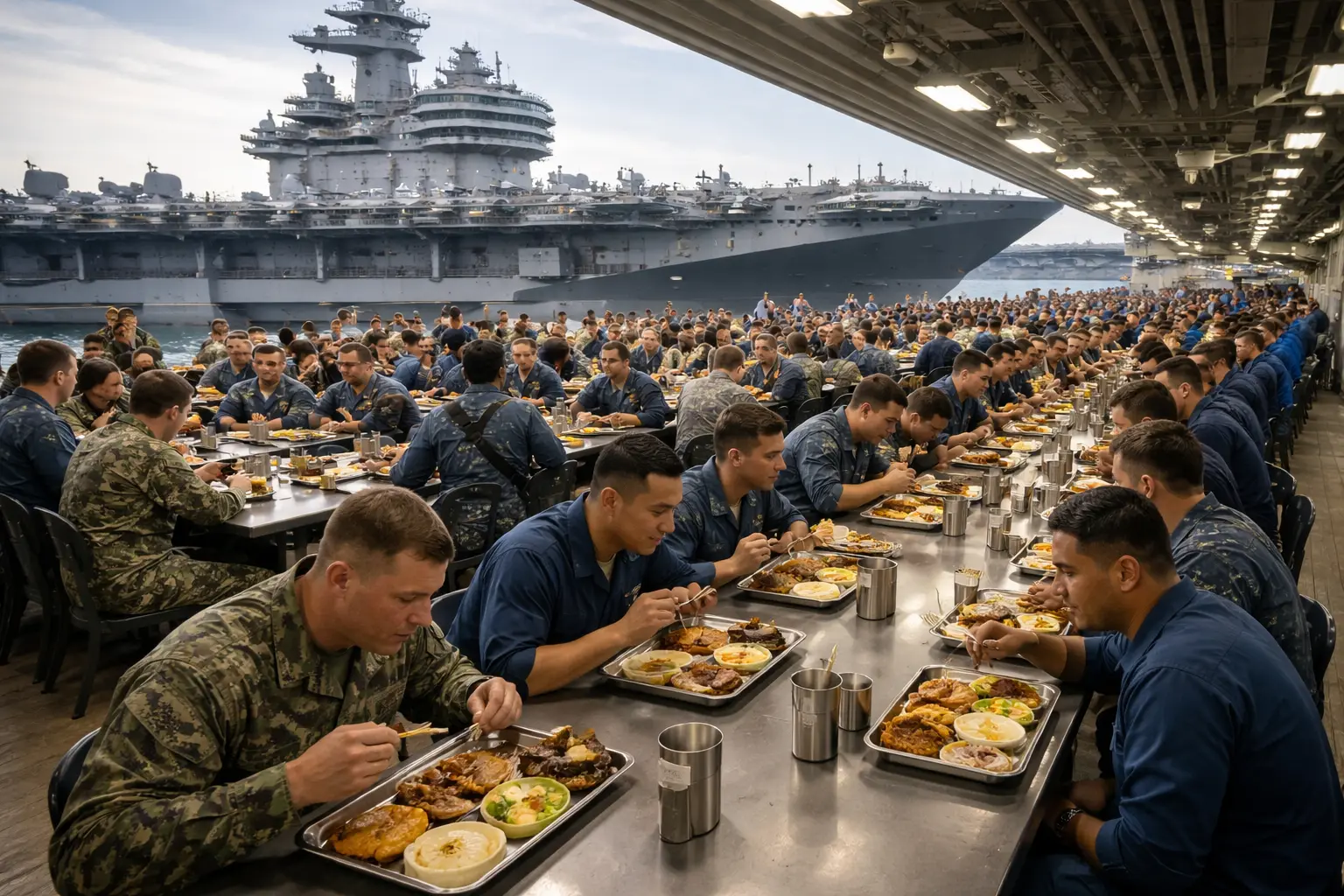
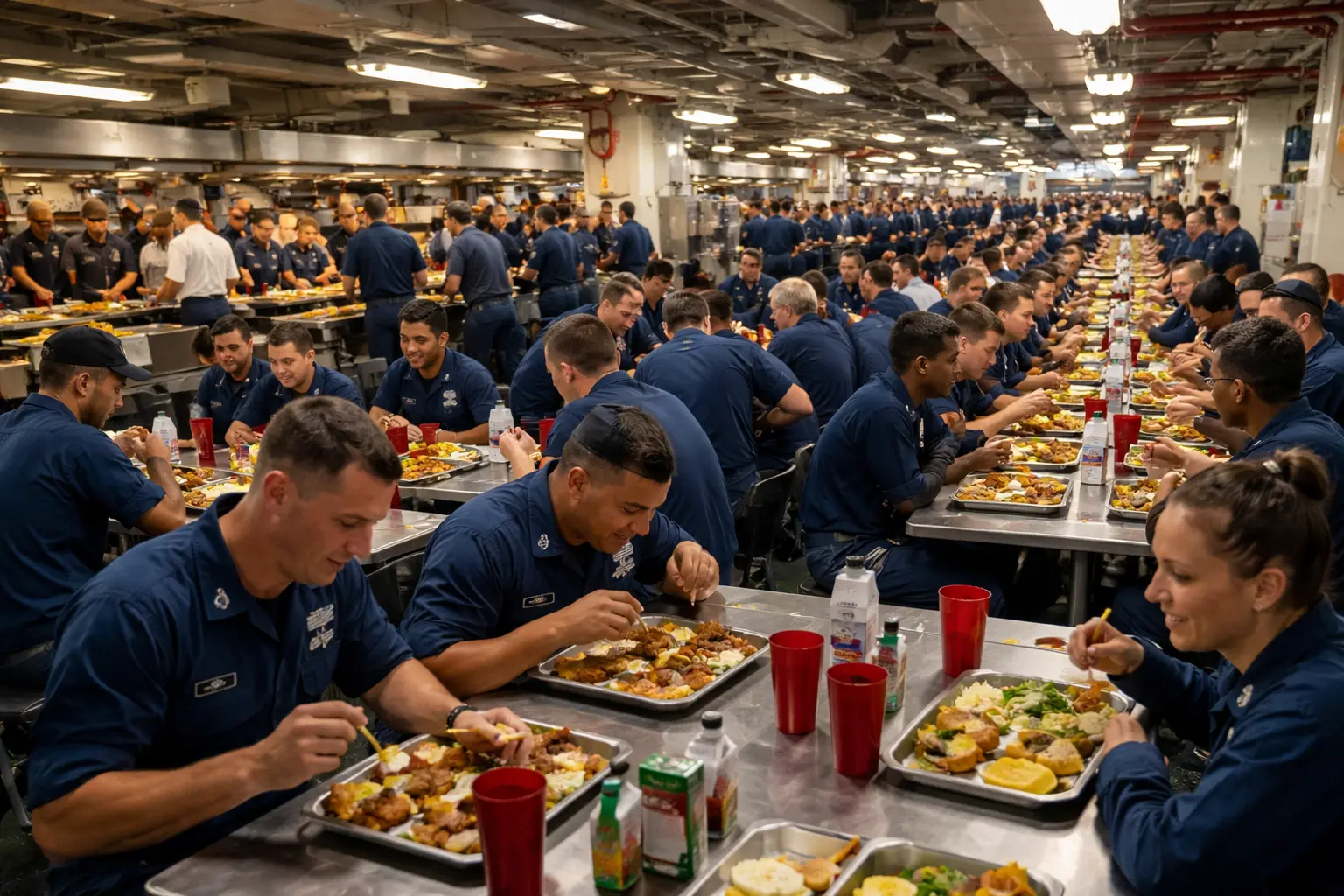
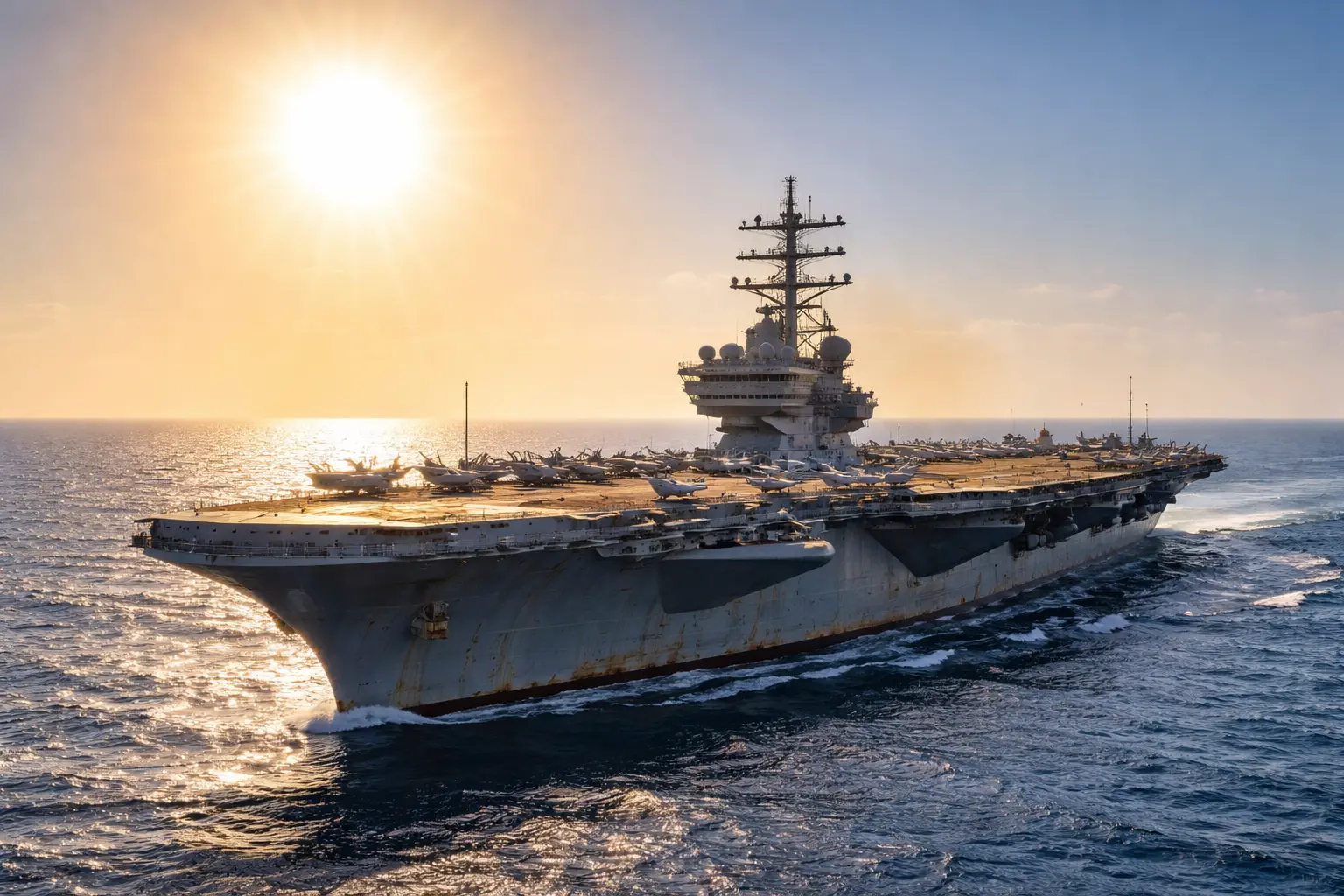
Efficient movement of these stores ensures a steady supply of ingredients reaches the ship's various dining areas. A Nimitz-class carrier operates multiple galleys to serve distinct groups across the hull: the Forward and Aft Main Mess Decks for enlisted sailors, the Chief Petty Officer (CPO) Mess, the Wardroom for commissioned officers, and the Flag Mess for the embarked strike group commander and their staff.

)
)
)
)