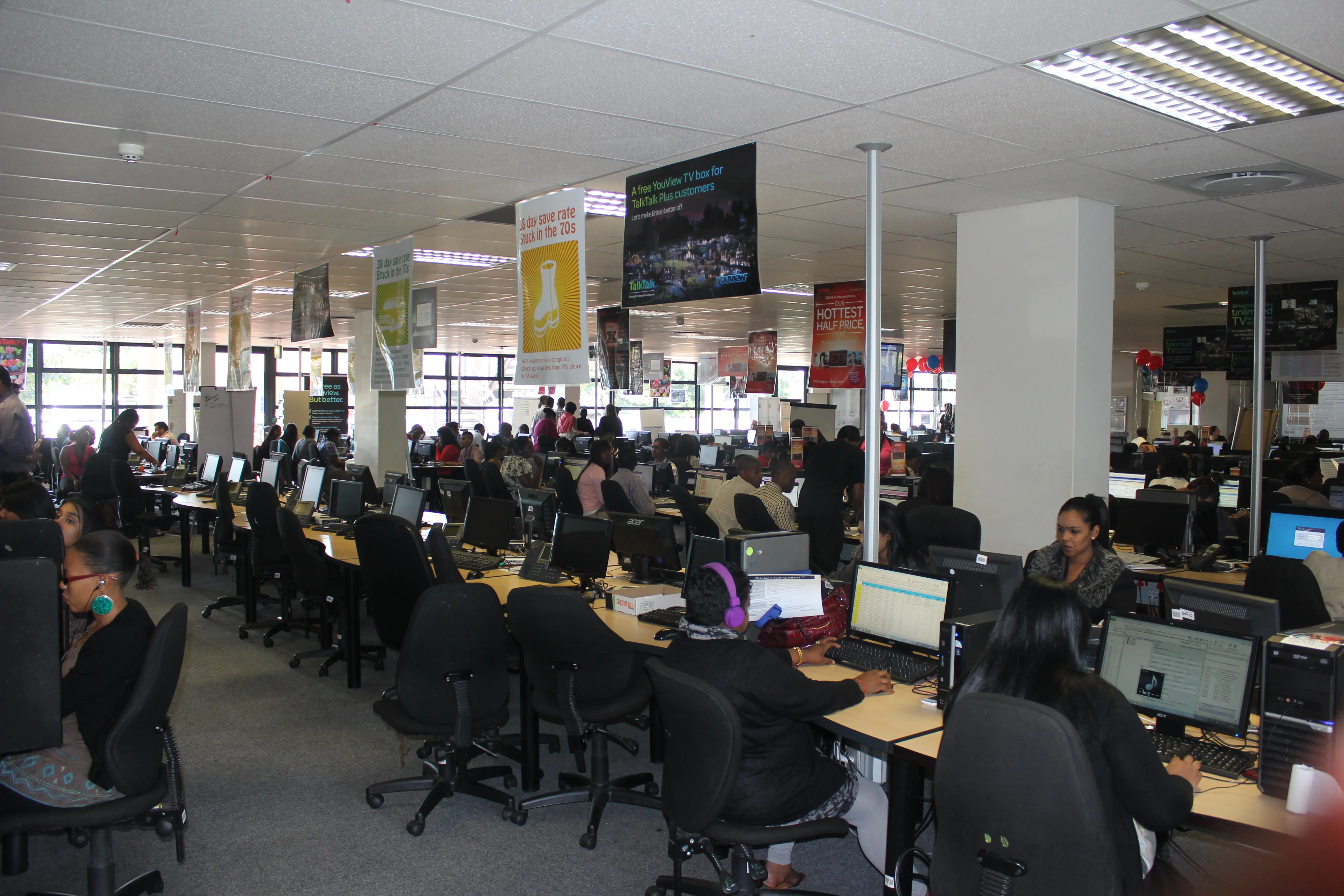
'Call center extinction': How voice AIs are quietly wiping out India’s $40 billion BPO industry

Voice AI doesn't just read scripts anymore; it has empathy, handles complex billing, and works 24/7. Discover how generative voice agents are structurally dismantling India’s massive outsourcing empire.
1. The 'Zero-Latency' Revolution
For years, the BPO industry dismissed voice bots because of the maddening 3-second processing delay. But the newest generation of foundational models shattered that barrier. Today's voice AI operates with zero perceptible latency. It breathes, uses filler words ("um," "let me check on that"), and can be interrupted mid-sentence, creating a conversational flow completely indistinguishable from a human operator.

2. The Empathy Algorithm
The true threat isn't just speed; it's emotional intelligence. Advanced voice agents are now trained on sentiment analysis. If an American customer calls in yelling about a canceled flight, the AI detects the acoustic stress in their voice. It instantly lowers its pitch, adopts a highly empathetic tone, and can autonomously authorize refunds or rebookings without ever placing the customer on a 20-minute hold for a manager.

3. The Cost Annihilation
The math is brutal. An offshore human agent in Gurugram or Bengaluru costs Western companies roughly $10 to $15 an hour when factoring in training, infrastructure, and attrition. A generative voice agent costs mere pennies per minute. It works 24/7, never takes a sick day, requires no office space, doesn't get burnt out by abusive callers, and possesses infinite patience.

4. Flawless Hyper-Localization
One of the biggest friction points in offshore BPOs has always been the accent barrier. AI entirely eliminates this. A single AI agent can answer a call from Dallas in a flawless Texan drawl, and three seconds later, answer a call from London using a perfect Cockney accent. It understands hyper-local slang, regional cultural nuances, and idiomatic expressions better than any human agent reading a standardized script.

5. The "Level 1" Wipeout
The foundational bedrock of the Indian BPO sector is "Level 1" support: password resets, order tracking, appointment scheduling, and basic billing inquiries. These highly repetitive, high-volume tasks are now effectively 100% solved by AI. The millions of entry-level jobs that built entire tech parks in cities like Pune, Noida, and Hyderabad are quietly vanishing from corporate budgets.

6. The Tier-2 Socioeconomic Crisis
The fallout extends far beyond corporate balance sheets. For two decades, the BPO sector has served as the great equalizer in India, acting as the primary economic bridge for millions of first-generation, English-speaking graduates from Tier-2 and Tier-3 cities to enter the middle class. The sudden evaporation of these entry-level roles threatens a massive, silent socioeconomic crisis across the subcontinent.

7. The Pivot to "Exception Handling"
The human call center agent isn't entirely dead, but the job description has fundamentally changed. The few humans left in the loop are no longer customer service reps; they are "escalation engineers." They only handle the 5% of hyper-complex, legally sensitive, or deeply emotional crisis calls that the AI escalates. The call center is transitioning from a high-volume script factory into a high-stress crisis management hub.
)
)
)
)
)