'Brace for impact': What would happen if 3I/ATLAS comet actually hits Earth?

A high-speed impact would eject massive amounts of dust and debris into the atmosphere. This could block sunlight for weeks or months, disrupting agriculture and potentially causing “impact winters.” Temperature drops, acid rain, and blocked sunlight could affect ecosystems globally.

1. Understanding 3I/ATLAS
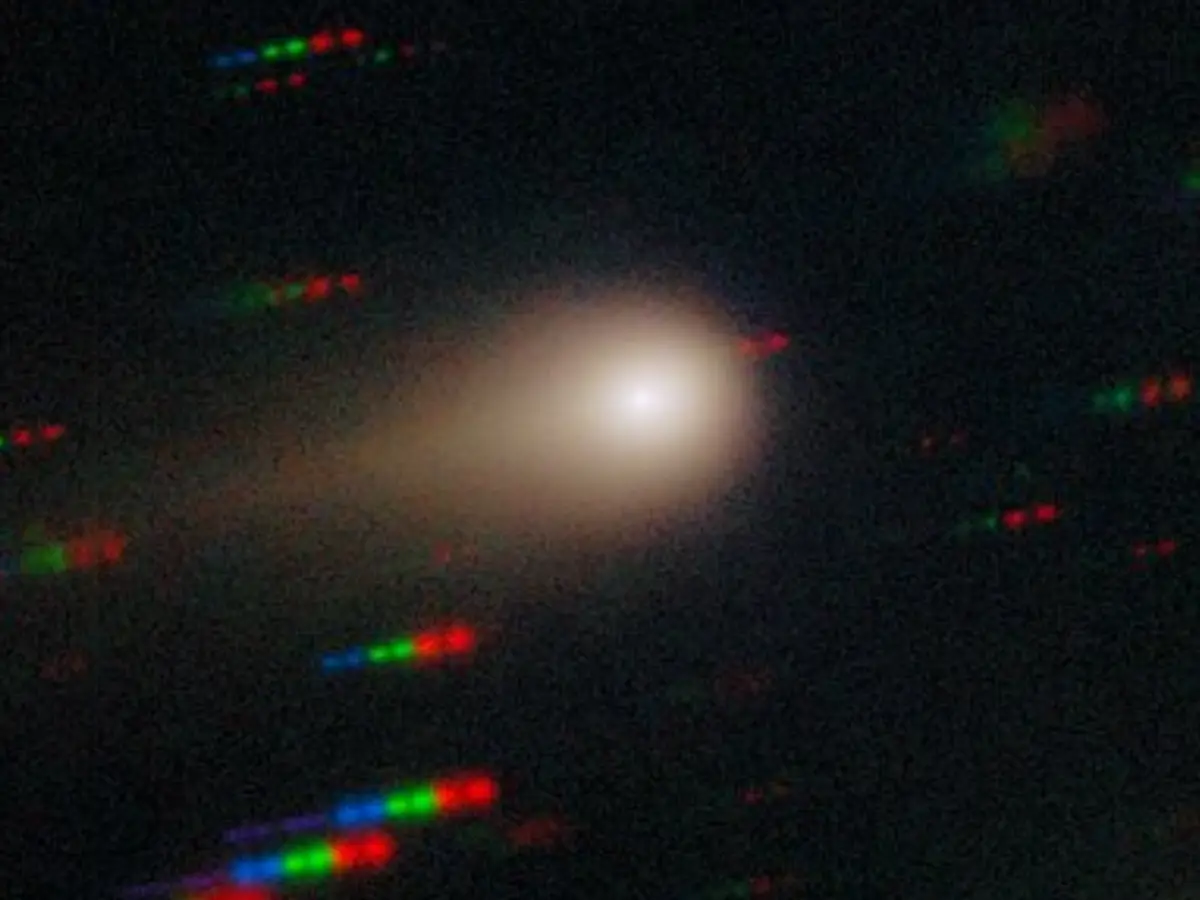
3I/ATLAS is the third known interstellar object to enter our Solar System, following ʻOumuamua (2017) and 2I/Borisov (2019). Discovered in 2024 by the ATLAS survey in Hawaii, the comet has a hyperbolic orbit, confirming it came from outside the Solar System. While its trajectory is well-studied and poses no threat, imagining a direct collision helps understand the potential consequences of large comet impacts.
2. Immediate Global Consequences
If an object the size of 3I/ATLAS were to collide with Earth, the immediate impact would be catastrophic. Scientists estimate that even a small comet several hundred meters across could generate an explosion equivalent to multiple nuclear bombs, triggering massive shockwaves, fires, and destruction over hundreds of kilometers. Coastal regions could also face megatsunamis, depending on the impact location. Such events are extremely rare but historically significant in shaping planetary life.
3. Atmospheric Effects
A high-speed impact would eject massive amounts of dust and debris into the atmosphere. This could block sunlight for weeks or months, disrupting agriculture and potentially causing “impact winters.” Temperature drops, acid rain, and blocked sunlight could affect ecosystems globally. Scientists study these scenarios to understand past mass extinction events, like the asteroid believed to have ended the dinosaurs 66 million years ago.
4. Size Matters: The Realistic Threat
3I/ATLAS is estimated to be smaller than ʻOumuamua. Most interstellar objects passing through our Solar System are tiny, reducing the likelihood of a catastrophic collision. Space agencies track these objects closely using telescopes like Pan-STARRS and ATLAS to calculate precise orbits. Even with a “close shave,” Earth is mostly safe from large-scale destruction, though small fragments could still enter the atmosphere and create spectacular meteor showers.
5. Preparedness and Early Warning Systems
NASA’s Planetary Defense Coordination Office (PDCO) and international agencies monitor Near-Earth Objects (NEOs) continuously. If a potential collision were detected years in advance, mitigation strategies could include kinetic impactors to deflect the object, or, in extreme cases, controlled nuclear devices. Public alerts and evacuation plans would be coordinated globally. Currently, 3I/ATLAS is not a threat, but exercises like these help humanity stay prepared.

6. Past Impacts as Reference Points
Historical events provide insights into potential outcomes. The Tunguska event (1908) flattened thousands of square kilometres of forest in Siberia. The Chelyabinsk meteor (2013) injured over 1,000 people with shockwaves. Both were small compared to a full-scale interstellar comet impact, but they illustrate that even relatively small objects can cause local devastation. A direct hit from 3I/ATLAS-sized object would scale these effects globally.

7. Scientific Opportunity vs Fear
While the idea of a collision sparks fear, scientists stress that 3I/ATLAS offers a rare chance for research. Studying its composition and trajectory could reveal insights into other star systems’ building blocks. Fictional scenarios like “brace for impact” help the public understand the physics of impacts, but the true value lies in science, not panic. Astronomers continue to monitor 3I/ATLAS closely to provide accurate updates and keep unnecessary fear in check.
)
)
)
)
)