‘2 Nuclear Reactors’: Why the USS Abraham Lincoln never runs out of electricity

The 100,000-tonne USS Abraham Lincoln relies on two advanced A4W nuclear reactors for infinite electricity. This immense atomic power allows the supercarrier to operate globally for 25 years without refuelling its engines.
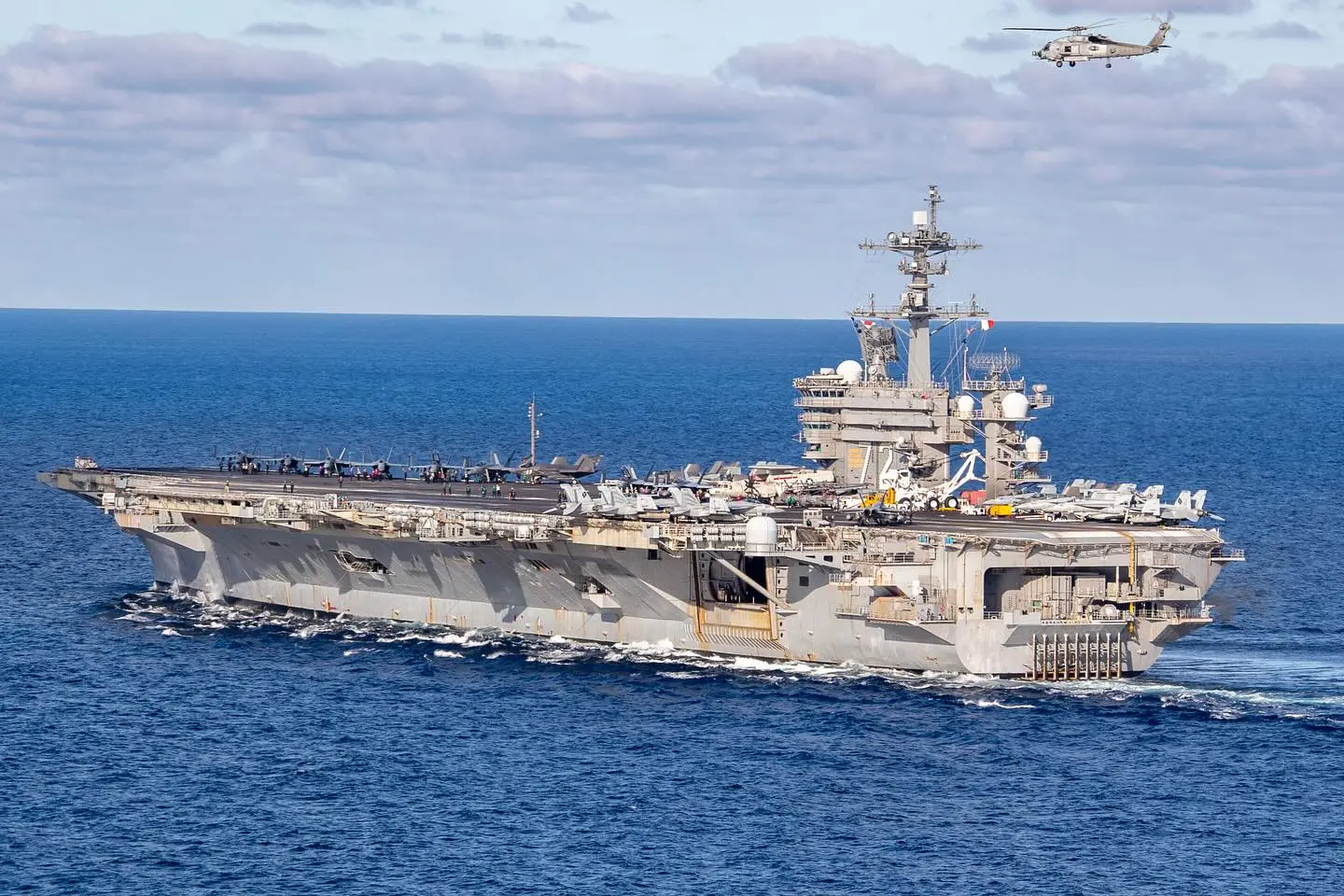
2 Westinghouse A4W reactors
The aircraft carrier relies on two highly advanced pressurised water reactors designed by Westinghouse. These massive nuclear systems generate immense heat through controlled atomic fission to power the entire 100,000-tonne warship.
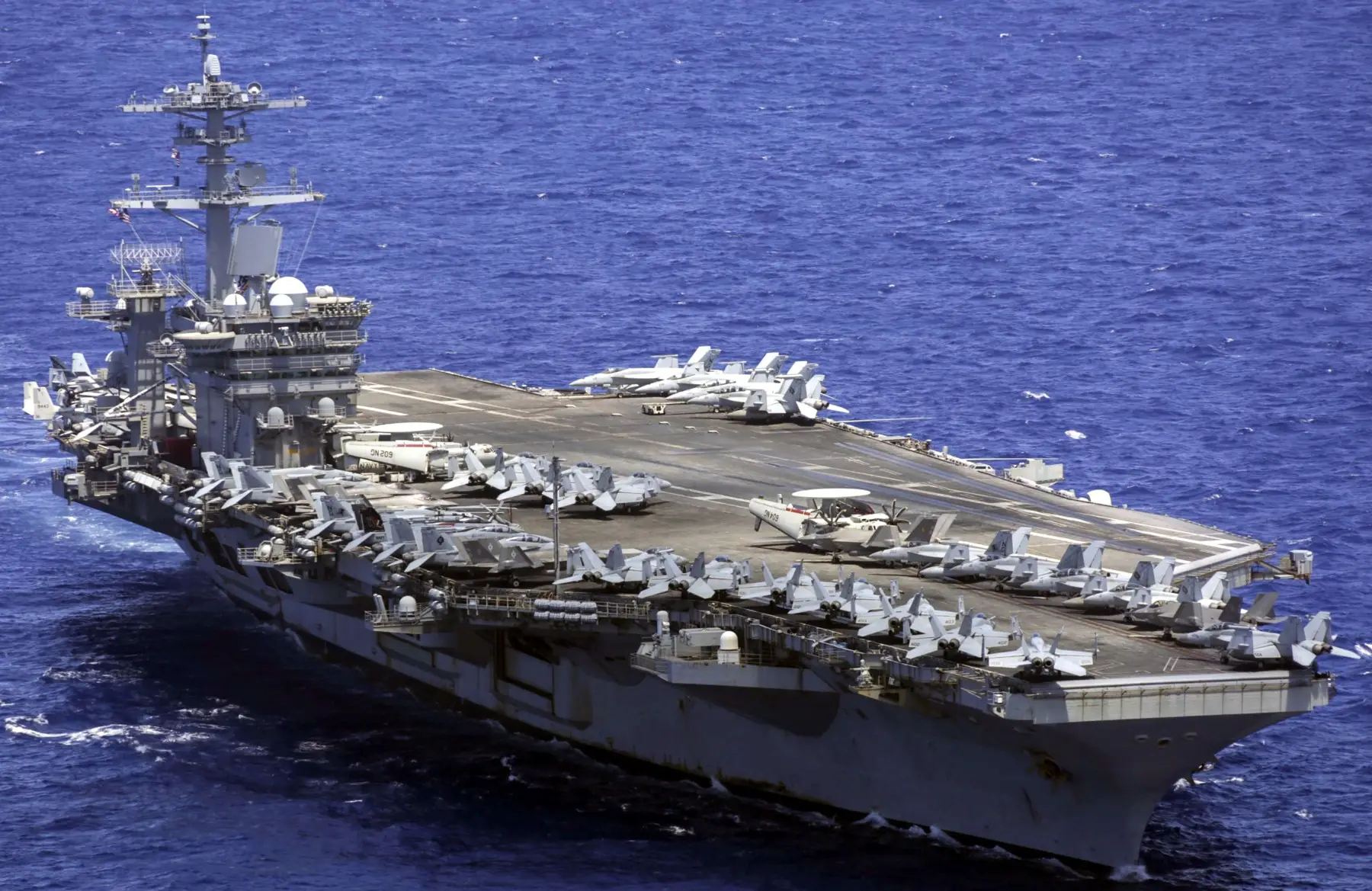
260,000 shaft horsepower generated
The nuclear heat creates high-pressure steam that spins massive electrical turbines. This closed-loop system produces roughly 260,000 shaft horsepower, effortlessly driving the ship's four giant bronze propellers.
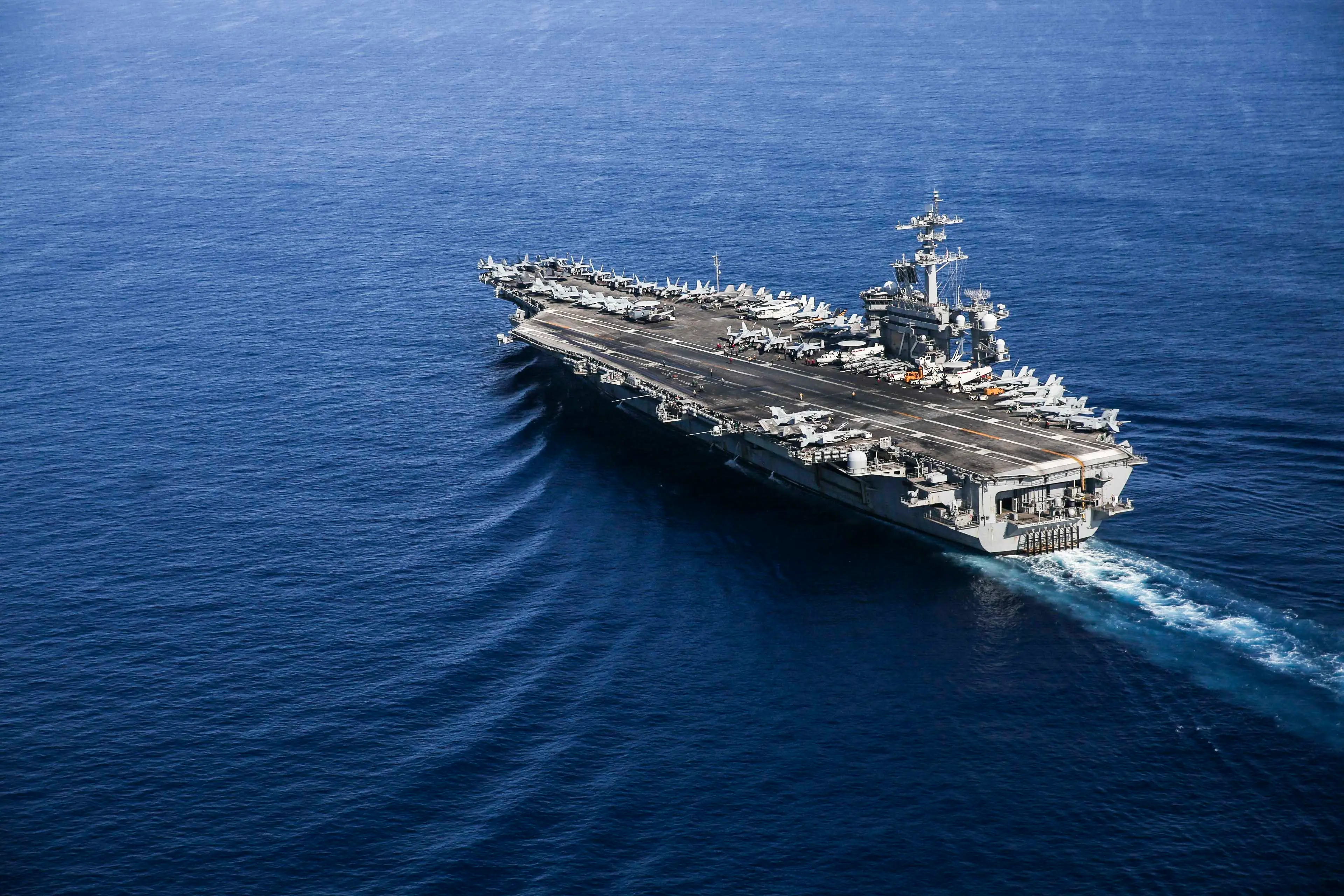
25 years without refuelling
Because enriched uranium is incredibly energy-dense, the ship operates continuously for a quarter of a century. The vessel deploys across the globe without ever needing to dock at a port for engine fuel.
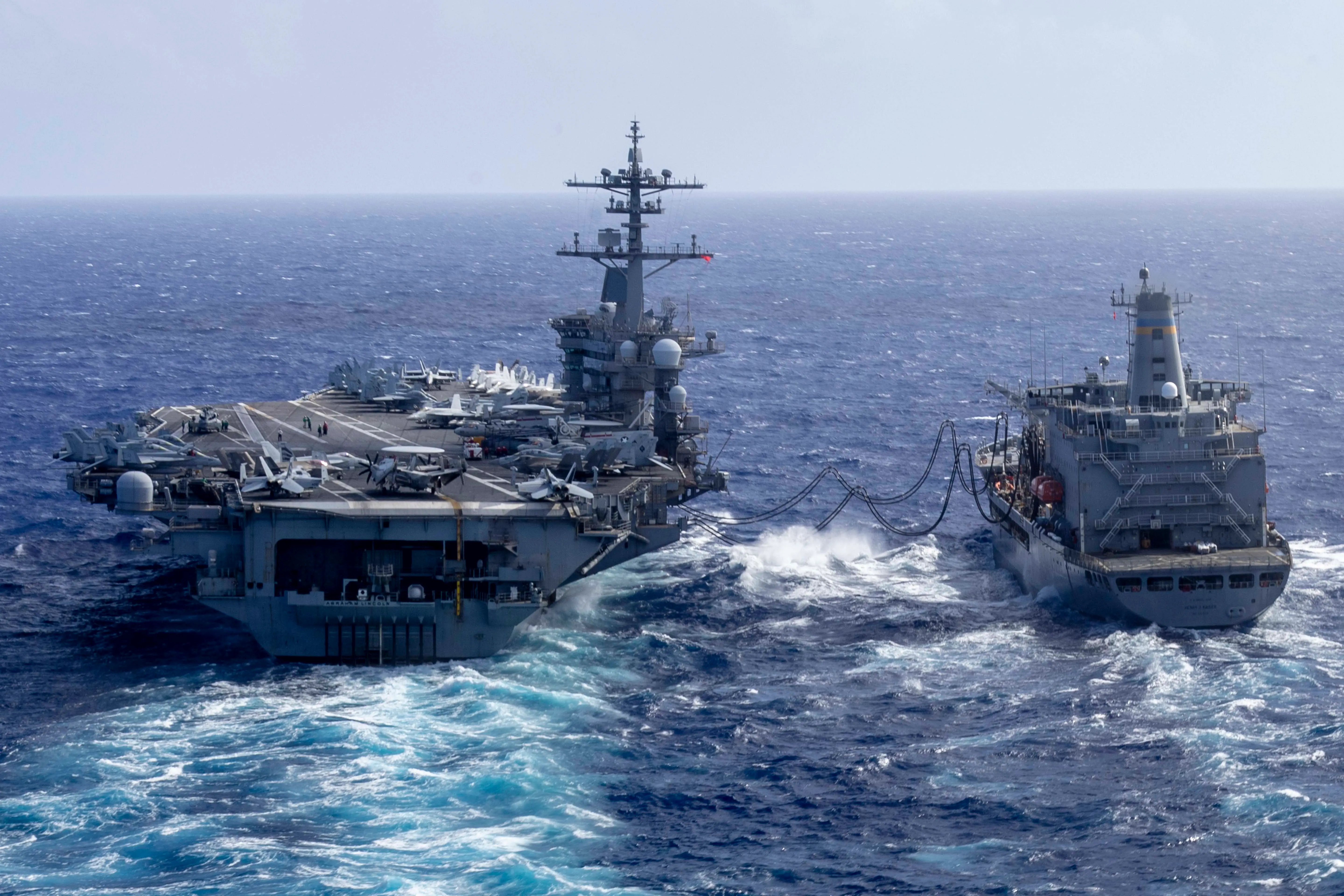
Powering a floating city
The onboard nuclear plant produces enough continuous electricity to power a city of 100,000 people. It supplies absolute power to the ship's complex radar systems, combat computers, and internal lighting grids.
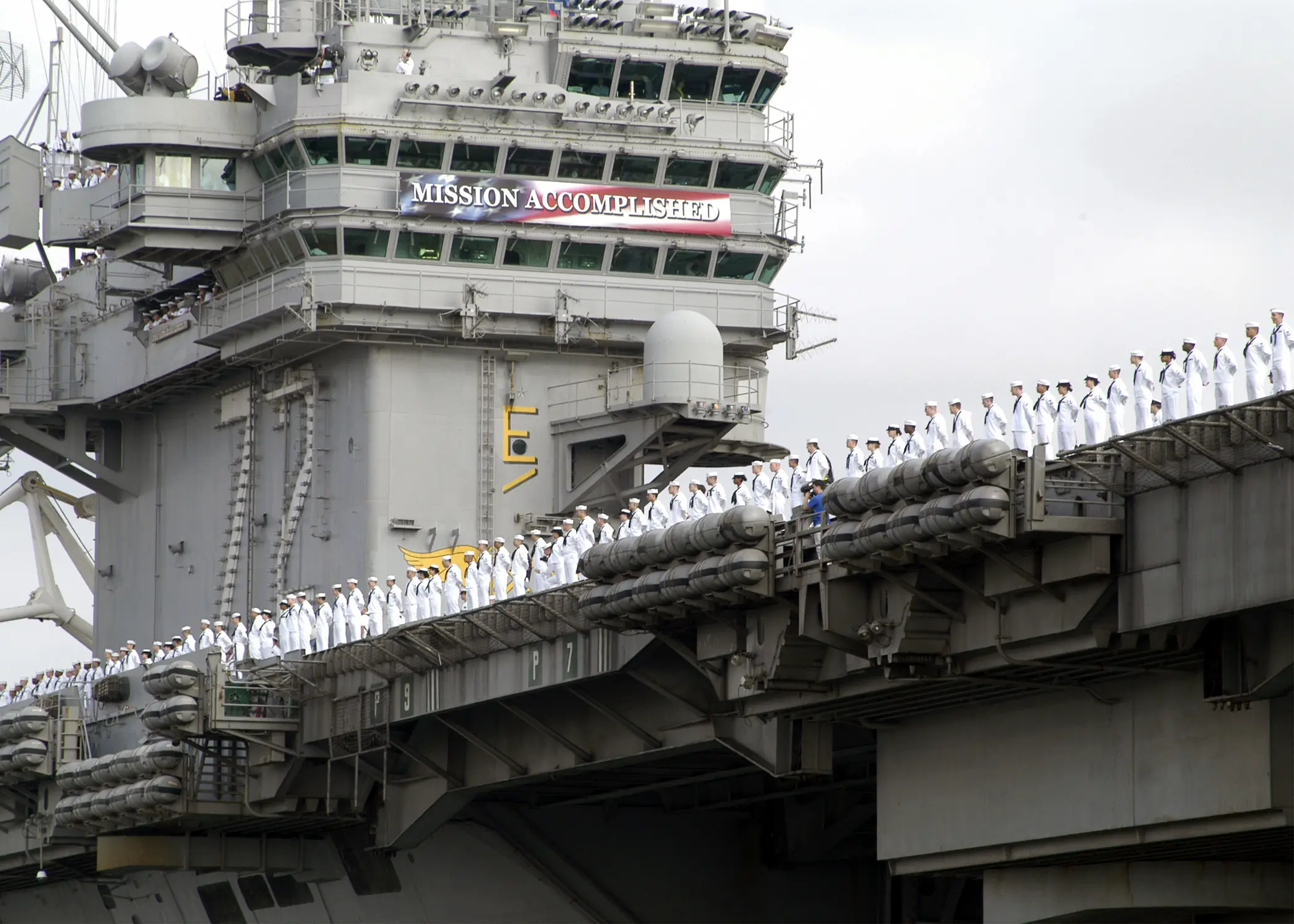
400,000 gallons fresh water
The reactors also provide extreme heat for the carrier's enormous onboard desalinisation plants. These vital systems instantly boil seawater to produce up to 400,000 gallons of fresh drinking water every single day.
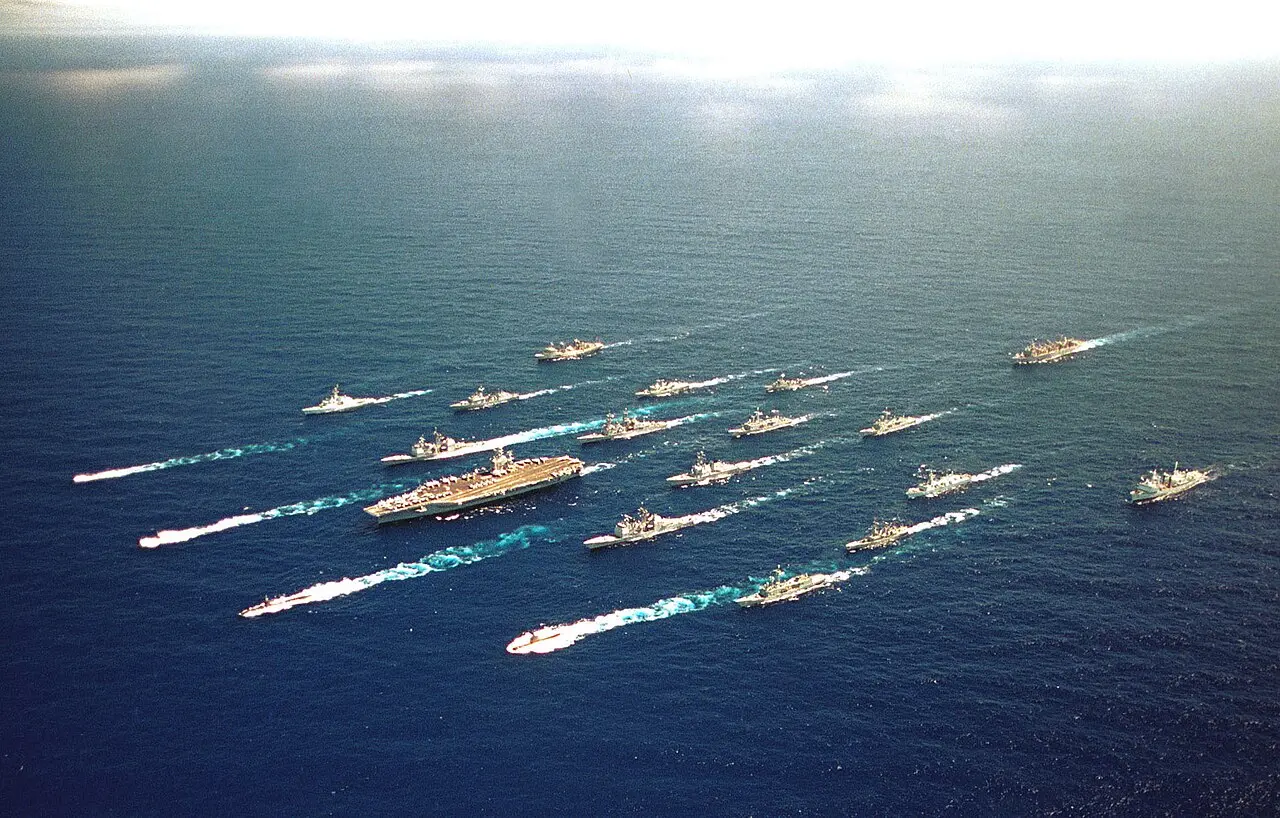
5,600 crew members supported
Unlimited electricity ensures absolute life support for the ship's massive operational crew. It powers huge galleys that prepare thousands of meals daily, along with critical heating and air conditioning systems.
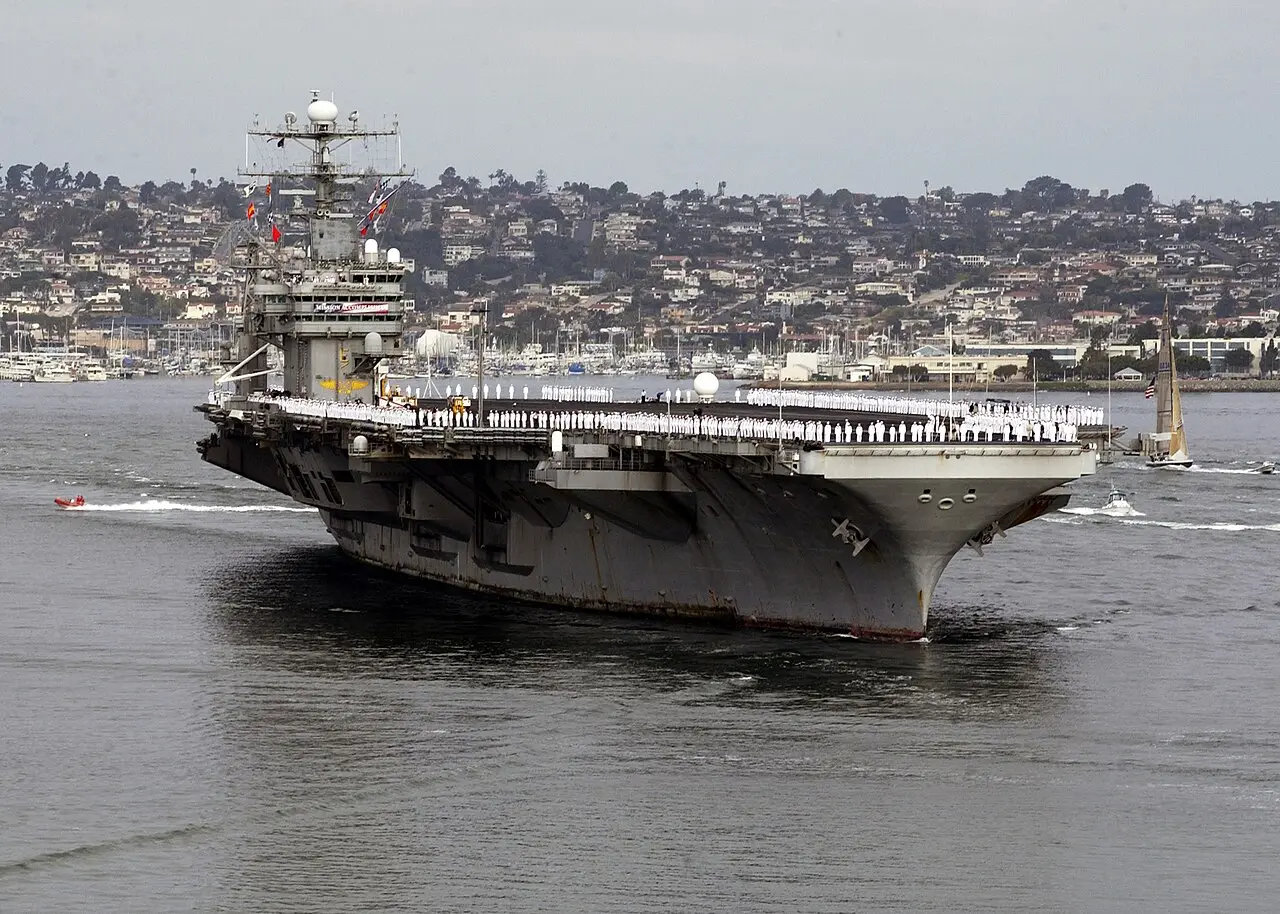
Launching 90 combat aircraft
The vessel uses steam directly from the nuclear reactors to operate its heavy-duty flight deck catapults. This raw pressure allows the crew to safely launch heavy stealth fighters and bombers into the sky.
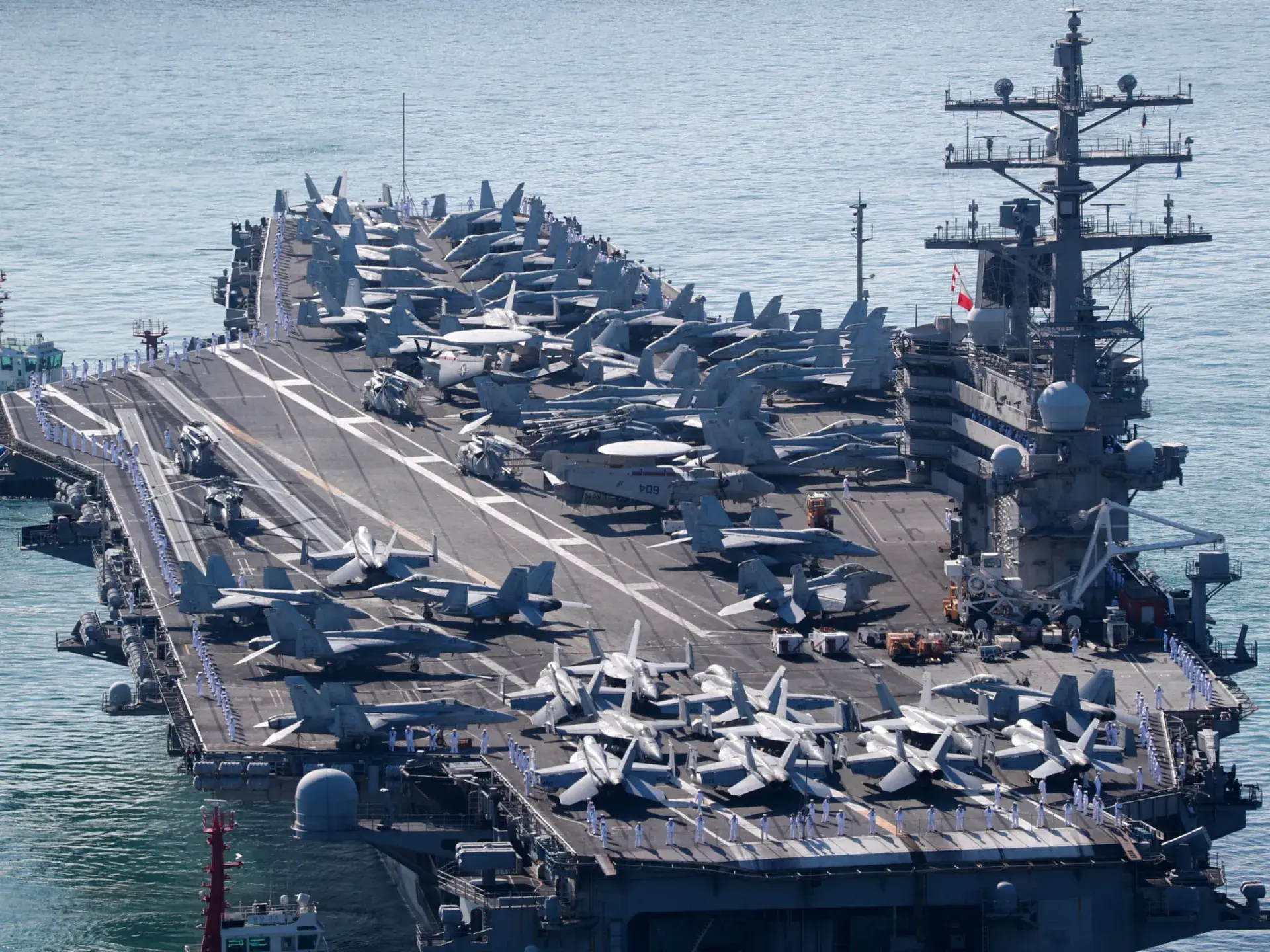
3 million gallons jet-fuel
While the ship runs entirely on nuclear power, it stores millions of gallons of aviation fuel for its air wing. This ensures the fighter jets remain fully fuelled for high-intensity combat missions.

Four-year midlife nuclear overhaul
At the 25-year mark, the carrier enters a drydock for a complex midlife refuelling. Engineers safely extract the depleted uranium and install fresh nuclear fuel for the remaining decades of service.

50-year total service lifespan
This robust nuclear engineering guarantees the warship remains structurally and operationally viable for 50 years. The constant electrical supply keeps the ageing but upgraded combat systems active during international deployments.
)
)
)
)
)