&imwidth=800&imheight=600&format=webp&quality=medium "8 million tons of plastic is ripping through the oceans like tornadoes")
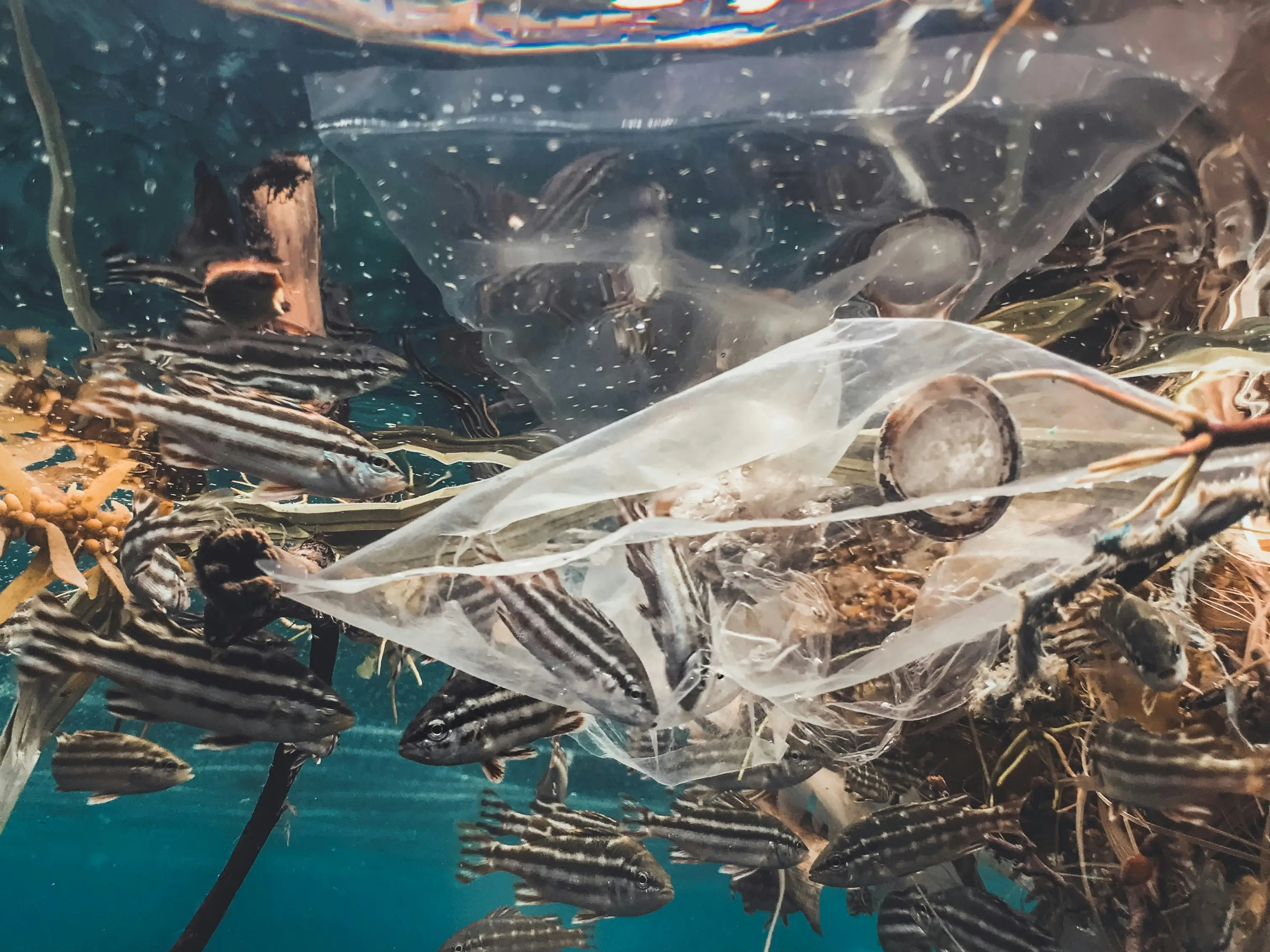
Microplastics have become a major concern, not just for the climate but also for human health. The pollutant has leeched into our food, body, drinking water and other areas. Oceans are one of the biggest places where these materials gather. According to NASA, over eight million tons of microplastics flow into the world's oceans every year. A group of scientists carried out research to understand how this pollutant moves in the waters. In previous studies, experts used satellites that are part of the Cyclone Global Navigation Satellite System to track the movement of microplastics across Earth. When it comes to oceans, peering deep inside the surface becomes a task. Larry Pratt and Irina Rypina from the Woods Hole Oceanographic Institution in Massachusetts turned to 3D modelling to track this process. They found that microplastics form an “idealised eddy”, like a tornado, as they make their way through the seas.
The duo simulated ocean currents by using a rotating cylinder, where the body rotates at one speed while the lid spins at a different rate, Popular Mechanics reported. They successfully created a circulation that closely resembled oceanic movements across hundreds of kilometres. Pratt said in a press statement that any particle follows the trajectory of the water when thrown inside, because the latter has some "arbitrary velocity" and the "viscous drag would rapidly bring its motion close to that of the fluid."

Microplastics behave differently in turbulence
However, microplastics exhibit inertia, and this can alter the above process. The researchers then made some calculations and presented a theory according to which microplastics turned into multiple attractors inside the chaotic ocean systems, like closed loops spiralling upwards and downwards, like a tornado. However, these also state that this might not be true for all microplastics. “The main thing we need to consider is the effects of small-scale turbulence. The theory is valid for spherical particles, but most microplastics in the ocean have very irregular shapes,” Pratt said. Irrespective of this, the researchers hope that their method can help understand where plastics are getting collected.