
&imwidth=800&imheight=600&format=webp&quality=medium "Scientists alarmed at noticing a scary feeding trait in the only Antarctic bug")
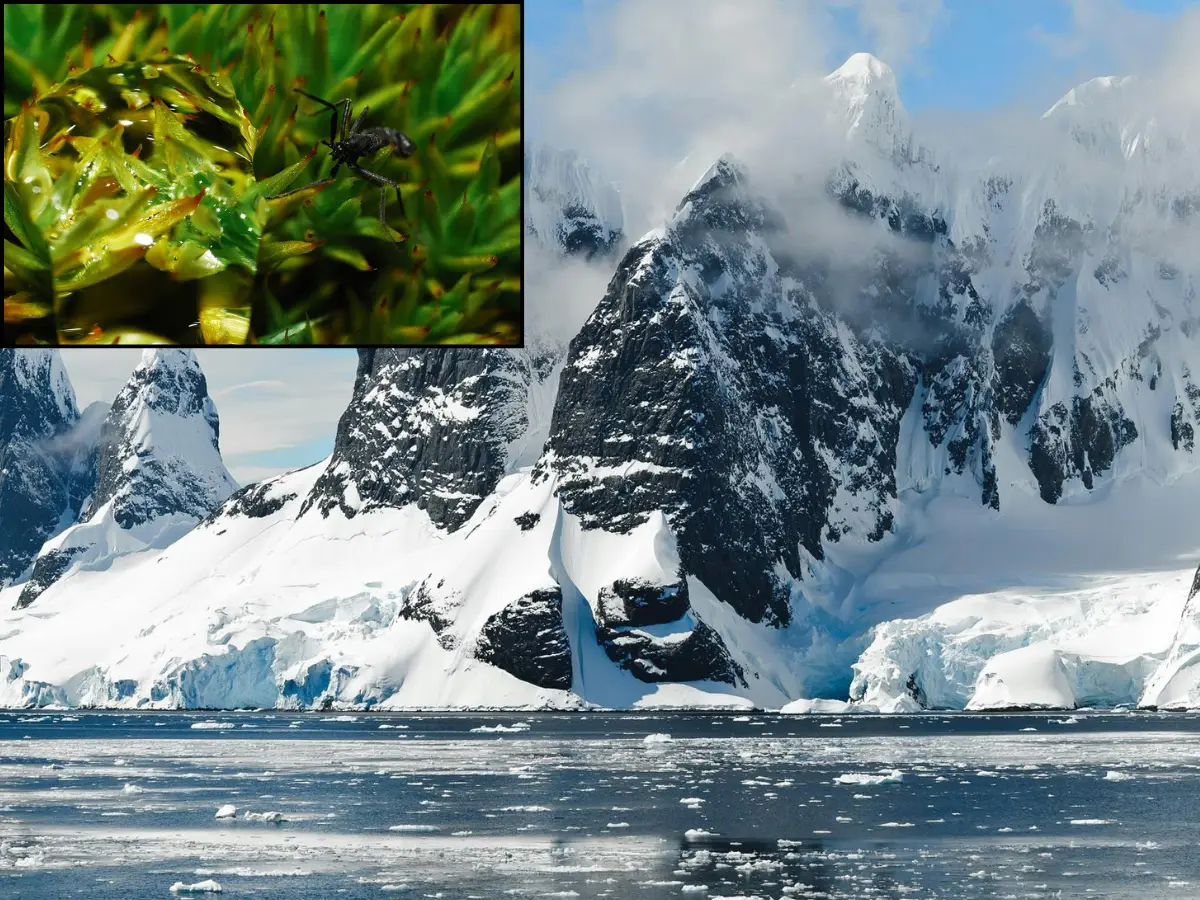
Microplastics have invaded the world and have reached even the remotest corners. Antarctica is no exception. Scientists have now made an even more worrying discovery, finding microplastics inside the only bug that lives on the frozen continent. Belgica antarctica is a small fly, only about the size of rice. It lives inside moss and algae and feeds on dead plant materials, and recycles nutrients present in the Antarctic soil. A study published in Science of the Total Environment has revealed the presence of microplastics inside these tiny creatures. The discovery brings forth a startling situation showing the increasing levels of pollution in Antarctica.
Jack Devlin, study lead author and an entomologist at the University of Kentucky, said in a statement, "Antarctica still has much lower plastic levels than most of the planet, and that’s good news. But we can now say they are getting into the system, and at high enough levels they start to change the insect’s energy balance.” Research ships and missions have been found responsible for leeching plastics into Antarctic ice, according to earlier findings. Plastic fragments have been detected in Antarctic snow and seawater. Since the bugs, or midges, live by breaking down things in the soil, researchers wanted to see if microplastics would make their way into their system.
Midges can fight extreme conditions in Antarctica

Midges are extremely tough, since they withstand extreme cold, high salt, huge temperature changes and UV radiation. But could they fight a new stress like microplastics, Devlin questioned, "or does it make them vulnerable to something they’ve never seen before?" To understand this, the researchers exposed the midges to different amounts of microplastics for 10 days in a lab. The insects’ metabolism did not change, and “they seemed to be doing fine,” Devlin said. They also noted that the only time the midges fed on microplastics was when the microplastic beads was at the highest concentration levels.
They then collected midge larvae from 20 sites on 13 islands in Antarctica. Their gut was checked for plastic, and of the 40 larvae, the team found only two microplastic fragments. Devlin admits that "microplastics are not flooding these soil communities" at the moment. However, this is an "early warning" that the pollutant is slowly spreading in Antarctica.

