World’s top 7 naval powers by total fleet tonnage in 2026: See where India stands

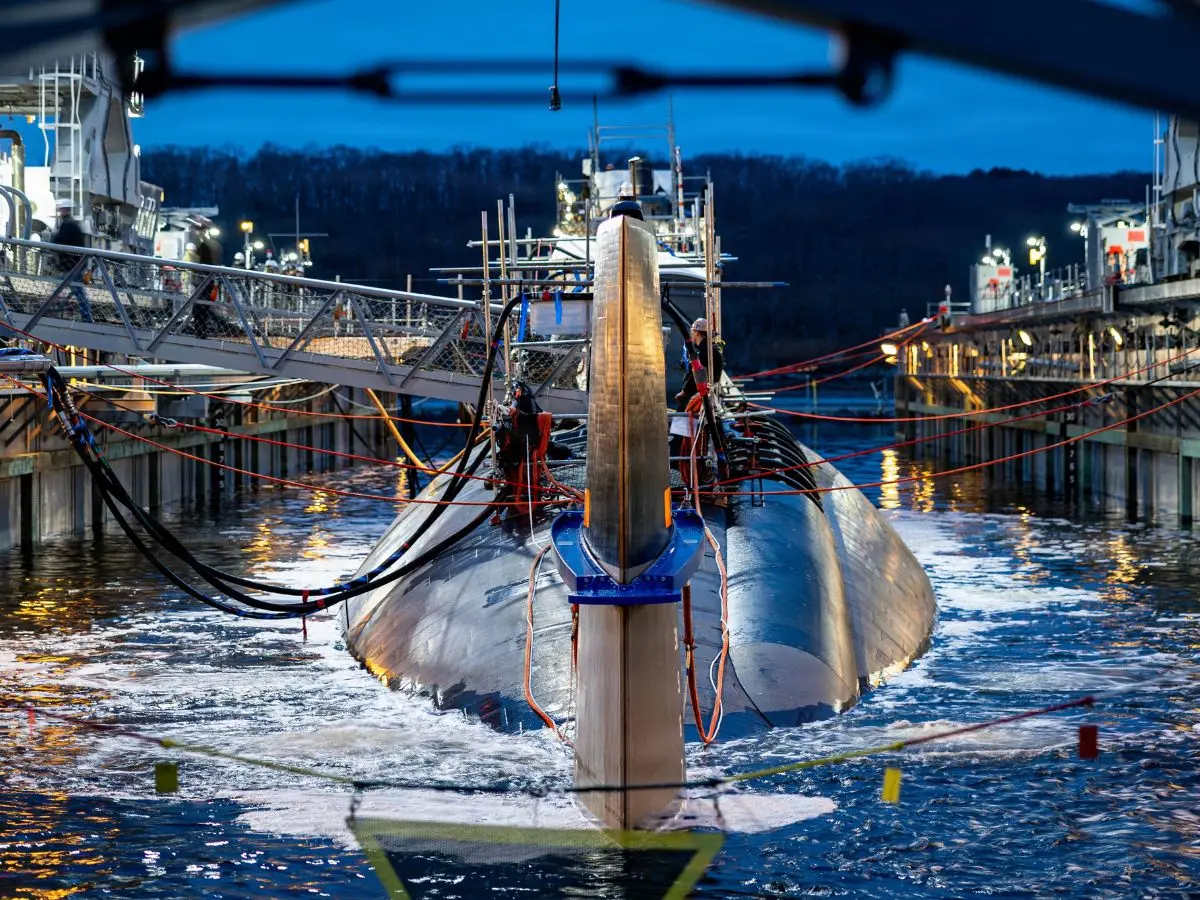
The United States remains the pre-eminent naval authority, ranked 1st out of 145 nations with a PowerIndex score of 0.0741. Accounting for a staggering 57.7 per cent of the top five powers' combined tonnage, the US Navy operates 465 assets totaling 8,265,799 tonnes.
Global naval balance in 2026
Naval power in 2026 is defined not just by the number of ships but also by total fleet tonnage, a measure of operational reach and endurance. A total fleet tonnage serves as a primary metric for blue-water capability and strategic endurance. According to the latest Global Firepower Index, the hierarchy of oceanic strength remains dominated by a few nations, with the United States maintaining a formidable lead. This ranking is not merely a count of hulls but a reflection of displacement, indicating the scale of logistics, armament, and power projection available to each sovereign state. The figures were last updated in January 2026.
United States
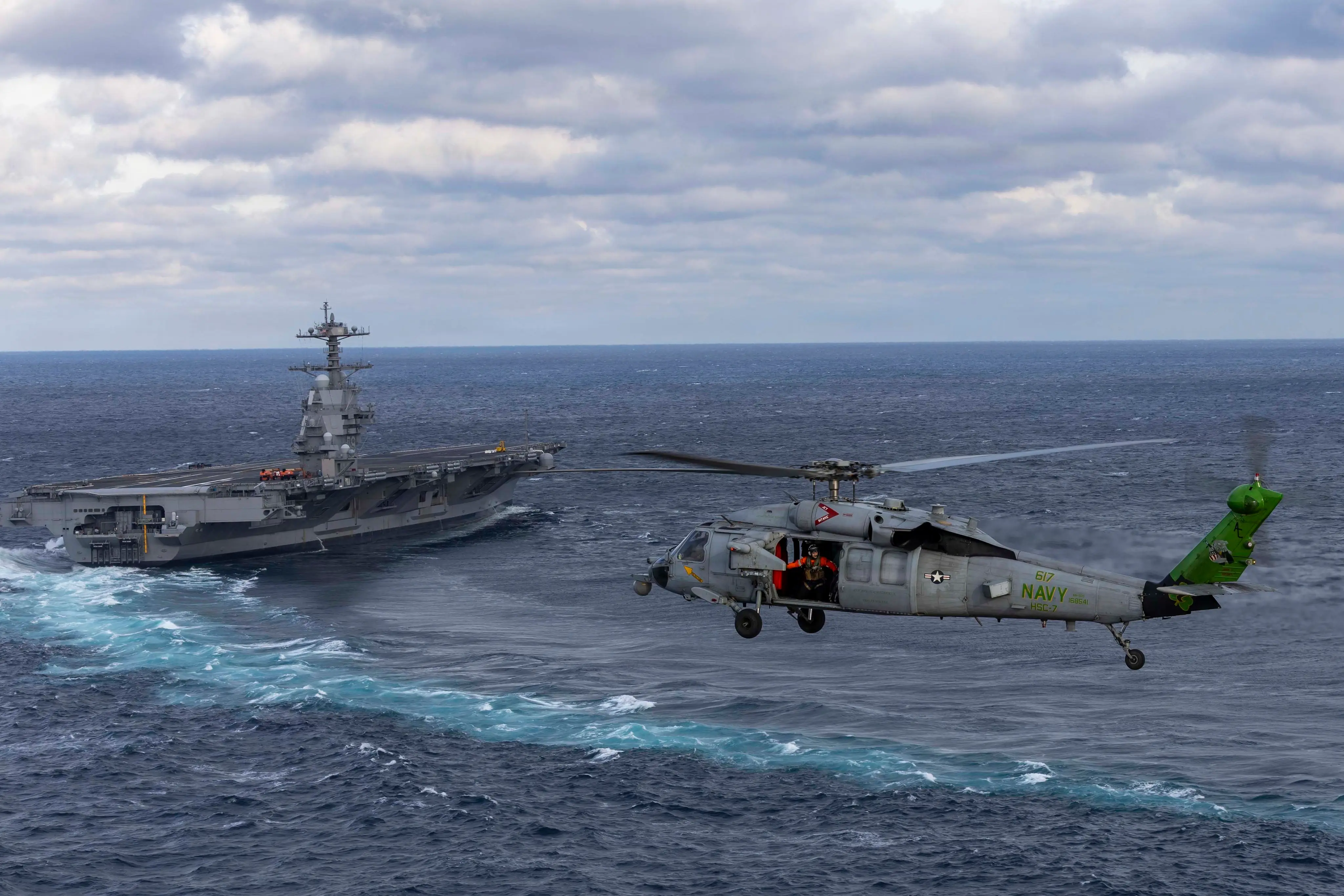
The United States remains the pre-eminent naval authority, ranked 1st out of 145 nations with a PowerIndex score of 0.0741. Accounting for a staggering 57.7 per cent of the top five powers' combined tonnage, the US Navy operates 465 assets totaling 8,265,799 tonnes. Its fleet is anchored by 11 aircraft carriers, including the technologically advanced USS Gerald R. Ford. While destroyers constitute the largest share of the fleet at 41.5 per cent, its 66 submarines and 9 helicopter carriers provide a multidimensional reach that remains unmatched.
China
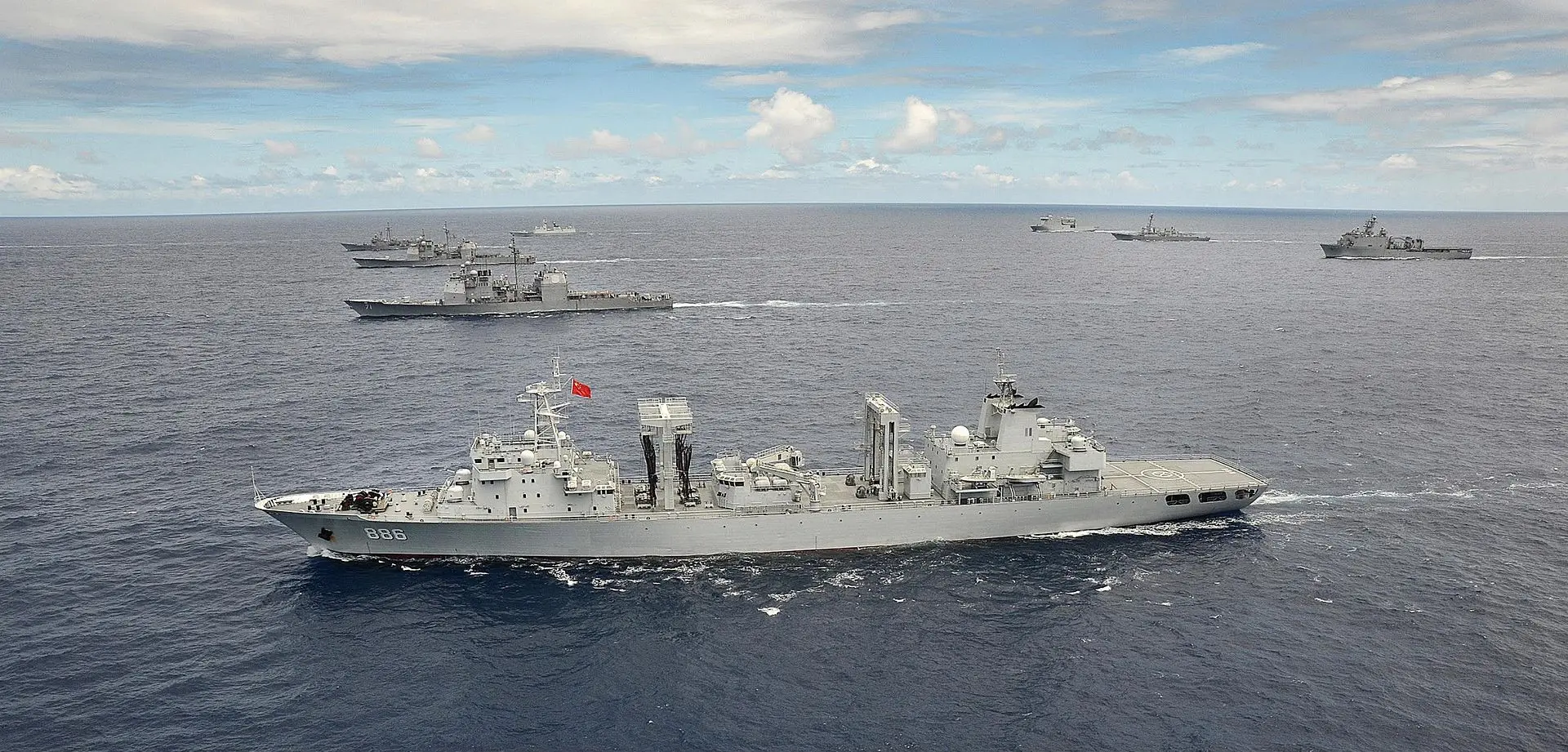
China holds the second position with a total tonnage of 3,192,411 tonnes across 841 assets. While its tonnage is roughly 38 per cent of the American total, the People’s Liberation Army Navy focuses on high-volume coastal and regional presence. Patrol vessels comprise 37.2 per cent of its fleet, yet the force is bolstered by 3 aircraft carriers and 61 submarines. This composition suggests a transition from a green-water force to a sophisticated maritime power capable of sustained operations via its 53 destroyers and 46 frigates.
Russia
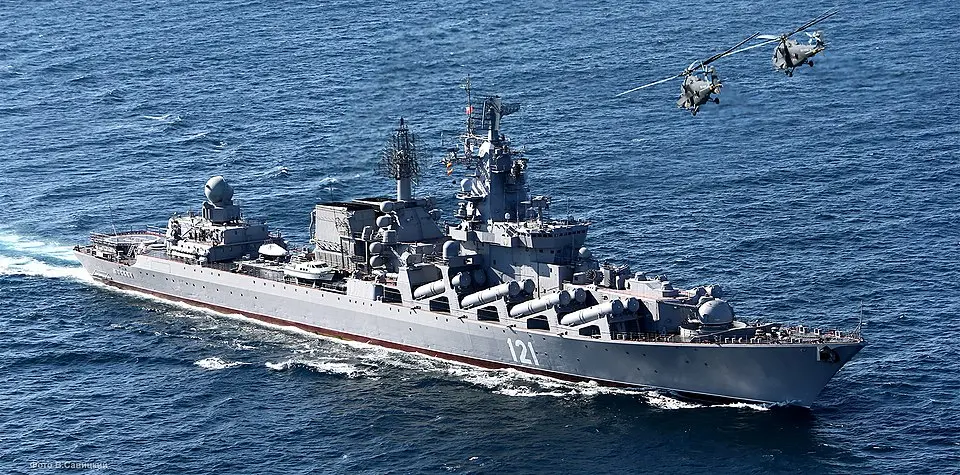
Russia ranks third globally, maintaining 1,426,539 tonnes across 747 assets. The Russian Navy exhibits a unique structural distribution, where corvettes represent the largest fleet share at 27.6 per cent. Despite operating only one aircraft carrier, the Admiral Kuznetsov, Russia maintains a potent underwater deterrent with 66 submarines. Its surface fleet is supported by 70 patrol vessels and 45 mine warfare units.
Japan
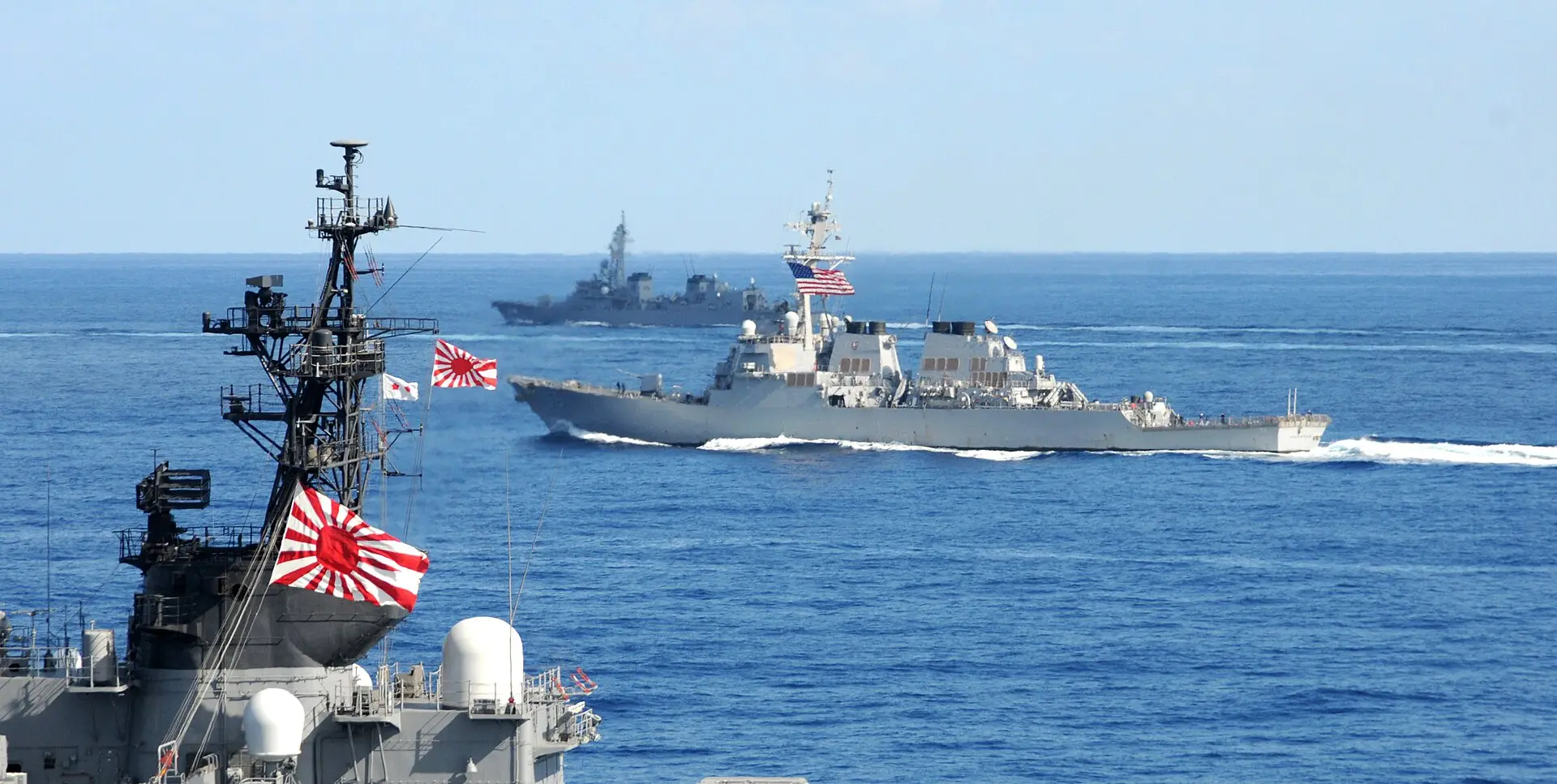
Japan occupies the fourth spot with 798,062 tonnes and 158 naval assets. The Japan Maritime Self-Defense Force is characterised by high-quality displacement, with destroyers forming 41per cent of its fleet. Although Japan officially lists zero aircraft carriers, it operates 4 helicopter carriers. The JS Kaga has been converted to function as a light aircraft carrier, capable of supporting fixed-wing operations. This fleet is rounded out by 23 submarines and 18 mine warfare vessels, highlighting a robust anti-submarine warfare capability.
India
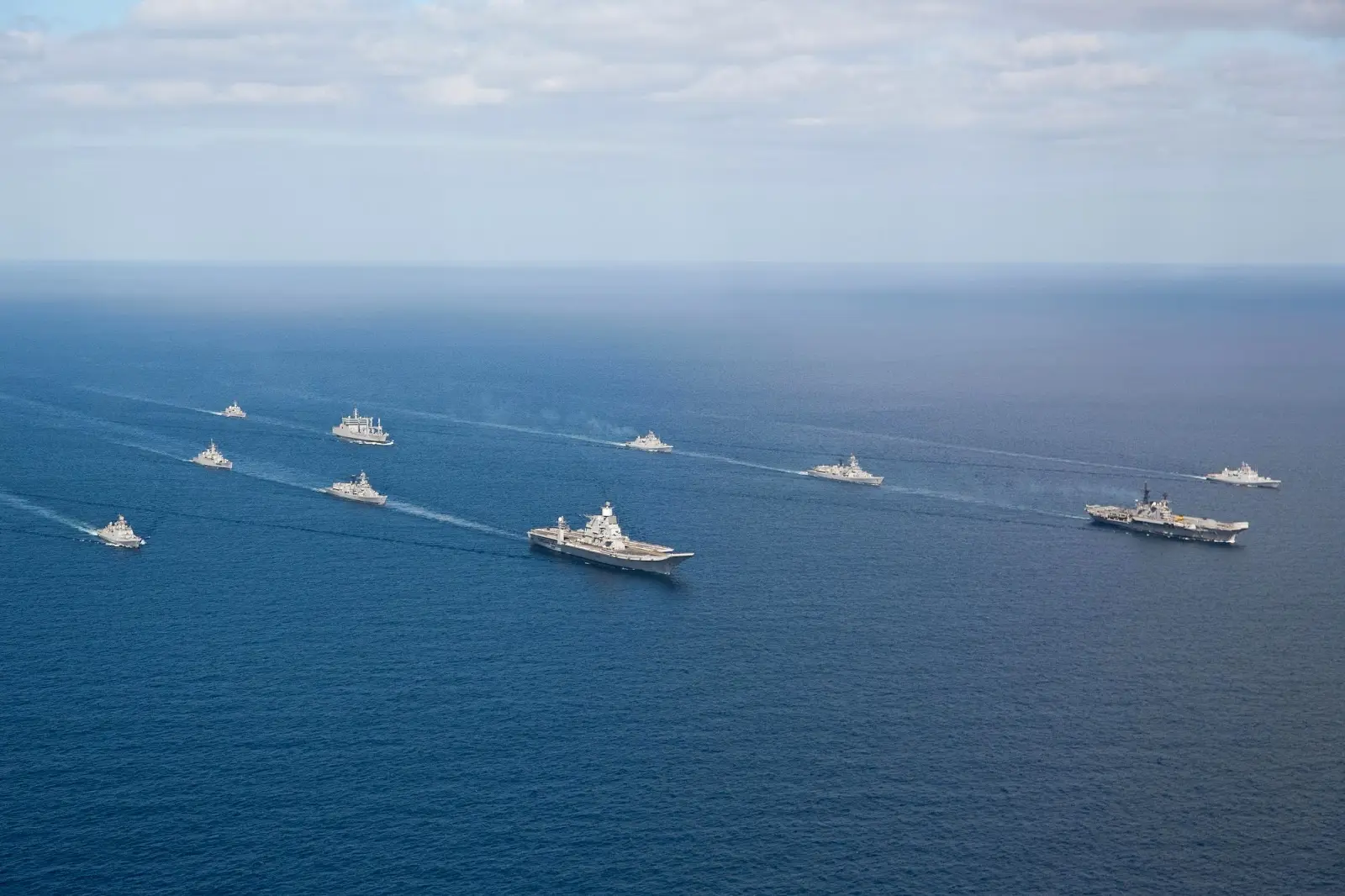
India ranks fifth globally, possessing a total tonnage of 631,989 tonnes across 343 assets. The Indian Navy’s structure is heavily weighted toward patrol vessels, which account for 67 per cent of its fleet. However, its power projection is anchored by two operational aircraft carriers, INS Vikramaditya and INS Vikrant, with plans for a third, INS Vishal. Recent inductions, including the frigate INS Taragiri and the submarine INS Aridhaman, are not reflected in this total, as they were commissioned in April 2026.
France
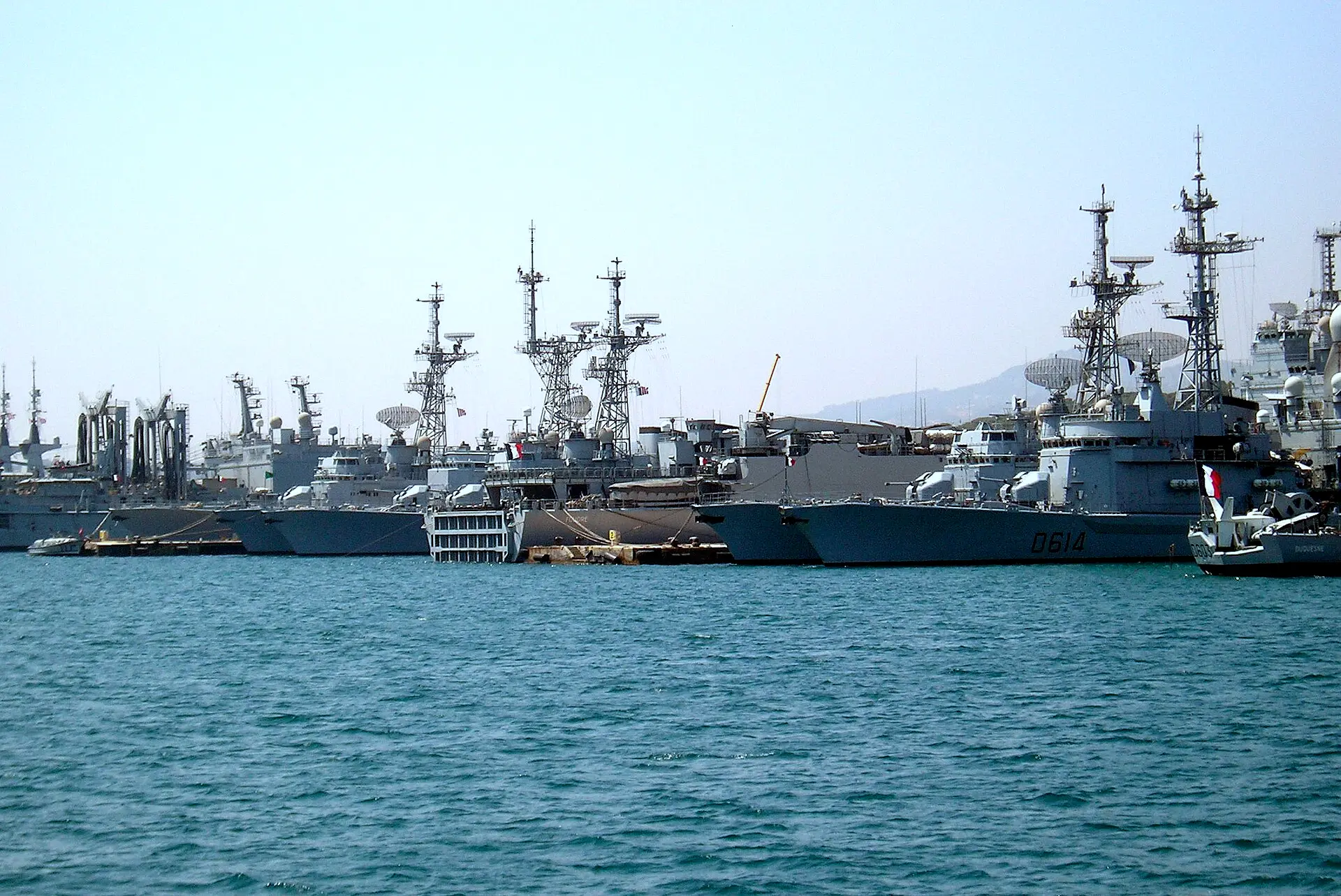
France sits at the sixth position with 166 assets and a total tonnage of 487,471 tonnes. As a key European power, France maintains a balanced fleet including one aircraft carrier and three helicopter carriers. Patrol vessels make up 31.4 per cent of its force, supported by 11 destroyers and 9 submarines. The French Navy remains one of the few forces capable of independent global deployment, utilizing its 19 mine warfare vessels and 5 frigates to secure diverse maritime interests across multiple oceans.
South Korea
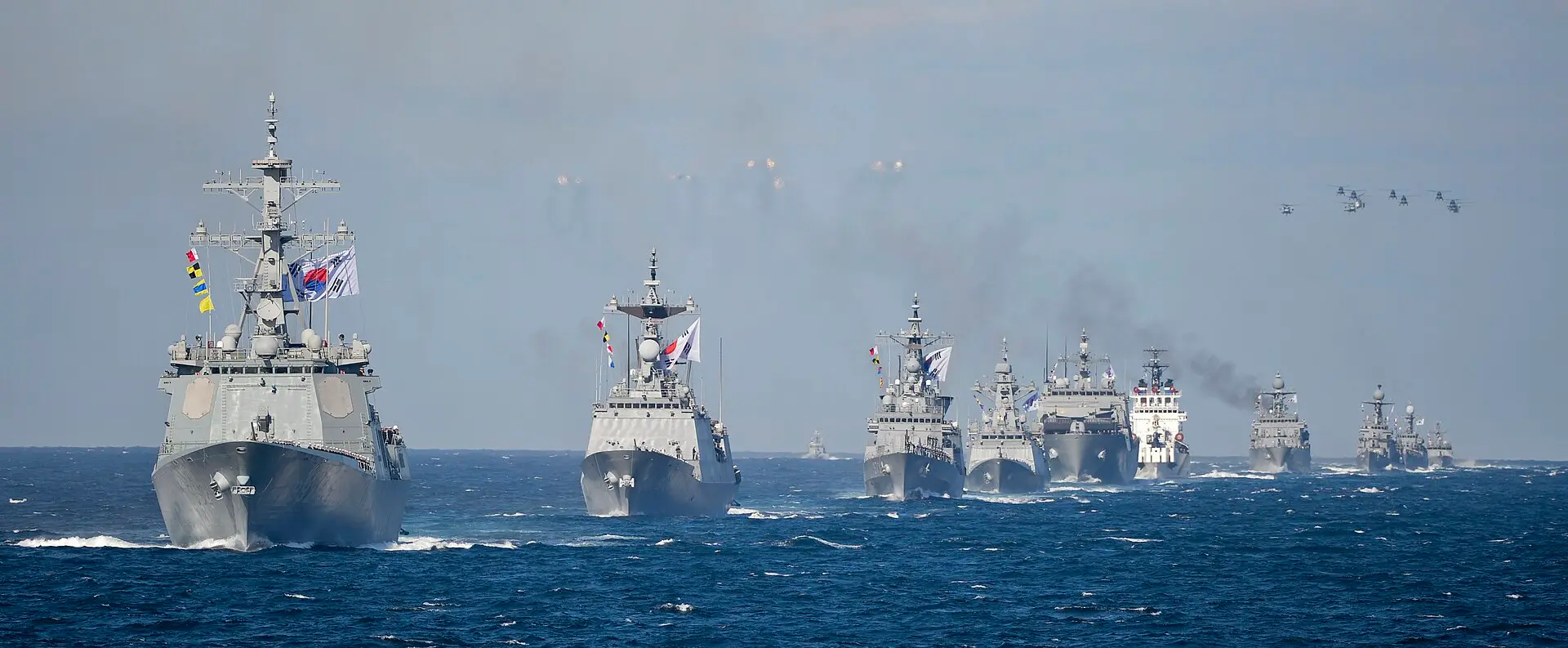
South Korea completes the top seven with 427,946 tonnes and 215 assets. Its naval doctrine is focused on the immediate security of the peninsula, evidenced by patrol vessels making up 56.8 per cent of the fleet. Nevertheless, the Republic of Korea Navy possesses significant striking power through 14 destroyers, 18 frigates, and 22 submarines. With 14 mine warfare vessels, the fleet is designed for high-intensity littoral combat and protecting vital trade routes.
)
)
)
)
)