What the strange glow around 3I/ATLAS could really mean?

The mysterious red glow around comet 3I/ATLAS reveals dust, water, and traces of metal from another star system. Scientists tracking its changing colours and faint jets say its strange light may hold secrets about how distant planets and comets form across the galaxy.
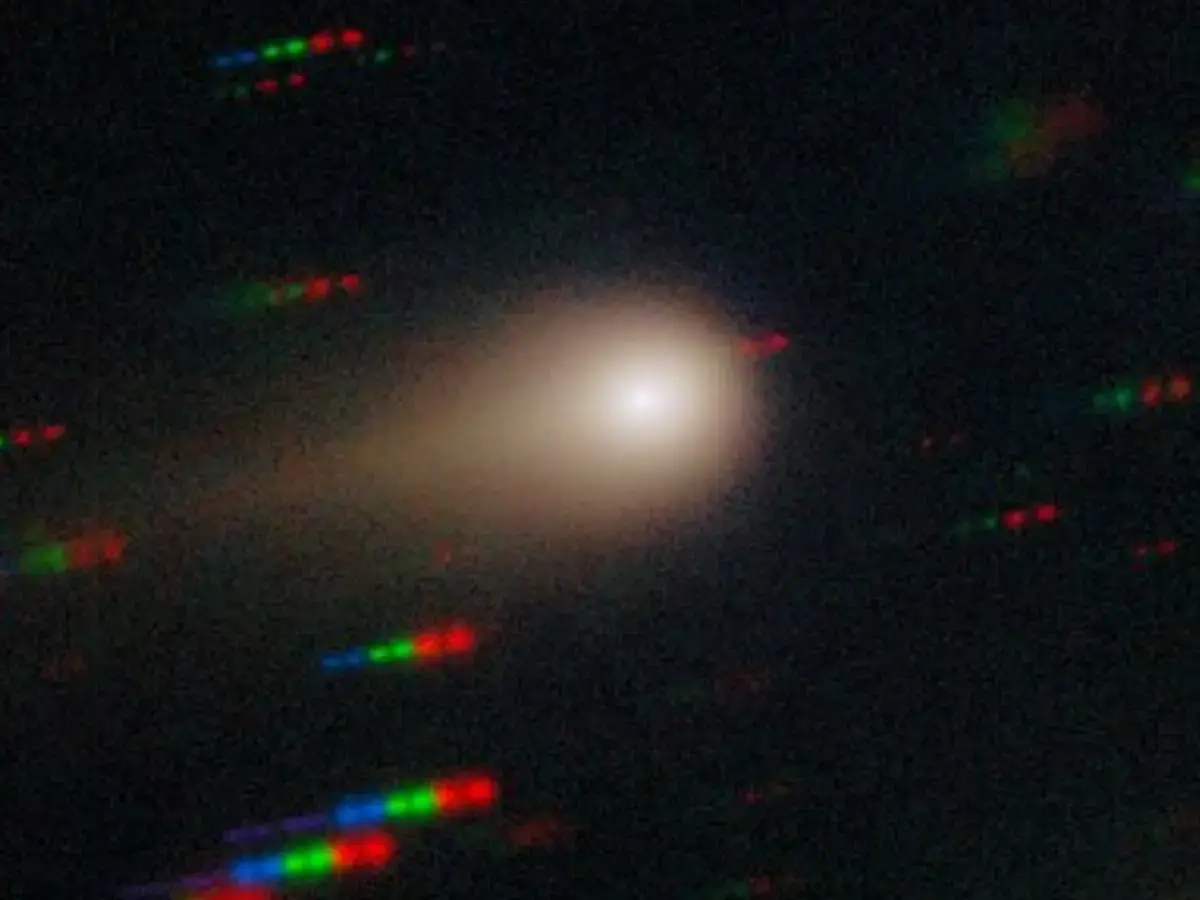
What Is the Glow?
The glow is called a "coma" a cloud of gas, dust, and ice grains that surround the solid heart of the comet. As 3I/ATLAS nears the Sun, its ices heat up and become gas, creating this giant, glowing halo that can be bigger than a planet.

A Red, Dust-Rich Coma
Unlike most comets, 3I/ATLAS’s coma appears unusually red in telescope images. Spectral observations suggest it is dominated by large dust grains coated in organic compounds (tholins) much like D-type asteroids and interstellar cousin 2I/Borisov.

Chemical Surprises - Minimal Gas, More Dust
Unlike classic comets that show bright gas emissions, 3I/ATLAS’s coma reveals little gas but is rich in dust. This hints at either a lack of volatile gases or an ancient “shut down” nucleus beneath the active surface.
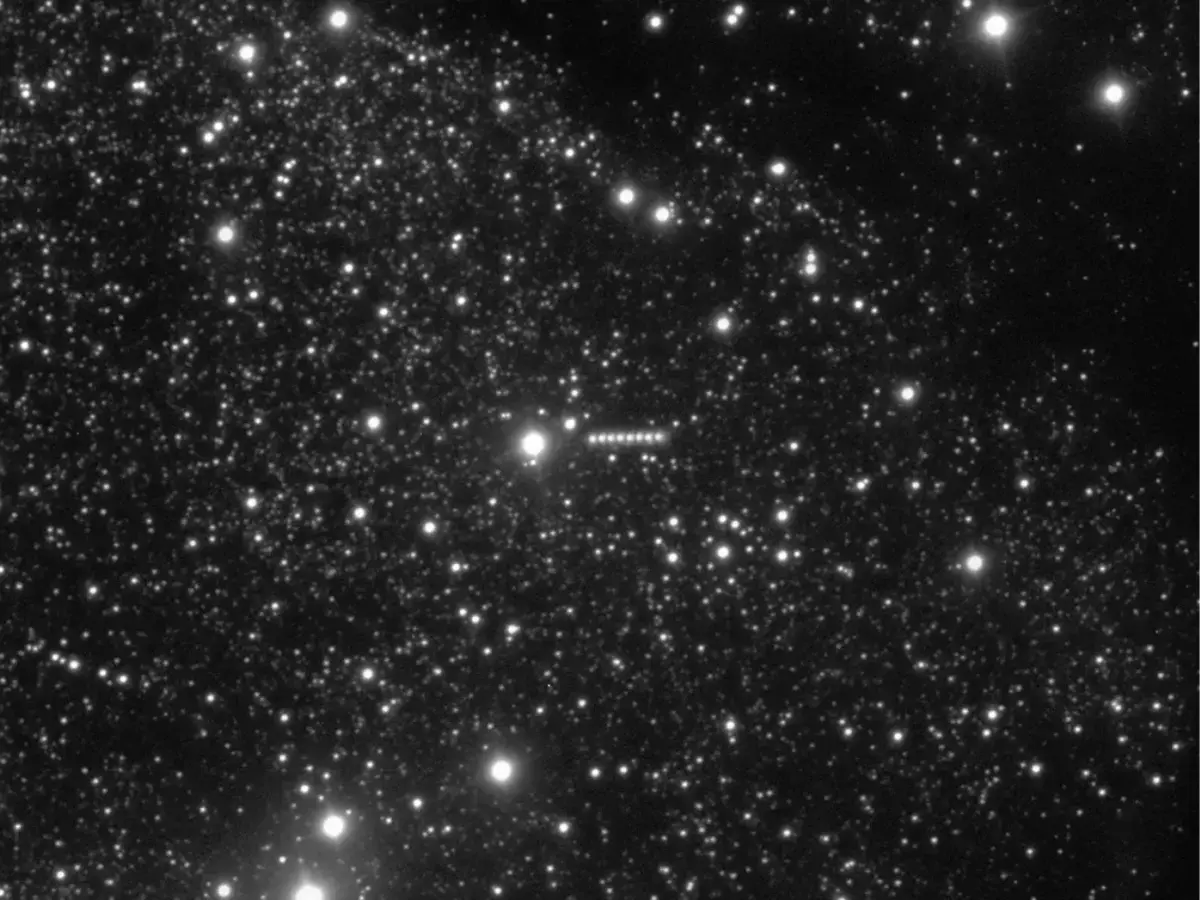
Changing Colours - Red to Green to Blue?
Some images and spectra suggest the coma’s colour may shift, possibly due to the presence of organic compounds, water, nickel, or even cyanide released by solar heating. Green and blue hues could point to unique chemistry not seen in most solar system comets.
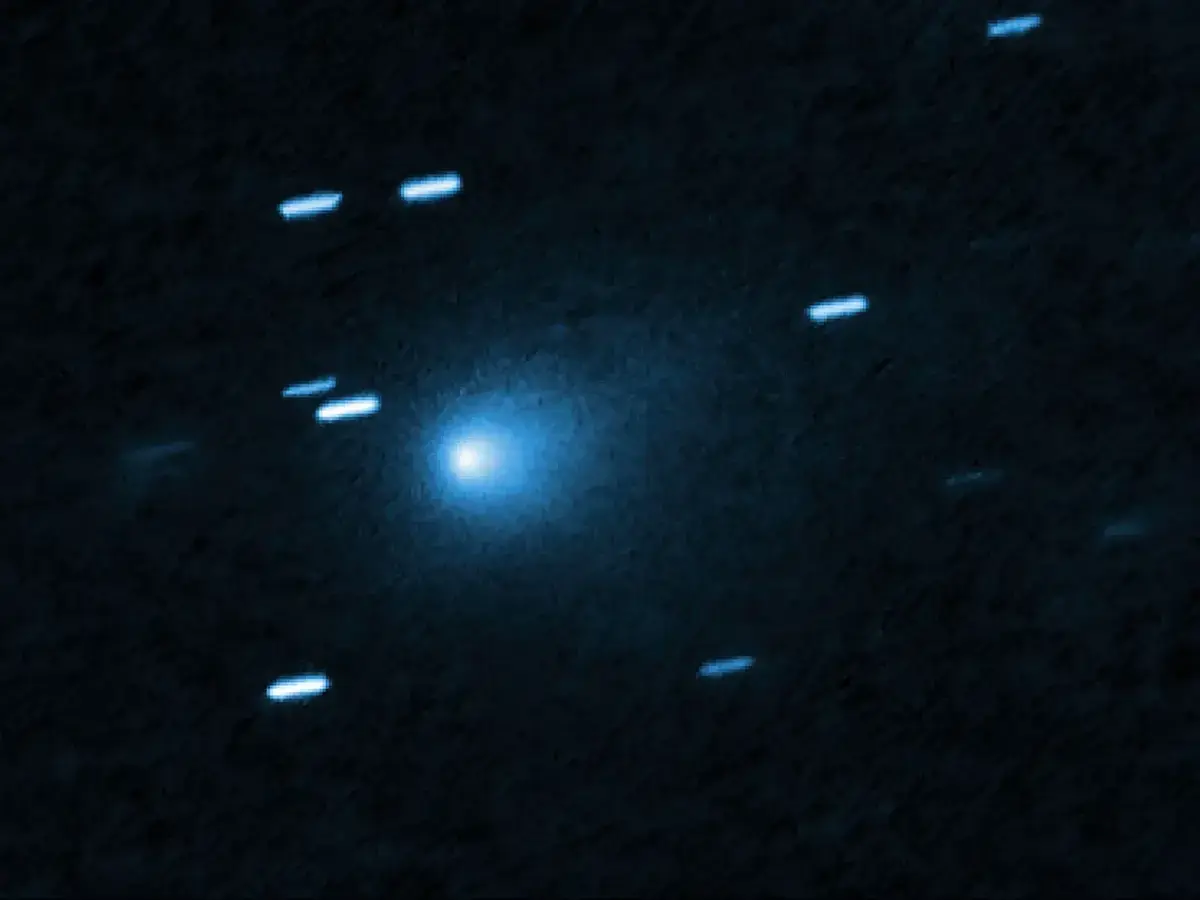
Water and Nickel Detection - Major Discoveries
For the first time, scientists using NASA’s Neil Gehrels Swift Observatory have detected a faint ultraviolet glow showing water’s fingerprint in the coma. Other teams have also found glowing traces of nickel, linking 3I/ATLAS’s chemistry to its interstellar origin.
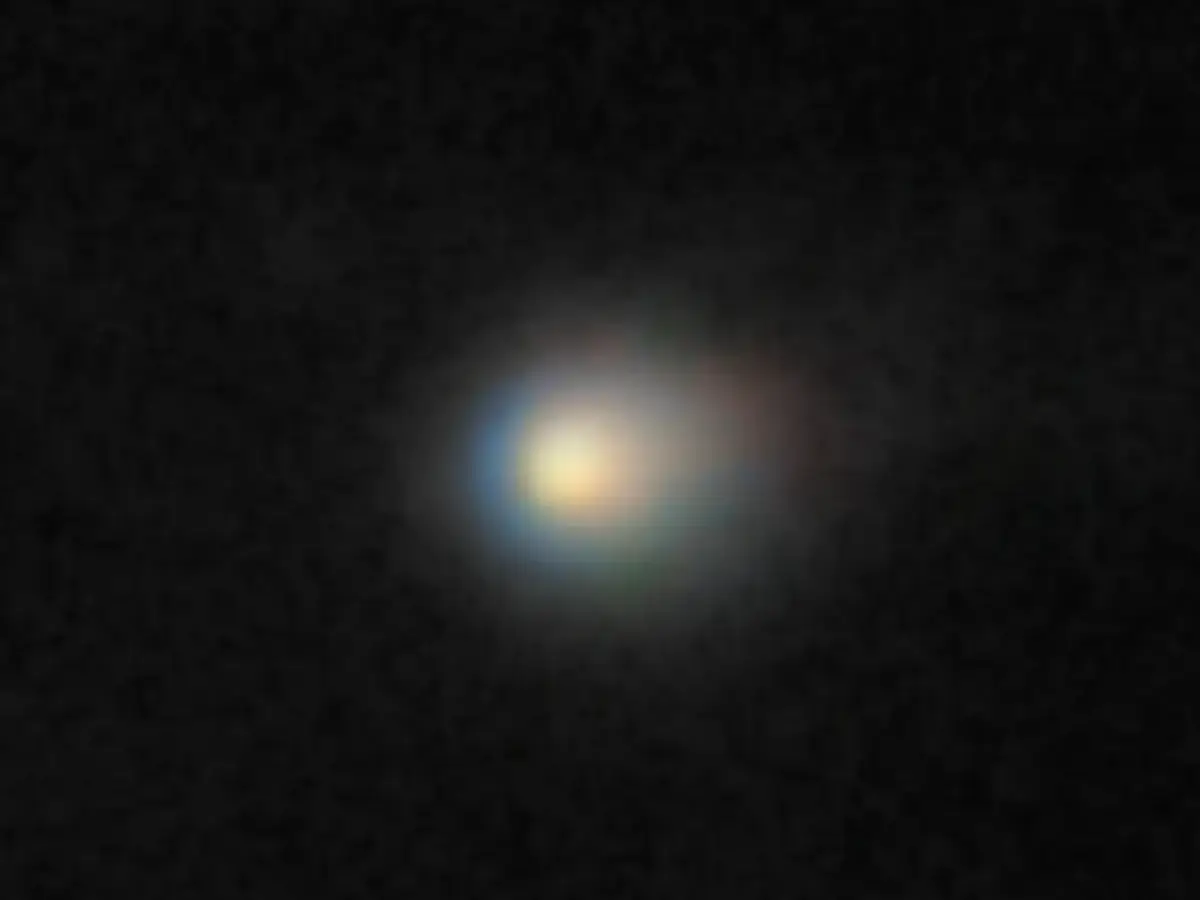
Flickers, Jets, and Outbursts
High-speed jets of gas and dust, seen as fan-shaped streaks in some images, can cause sudden changes and even fragmentation in the glow and tail. So far, 3I/ATLAS has remained stable, but sudden outbursts could change its appearance.
What Does It Mean for Science?
The glow of 3I/ATLAS is a window into the chemistry of other solar systems. Each colour and change tells astronomers about the comet’s journey, structure, and the alien dust it carries. Analysing the strange glow helps scientists uncover clues about planetary formation across the galaxy.
)
)
)
)
)