What makes Russia’s nuclear-capable Oreshnik missile so dangerous? Speed, range & threat explained

The hypersonic Oreshnik ballistic missile is derived from the RS-26 Rubezh, which Russia initially developed as an intercontinental missile system. Like several other Russian military platforms, the Oreshnik can be equipped with both nuclear and conventional warheads.

Russia attack Ukraine
Ukrainian President Volodymyr Zelenskyy said on Sunday that Russia used the powerful nuclear-capable intermediate-range Oreshnik ballistic missile during a mass drone and missile attack on Kyiv, killing at least two people. The attack using an Oreshnik missile marks the third time the weapon has been used by Russia against Ukraine in the four-year war. During the attack, buildings across the Ukrainian capital, including near government offices, residential buildings and schools, were damaged.
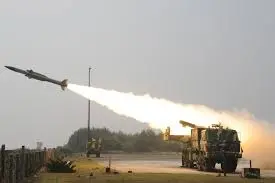
What is the hypersonic Oreshnik ballistic missile?
The Oreshnik missile, whose name translates to “Hazel Tree”, is an intermediate-range hypersonic ballistic missile designed to carry multiple warheads capable of hitting several targets simultaneously, a feature more commonly linked with long-range intercontinental ballistic missiles (ICBMs). The missile is derived from the RS-26 Rubezh, which Russia initially developed as an intercontinental missile system. Like several other Russian military platforms, the Oreshnik can be equipped with both nuclear and conventional warheads.

Speed and range
It flies at hypersonic speeds exceeding Mach 10 (over 12,000 km/h). It can change direction mid-flight, making it extremely difficult for conventional air defences to track or intercept. It has an operational range spanning roughly 500 to 5,500 km. The missile can deploy between 3 and 6 warheads, which can each be equipped with multiple submunitions, allowing it to hit several targets simultaneously over a wide area.

Can Oreshnik missile be intercepted?
Vladimir Putin has claimed that the Oreshnik missile cannot be intercepted and said its destructive capability is comparable to that of a nuclear weapon, even when armed with a conventional warhead. However, some Western analysts have disputed those assertions, describing them as overstated. In December 2024, a US official characterised the missile as experimental and not a major battlefield game-changer, adding that Russia was believed to possess only a limited number of the weapons.
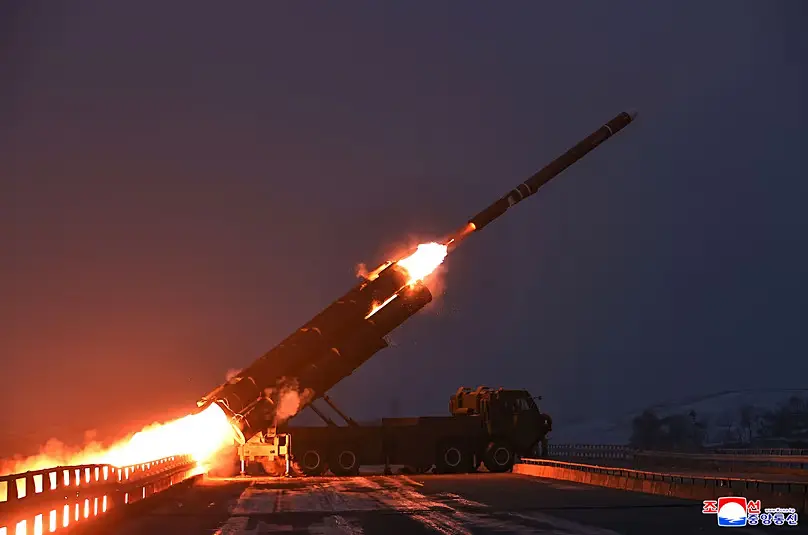
When was the Oreshnik ballistic missile first used?
The Russian military launched the experimental missile from the Kapustin Yar test site in the Astrakhan region on November 21, 2024, to strike a military-industrial facility in the Ukrainian city of Dnipro. The strike marked a significant escalation, with the missile reportedly reaching speeds over Mach 10 while carrying multiple warheads.
)
)
)
)
)