Sir VS Naipaul, 1932-2018: Literary giant, tortured soul

Authored By Wion Web Desk
Published: Aug 12, 2018, 06:42 IST | Updated: Aug 12, 2018, 06:42 IST
Vidiadhar Surajprasad Naipaul made several controversial comments about women, post-colonial societies, and Islam. He was often described as harsh, critical, and condescending. But in a large part of his work, he was harshest on himself.

1 / 7
Sir VS Naipaul
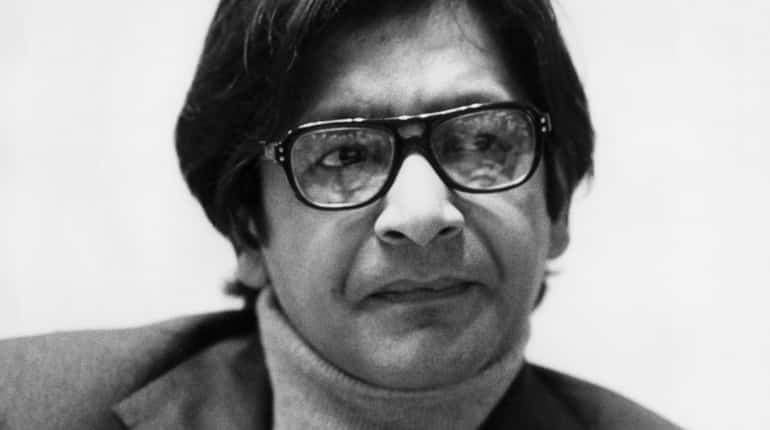
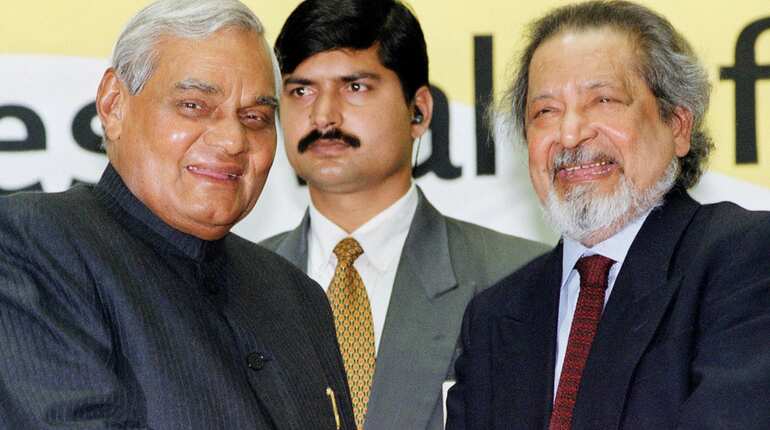
Sir Vidiadhar Surajprasad Naipaul, commonly known as VS Naipaul was an Indo-Caribbean writer and Nobel Laureate, born in Trinidad with British citizenship in 1932. He is known for his comic early novels set in Trinidad and Tobago, his bleaker later novels of the wider world, and his autobiographical chronicles of life and travels. He published more than thirty books, both of fiction and nonfiction, over some fifty years. His most acclaimed works include, 'A House for Mr Biswas' and his Man Booker Prize-winning 'In A Free State'.
2 / 7
Like father, like son
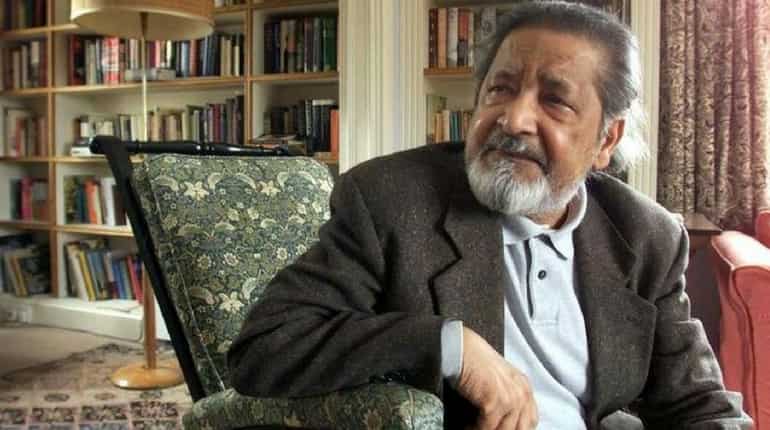
Naipaul was the second child of Droapatie Capildeo and Seepersad Naipaul. In the 1880s, his grandparents migrated from India to work as indentured labourers. In the Indian immigrant community in Trinidad, Naipaul's father became an English-language journalist, and in 1929 began contributing articles to the Trinidad Guardian. In 'A prologue to an autobiography' (1983), Naipaul has described how his father's reverence for writers and for the writing life spawned his own dreams and aspirations to become a writer.
3 / 7
'Something like a mental illness'
Naipaul completed his schooling from the government-run Queen's Royal College a well-regarded school that was modelled after a British public school. Upon graduation, Naipaul won a Trinidad Government scholarship that allowed him to study at any institution of higher learning in the British Commonwealth; he chose Oxford. During his Oxford time, Naipaul considered his early attempts of writing contrived. He felt lonely and unsure of his ability and calling. Subsequently, getting depressed, Naipaul took an impulsive trip to Spain. He called his impulsive trip 'a nervous breakdown'. Thirty years later, he called it 'something like a mental illness' in his book 'Conversations with VS Naipaul'. In 1952, before visiting Spain, Naipaul had met Patricia Ann Hale, his future wife, at a college play. With Hale's support, he began to recover and gradually to write.
4 / 7
'My life is short. I can't listen to banalities'
VS Naipaul was always an outspoken man and had a reputation for cutting people out of his life. He was once retorted saying, 'My life is short. I can't listen to banalities.' He also stirred controversy by describing post-colonial countries as 'half-made societies' and arguing that Islam both enslaved and attempted to wipe out other cultures. He also made disparaging comments about 'sentimental' female novelists. 'Women writers are different, they are quite different. I read a piece of writing and within a paragraph or two, I know whether it is by a woman or not. I think (it is) unequal to me,' he told the London Evening Standard newspaper in 2011. He said this was due to women's 'sentimentality, the narrow view of the world'. Naipaul also fell out with US travel writer Paul Theroux, who later wrote a bitter, no-holds-barred memoir of their long association. They later resolved their differences. (AFP)

5 / 7
'An Area of Darkness'
His famous work involves,"A House of Mr Biswas", "A Bend in the River", "In a Free State", "An Area of Darkness", "Halt of Life", "Miguel Street", "Guerrillas", "Among the believers, "The Enigma of Arrival", "India: A Wounded Civilization", "The Mimic Men, Magic Seeds".
“An Area of Darkness”, however, was banned in 1964 for "negatively portraying India". The book is still on the “banned list” 60 years later.
The book which is in the form of a travelogue looks at India through the eyes of an “outsider”. The book looked at India’s caste system, poverty and nostalgia for the British Raj which did not go well with Indian authorities in the 60s.
“An Area of Darkness”, however, was banned in 1964 for "negatively portraying India". The book is still on the “banned list” 60 years later.
The book which is in the form of a travelogue looks at India through the eyes of an “outsider”. The book looked at India’s caste system, poverty and nostalgia for the British Raj which did not go well with Indian authorities in the 60s.
6 / 7
Transforming rage into precision
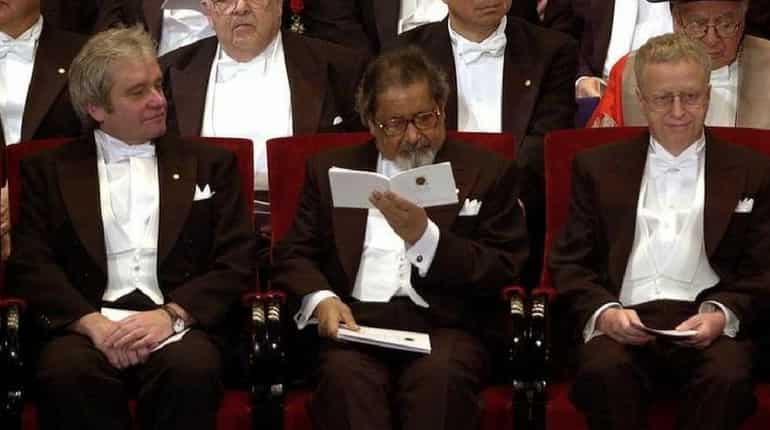
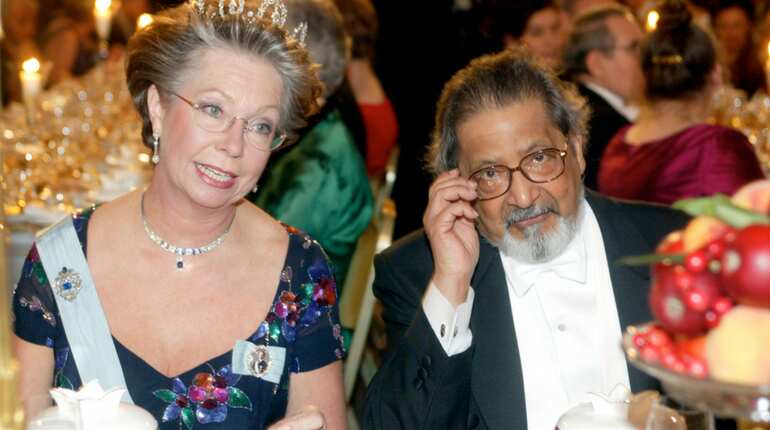
In awarding Naipaul the 2001 Nobel Prize for Literature, the Swedish Academy praised his work "for having united perceptive narrative and incorruptible scrutiny in works that compel us to see the presence of suppressed histories." The Committee added, "Naipaul is a modern philosopher carrying on the tradition that started originally with 'Lettres Persanes' (Persian Letters) and 'Candide'. In a vigilant style, which has been deservedly admired, he transforms rage into precision and allows events to speak with their own inherent irony.' The Committee also noted Naipaul's affinity with the novelist Joseph Conrad: 'Naipaul is Conrad's heir as the annalist of the destinies of empires in the moral sense: What they do to human beings. His authority as a narrator is grounded in the memory of what others have forgotten, the history of the vanquished.'
7 / 7
An Area of Darkness
Sir Naipaul won, among others, the Nobel Prize for Literature in 2001, the Man Booker for 'In a Free State' in 1971, and the Jerusalem Prize for Freedom of the Individual in Society in 1983. He wrote three books on India — India: An Area of Darkness; India: A Wounded Civilisation; and India: A Million Mutinies now. The first, his best of the three, was promptly banned. The people banning it had probably not read it. Sir VS had not called India 'an area of darkness'. He had tried to say that India, the land of his forefathers, remained 'an area of darkness' for him. A place he could not understand.
)
)
)
)
)