Three Chinese astronauts stuck in orbit after Sunita Williams, what went wrong with Shenzhou-20?

The crew of China’s Shenzhou-20 mission, docked at the Tiangong space station since April, were due to return to Earth this week. However, their homecoming has been postponed indefinitely after their return capsule was suspected to have been struck by tiny fragments of space debris.

A new space setback
Months after Indian-origin NASA astronaut Sunita Williams and Butch Wilmore faced an extended stay aboard the International Space Station, three Chinese astronauts have been forced to remain in orbit longer than planned. The crew of China’s Shenzhou-20 mission, docked at the Tiangong space station since April, were due to return to Earth this week. However, their homecoming has been postponed indefinitely after their return capsule was suspected to have been struck by tiny fragments of space debris.

Debris damage suspends return plans
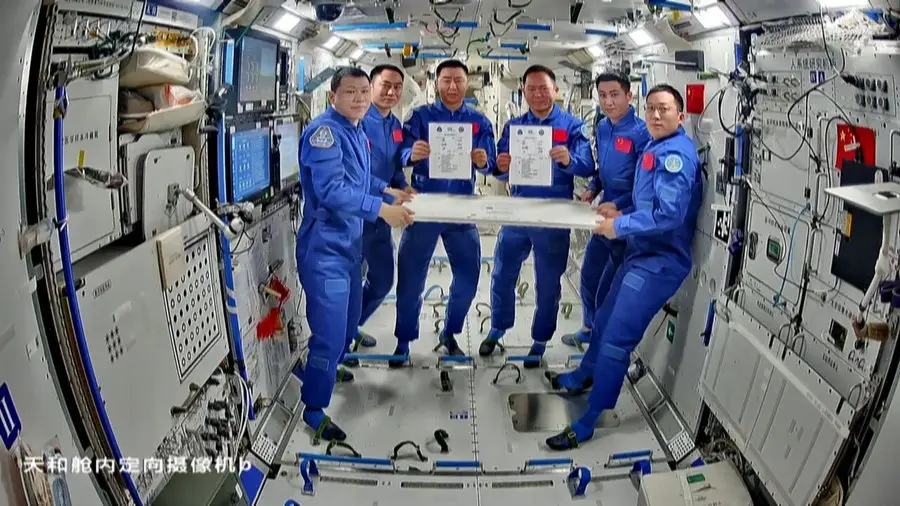
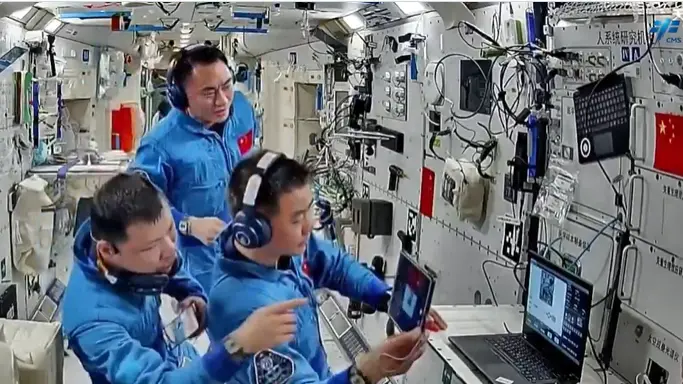
The China Manned Space Agency (CMSA) confirmed that an impact assessment and risk analysis are underway following the detection of possible damage to the Shenzhou-20 return capsule. The three-member crew, Commander Chen Dong, Chen Zhongrui and Wang Jie, were scheduled to land in Inner Mongolia on Wednesday. Instead, engineers are now examining the spacecraft for safety risks before approving re-entry. The CMSA has yet to announce a new return date, and state broadcaster CCTV said the mission has been 'temporarily extended'.
Uncertain timeline, safety under review
In a brief statement, the CMSA said only that “impact analysis and risk assessment are underway,” offering no details on the extent of the damage. The capsule, which has been docked with the Tiangong space station for nearly six months, is believed to have been hit by debris orbiting Earth, fragments of old satellites and rocket parts that have become a growing hazard to spacecraft. Officials have not confirmed what struck the vessel or whether repairs can be conducted in orbit.
Plan B on standby
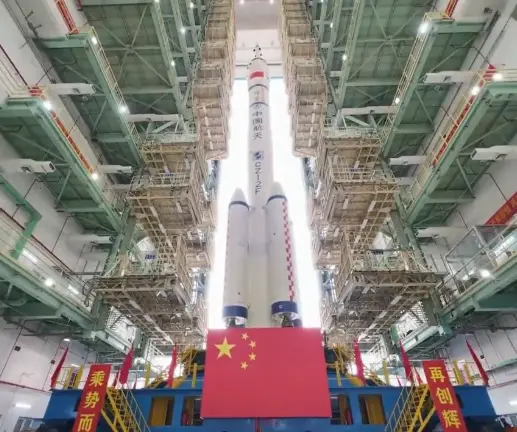
If the damage is deemed too severe for a safe return, Chinese engineers may activate a contingency plan. Chinese science communicator Yu Jun known online as 'Steed’s Scarf,' said on social media that a standby crewed spacecraft and a Long March 2F rocket, Shenzhou-22, are on 'emergency duty' and ready to launch if needed. This backup mechanism would allow a replacement capsule to be sent to bring the Shenzhou-20 astronauts safely home.
Inside the Shenzhou-20 mission
The Shenzhou-20 mission, launched on April 25, 2024 from the Jiuquan Satellite Launch Centre in Inner Mongolia, marked China’s sixth three-member mission to the Tiangong space station. Commander Chen Dong, a veteran astronaut on his third spaceflight, was joined by rookies Chen Zhongrui and Wang Jie. The crew arrived at Tiangong the following day, carrying out experiments, maintenance tasks and several live science sessions during their half-year stay.
Hand-over and extended stay
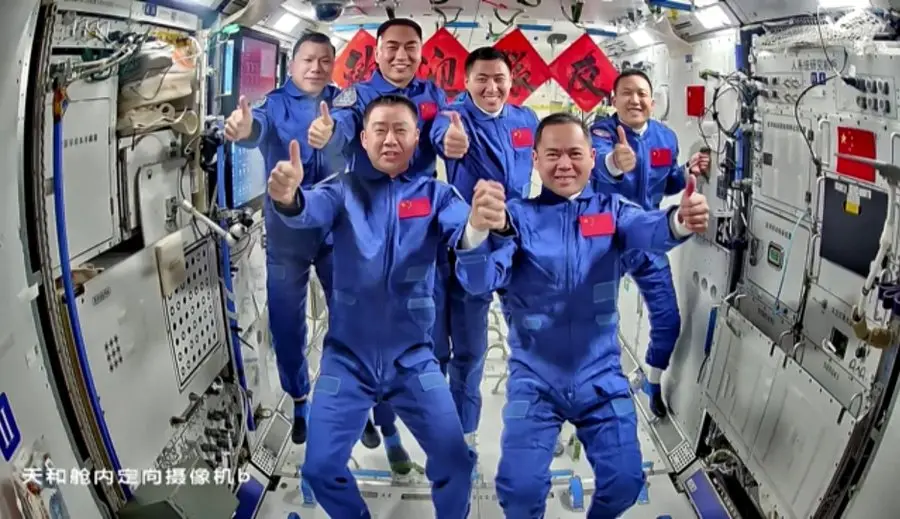
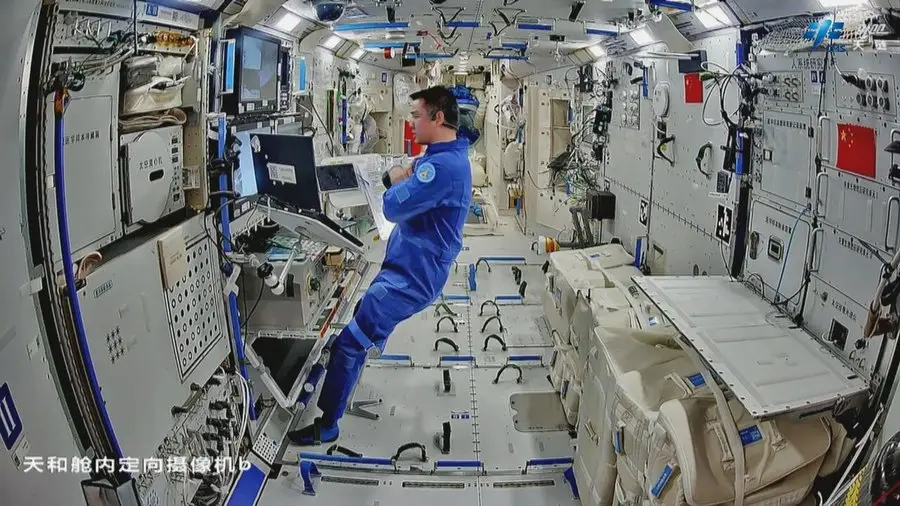
Before their planned return, the trio completed a hand-over to the incoming Shenzhou-21 crew last week, temporarily increasing the station’s population to six astronauts. Only days before the incident, both crews shared a light-hearted moment on social media, appearing in a video enjoying the first 'space barbecue' using a new onboard oven. The unexpected delay means the Shenzhou-20 astronauts will remain aboard Tiangong until their capsule’s safety is verified or a replacement mission is launched.
A growing challenge in orbit
Space debris has long been recognised as one of the greatest risks to orbital missions. Even millimetre-sized fragments travel at speeds exceeding 25,000 km/h, capable of puncturing spacecraft surfaces or damaging heat shields. The Shenzhou-20 incident follows a similar scare that delayed Sunita Williams’ return earlier this year, highlighting the increasing dangers posed by space junk in low Earth orbit.
)
)
)
)
)