Terror threat, Article 370, Ram Mandir and more: 25 crises of PM Modi's 25 years in office | Seva Sankalp Abhiyaan

The government booklet, ‘25 Years, 25 Crises’, recounts Modi's handling of events from the 2001 Gujarat quake to the 2026 Hormuz closure, citing GST, Article 370, Naxalism and vaccines. These are the government's own claims.
01. A State in Crisis
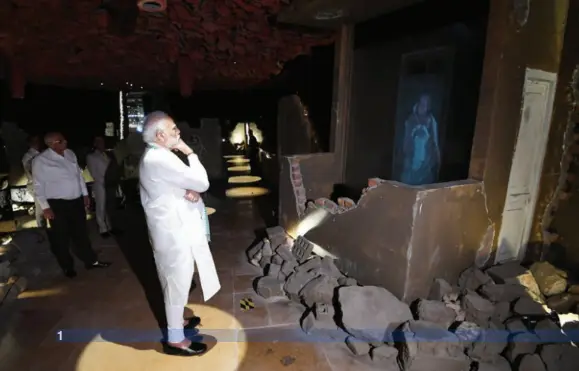
The booklet released by the central government, 'Seva Sankalp Abhiyan', describes Gujarat in October 2001 as reeling from a mega earthquake that flattened towns across Kutch, a cyclone at Kandla three years earlier, a third year of drought and failing cooperative banks. Modi, sworn in as Chief Minister without prior elected office or administrative experience, is said to have "compressed the clock" by posting senior officers to Kutch and supervising the banks. It credits on-site decisions for Kutch's rebuilding, India's first state disaster management law in 2003, and 9.6 per cent annual agricultural growth against 2.9 per cent nationally.
02. Recurring Communal Conflict
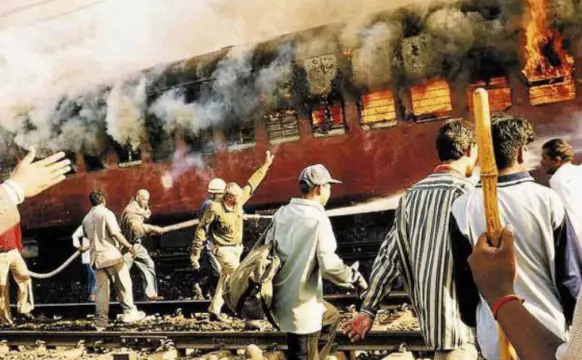
The chapter says Gujarat had long lived with caste and communal violence, with routine curfews in Ahmedabad, Vadodara and Surat, and that three decades of governments failed to break the pattern. It cites the violence after Godhra in February 2002, which cost more than a thousand lives. The booklet claims Modi ended the cycle by mobilising the administration and making order non-negotiable, then shifting focus to investment, infrastructure and jobs. It says Gujarat has seen no violence on that scale in twenty-four years, followed by two decades of growth.
3. An Early Electoral Test
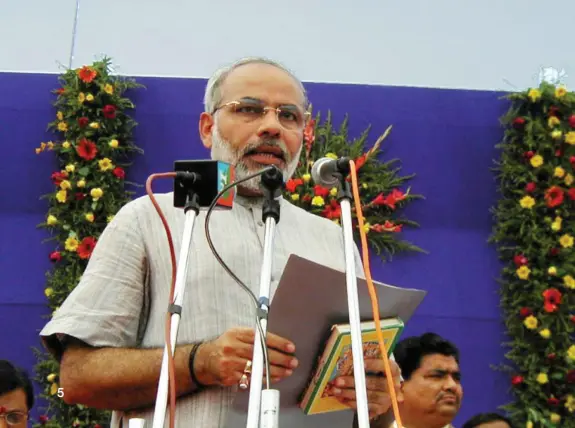
By mid-2002, the opposition and much of the national press wanted Narendra Modi gone. Instead of serving his remaining eight months, he resigned in July and asked for the assembly to be dissolved, seeking judgment on his fourteen months in office. In December, the BJP won 127 of 182 seats with 49.85% of the vote, while Congress won 51. The chapter calls it a personal mandate.
4. The Terror Threat
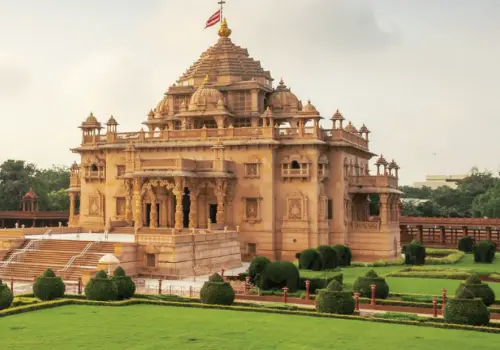
For a decade, Gujarat lived under siege, its coastline, industry and proximity to Pakistan making it a prime target. The attacks aimed to push the state back into communal conflict. It cites twenty-one bombs across Ahmedabad on 26 July 2008. The investigation exposed a network behind bombings in several states. Neither attack turned communal; policing was tightened, and the chapter concludes Gujarat's direction never changed.
5. From Water Scarcity to Water Security
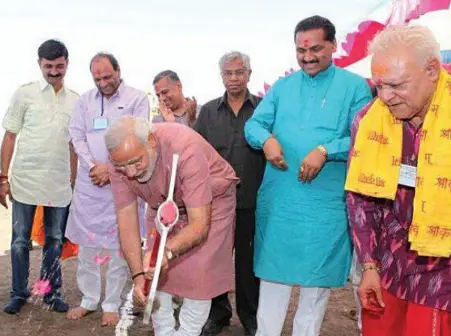
Saurashtra and Kutch went dry most years, women walked kilometres for a single pot, and the Narmada dam stood stalled for forty years after its 1961 foundation stone. The booklet released by the central government, ‘Seva Sankalp Abhiyan ’, credits Modi with over 1.8 lakh check dams and the Sujalam Sufalam and SAUNI pipelines. At full height since 2017, the dam supplies water to over 9,000 villages and 170 towns, and Kutch now exports Kesar mangoes.
06. The Floods and Their Aftermath
In August 2006, the Tapi flooded up to 95 per cent of Surat, halting its diamond and textile industries. The chapter says Surat rebuilt its drainage, warning systems and civic administration, sharing the title of India's cleanest city by 2023 while remaining the diamond hub. Eight years later, floods hit 2,600 villages in Jammu and Kashmir, killing 277. PM Modi reached Srinagar within days and spent Diwali there.
07. A Decade Through Political Witch Hunt
Since 2002, the booklet says, Modi has governed under an unprecedented campaign of accusations. It calls the cases fabricated and says they were tried in public before reaching any court. Gujarat's growth and investment figures were also attacked, putting the whole state on trial. It says he did not retaliate or complain but went back to voters with his record. Gujarat re-elected him in 2007 and 2012.
08. The Patna Blasts
Six weeks into his role as BJP's prime ministerial candidate, Modi addressed a rally at Patna's Gandhi Maidan on 27 October 2013. Seven bombs went off around the ground, killing six and injuring 85. The booklet says the Indian Mujahideen had threatened to target him. It describes him continuing to speak, finishing the rally and asking the crowd to stay seated and calm. The chapter says the attack failed in its purpose.
09. First Majority Government in 30 Years
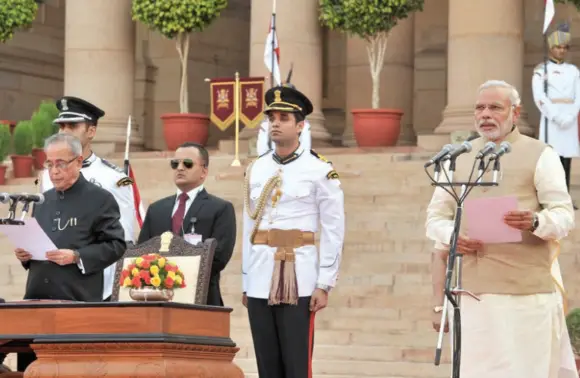
By 2014, the booklet says, India had been governed by coalitions for thirty years. No party had won a majority alone since 1984, and the BJP's best was 182. Modi, a state Chief Minister written off by the establishment, campaigned directly: four hundred rallies and three lakh kilometres in nine months. The BJP won 282 seats, which the chapter presents as ending the era of unstable coalitions.
10. 'The Fragile Five' Tag
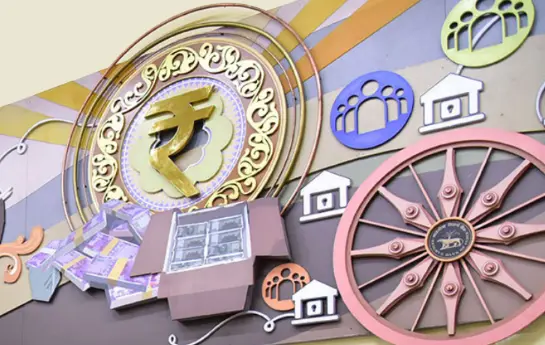
In 2013, India was labelled one of the "Fragile Five" economies, with near double-digit inflation, a record current account deficit and a record-low rupee. The booklet credits structural fixes: a formal RBI inflation target in 2016, the Insolvency and Bankruptcy Code and GST. It says India's fiscal position stayed stable through five external shocks, including the pandemic and the Hormuz closure, with 7.8% growth in the first quarter of FY2027.
11. Ease of Doing Business
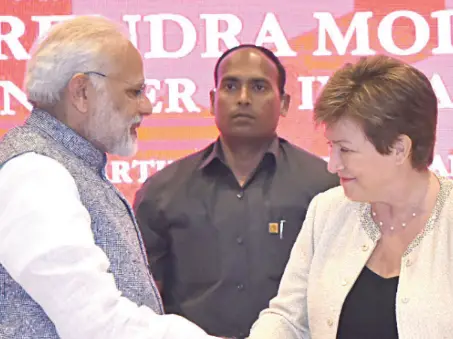
India ranked 142nd on ease of doing business in 2014, the booklet says, with slow company registration and repeated state taxes on trucks. It credits GST, Dedicated Freight Corridors, expressways, digital clearances, the Insolvency and Bankruptcy Code, Jan Vishwas decriminalisation and simpler company law. India climbed to 63rd by 2020, described as one of the largest improvements any big economy has recorded, and investment followed.
12. The Banking Sector Cleanup
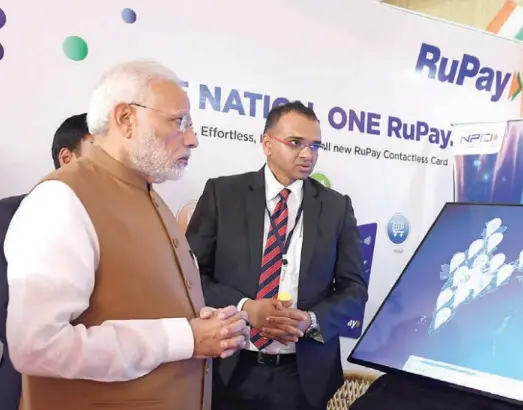
The chapter says India's credit markets were driven by "phone banking", where loans to favoured borrowers were pushed through, and bad loans were refinanced through evergreening. The Modi government ordered an Asset Quality Review, which revealed public sector bad loans near 15 per cent. The response was the 4R strategy of Recognition, Resolution, Recapitalisation and Reforms, backed by the Insolvency and Bankruptcy Code, leaving banks ready to support growth.
13. The End of Naxalism
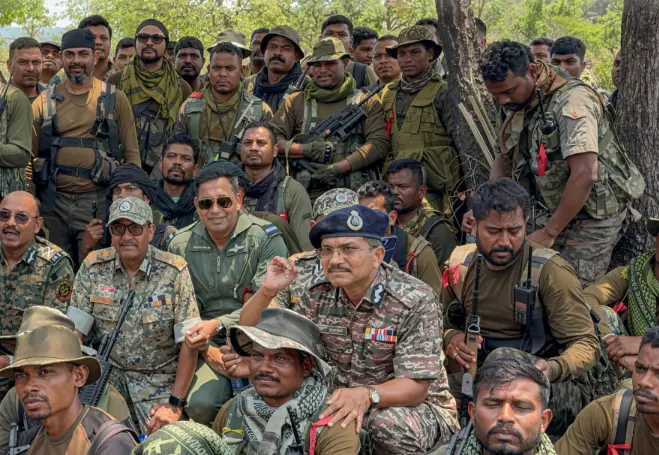
The booklet traces Naxalism from Naxalbari in 1967. It notes that Maoist insurgents held a central corridor for nearly five decades and killed 76 CRPF men at Dantewada in 2010. By 2014, 126 districts were affected. It credits Modi with pairing operations and intelligence with roads, schools, mobile towers and bank credit. Surrenders rose from 421 to 6,558 a year. On 30 March 2026, the Home Minister told Parliament no district remained Naxal-infested.
14. Defending India's Sovereignty
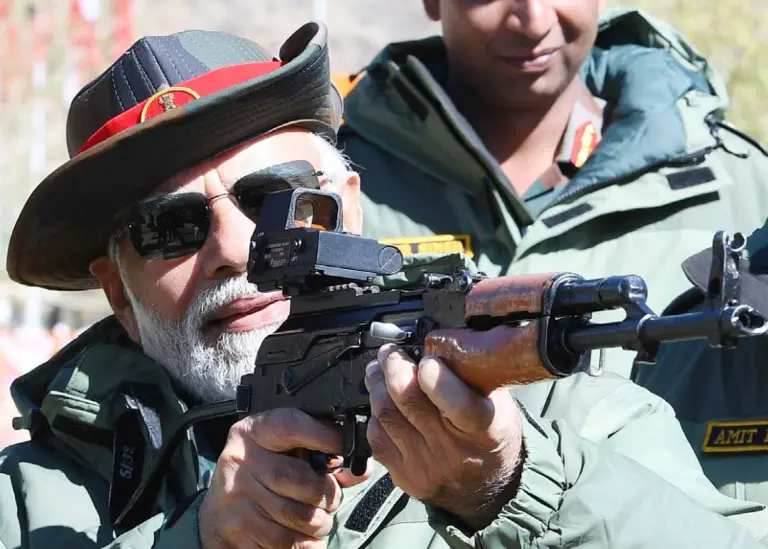
The booklet recounts the June 2017 Doklam standoff, when Chinese troops began extending a road near the India-China-Bhutan tri-junction. Indian troops halted the work, the armies faced each other for seventy-three days, and the road was never built. It also cites the June 2020 Galwan clash, the first deadly one in four decades, after which the military held its position until China pulled back. It credits resolve from the top.
15. GST: One Nation One Taxation
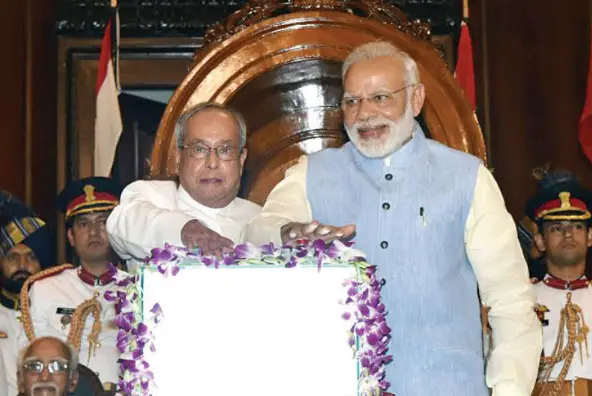
A single national tax had been discussed for seventeen years, with goods taxed repeatedly at state borders. The booklet says the obstacle was states' distrust of the centre over lost revenue. The Modi government cleared old CST dues and guaranteed each state annual revenue growth, winning over manufacturing states. GST took effect in July 2017, removing tax borders and simplifying compliance. The closing line reads: "One Nation, One Tax, One Motto: Development."
16. Bringing Development to the Northeast
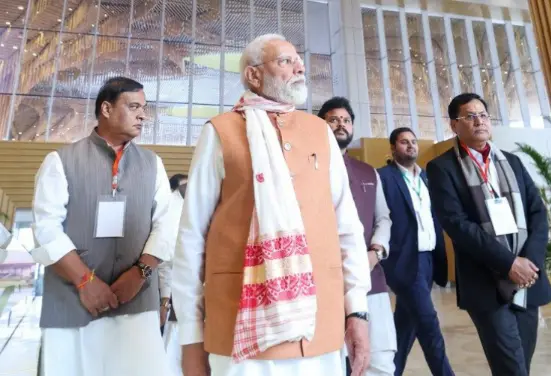
The booklet argues that distance was only an excuse for neglecting the Northeast. Six decades after independence, several state capitals had no railway line and the Kashmir Valley was not on the national network. It says this changed capital by capital, with broad gauge reaching Agartala and Naharlagun and Mizoram getting its first train in September 2025. The Udhampur-Srinagar-Baramulla line, 28 years in the making, opened in June 2025 over the world's highest railway bridge.
17. The Northeast Accords
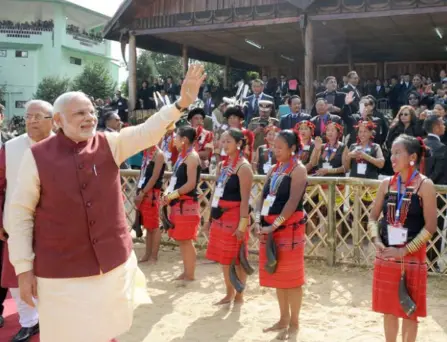
The chapter describes decades of conflict in Northeast India, beginning with the Naga movement in the 1950s, in which dozens of armed groups pressed claims over land, identity and autonomy, and tens of thousands died. Earlier accords collapsed. It says the government chose talks over force, signing twelve accords since 2019. Nearly eleven thousand cadres have surrendered weapons, incidents fell 71 per cent between 2014 and 2023, and AFSPA was withdrawn from Bodoland in April 2022.
18. A New Normal Against Terror
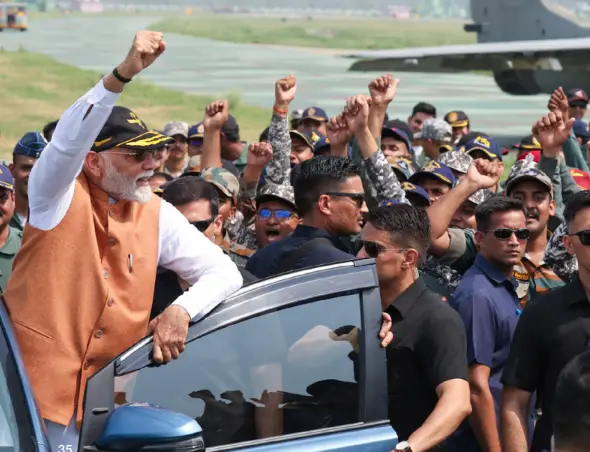
After the 26/11 Mumbai attacks, the booklet says India answered with dossiers and no consequences followed, so attacks continued at no cost. It describes a shift beginning with the September 2016 strikes across the Line of Control, announced publicly. It then cites the February 2019 Balakot air strike and Operation Sindoor in May 2025, which hit nine sites in one night. The stated doctrine is a military answer to terror, with no distinction between terrorists and their state sponsors.
19. Article 370 Revocation: One Nation One Constitution
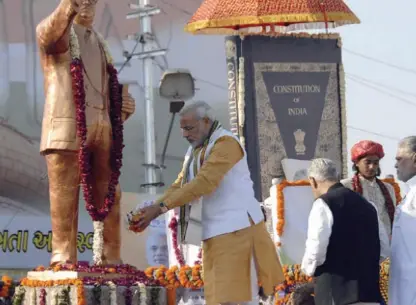
The chapter says Article 370 stood for seventy years and was treated as untouchable because governments feared the consequences of removing it. It notes the Valley's 51-day curfew in 2016 and expectations of chaos. The government, it says, moved a Presidential Order, a parliamentary resolution and a reorganisation law on the same day. The summer stayed quiet; the Supreme Court upheld the exercise in December 2023, and assembly elections followed in 2024, the first in a decade.
20. Ram Mandir: Reawakening Civilisational Awareness
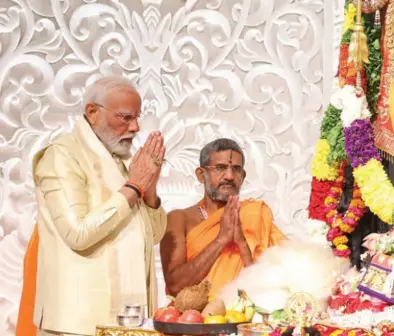
The booklet describes five centuries of waiting among Hindus to reclaim the site in Ayodhya believed to be Ram's birthplace, with the court case deadlocked for seventy years. It says the government prepared the ground by urging every party to accept the verdict and keep the peace. The Court ruled unanimously in November 2019, and no major violence followed. The Pran Pratishtha was held on 22 January 2024, and the temple was structurally complete in November 2025.
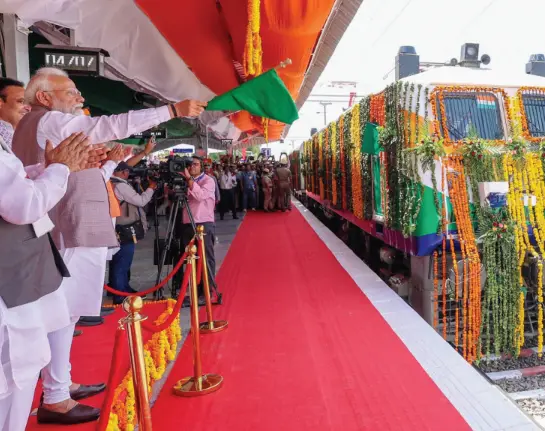
21. Tracks That Gave India Its Pace
Indian freight, the chapter says, crawled at 24 km/h because goods trains gave way to passenger services. A container took three days from Mumbai to Delhi, and logistics consumed nearly 14 per cent of the value of what India made. The Dedicated Freight Corridors were sanctioned in 2008 but no track was laid by 2014. The booklet says construction began after Modi took office, with over Rs 45,000 crore spent versus Rs 4,000 crore earlier, giving goods-only lines with 1.5 km-long trains.
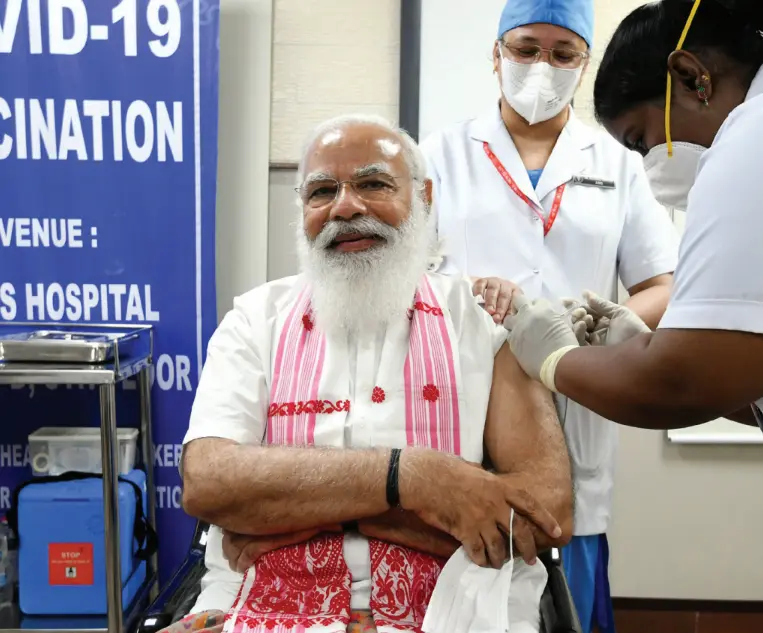
22. Two Billion Doses
The chapter says the world expected India, with 1.4 billion people, to be the pandemic's great failure and wait years for a vaccine. India instead produced its own: Covaxin, developed by Bharat Biotech with ICMR, and Covishield, manufactured in Pune. Vaccination began in January 2021 and passed two billion doses. CoWIN handled registrations and certificates, and India supplied vaccines to nearly a hundred countries while its own drive continued.
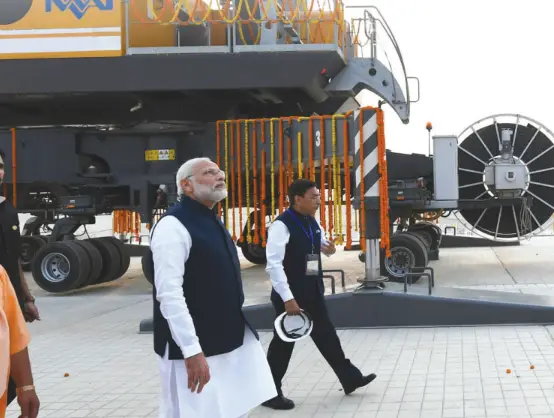
23. Harnessing the Strength of Our Rivers
The booklet notes that India's water is unevenly distributed, with one basin flooding while another fails. River linking was proposed in the 1980s but stalled for forty years. Ken-Betwa, begun in December 2024, would move water from Madhya Pradesh to Uttar Pradesh and irrigate eleven lakh hectares in Bundelkhand. National waterway cargo grew from 18 million tonnes in 2013-14 to 145 million in 2024-25. In April 2025, after Pahalgam, India put the Indus Waters Treaty in abeyance.
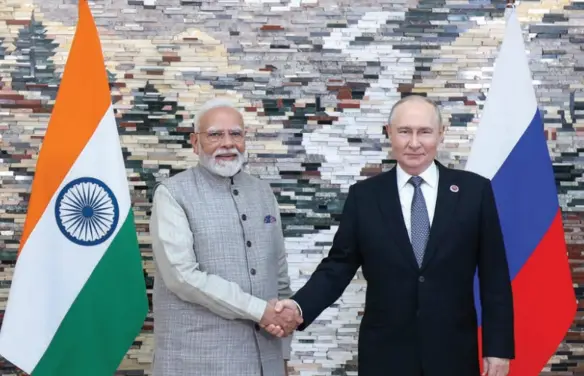
24. The Conflict Between Russia and Ukraine
The booklet says the Ukraine war of February 2022 hit India first through imports, since it buys 88 per cent of its oil abroad and most of its fertiliser. Operation Ganga flew 22,500 Indians out in three weeks on 90 flights, with four Union Ministers posted at border crossings. India also raised Russian crude from 2 per cent of imports to a third in two years despite Western pressure, and says inflation never reached double digits.
25. The War in West Asia
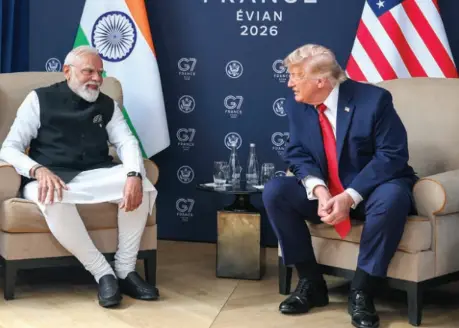
The chapter describes the US and Israeli strike on Iran on 28 February 2026 and Iran's closure of the Strait of Hormuz two days later, cutting traffic from 130 ships a day to under ten. Half of India's crude came through the strait, and the oil basket rose from $69 to $157 a barrel. It says Modi called Tehran, then Washington; duties were cut, gas was rationed, and Indian tankers moved anyway. The economy grew 7.8 per cent in the quarter the strait stayed shut.
)
)
)
)
)