Star Earendel: The most distant star ever seen, or just a cosmic illusion?

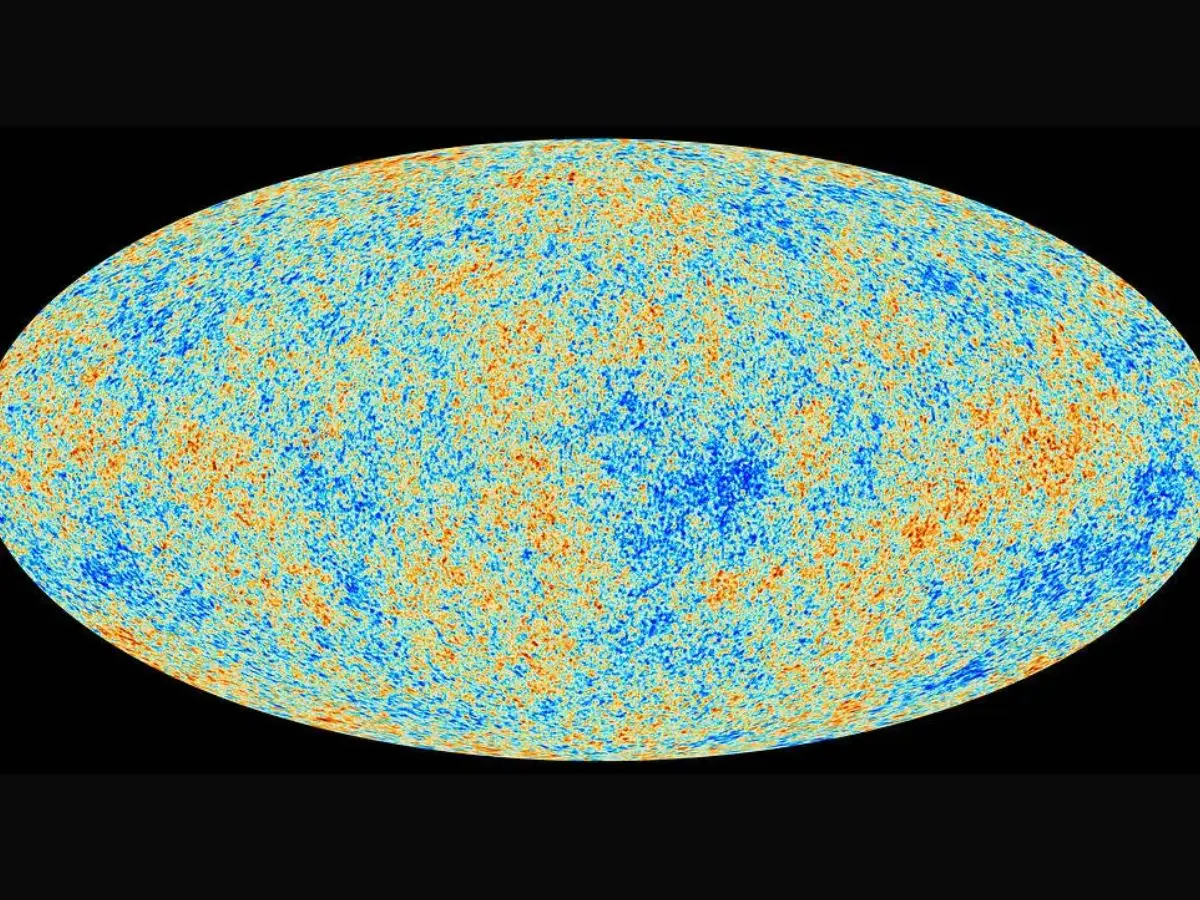
This observation marked a significant milestone, as it provided a rare glimpse into the universe's infancy, capturing light emitted just 900 million years after the Big Bang.
A Glimpse into the Universe’s Youth
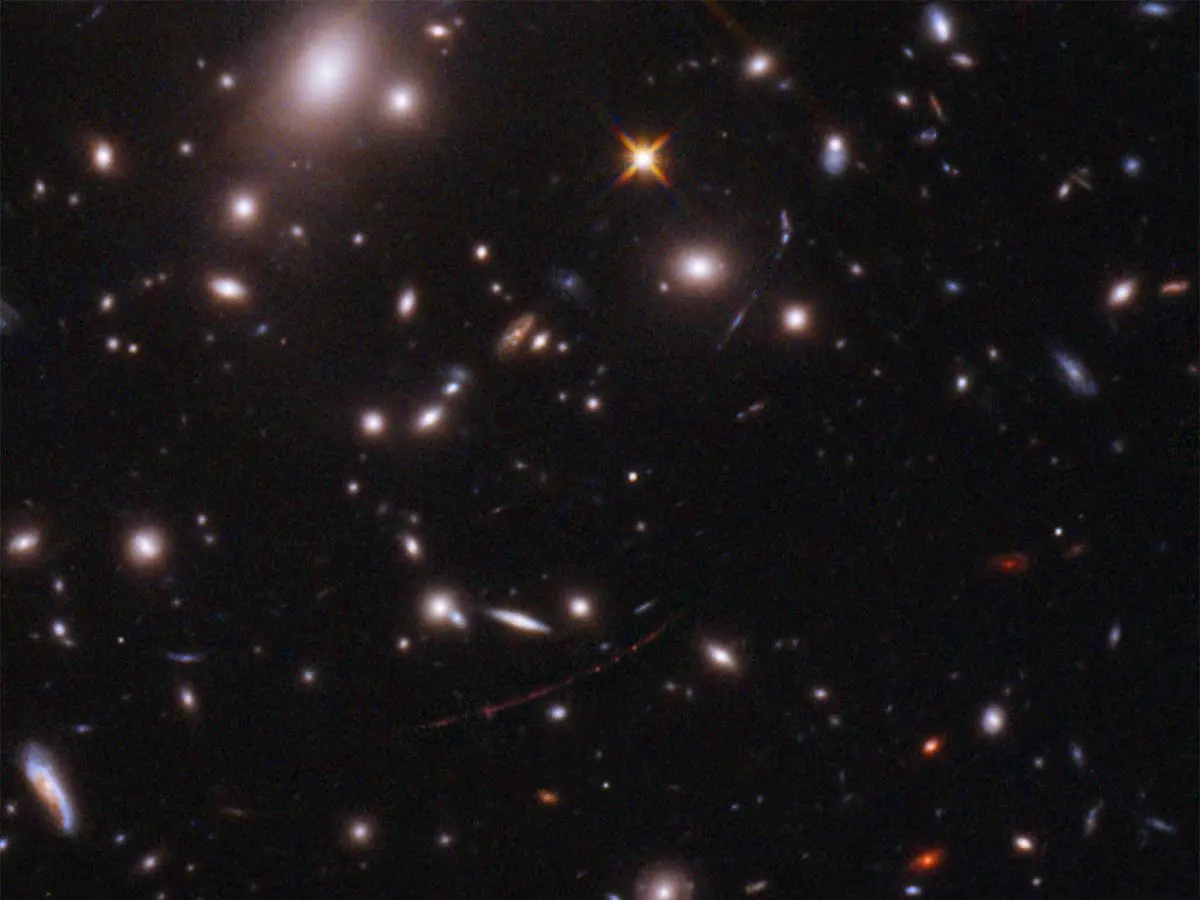
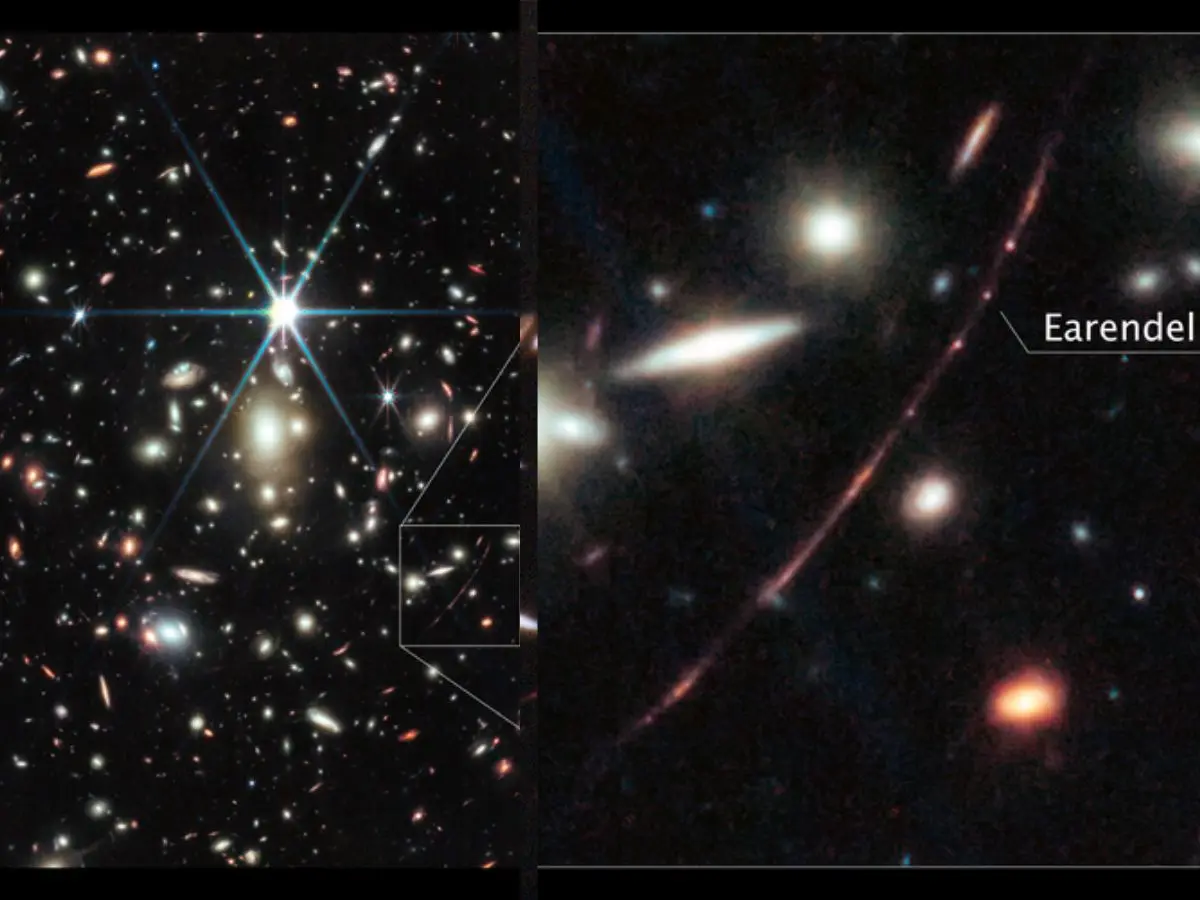
In March 2022, astronomers using NASA’s Hubble Space Telescope reported the discovery of a star named Earendel, situated approximately 12.9 billion light-years away. This observation marked a significant milestone, as it provided a rare glimpse into the universe's infancy, capturing light emitted just 900 million years after the Big Bang. Earendel's discovery was facilitated by gravitational lensing, a phenomenon where a massive galaxy cluster magnifies the light from a distant object, allowing astronomers to observe celestial bodies that would otherwise be too faint or distant to detect.
The Role of Gravitational Lensing
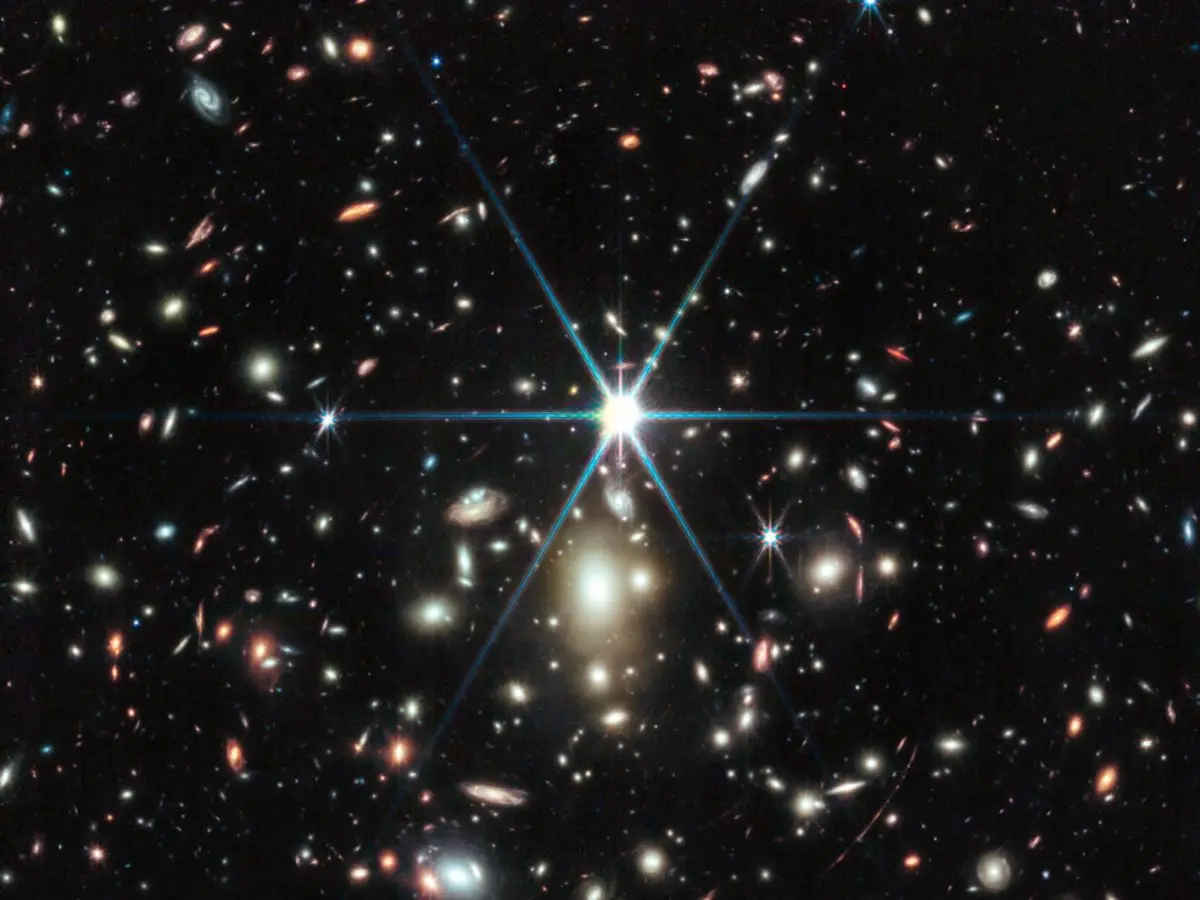
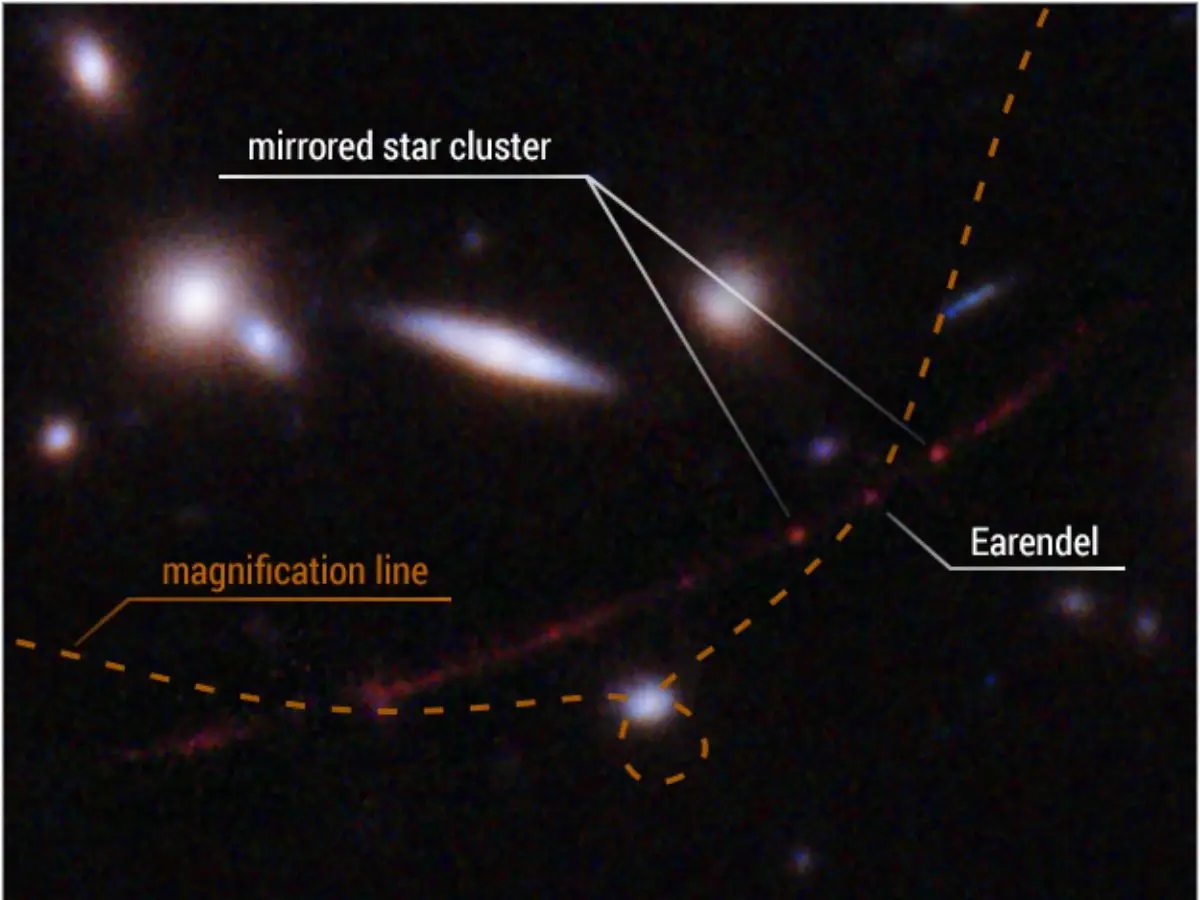
Earendel's visibility was made possible by the gravitational lensing effect caused by the galaxy cluster WHL0137-08. This cluster acted as a cosmic magnifying glass, bending and amplifying the light from Earendel, enabling its detection. The alignment of the galaxy cluster between Earth and Earendel was a rare cosmic occurrence, providing a unique opportunity for astronomers to study a star from such an early epoch in the universe's history.
The Nature of Earendel
Initially, Earendel was identified as a single star. However, subsequent observations, particularly those made by the James Webb Space Telescope (JWST), have raised questions about its true nature. The JWST's high-resolution imaging and spectroscopic data suggest that Earendel might not be a solitary star but rather a compact star cluster. The spectral characteristics observed align more closely with those of globular clusters, which are dense collections of stars, rather than a single stellar object. This revelation has prompted further investigations to determine whether Earendel is indeed a single star or a cluster of stars.
The Significance of the Discovery
Whether Earendel is a single star or a star cluster, its discovery holds profound implications for our understanding of the early universe. Observing such distant objects allows astronomers to study the conditions and processes that prevailed in the universe's formative years. The light from Earendel provides insights into the chemical composition and physical conditions of the early cosmos, shedding light on the formation of the first stars and galaxies.
Implications for Cosmology
The study of Earendel and similar distant objects contributes to the broader field of cosmology, particularly in understanding the evolution of the universe. By analyzing the light from these early stars, astronomers can infer the rates of star formation, the distribution of elements, and the development of cosmic structures in the universe's early stages. Such information is crucial for constructing accurate models of cosmic evolution and understanding the fundamental processes that have shaped the universe.
Future Observations
The ambiguity surrounding Earendel's true nature underscores the necessity for continued observations and advancements in astronomical technology. Future missions and telescopes, such as the next-generation space observatories, will be instrumental in resolving these uncertainties. Enhanced imaging capabilities will allow for more detailed studies of distant celestial objects, providing clearer insights into the early universe's characteristics and the objects that inhabited it.

Conclusion
Earendel's discovery, whether it turns out to be a single star or a star cluster, exemplifies the remarkable capabilities of modern astronomy and the importance of cosmic phenomena like gravitational lensing.
)
)
)
)
)