Milky Way’s monster black hole spins at near light speed and it’s pointed straight at Earth

This unusual orientation offers an unprecedented opportunity to study the behaviour of matter and magnetic fields around one of the most enigmatic objects in the universe.
A surprising alignment at the heart of the galaxy
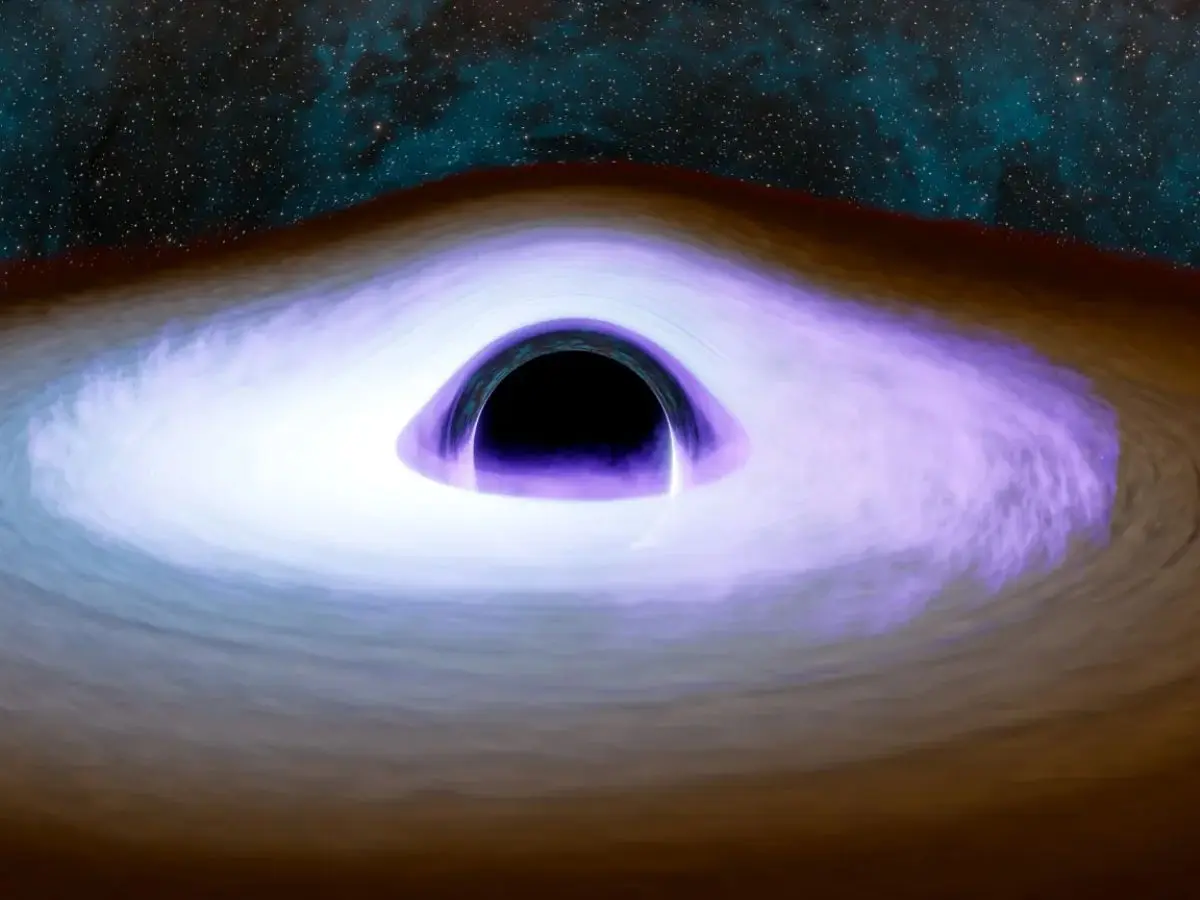
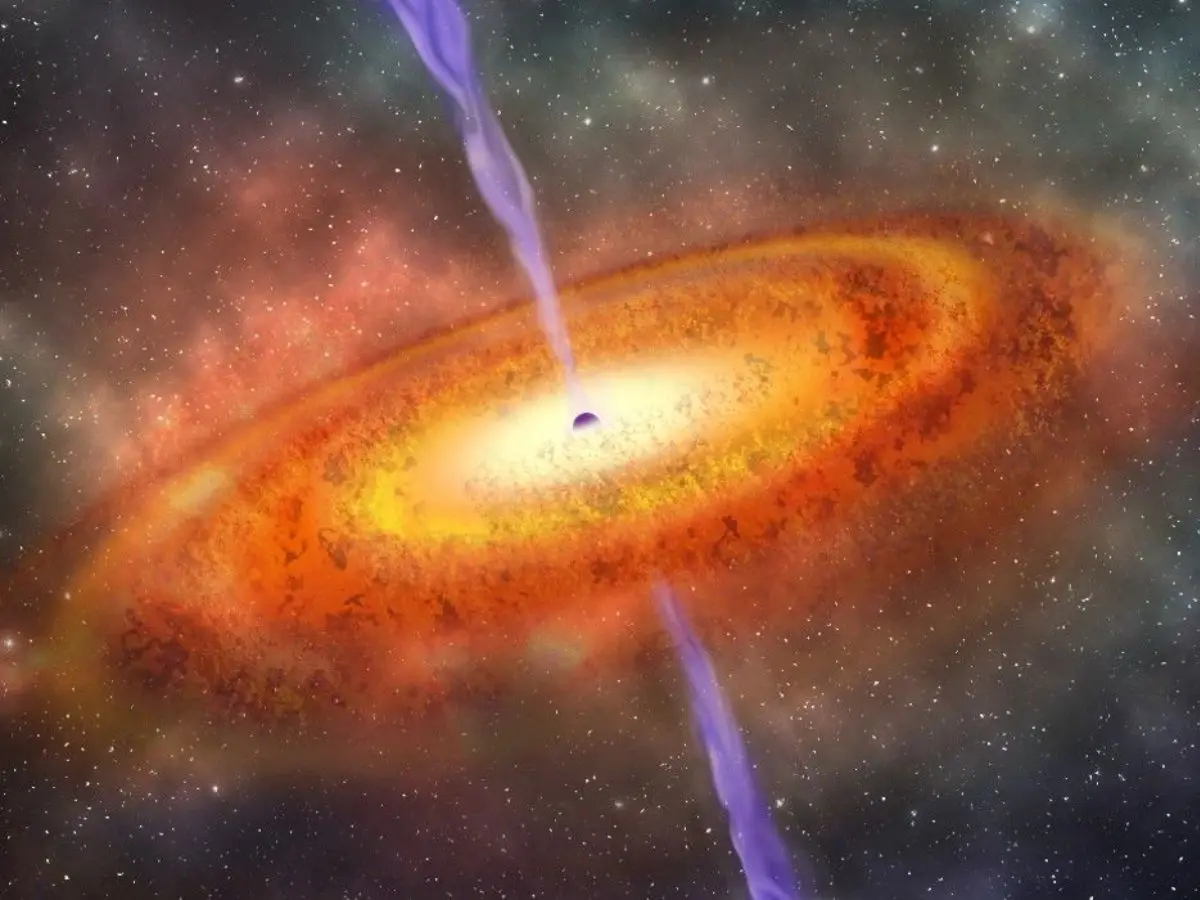
Astronomers have revealed that the supermassive black hole at the centre of the Milky Way, Sagittarius A*, is spinning at nearly its maximum possible speed and, remarkably, its axis is aligned almost directly toward Earth. The findings, published in Astronomy & Astrophysics, come from a new analysis of Event Horizon Telescope (EHT) data, enhanced by advanced machine learning techniques. This unusual orientation offers an unprecedented opportunity to study the behaviour of matter and magnetic fields around one of the most enigmatic objects in the universe.
Machine learning unlocks hidden signals
The breakthrough was achieved using a Bayesian neural network, designed to capture subtle patterns within the raw data of very long baseline interferometry (VLBI). Unlike traditional methods that rely on heavily averaged images, the algorithm processed the full polarisation visibilities across time and frequency. This preserved information that is often lost in conventional approaches, allowing researchers to extract stable patterns even amid noise. The work required the creation of around a million synthetic datasets, carefully calibrated to simulate the EHT’s conditions. The pipeline, known as Zingularity, scaled across advanced computing systems to train the network while remaining realistic about instrumental and atmospheric errors.
How fast does Sagittarius A* spin?
The analysis suggests Sagittarius A* rotates at a rate close to the theoretical maximum, with spin values estimated between 0.8 and 0.9. This spin is not just a number: it represents a vast reservoir of rotational energy that can shape the flow of plasma and influence the environment around the black hole. Just as striking is the orientation of its spin axis, which is pointed almost directly along our line of sight from Earth. This geometry produces distinctive polarised light profiles, giving astronomers a clear window into the dynamics of the surrounding accretion disk and its superheated plasma.
Implications for black hole physics
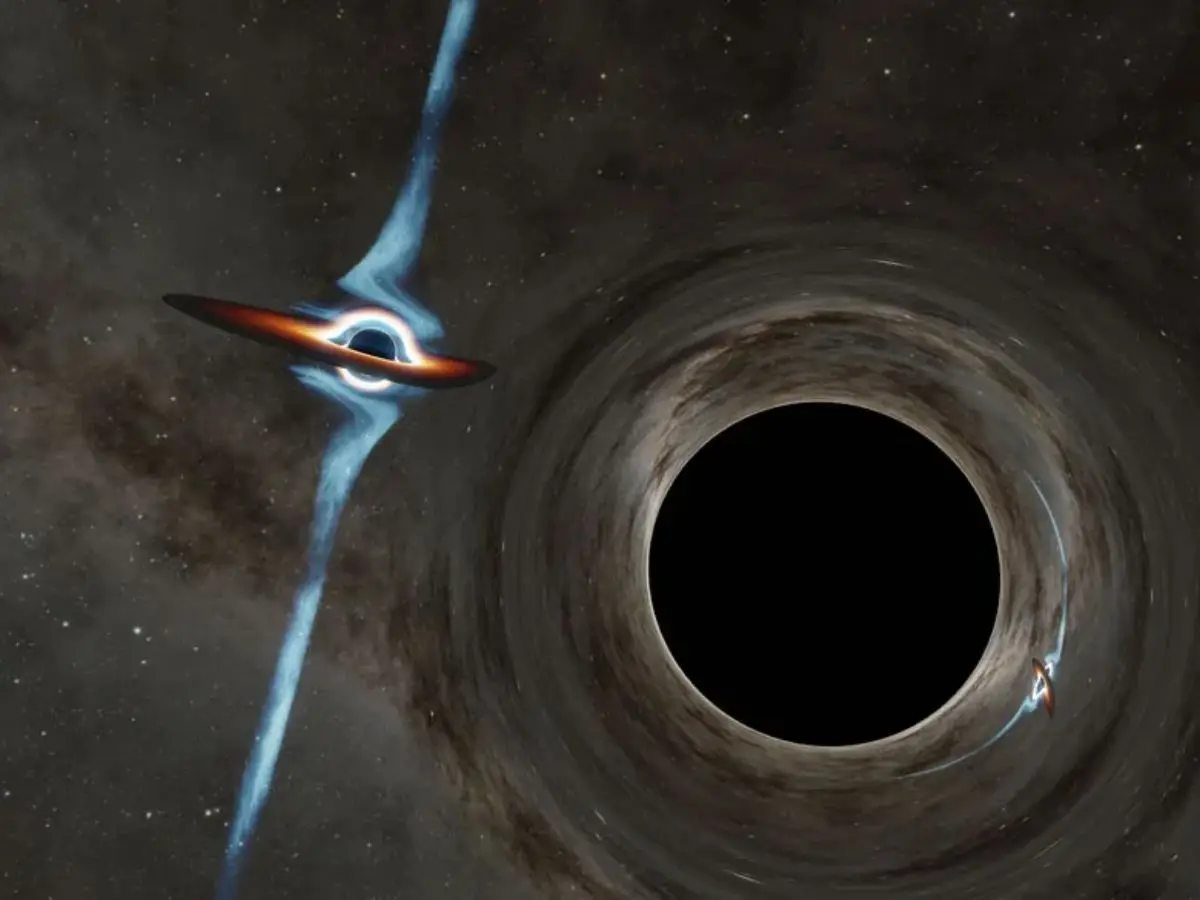
The alignment indicates that the light we observe is dominated by extremely hot electrons within the accretion disk, rather than by a powerful jet, as is often the case in other galaxies. This discovery not only clarifies the dominant emission mechanisms around Sagittarius A* but also provides a rare opportunity to test theories of black hole physics under favourable conditions. The study’s findings also contrast with earlier work on M87*, the first black hole ever imaged, which appears to have a retrograde spin opposite to the flow of its infalling gas, possibly the result of a past galactic merger.
The role of global collaboration
The project brought together researchers from Radboud University in the Netherlands, the University of Southern California’s Information Sciences Institute, and collaborators across Europe and the United States. According to the team, the sheer scale of data processing, millions of synthetic observations tested against real-world calibration, was a technical feat in itself. As Chi-Kwan Chan of the University of Arizona observed, the ability to scale such models across realistic data was an “impressive achievement,” underscoring the growing role of artificial intelligence in astrophysical research.
What comes next for Sagittarius A*
Future observations promise to refine these results further. The planned Africa Millimetre Telescope in Namibia will extend the EHT’s reach into the Southern Hemisphere, improving resolution and reducing uncertainties. With more stations, greater bandwidth, and higher frequencies, astronomers hope to confirm whether Sagittarius A* truly is a high-spin, face-on system and to map how magnetic fields channel energy into its environment.
)
)
)
)
)