Latest NASA findings: 5 discoveries made by Webb, Hubble and Chandra Space Telescopes

NASA's James Webb and Hubble space telescopes have made some startling discoveries. The Chandra X-ray telescope captured a famous supernova remnant over several years. Here are some new findings made by these astonishing pieces of technology.
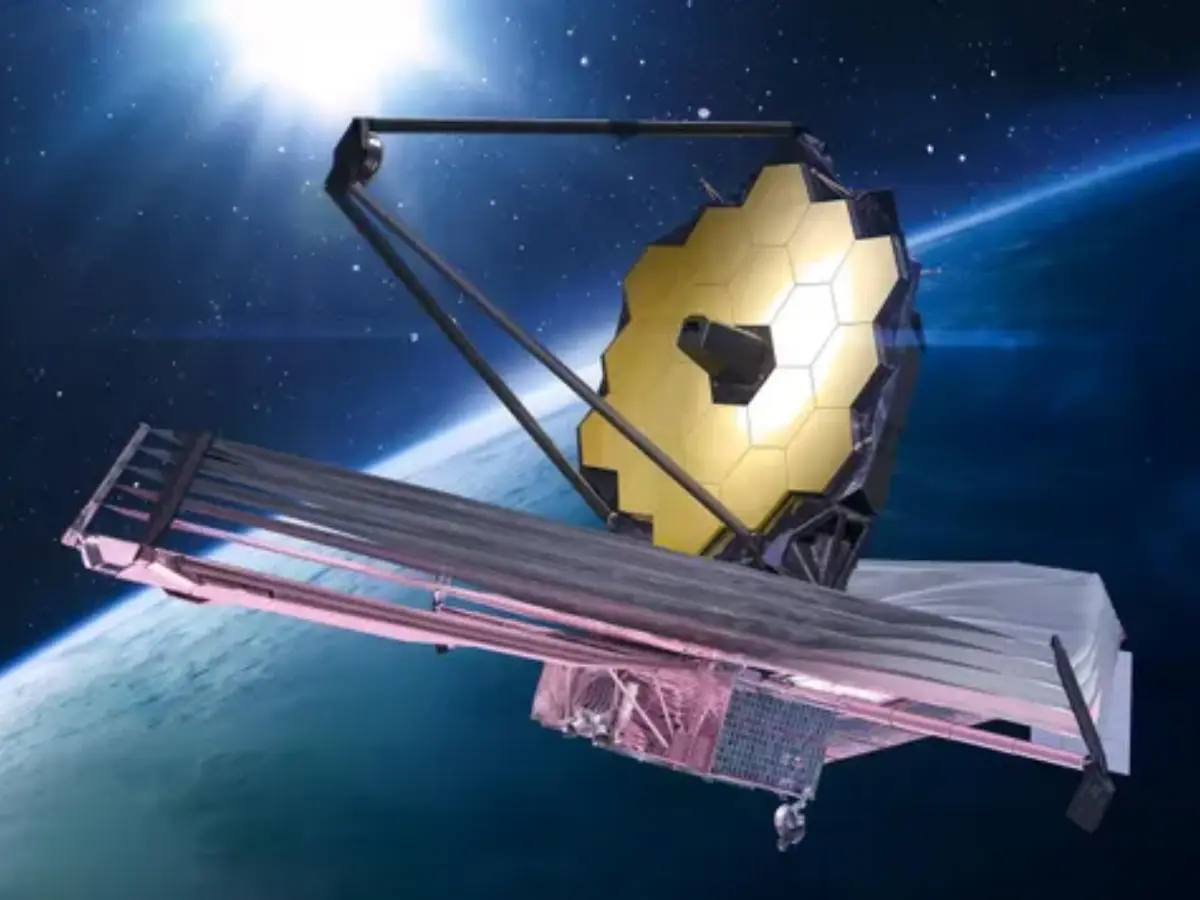
NASA telescopes makes some unbelievable discoveries
NASA has made some brilliant discoveries recently in the universe. The year 2026 has kicked off with several new objects, some strange and mysterious, and others as expected. The James Webb and Hubble Telescopes detected certain objects that can't be explained and do not fit any existing categories. The Chandra observatory observed a supernova remnant for decades.
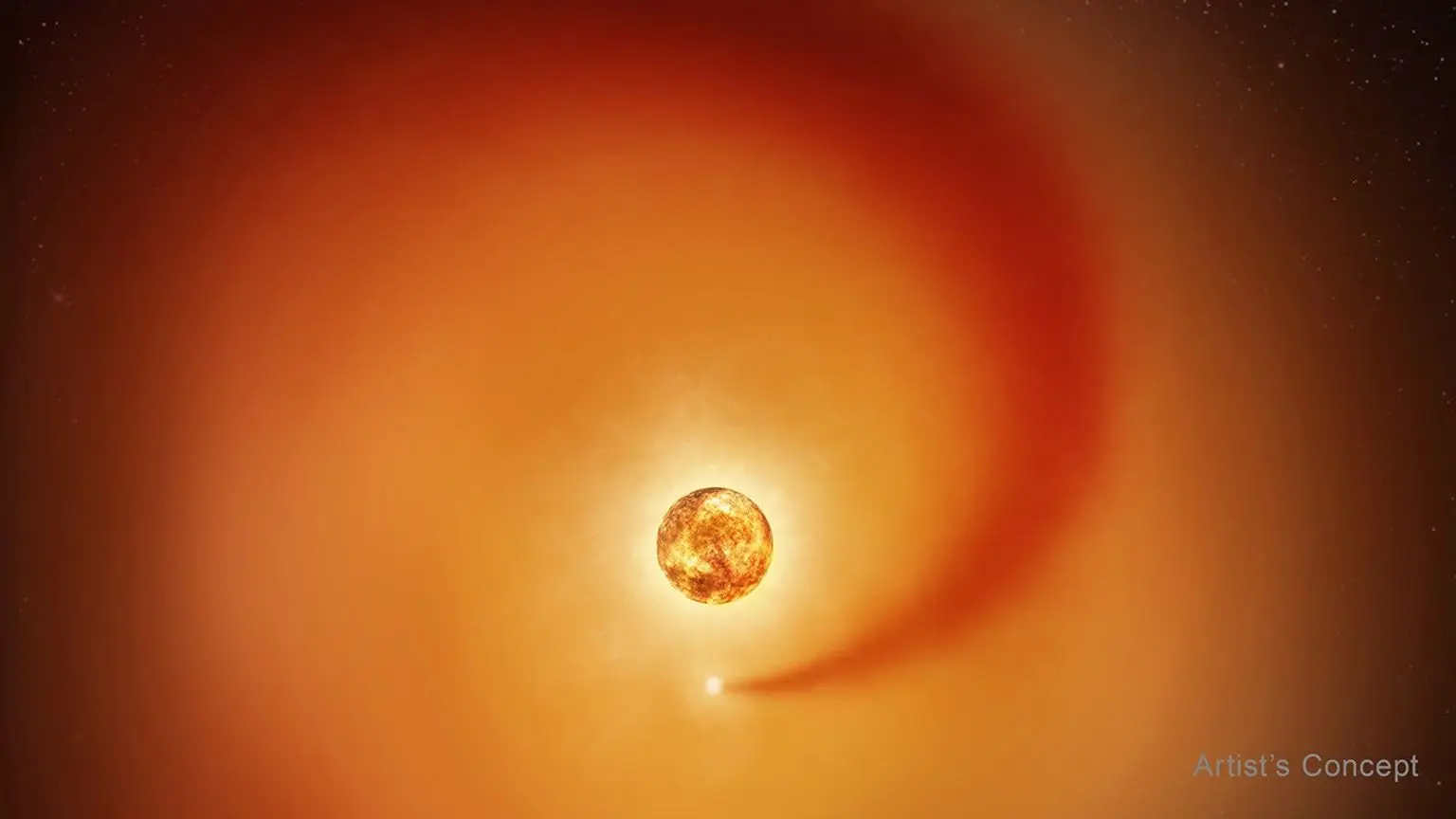
Hubble spots a companion star near Betelgeuse
NASA’s Hubble Space Telescope and ground-based observatories spotted a recently discovered companion star, Siwarha, moving through the gas around Betelgeuse. It is a red supergiant star and can fit more than 400 million Suns. The team tracked changes in the star’s light over nearly eight years and saw a pattern of changes in Betelgeuse. They observed changes in the star’s spectrum and the speed and direction of gases in the outer atmosphere due to a trail of denser material. This provided clear evidence that a companion star was around it and had an impact on the red supergiant’s outer atmosphere. The existence of this companion star has been suspected for a long time, and Hubble has now finally confirmed it.
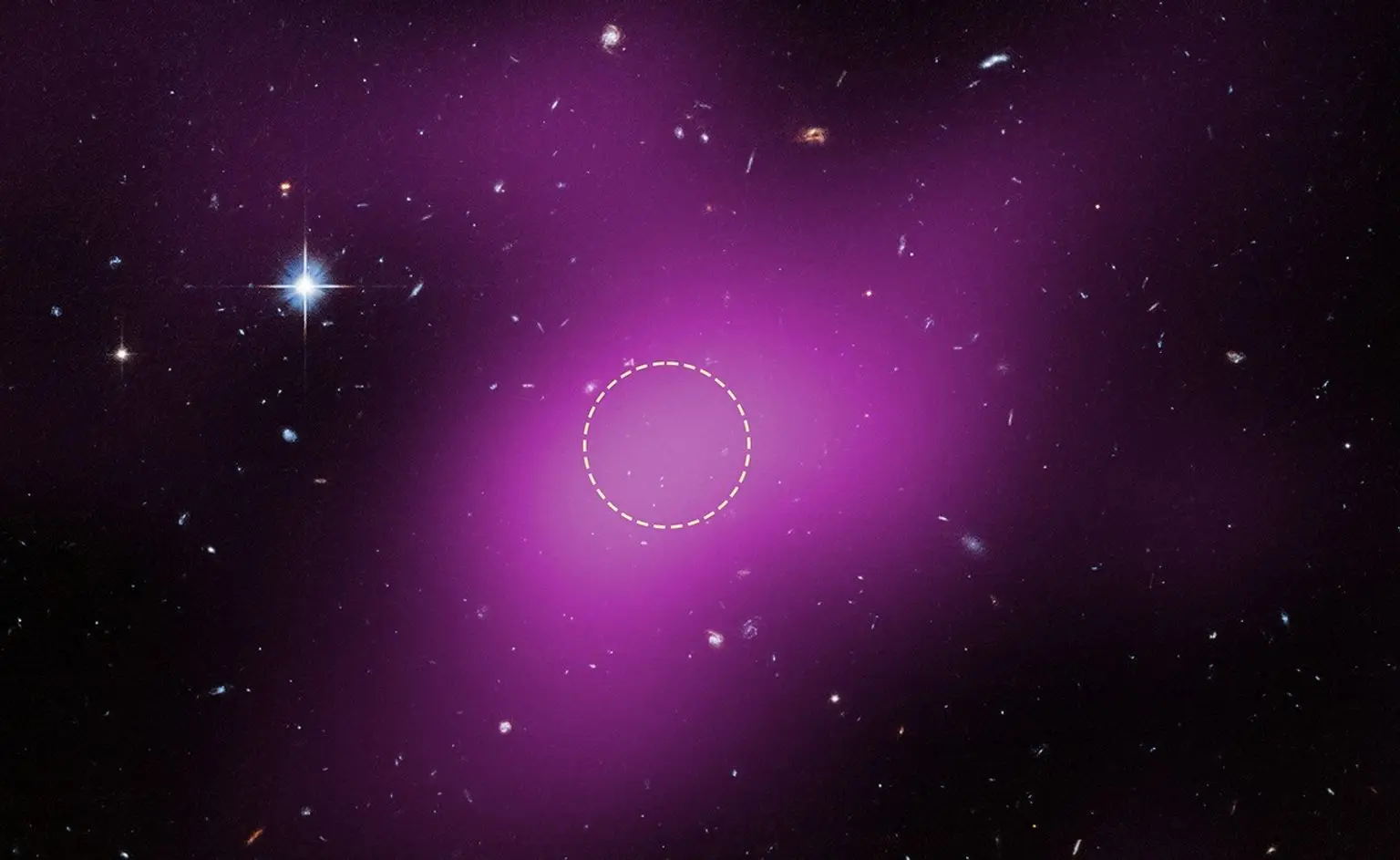
Cloud-9, a failed galaxy from ancient universe
Hubble also revealed a new type of astronomical object, a dark-matter cloud rich in gas with no stars. Termed Cloud-9, it is considered a "relic" or remnant of early galaxy formation. This is the first time such an object has been detected in the universe. This finding throws light on galaxy formation, the early universe, and the nature of dark matter. “This is a tale of a failed galaxy,” the program’s principal investigator, Alejandro Benitez-Llambay said. He added that this means they have found in the local universe "a primordial building block of a galaxy that hasn't formed." The results were published in The Astrophysical Journal Letters.
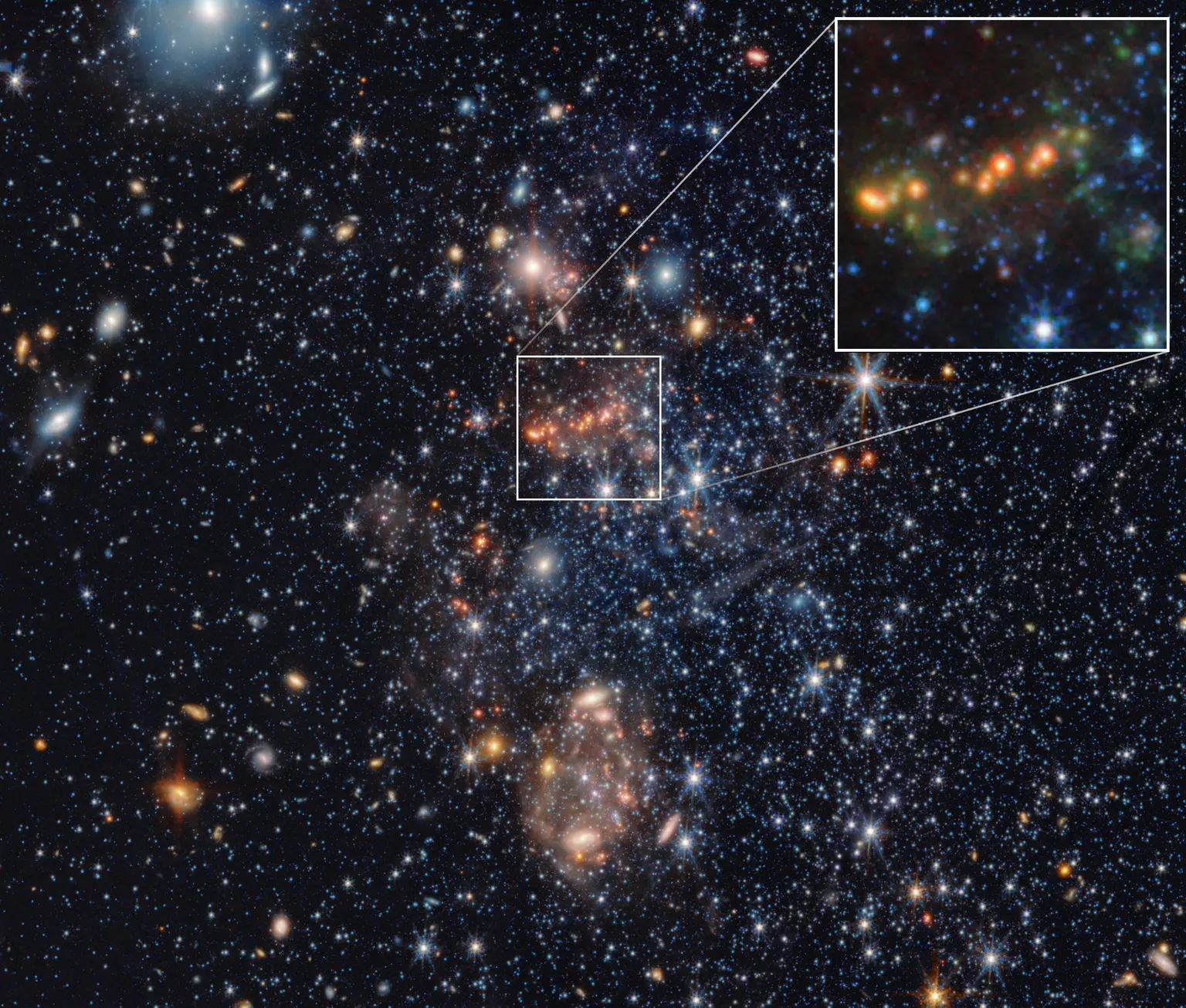
Webb sees early universe and its skill of making dust
NASA’s James Webb Space Telescope spotted two rare kinds of dust in the dwarf galaxy Sextans A, offering insights into how early galaxies evolved and developed the building blocks for planets. Scientists found metallic iron dust and silicon carbide (SiC) being produced by ageing stars. The finding shows that even when very little of today’s heavy elements were present, stars and the interstellar medium could still create solid dust grains. Sextans A is approximately 4 million light-years away, and its gravitational pull is so weak that it is unable to retain the heavy elements, such as iron and oxygen, created by supernovae and ageing stars. Galaxies like these filled the early universe. With low metal content, the stars in them should be dust-free. "Instead, Webb revealed a star forging dust grains made almost entirely of iron. This is something we’ve never seen in stars that are analogues of stars in the early universe," Martha Boyer, lead author in one of the companion studies, said.
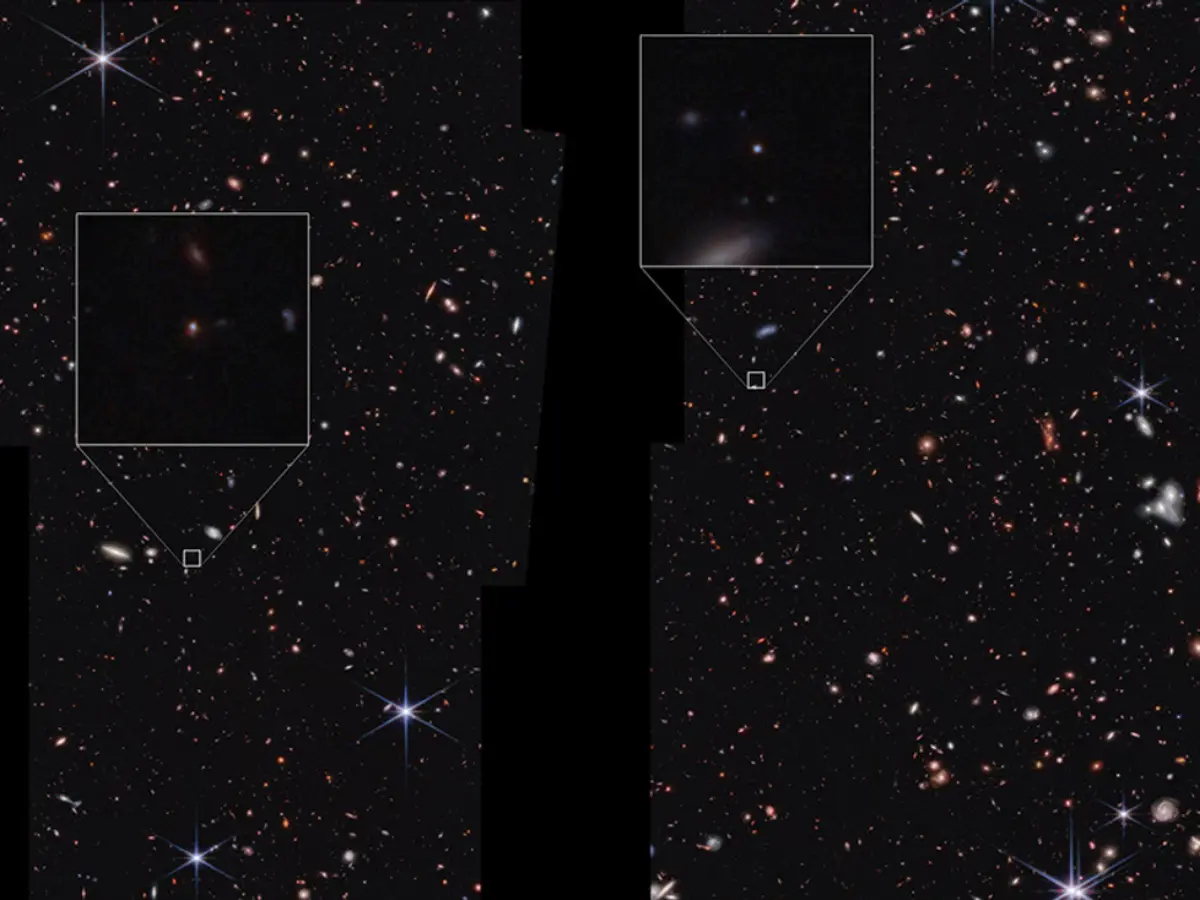
Webb spots astronomy's platypus that can't be classified
A small team of astronomers at the University of Missouri used the James Webb Telescope to discover a sample of galaxies with a previously unseen combination of features. Principal investigator Haojing Yan compared the discovery to biology’s taxonomy-defying platypus. These galaxies are so odd that they cannot be categorised. While they are extremely tiny and compact, "like a point source", yet there are no visible "characteristics of a quasar, an active supermassive black hole, which is what most distant point sources are,” said Yan. He said that it is like looking at a platypus. "You think that these things should not exist together, but there it is right in front of you, and it’s undeniable,” Yan said.
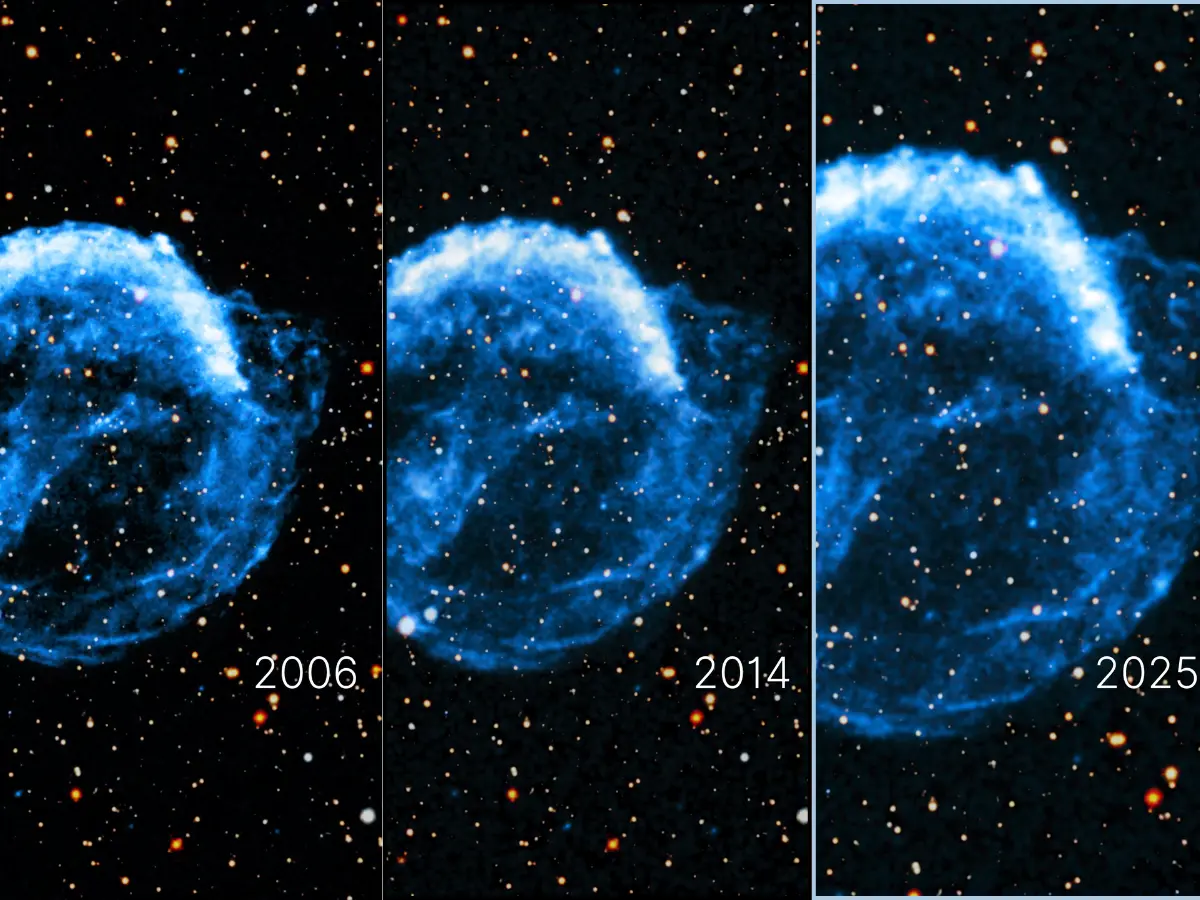
Chandra captures Kepler’s Supernova Remnant over decades
NASA’s Chandra X-ray Observatory was used to stitch together a video showing the evolution of Kepler’s Supernova Remnant. This remnant was first spotted in the night sky in 1604 and was formed when a white dwarf star exploded after exceeding a critical mass as it pulled in material from a companion star. Supernova remnants are the debris fields left behind after a stellar explosion that exceeds temperatures of millions of degrees, making them visible in X-rays. This helped Chandra see it 17,000 light-years from Earth. The X-ray data were captured over more than two and a half decades, from the years 2000, 2004, 2006, 2014, and 2025. The researchers say that the fastest parts of the remnant are travelling at about 22.2 million kilometres per hour, while the slowest are moving at about 6.4 million kilometres.
)
)
)
)
)